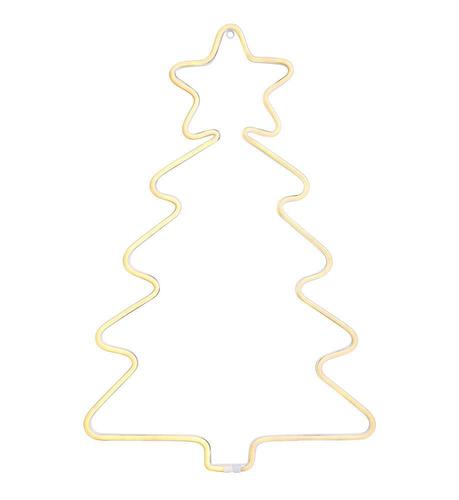
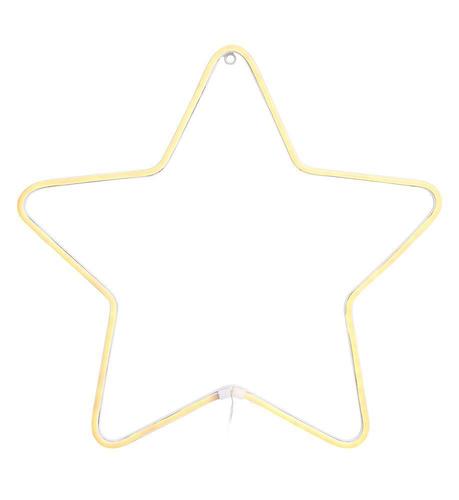
Outdoor light-up decorations are ornaments built to live in the garden: figures, globes, lanterns and planters that look like ordinary decor by day and glow once the sun goes down. What separates them from indoor pieces is what they are made to survive – rain, frost and summer sun – so the IP rating, the power source and the materials matter more than the shape.
Weatherproof, waterproof or neither?
‘Weatherproof’ and ‘waterproof’ are used loosely on packaging, so look for the IP rating instead. In a British garden the bigger enemy is usually water rather than deep frost: weeks of drizzle find their way into battery compartments, plug connections and seams in cheap housings.
-
IP20 or no rating – indoor only, even if it sits in a porch.
-
IP44 – protected against splashing water. Fine under a canopy, on a covered doorstep or for a few weeks of seasonal display.
-
IP65 – resists jets of water from any direction; the sensible minimum for pieces left in an open border.
-
IP67 – survives brief immersion; good at the pond edge.
-
IP68 – rated for continuous immersion; the one to use for anything that sits in the water.
Look at the weakest part as well as the figure itself. A decoration rated IP65 that runs from an indoor-rated transformer is only as good as that transformer.
What to put outside that lights up
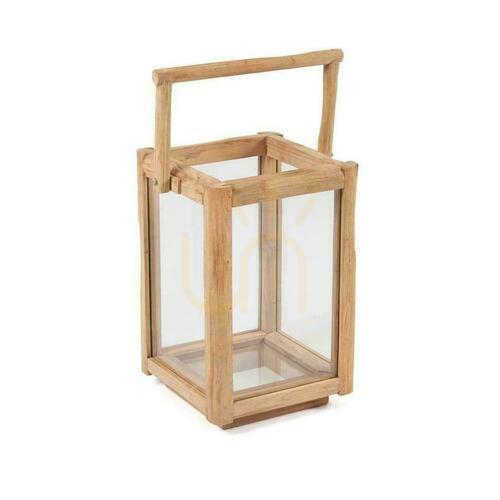
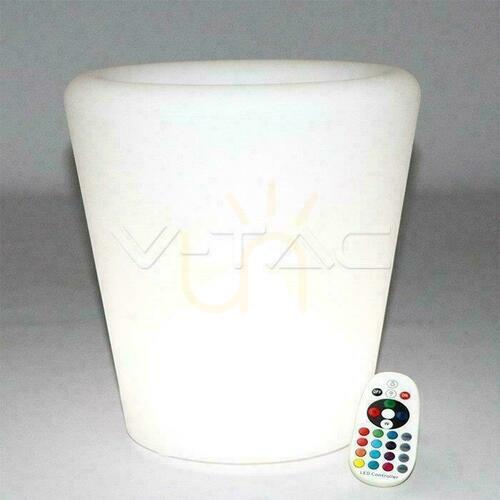
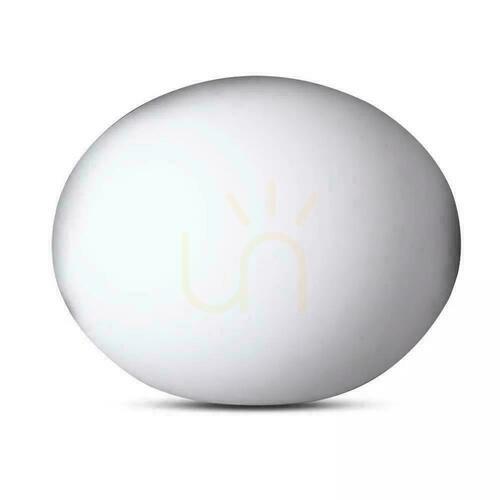
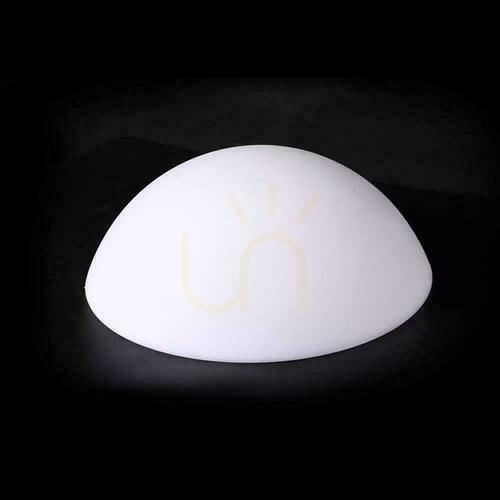
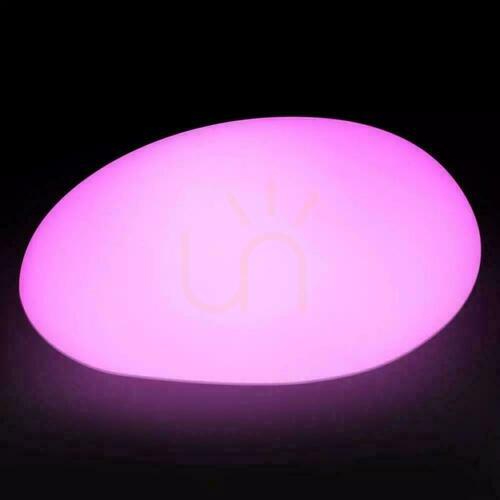
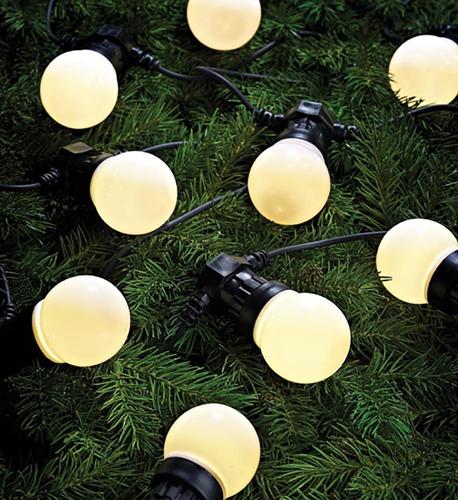
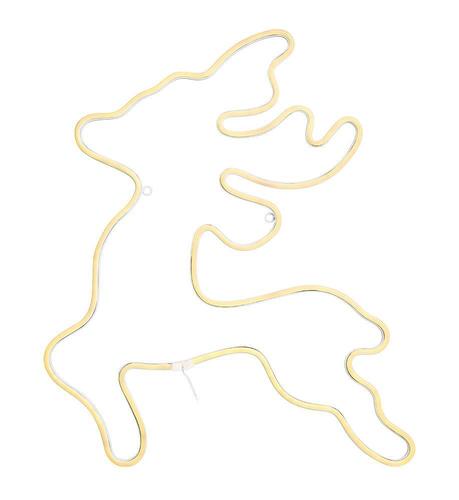
The choice is wider than reindeer and snowmen. Solar stake lights shaped as birds, flowers or butterflies suit borders all year. Glowing spheres and light-up planters made of polyethylene double as furniture on a patio. Lanterns with LED candles work on steps and tables, while wreaths, garlands and icicle lights dress a front door, porch or eaves. For the festive season there are large figures made of rope light on wire frames, acrylic animals and light-up trees. Not every outdoor decoration has its own light – metal lanterns for tea lights or natural-material pieces come alive with a small spotlight aimed at them.
Choosing the right power and light
| What to check |
Typical options |
Good to know |
| Solar |
built-in panel and dusk sensor |
lights all night in summer, often only a few hours between November and February |
| Batteries |
2–3 AA cells, 6-hour timer |
goes anywhere; cold weather shortens battery life |
| Rechargeable |
USB charging indoors |
handy for lanterns and table pieces you bring out in the evening |
| Low voltage |
24 V or 31 V via a transformer |
safe voltage in the garden; keep the transformer under cover |
| Mains |
230 V, lead usually 3–5 m to the plug |
brightest option for large figures; outdoor socket only |
| Colour of light |
warm white 2200–3000 K, cool white around 6000 K, RGB |
warm white blends with planting; cool white reads as frosty and festive |
| Power draw |
from a fraction of a watt to a few W per piece |
running several every evening adds very little to the bill |
Rubber cable stays supple in cold weather, whereas PVC stiffens and can crack when moved in winter. If a set is connectable, add only parts from the same system – plugs from different ranges rarely fit and transformers have a maximum load.
Placing them for the best effect
Put the light where eyes already go after dark: the front path, the edge of the patio, the border you see from the sitting-room window. Several soft points at different heights – on the ground, at table level, in a tree – give depth that a single big figure in the middle of the lawn never will. Stick to one colour of light within one view; mixing warm and cool whites looks accidental. Large wire-frame figures catch the wind like a sail, so peg them down or use guy lines.
Safety and care
Mains-powered decorations should go into a weatherproof outdoor socket protected by a 30 mA RCD, which BS 7671 requires for outdoor socket-outlets. Use an extension lead rated for outdoor use and lift the connection off wet ground, or put it in a weatherproof connection box. A new outdoor socket or buried cable is a job for a qualified electrician.
Wipe solar panels every few weeks – dust and pollen cut charging noticeably. Before storing decorations, take the batteries out so they cannot leak, and let everything dry fully. Fabric, paper and rattan pieces spend the winter indoors; acrylic and polyethylene with a suitable rating can stay out.
Frequently asked questions
What are the best decorative outdoor lights?
The ones matched to their spot: IP65 for an exposed border, IP44 for a covered porch, warm white for year-round use and cool white or colour for the festive season.
How do you decorate an outside light?
Keep it light and heat-free: an LED garland or wreath around a wall light works if it is rated for outdoor use and does not block the fitting's vents. Never cover the lamp itself.
Are large outdoor light-up decorations worth it?
For a front garden seen from the street, yes – but they need mains or low-voltage power, firm anchoring and storage space for the rest of the year.
Do solar decorations work in a British winter?
They work, but only for a few hours on dull days, and not at all with snow or leaves on the panel. Pair them with a mains or low-voltage piece for dependable light in December.
Can outdoor light-up decorations stay out all year?
Those rated IP65 or higher with rubber cable can. Seasonal figures last longer if they are cleaned, dried and stored once the season ends.
For lights on the house front, trees and hedges, carry on to outdoor Christmas lights. More on indoor and tabletop decorations: decor.