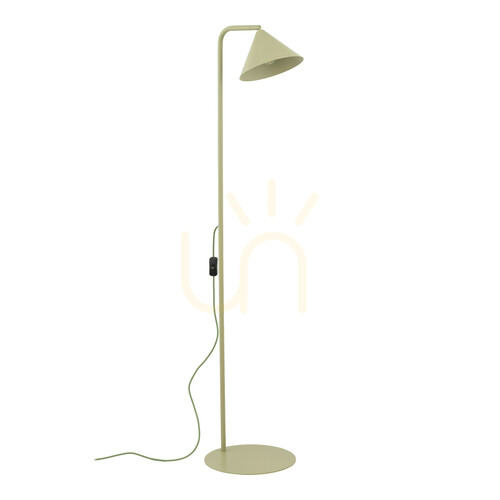
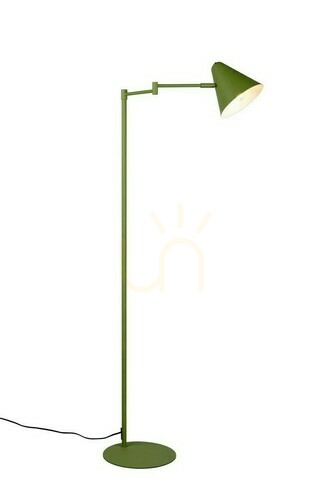
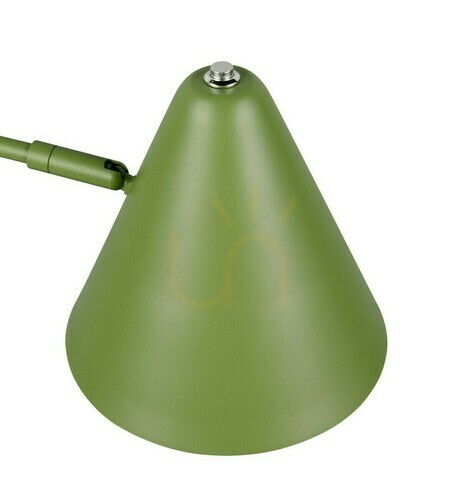
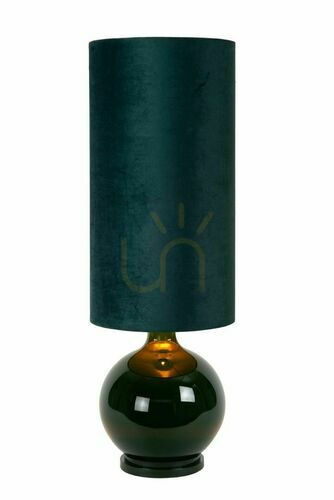
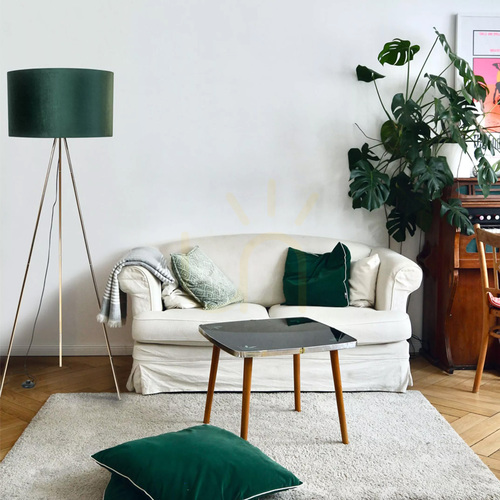
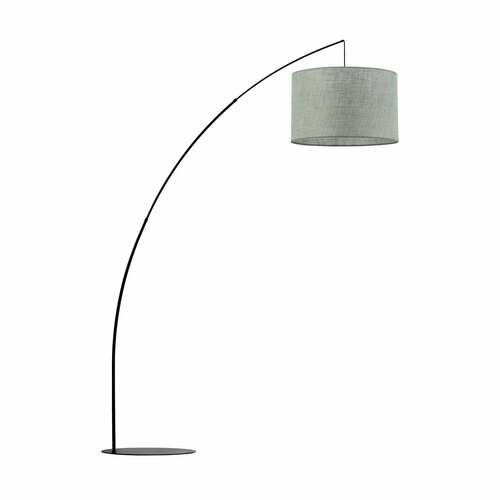
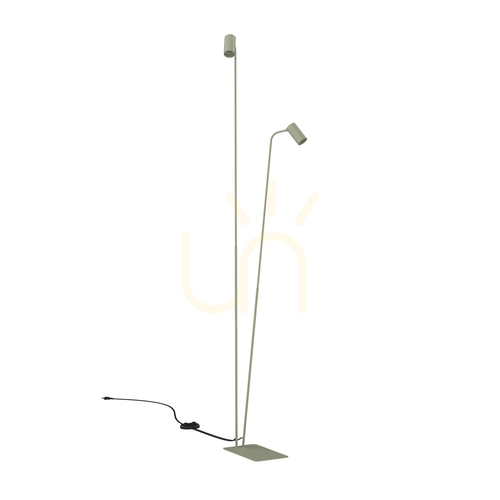
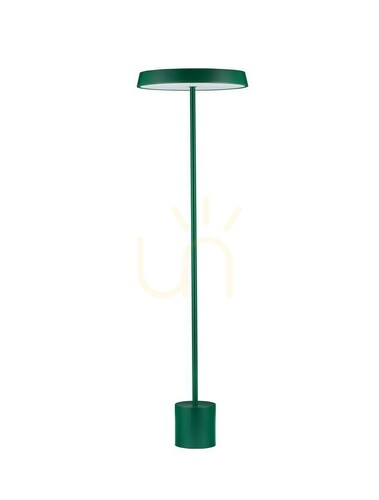
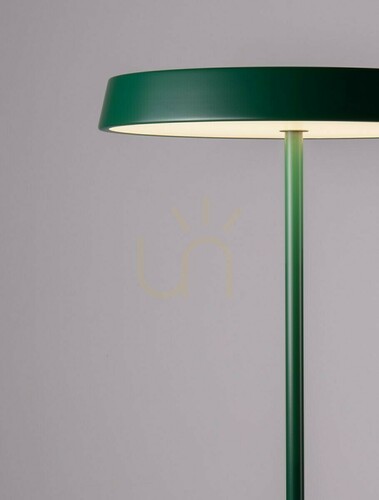
A green floor lamp does two jobs at once: it lights a reading chair or a gloomy corner in the evening, and during the day it stands there as a piece of colour, as noticeable as a sofa or a rug. With a floor-standing light, the green also affects the light itself – or doesn't – depending on what the shade is made of.
So before settling on sage or emerald, it pays to work out where the colour actually sits and what you mainly want the lamp for: reading, mood or simply a bit of colour in a neutral room.
Sage, olive, forest or emerald: which green, where
Green covers a wide spread of tones, and each one behaves differently in a room.
-
Sage green is soft and greyish. It sits comfortably with pale oak, linen, white walls and warm greys, which is why it turns up so often in Scandi and Japandi schemes. It is the easiest green to live with.
-
Olive and moss are warm and earthy. Pair them with terracotta, rust, tan leather and rattan for a relaxed, seventies-leaning look.
-
Dark or forest green is deep and traditional – think library, brass, walnut and velvet. It suits period homes and Art Deco touches.
-
Emerald is saturated and often glossy. It loves gold, blush pink and dark wood, and reads as a statement.
-
Light green and mint are fresh and pastel, close to fifties retro. Keep them with white and pale grey, or they can look sugary.
One trap: a dark green lamp in front of a dark green wall disappears. Tone-on-tone works only if the lamp is clearly lighter or darker than the wall, or has brass or chrome details to pick it out.
Does the shade make the light green?
That depends on the shade. A metal shade painted green outside is usually white or gold inside, so the light stays neutral and only the lamp looks green. A thin fabric or velvet shade glows softly green and dims the output – lovely for evening mood, less good for reading. A cased glass shade, like on the classic banker's lamp, glows green outside while its white inner layer sends clear light downwards. A painted wooden or metal base with a natural shade gives you green on the stand and white light from the top.
Sizes and specs worth checking
| What to check |
Typical range |
Why it matters |
| Height, shaded floor lamp |
usually 140–170 cm |
beside a chair, the bottom of the shade should sit around seated eye level |
| Arc floor lamp |
about 180–210 cm, roughly 1 m reach |
needs a heavy base and clear space to one side |
| Task lamp with adjustable arm |
about 120–160 cm |
directed light for reading or crafts |
| Bulb fitting |
E27 screw, B22 bayonet, E14 on small shades |
B22 is common in the UK, so check before buying spare bulbs |
| Brightness at the chair |
roughly 400–800 lm |
some decorative LED lamps give only around 200 lm |
| Colour temperature |
2700–3000 K |
warm white deepens olive and forest green |
| Plug |
UK three-pin, fused |
check the cable reaches the socket without a trailing extension |
Colour temperature matters more with green than with neutral finishes. A 2700 K bulb adds yellow, which flatters olive and forest green but can turn sage and mint slightly grey. For a truer colour, use 3000 K with a high colour rendering index (CRI 90 or above). If the lamp has integrated LEDs, check its stated output and colour temperature before you buy, as you can't change them later. On a dimmable lamp, fit a bulb that is marked dimmable.
Where it works best
The obvious spot is behind a reading chair or at the end of a sofa, slightly behind your shoulder. In a bedroom, a fabric-shaded lamp gives a softer glow than the ceiling light. In a home office, a floor-standing banker's lamp or an adjustable task lamp gives proper light for paperwork. Green also pulls houseplants together beautifully: stand the lamp next to a large fiddle-leaf fig or a monstera and the corner suddenly looks planned.
A mother-and-child floor lamp, with a big uplighter bowl and a small reading arm, is useful in a living room where one lamp has to do both jobs. If there are toddlers or a dog about, a tripod belongs in a corner rather than in a walkway.
Looking after a green lamp
- Wipe powder-coated or lacquered metal with a damp cloth; abrasive cleaners leave marks that show up badly on dark green.
- Use a lint roller or a soft brush on velvet and linen shades.
- Fabric shades fade in strong sun, often unevenly, so avoid a south-facing window if you can.
- Clean glass shades only once they have cooled; dust brass with a dry cloth.
Green floor lamp FAQs
Why is the green lamp so popular?
Partly history: the green glass banker's lamp has been a fixture of libraries and studies for well over a century. Partly psychology: green reads as calm and natural, and it bridges warm woods and cool whites better than most colours.
Does a sage green floor lamp go with grey?
Yes. Sage has grey in it already, so it works with warm and mid greys. Add some natural wood so the room doesn't feel cold.
Is a dark green floor lamp too heavy for a small room?
Not if the frame is slim. Choose a thin stem and a lighter shade, or a dark green shade on a brass stand, and it will look rich rather than bulky.
What goes with an emerald green floor lamp?
Gold or brass, blush pink, navy and dark wood. Repeat the green once more in the room – a cushion or a print – so the lamp doesn't look stranded.
Which bulb should I use?
Usually an LED in E27 or B22, at 2700–3000 K. For reading, something around 400–800 lm at the chair is plenty.
Will a light green lamp look childish?
Not in a matt finish with natural materials. Mint and pistachio feel grown-up next to oak, white and brass.
For more on choosing heights, styles and types, see floor lamps. If green makes you think of the fifties and seventies, carry on with retro floor lamps.