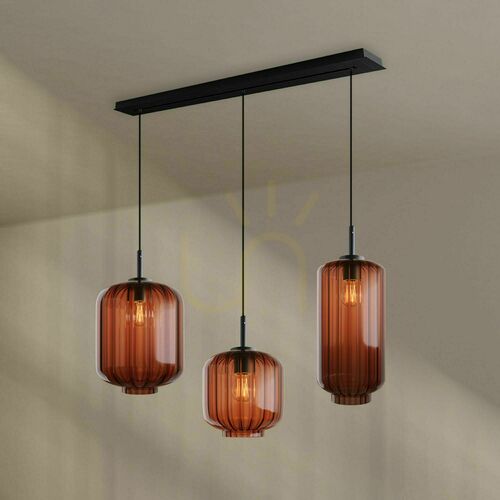
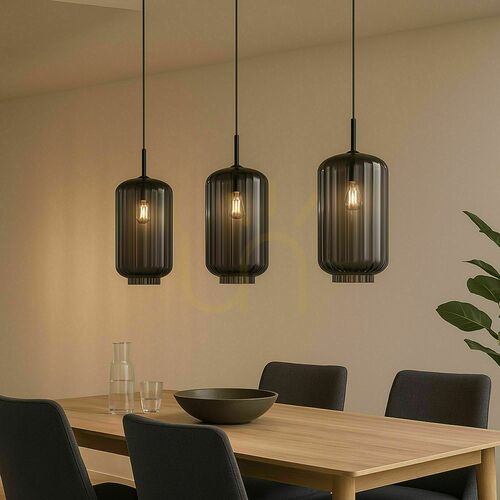
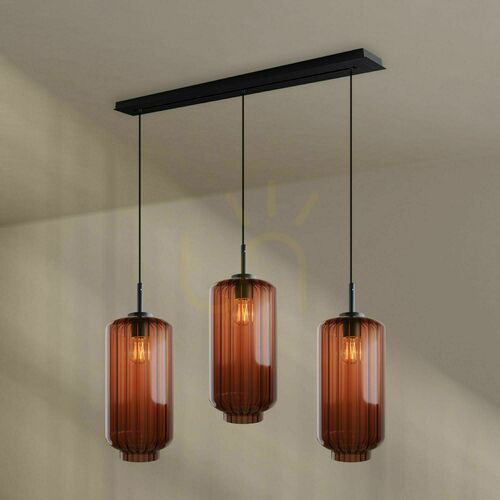
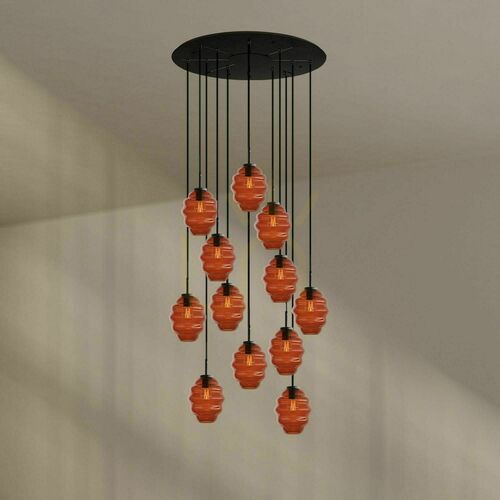
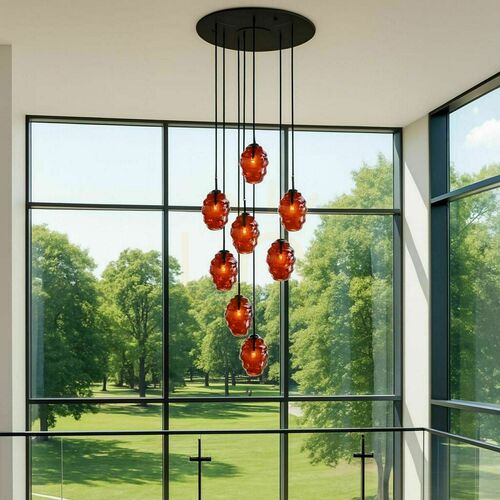
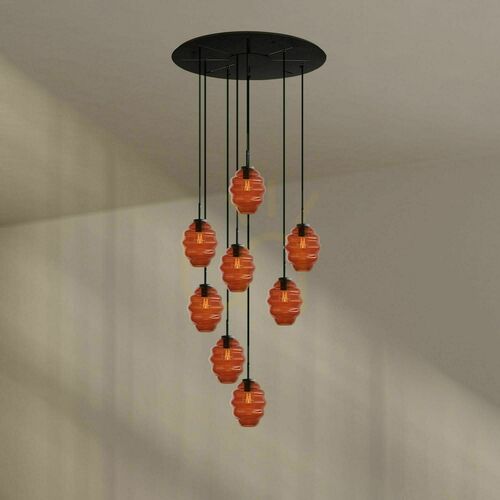
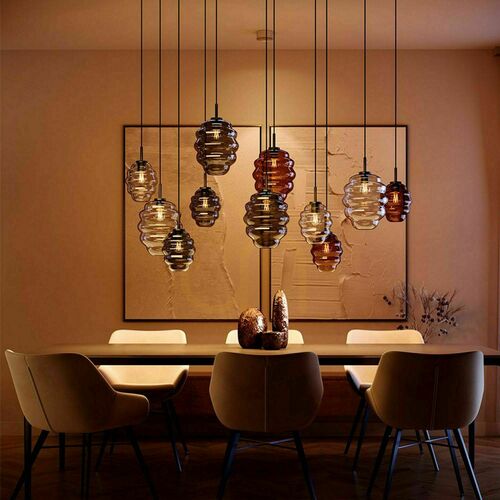
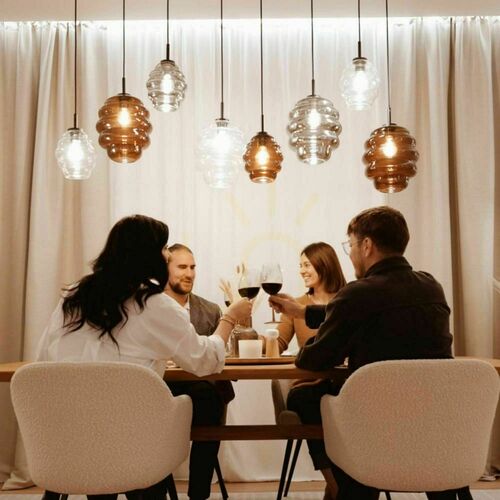
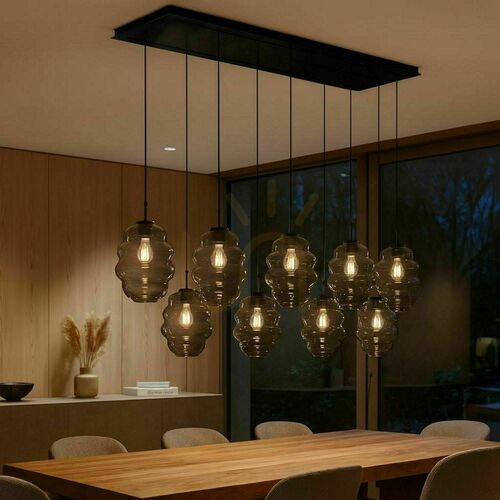
In a typical British home the first question about a colourful chandelier isn't which colour, it's how much drop the ceiling will allow. Plenty of terraces, semis and new builds have ceilings of only 2.3–2.4 m, which calls for a flush or semi-flush fitting with coloured glass sitting close to the plaster. Victorian and Edwardian rooms, often 2.6–3 m high, can take a multi-arm piece on a chain, with tinted drops or shades at eye-catching height.
Whatever the shape, the colour lives in the fitting – in the glass, the drops, the shades or the painted frame – and the light has to pass through it. That changes how bright the room gets and how the colours read after dark, so the bulb matters as much as the design.
How much drop your ceiling allows
Most electricians work to a simple rule: leave at least 2.1 m between the floor and the lowest point of the fitting wherever people walk. Building regulations don't set a figure, but heads do. Typical guides for British rooms:
| Situation |
Typical guide |
What it means for a colourful fitting |
| Ceiling around 2.3 m (many terraces and new builds) |
flush fitting, total drop up to about 20 cm |
Coloured glass shades fixed tight to a ceiling plate |
| Ceiling around 2.4 m |
semi-flush on a 10–15 cm stem, total drop about 25–30 cm |
Room for a small cluster of tinted globes or a shallow ring of coloured drops |
| Period rooms, 2.6–3 m |
chain or rod, bottom of the fitting at least 2.1 m from the floor |
Multi-arm or tiered designs; tiered pieces can hang 60–80 cm below the canopy |
| Over a dining table |
base about 75–80 cm above the tabletop, width ½–⅔ of the table |
Nobody walks underneath, so a longer drop works even under a low ceiling |
| Lamp cap |
B22 bayonet, E27 or E14 screw, G9 in small glass shades |
Check the cap before ordering bulbs – continental fittings rarely take B22 |
| Wiring |
a registered electrician working to BS 7671 |
New circuits and bathroom work are notifiable under Part P in England and Wales |
For diameter, add the room's length and width in metres and read the result as centimetres: a 4 × 3.5 m sitting room suggests about 75 cm. Diameter and drop are separate decisions, so a wide fitting can still be shallow enough for a low ceiling.
Where the colour comes from
-
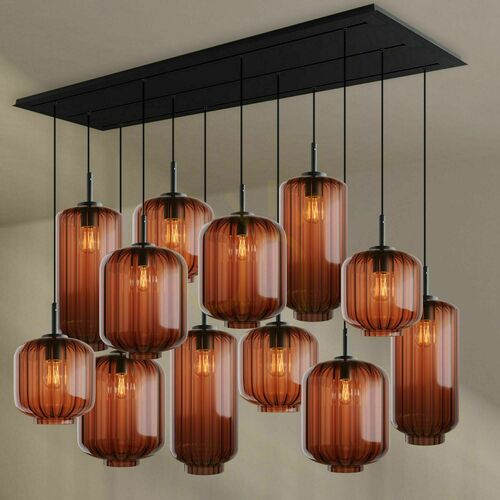
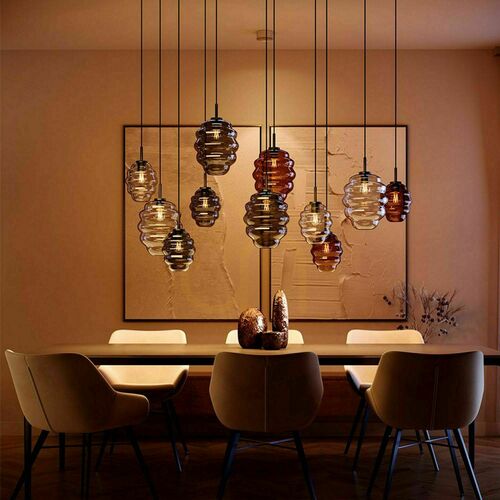
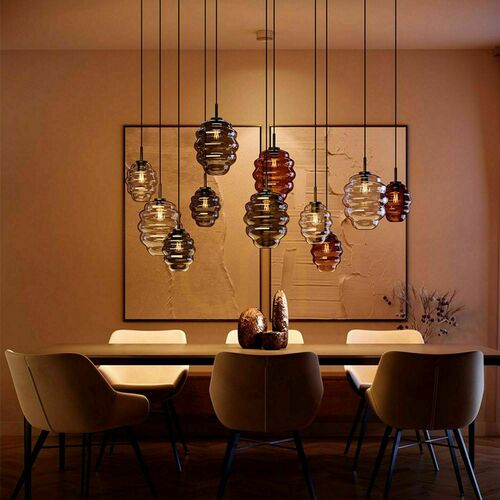
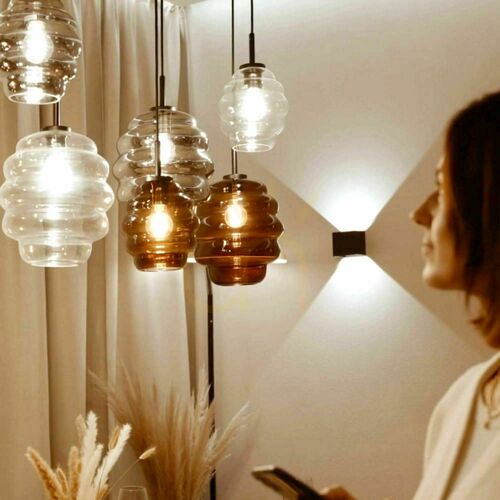
Glass you look through. Harlequin globes, bells or cones, each in a different shade, usually on a black or brass frame. Hand-blown Venetian-style glass – petals, leaves, ribbed bowls – belongs here too, and no two pieces match exactly.
-
Glass that sparkles. Coloured crystal drops, pear drops and prisms in amber, cobalt, rose or mixed hues, often on traditional Maria Theresa-style arms. Cut faces split the light, so they glitter rather than glow.
-
Leaded glass. Tiffany-style shades, pieced from many small panes, give a low, mellow light that suits a period sitting room or a study.
-
Shades that diffuse. Fabric shades in several colours, or painted metal, are lighter, cheaper to replace and kinder to a plasterboard ceiling.
Colour-changing RGB LEDs work the other way round: the fitting can be plain white and the light itself turns colour.
Bulbs, brightness and the evening look
Deep cobalt, ruby or smoked glass lets through far less light than clear or opal glass, so a colourful chandelier is best treated as the mood layer. British living rooms already tend to rely on table lamps and wall lights, and that habit suits tinted glass well. Warm white around 2700 K flatters amber, red and pink; blues and greens stay truer at 3000–4000 K. A bulb with CRI 90 or higher keeps saturated colours from going muddy, a clear filament bulb throws crisp coloured patterns onto the walls and an opal one softens them.
Room by room
Period sitting room. Under a high ceiling with a picture rail and deep heritage paint colours, coloured crystal or Venetian-style glass looks at home. Pick up one shade from the glass in the curtains or a rug.
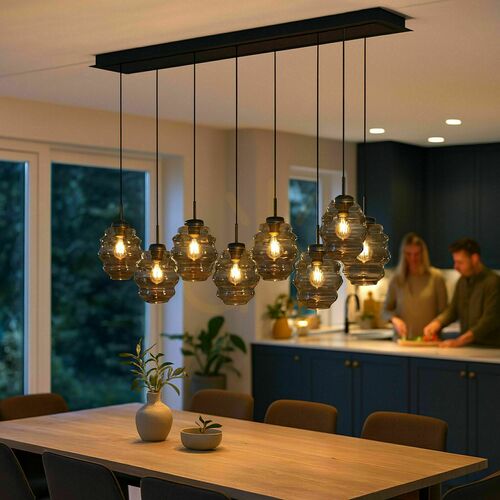
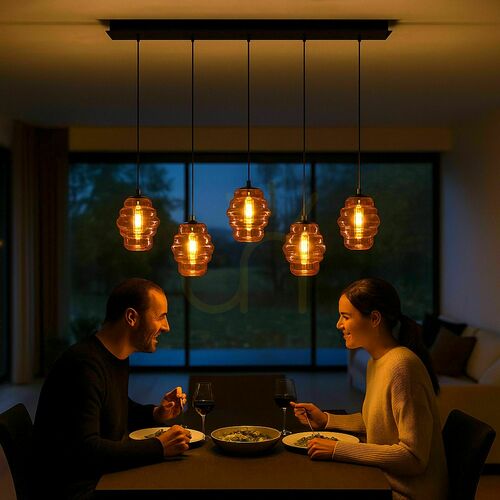
Through-lounge or open-plan kitchen-diner. Hang the colourful piece over the dining end, where it can drop low, and keep plain downlights or a track over the kitchen worktops. Strong blue or green directly over the plates makes food look grey; amber and honey glass is the safer choice.
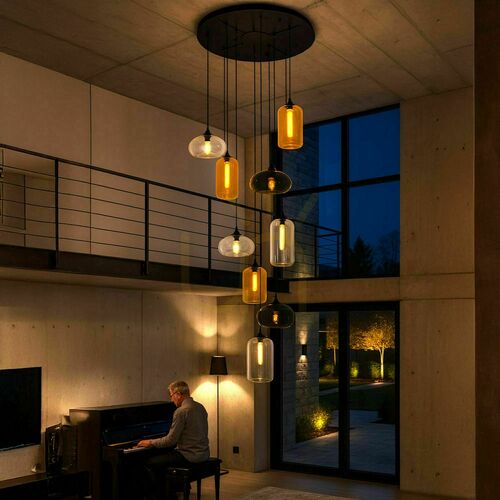
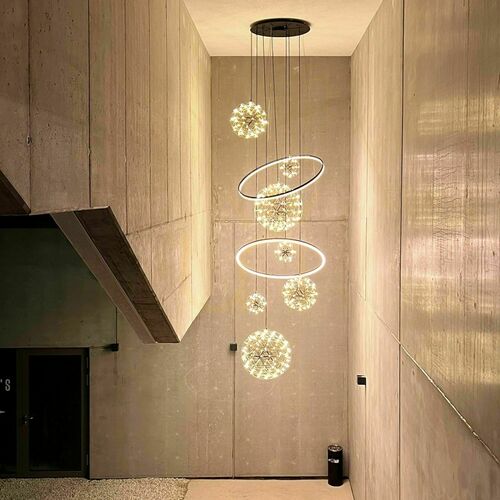
Hallway and stairwell. A tall Victorian stairwell is one of the few places a long drop works in a smaller house, and tinted glass greets people at the door. In a narrow hall with a low ceiling, choose a flush fitting.
Looking after coloured glass
-
Dust little and often. A microfibre cloth or soft duster every few weeks saves taking the fitting apart. Never spray glass cleaner straight onto it: liquid can run into the lampholders.
-
Photograph before you dismantle. For a deeper clean, snap the order of the drops and shades first, then wash glass in lukewarm water with a little washing-up liquid and dry it with a lint-free cloth.
-
Know what the colour is. Glass coloured through its mass won't fade. Painted, enamelled or gilded glass and shades lacquered inside should stay out of the dishwasher and away from abrasives, and hot halogen bulbs can discolour a coating over time.
-
Mind the weight. A glass or crystal chandelier can top 10 kg, more than a standard ceiling rose is made to carry. It needs a hook or bracket fixed into a joist.
Frequently asked questions
What is the best chandelier for a low-ceiling dining room?
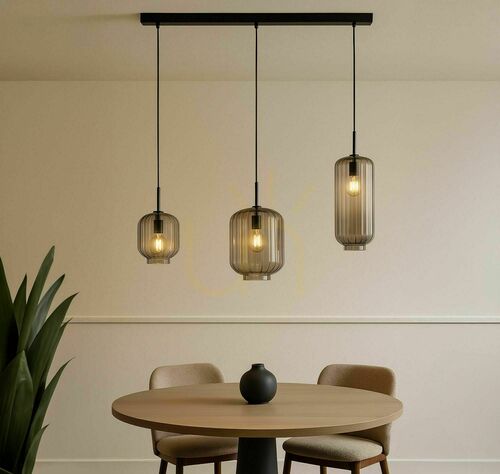
Over the table you have more freedom than elsewhere, because nobody walks underneath. A semi-flush cluster of coloured glass, or a low pendant with its base about 75–80 cm above the tabletop, works under a 2.4 m ceiling.
How low can a chandelier hang in a living room?
Where people walk, keep at least about 2.1 m clear below the fitting. Above a coffee table or in a corner nobody crosses, it can hang a little lower.
Can I fit a chandelier myself?
Replacing a fitting on an existing ceiling point is the simplest job, but a heavy chandelier needs a proper fixing and safe connections. Use a registered electrician; new circuits fall under Part P in England and Wales.
What type of ceiling light gives off the most light?
Clear or opal glass and open, upward-facing arms let out the most light. Dark tinted glass gives the least, so pair it with lamps for reading.
What are some unique and quirky lighting ideas?
Mismatched coloured globes at different heights over a table, a leaded-glass shade in a pared-back room, or a classic arm chandelier hung with amber instead of clear drops.
What is another name for a chandelier?
Lustre is the older word, electrolier was used for early electric versions, and many retailers simply say multi-arm pendant or ceiling light.
More on shapes and styles beyond colour: chandeliers. For rooms under 2.4 m, see also flush mount chandeliers.