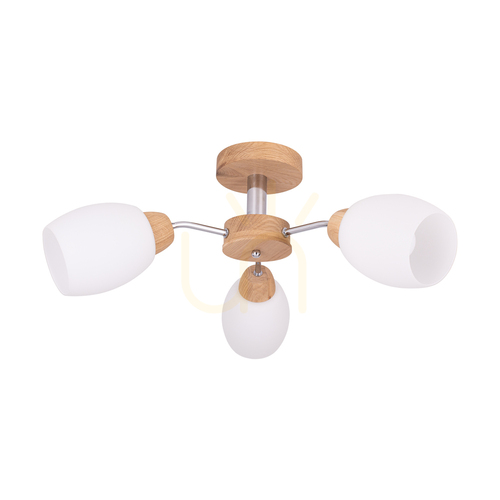
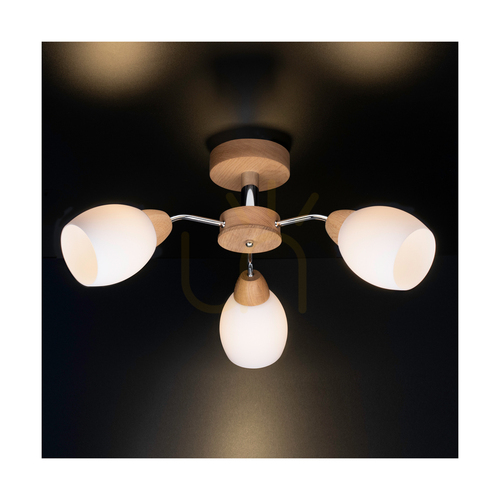
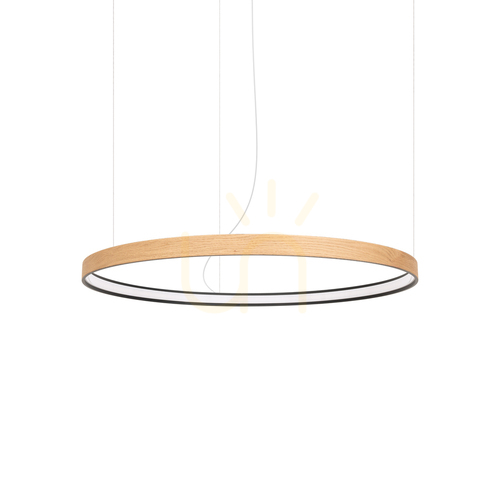
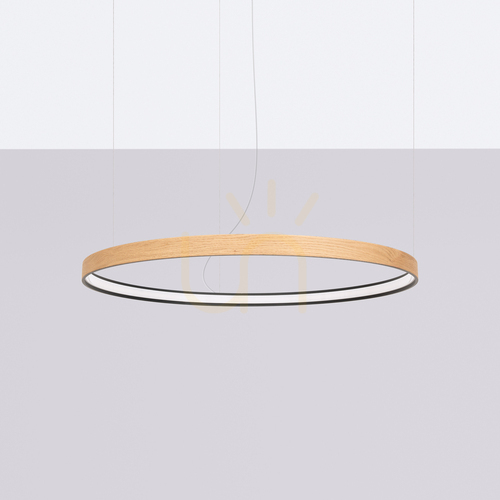
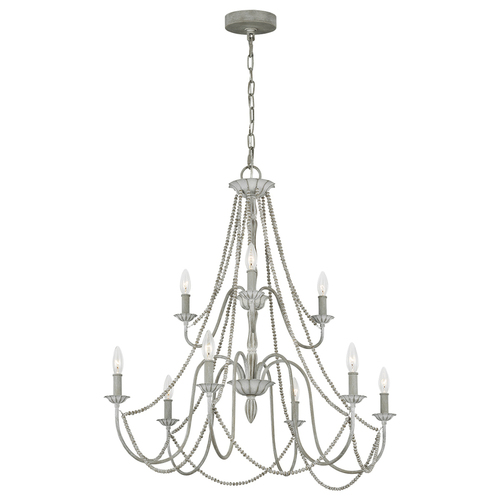
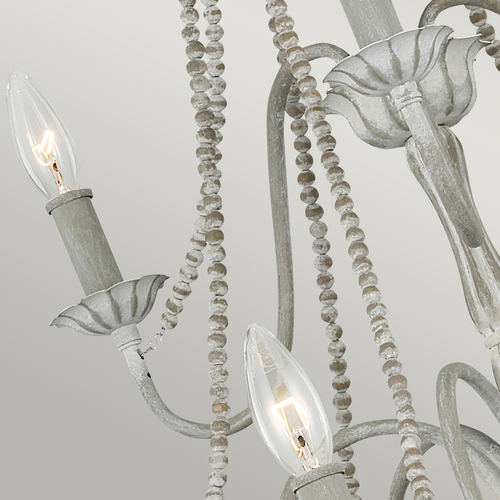
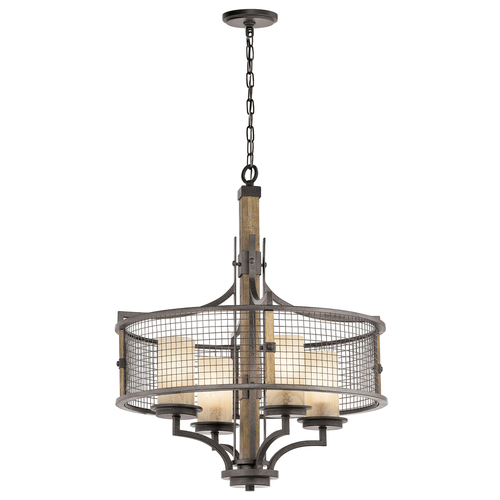
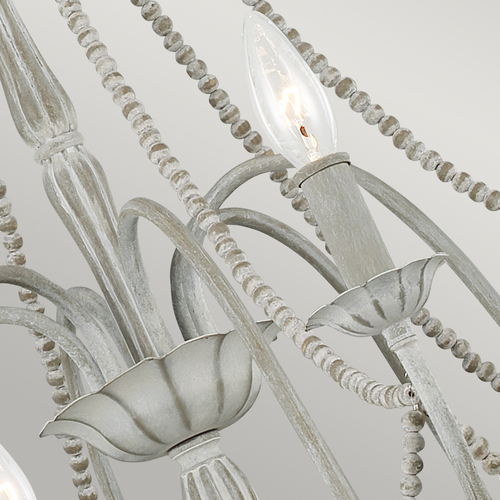
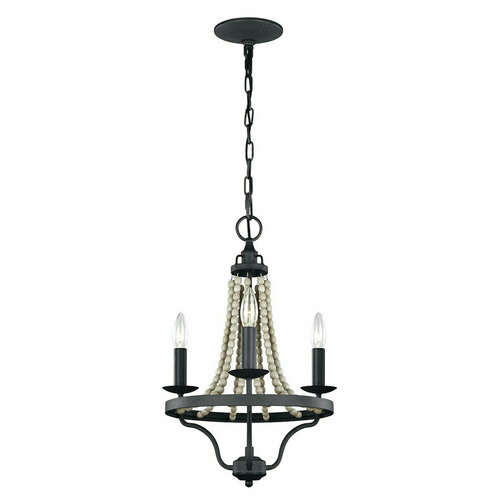
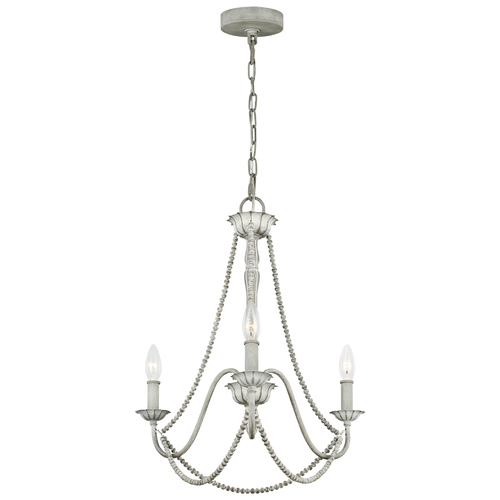
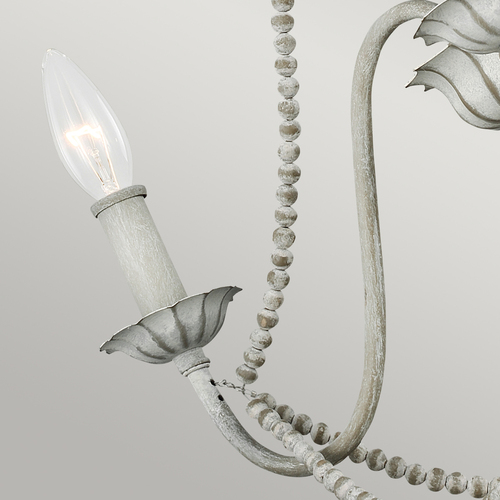
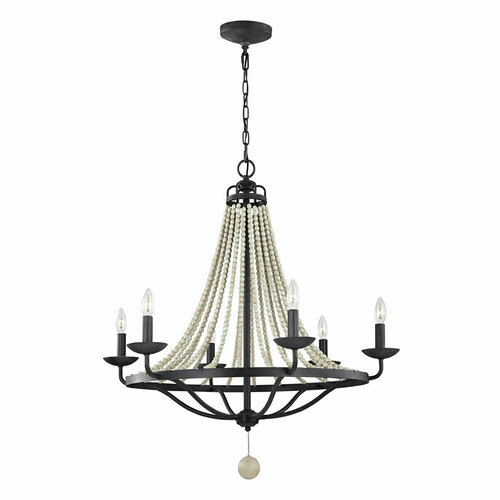
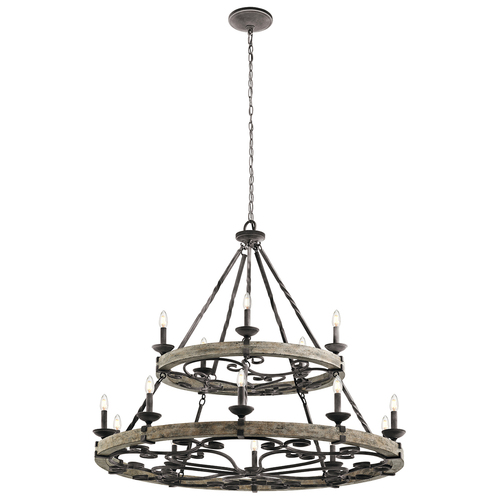
A wooden chandelier is a multi-light ceiling fitting in which timber does the real work – the frame, the arms or the shade – rather than appearing as a token detail. It softens the light, warms up a room with hard surfaces and looks as natural under the exposed beams of a cottage as it does over an oak table in a new-build flat.
Timber does bring its own rules, though. It reads heavier than metal, it moves with the seasons and it can be surprisingly weighty. Get the size, the bulbs and the fixing right and it will last for decades.
Is a wooden chandelier right for a UK living room?
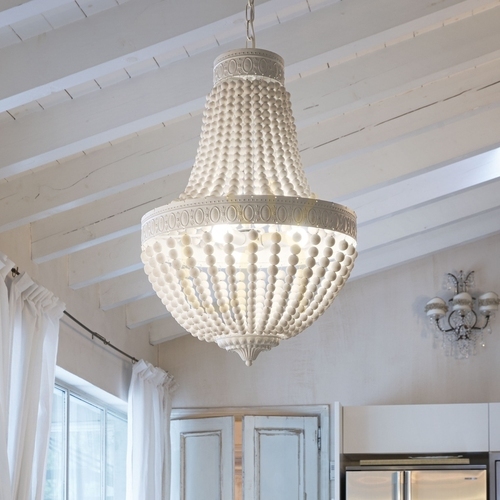
Most British homes have ceilings of around 2.4 m, sometimes lower in older cottages and higher in Victorian terraces. That matters more for a chandelier than for almost any other light. In a standard-height living room you want something that doesn't drop too far: a slim wooden ring, a compact cluster or a semi-flush design with a short rod. Save the large, deep pieces – a cart-wheel or a long reclaimed beam – for rooms with real height, or for the space above a dining table where nobody walks underneath.
Style is the easier bit. Pale oak, ash and birch sit happily in Scandinavian and Japandi schemes. Darker walnut or stained timber suits traditional rooms. Wood with black or rust-finish steel is the farmhouse and industrial look, and turned wooden arms in a candle layout give a country-house feel.
The main designs
-
Beam chandeliers – a length of solid or reclaimed-look timber with several lampholders in a row, typically 60–180 cm long. Made for long dining tables and kitchen islands.
-
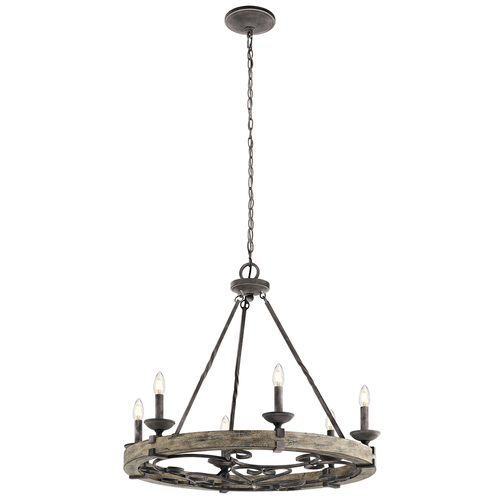
Wheel and ring chandeliers – a circular timber crown with lights around the edge, either chunky and rustic or slim with built-in LEDs.
-
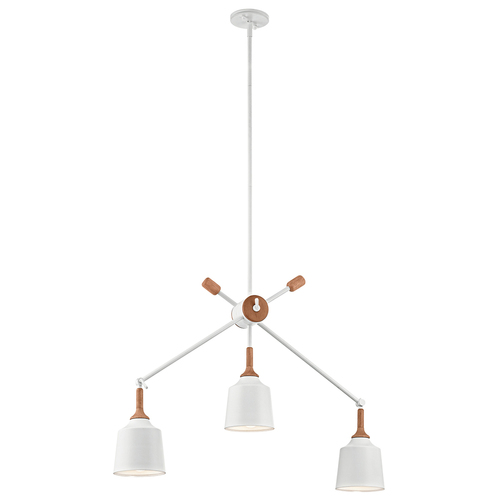
Wood and metal frames – timber details on a steel cage or arms; the most versatile option for modern rooms.
-
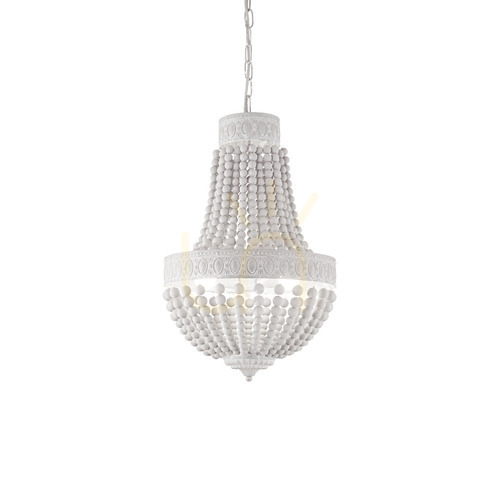
Veneer and slatted shades – lightweight, airy designs that throw patterned light onto the ceiling.
Sizing a wooden chandelier
| Where |
Rule of thumb |
Example |
| Living room diameter |
(room length + width in m) × 10 = diameter in cm |
4.5 × 3.5 m room → about 80 cm |
| Over a round table |
roughly ½–⅔ of the table width |
100 cm table → 50–65 cm |
| Beam over a long table |
30–60 cm shorter than the tabletop |
180 cm table → 120–150 cm beam |
| Drop over a table |
bottom edge 75–90 cm above the top |
shorten the chain or cable to suit |
| Walkways |
at least 2.1 m clearance |
2.4 m ceiling: go flush or semi-flush |
| Colour temperature |
2700–3000 K warm white |
4000 K cool white makes timber look grey |
Bulbs, heat and dimming
Wooden chandeliers usually take E27 (ES) or the smaller E14 (SES) candle bulbs, and some have integrated LEDs. Note that many UK fittings use B22 bayonet caps, so check the lampholder before buying spares. Whatever the cap, LED bulbs are the sensible match for timber: they run far cooler than old incandescent lamps, so veneer shades and lampholders set into a beam won't dry out or scorch. Always stay within the maximum wattage marked on the fitting.
Over a dining table a dimmer is worth having. Use bulbs marked as dimmable and a dimmer switch rated for LED loads, otherwise you may get flicker or buzzing.
Fitting and looking after the wood
A solid beam or large wheel with steel fittings can weigh well over 10 kg. It needs a fixing into a joist or a proper ceiling support, not just the plasterboard. Connection to the mains should be carried out by a qualified electrician working to BS 7671.
Wood is happiest at a relative humidity of roughly 40–60%. Avoid hanging it directly above a wood burner or in a poorly ventilated bathroom, where swings in heat and moisture can cause splits. Fine surface checks in rustic solid timber are natural movement, not a fault.
- Dust with a dry, soft cloth or a soft brush; for marks, use a barely damp cloth.
- Skip alcohol-based sprays and solvents, which dull lacquer and strip oil.
- Re-oil oiled finishes now and then; lacquered timber only needs dusting.
- Expect oak, pine and cherry to mellow and darken in the light over time.
Frequently asked questions
Which wooden chandelier works best in a living room?
Work out the diameter from the room size, then match the timber tone to your floor or furniture. In a room with a standard 2.4 m ceiling, choose a design with a short drop or a semi-flush mount.
Can I have a large wooden chandelier with a low ceiling?
Only where nobody walks under it, typically above a dining table. Elsewhere a large but shallow ring that sits close to the ceiling gives the scale without the head-bumping.
Do wooden chandeliers suit modern interiors?
Yes. Clean shapes in pale oak, or timber paired with matt black steel, look contemporary. It's heavy carving and dark stain that lean traditional.
What's the difference between a wooden chandelier and a wood pendant light?
A pendant usually has a single light source and shade; a chandelier has several lights spread on arms, a ring or a beam. Chandeliers light a wider area and carry more visual weight.
Are wooden chandeliers safe with hot bulbs?
Yes, with LED bulbs. LEDs run far cooler than incandescent bulbs, though the base can still get hot – so keep to the maximum wattage on the label.
How do I clean a wooden chandelier?
Switch off, let it cool, then dust with a dry soft cloth. No water sprays or household cleaners on the wood.
To compare timber with metal, glass and crystal designs, start with chandeliers. If you're drawn to natural materials generally, rattan chandeliers are the woven alternative.