Living room lamps - a complete guide to ideal living room lighting
Choosing the right lamp for the living room seems like a simple task to many people - until they walk into a store or open a lighting website. Suddenly you find that "living room lamps" are hundreds of models, dozens of styles, different materials, colors, types of bulbs and additional features. It's easy to get lost in all this, yet the living room is the heart of the home and the place where light really matters. Well-planned living room lighting affects visual comfort, the mood of the household, as well as the perception of wall colors, furniture and decorations. One apt lamp for the living room can literally transform the interior, combine seemingly mismatched elements and bring out the most beautiful from the arrangement.
The living room is a multifunctional space - here we relax after work, receive guests, watch movies, play with children, sometimes work at the table or on the sofa. Not surprisingly, the lamps in the living room must be flexible and adaptable to different scenarios of the day. We need a different light for an evening reading, another for a family movie, and another for a holiday dinner, when the dining table in the living room area becomes the center of events. This is why a single living room lamp alone, even if it is very impressive, is usually not enough. The key is a well-thought-out plan in which the main living room lamps work together with zoned and decorative lighting.
The basic principle is: it is not the apartment that has to match the lamp, but the living room lamp has to support the life of the household members. So it's worth starting not with a catalog, but by answering a few simple questions: what do we do in the living room most often, which way do we walk, where do we sit, where do we want cozy twilight, and where do we want bright, functional light? Only then do we choose specific models - whether it will be a large living room lamp in the form of a chandelier, or rather a lower, cozy fixture over the coffee table, or perhaps a track lighting system that allows you to freely adjust the direction of light.
Living room lighting - why is it so important?
Well-designed living room lighting has a huge impact on the well-being of the. Too strong, cold light can tire the eyes and spoil the atmosphere, and too weak light makes the interior look gloomy and non-functional. Living room lamps are responsible not only for whether we can see well enough, but also for the atmosphere of the room. They are the ones that build the impression of coziness, luxury, minimalism or pleasant, homely freedom.
If the living room is an open space connected with the kitchen and dining room, lighting for the living room must cope with a clear division of zones. We will use different lamps in the living room over the sofa, others over the table, still others near the TV or bookshelf. Properly selected living room lamps allow you to optically organize the interior, separate zones and give them their own character, even if the walls do not separate them from each other.
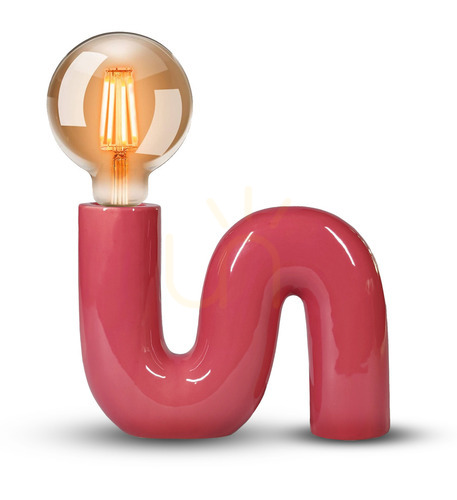
It is also worth remembering that interesting lamps for the living room can serve as a decoration on a par with paintings or posters. An original chandelier, a designer floor lamp or a composition of several fixtures over a table often draws the eye more than the furniture. In this way, the living room lamp becomes the focal point of the decor and gives the entire room a cohesive character.
Planning lighting for the living room - where to start?
Before deciding which specific lamp for the living room will go on our shopping list, it is worth looking at the room holistically. It is good practice to divide living room lighting into three main groups: general light, zone light and decorative light.
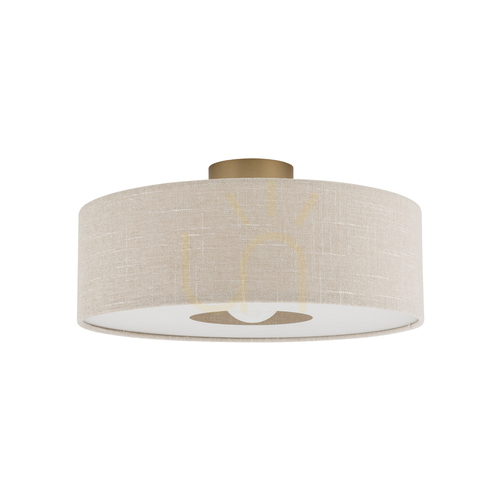
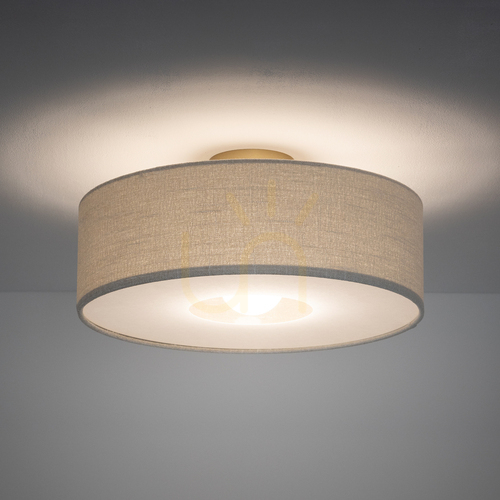
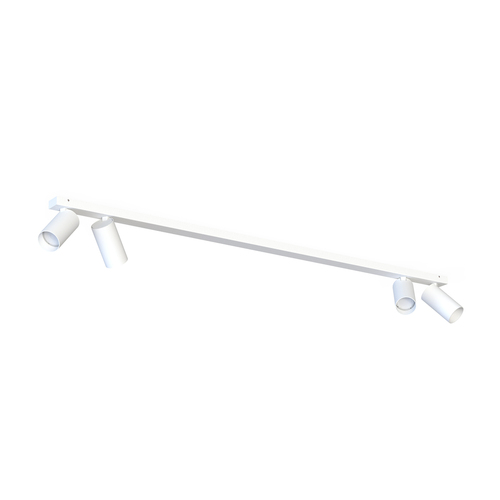
1. General light - the most common are lamps for the living room mounted under the ceiling: chandeliers, plafonds, ceiling lamps on strips or rails. Their task is to evenly illuminate the entire space so that you can move freely, clean up or meet at the table with your family. Here, a large living room lamp often appears as a strong focal point of the decor.
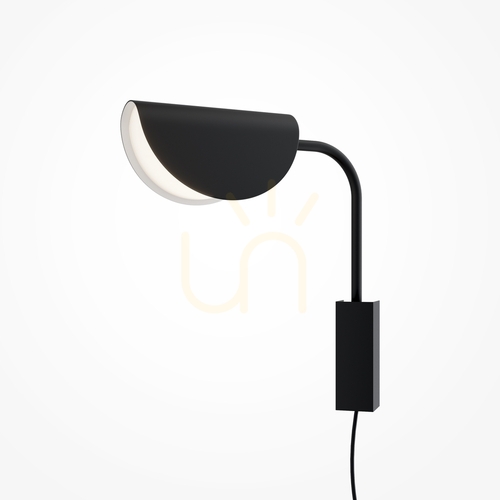
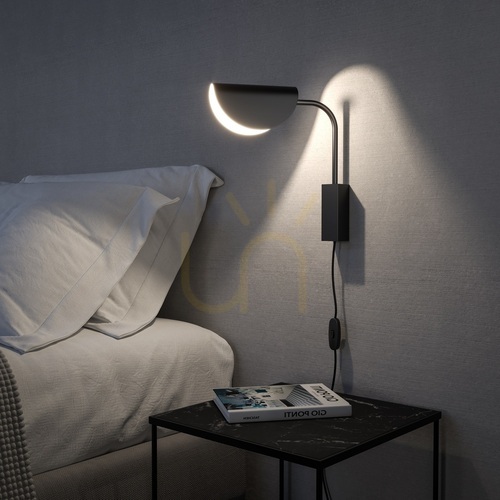
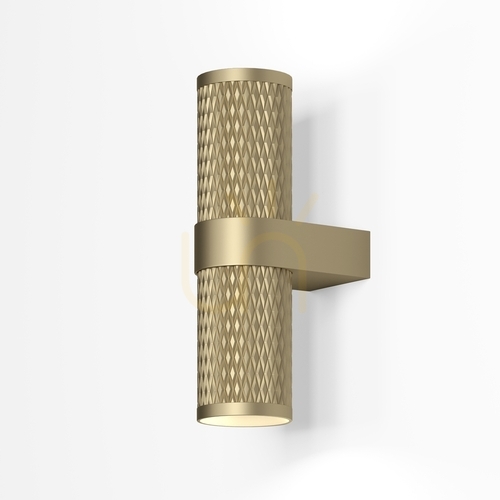
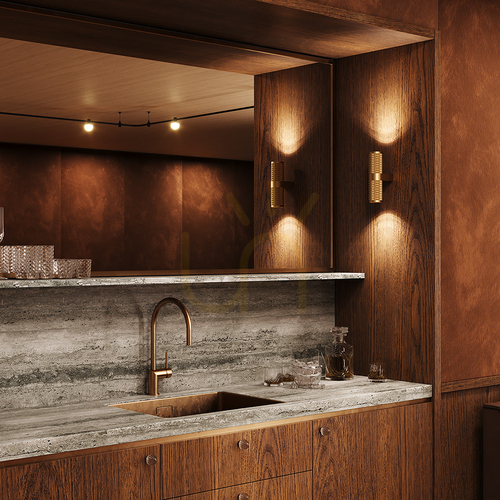
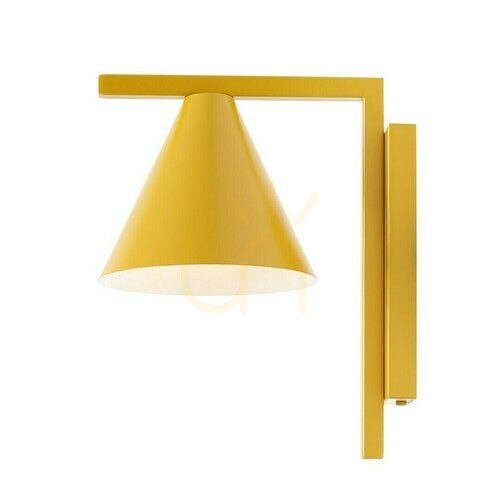
2. Zone light - this is where floor lamps, wall lamps, table lamps or directional spotlights come into play. Such lighting for the living room illuminates selected places: reading corner, desk by the window, space by the sofa, coffee table, display case with souvenirs. This allows you to use the living room comfortably without having to turn on the overhead light.
3. Decorative light - this is all kinds of LED strips, spotlights in shelves, niches or behind the TV, small spotlights to highlight the texture of the brick or decorative wall. Such lamps in the living room do not need to be very strong - their role is to build the mood and highlight the most interesting elements of the arrangement.
Only when we lay out these three layers of lighting, the choice of specific models becomes simpler. Instead of haphazardly browsing through catalogs, we look for specific solutions: for example, a large living room lamp as a general light, one floor lamp by an armchair, two table lamps on a dresser and delicate LEDs by a bookshelf.
How to choose lamps for the living room according to the size of the room?
The square footage has a huge impact on what living room lamps will work best. A small living room in a block of flats will need a different approach than a spacious living room in a detached house with a high ceiling.
In a small living room it is worth betting on visually light fixtures: subtle plafonds, simple ceiling lamps, small wall lamps and slender floor lamps. Too massive living room lamp in a small room can overwhelm the interior and disrupt proportions. If we dream of an elegant chandelier, a good compromise is a model with a delicate design - for example, openwork, made of glass or in a light color, which optically does not "eat" the space.
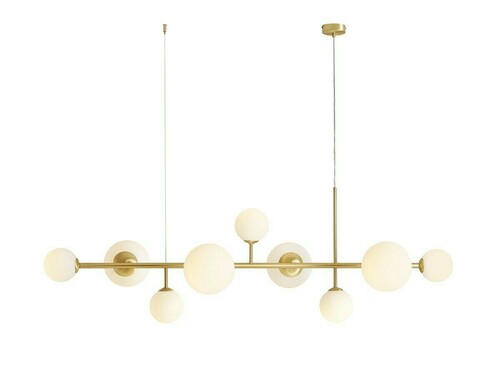
In a large living room, the situation is the opposite: here you can use expressive, large living room lamps without fear, especially over the lounge or dining area. The larger the space, the more useful is a large living room lamp that fills the ceiling and balances the proportions. Tall rooms are well accepted by long overhangs, cascading chandeliers or compositions of several lampshades at different heights.
It is also worth remembering that in narrow living rooms lounge lamps arranged linearly - for example, on ceiling rails - work well.. This allows the light to evenly illuminate the entire space, and living room lamps do not cluster in one place, but lead the eye deep into the room, visually extending it.
Interior style and the choice of lamps for the living room
The next step is to match the lighting to the character of the interior. The same living room lamps can look very different in different arrangements, so it is worth paying attention not only to function, but also to style.
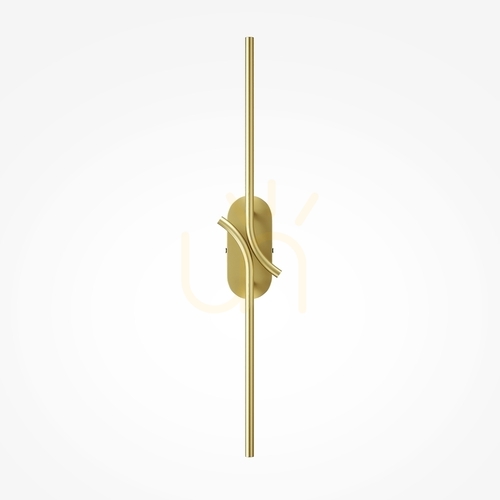
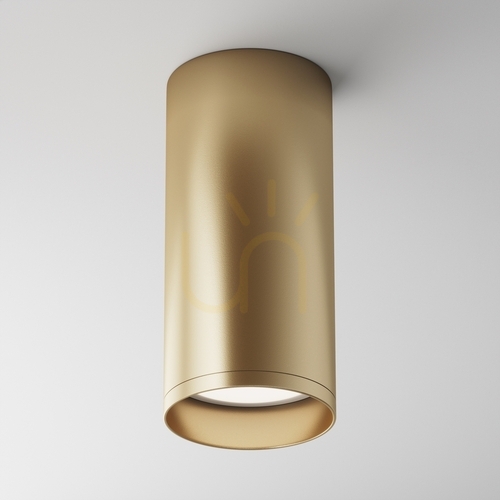
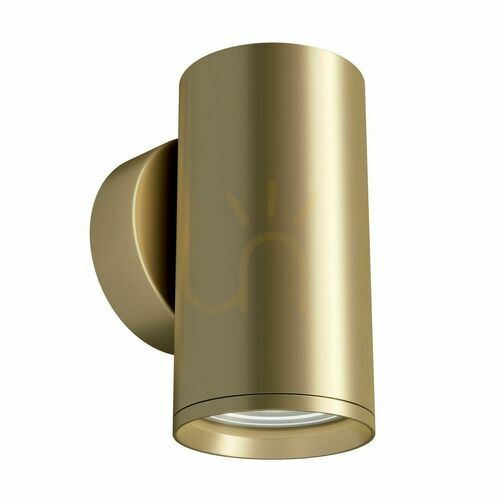
In a modern living room, simple, geometric forms, muted colors, matte finishes of metal and glass and minimalism of details look best. Here, interesting lamps for the living room in the form of LED rings, thin light beams or simple cylindrical lampshades will find a perfect match.. The lighting of the living room in such an edition is subtle, but expressive - it does not dominate, but complements the whole.
Loft or industrial living room likes raw materials: black steel, concrete, glass, sometimes wood with natural grain. In such an interior, the living room lamp can take the form of a metal truss, spotlights on slats, visible E27 decorative bulbs or lamps on adjustable arms. Loft style living room lighting is not afraid of strong accents - on the contrary, distinctive shapes emphasize the character of the space.
In Scandinavian living rooms, lamps for the living room combining white, wood, light grays and soft pastel accents work well. Soft textile lampshades, wooden floor lamp frames, simple plafonds and spotlight strips create a cohesive, bright whole. Such lamps in the living room emphasize the naturalness, coziness and lightness of the decor.
Classical, glamour or New York living room, on the other hand, is the realm of elegance. Here, large living room lamps with crystals, metal structures in gold or silver, decorative fabric shades and wall lamps with decorative details will be perfect. In such an interior, living room lighting can be the jewelry of the entire arrangement - a shining element that catches the eye from the threshold.
Light color and bulbs - the technical ABC of living room lighting.
The choice of the luminaire itself is only half the battle. Equally important is what light sources we use in the lamps. LEDs reign supreme in modern interiors - energy-efficient, durable and available in a variety of light colors. When planning the lighting of a living room, it is useful to know the difference between warm white light and neutral and cool white light.
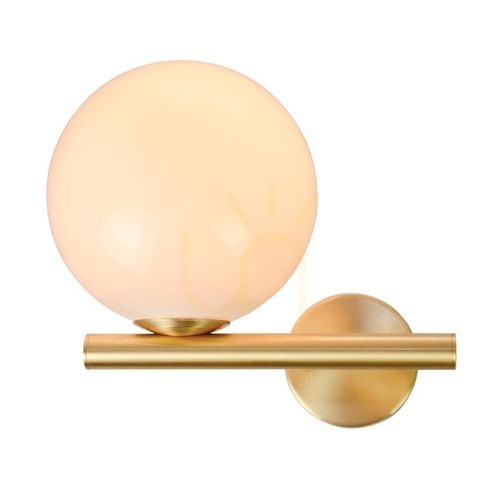
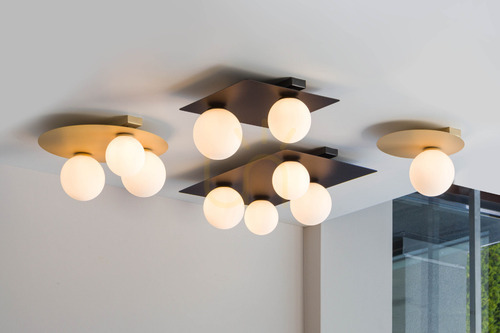
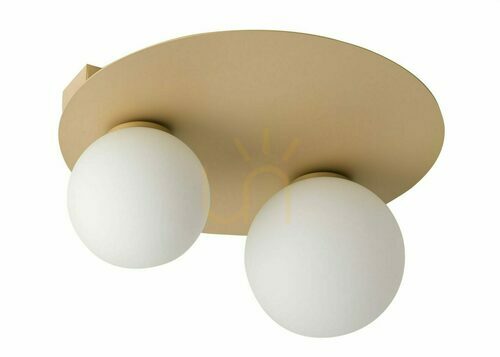
For lounge areas, such as the sofa, armchair, reading corner or dresser with decorations, a warm light color is best (approx.. 2700-3000K). It creates a cozy atmosphere, promotes relaxation and makes the interior look more homely. Often it is in these areas that interesting living room lamps with textile lampshades, milk shades or glass globes that softly diffuse light are used.
In more functional areas, such as the table in the dining area of the living room or the worktop, neutral light is useful (approx.. 3500-4000K). It allows you to see details well, does not distort the colors of dishes and decorations, and at the same time is not as cool as typical office light. In many homes, it is above the table that a large living room lamp appears, often with several light sources or adjustable intensity.
On the other hand, cool color (above 4000K) is the least used in the living room, but it is sometimes useful where we perform tasks that require precision - for example, at the desk set in the corner of the living room. Even then, however, it is worth ensuring that the cool light does not dominate the entire room, but appears in the form of an additional desk lamp or directional spotlight.
Not without significance is also the possibility of dimming. More and more people, when choosing lamps for the living room, opt for dimmer-compatible solutions. This allows you to turn a bright cleaning light into a moody twilight in one motion, perfect for an evening movie session. Lighting for the living room with a dimmer also allows you to achieve a wide range of atmospheres without having to install many additional lamps.
Interesting lamps for the living room - how to look for inspiration?
In the age of social media and interior design blogs, inspiration is at your fingertips. Just type "living room lamps inspiration", "interesting living room lamps", "modern living room lamp" or "loft living room lamps" in the search engine to see hundreds of photos of ready-made arrangements. It's a great starting point, but it's worth looking at these photos critically. What looks good in a photograph of a large apartment will not always work in a smaller apartment.
A good way to find your own style is to pay attention to recurring motifs. If a similar form of lamp appears in several of your favorite photos - for example, glass spheres, metal tubes or textile shades - it's a good signal that this is exactly the kind of living room lamps we'll also like in our own home. You can also pay attention to the color scheme: are you more drawn toward black and graphite, or rather gold, copper and beige? Such observations make it easier to choose when it comes time to buy.
It's also worth browsing the offerings of online stores, filtering products by style, color, number of light points or material. This way, instead of browsing through hundreds of fixtures, we narrow down the choice to a few that realistically fit our interior. Once you find the models you are interested in, you can compare their dimensions, shade spacing, suspension height or adjustability. These are important details that can easily be forgotten by just looking at pictures.
Large lamp for the living room - when is it worth opting for it?
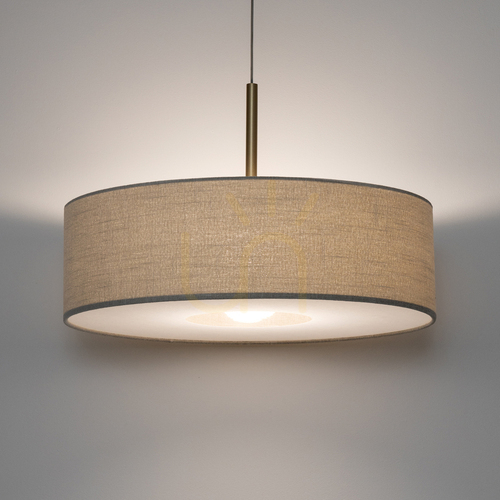
Some interiors even ask for an expressive focal point. Then a large lamp for the living room becomes not only a source of light, but also the main decoration. This works especially well in high rooms and in living rooms connected to the dining room. Hanging above the table, a large lamp for the living room marks the visual center where family life is concentrated.
When deciding on a large model, it is worth paying attention to several practical issues. First, proportions - too small a lamp over a large table will look disproportionate, but too huge a fixture in a low room can overwhelm the interior. Second, the height at which the lighting is suspended - the light should not glare into the eyes of those sitting at the table or obstruct the view of the rest of the living room. Third, the number of light sources - a large living room lamp with several bulbs gives you more opportunities to adjust the brightness than a single fixture.
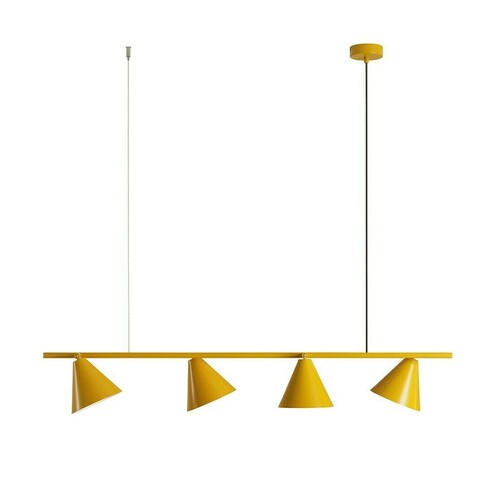
Sometimes a composition of several smaller lamps is a better solution than one large lamp. Three identical living room lamps hung in a row over a table or kitchen island look very modern and allow for more precise lighting of the countertop. It's also an interesting visual alternative if we can't find one perfect lamp, but we like the particular shape of a smaller fixture.
Living room lamps and the functions of the room
Modern living rooms are increasingly combining multiple functions: a TV area, a work corner, a place for a table, a space for children to play and a comfortable corner for relaxing. All this means that the lighting of the living room must be flexible. One lamp for the living room is not enough, so you should plan several independently controlled circuits.
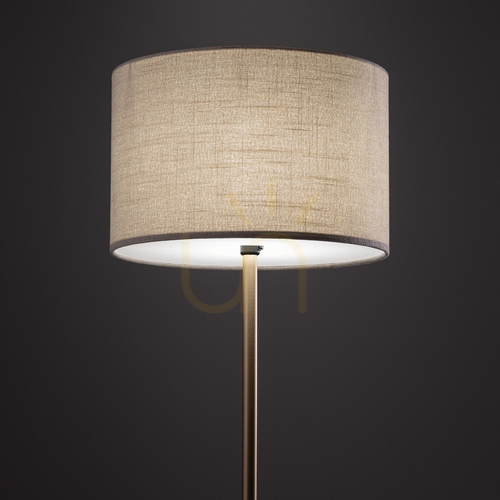
In the lounge area, a combination will work well: a top living room lamp with a warm color, a floor lamp by the sofa and a small table lamp on the dresser. This allows you to combine light sources at will - sometimes turn on just a floor lamp and a table lamp, other times use the full lighting.
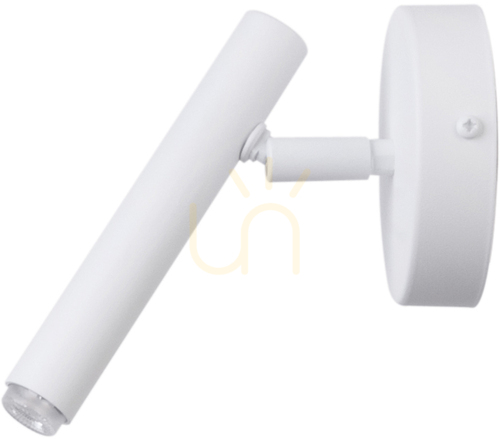
In a corner for working at a desk or table, you need more concentrated light. This is where a desk lamp or an adjustable spotlight on a rail comes in handy. It is important that the light does not reflect in the computer screen and does not tire the eyesight. On the other hand, by the TV, it is worth avoiding strong light aimed straight at the screen - softer LEDs behind the TV or low living room lamps placed on the side will be better.
If the living room also has a dining area, a living room lamp over the table will be key. Ideally, if it can be dimmed - bright light will be useful when working or playing board games, and softer lighting will create a cozy atmosphere during dinner.
The most common mistakes when choosing lighting for the living room
Although thousands of models are available in stores, in practice many people make similar mistakes when choosing lamps for the living room. Here are some of them:
- Limiting yourself to a single light source. One living room lamp in the middle of the ceiling is definitely not enough, especially in larger rooms. The effect is dark corners, lack of cozy light and a feeling of "office" brightness.
- Too strong, cold bulbs. Living room lighting should not resemble a doctor's office. Too cool colors and very high light intensity make the interior unpleasant and tiring to the eyes.
- Lack of stylistic consistency. Interesting lamps for the living room do not have to be from one collection, but it is good if they share some common denominator: color, shape, material. Too haphazard a combination of fixtures can create chaos.
- Poorly chosen lamp scale. It happens that someone falls in love with a striking model, but after hanging it, it turns out that it is too big or too small for a particular interior. Therefore, it is always a good idea to check the dimensions on the projections or "try on" the lamp, for example, by cutting its outline from cardboard and hanging it in the target location.
- Underestimation of decorative light. Many investors focus only on the top lamp for the living room, forgetting about the mood lighting points. Meanwhile, they are the ones that create the evening atmosphere in which we want to spend time.
How to combine fashion with your own taste?
Trends change from season to season. Once black living room lamps reign supreme, other times gold, then the classic white plafonds return. When looking at catalogs, it is easy to succumb to the pressure to necessarily have what is currently "on trend". However, it is worth remembering that we usually buy salon lamps for several years, not for one season. Therefore, more important than a fad is what we really like and fits into our daily lives.
A good solution is to combine a timeless base with fashionable accents. For example, the main lamps for the living room can be simple, universal and neutral in color, for the role of details will appear more interesting forms - a designer floor lamp, decorative table lamp or decorative light bulbs. If the fashion changes after a few years, it is easier to replace smaller pieces than the main ceiling lamp.
It is also worth remembering that the search terms typed into the search engine, such as "modern living room lamp", "Scandinavian living room lamps" or "loft living room lamps", are only a starting point. The final decision should come from how we live, what we like and what effect we want to achieve. We are the ones who will be looking at the living room lamps every day, not the catalog designer.
Examples of living room lighting arrangements
To get an easier idea of what a well-planned lighting arrangement for a living room might look like, let's look at a few sample scenarios:
- A small living room in a block of flats: a simple LED plafond on the ceiling as a general light, plus a floor lamp by the corner and a small table lamp on the dresser. In the evening, instead of an overhead light, only a floor and table lamp can be turned on, creating a cozy mood.
- Living room with dining room: above the table a large lounge lamp with several shades, above the lounge area a strip with three adjustable spotlights, and by the bookshelf a wall lamp with warm light color. In addition, LEDs behind the TV, which reduce the contrast between the screen and the background and are pleasant to the eyes during the screening.
- Loft living room: a rail system on the ceiling with several directional spotlights, an industrial living room lamp over the table, black wall sconces on the brick wall and decorative bulbs hanging on wires in the corner of the room. All consistent in color - black, graphite, warm light bulbs.
- Scandinavian living room: a white plafond by the ceiling, a floor lamp with wooden legs and a light lampshade by the sofa, two small table lamps on the dresser and discreet LEDs in the shelves with decorations. The living room lighting is bright, light and natural, perfectly matching the light walls and wooden floor.
Living room lamps and energy efficiency and ecology
More and more people are paying attention not only to appearance, but also to energy consumption. After all, the lamps in the living room are lit for many hours a day, especially in autumn and winter. Therefore, it is worth choosing solutions that are friendly to both the household budget and the environment.
The most popular choice today are LED sources. They consume many times less energy than traditional incandescent bulbs and offer a long service life. In practice, this means that living room lamps equipped with good quality LEDs can last for years without having to replace the light source. An additional advantage is low heat emission, which is important especially for closed shades and small rooms.
If you want even more control over energy consumption, you can reach for smart home systems. With them, living room lighting can be controlled via an app on your phone, programmed with lighting scenes and even set schedules for lights to turn on and off. Combined with dimmers, this gives great opportunities to create mood and save energy.
Summary - how to choose the perfect lamps for the living room?
Making a decision does not have to be stressful if you approach the subject step by step. First, it is worth considering what functions the living room has and how we divide it into zones. Then we choose the type of light for each of them: general, zonal, decorative. Then we determine the style and color scheme that best suits the interior, and only then do we look for specific models.
There is no one-size-fits-all answer to the question of what is the best lamp for the living room. For some it will be a simple plafond and a few wall sconces, for others a large living room lamp in the form of a crystal chandelier, and someone else will opt for minimalist spotlights on rails. It is important that the lighting for the living room should be consistent with the arrangement, comfortable for daily use and fit our habits.
It is worth remembering that even if at first the choice seems difficult, well-chosen lamps for the living room will quickly repay with comfort, beautiful light and a mood that is conducive to spending time with loved ones. Whether you opt for classic or modern, whether you type "living room lamp", "living room lamps" or "interesting lamps for living room" in the search engine, what ultimately matters is that when you turn on the light, you think: "yes, this is the atmosphere I wanted".