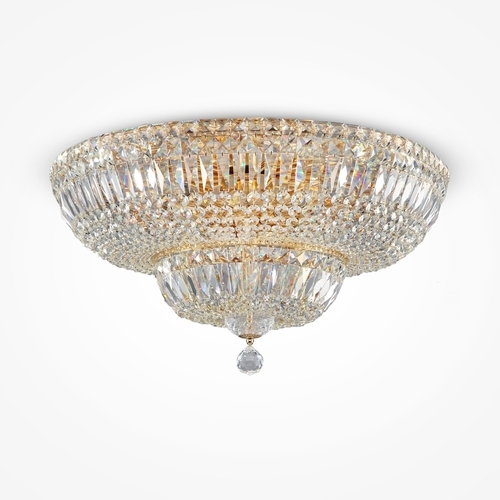
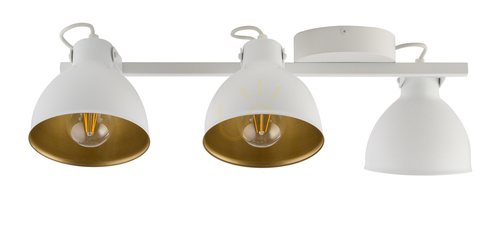
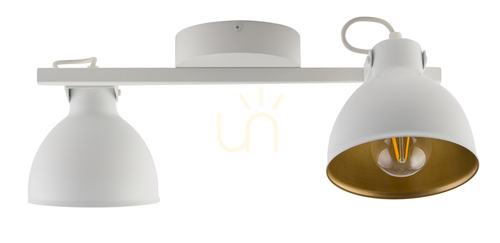
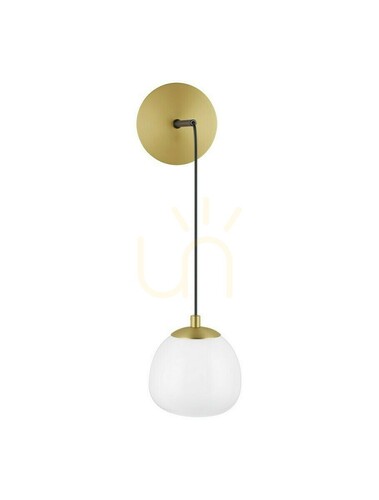
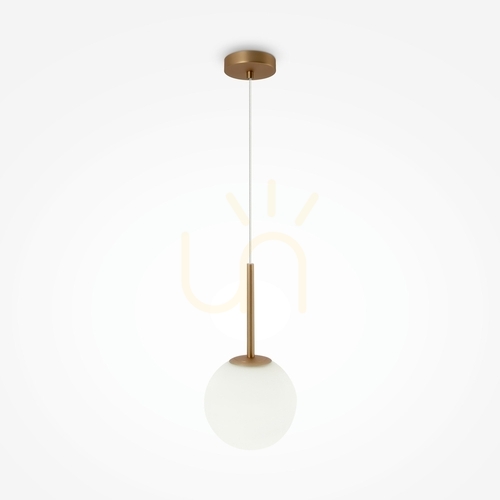
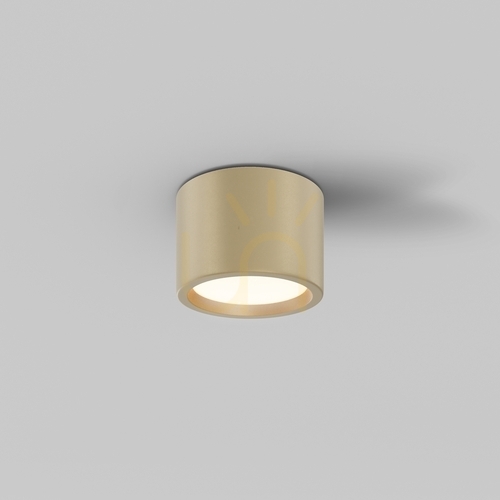
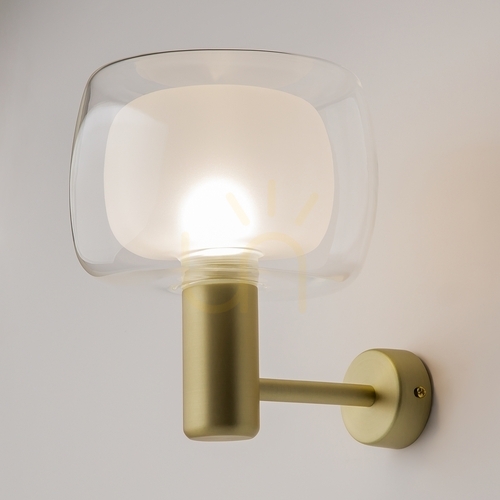
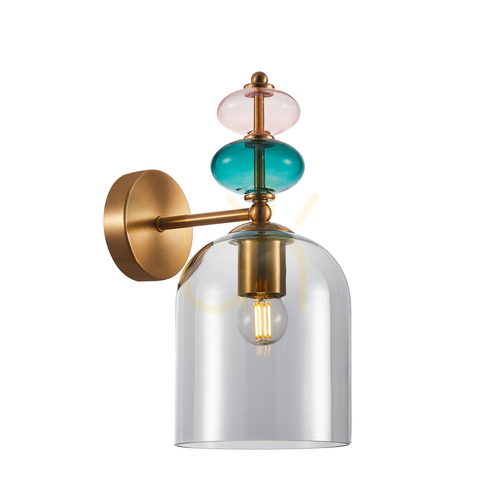
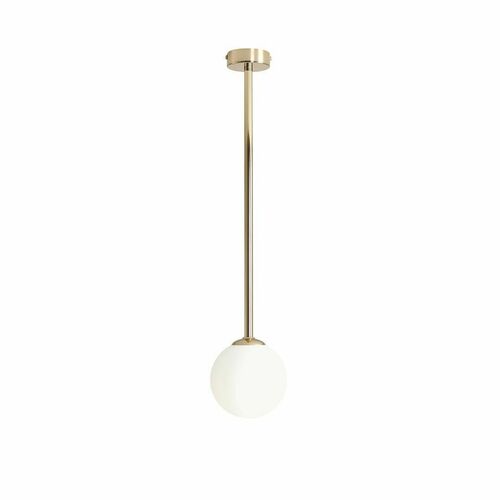
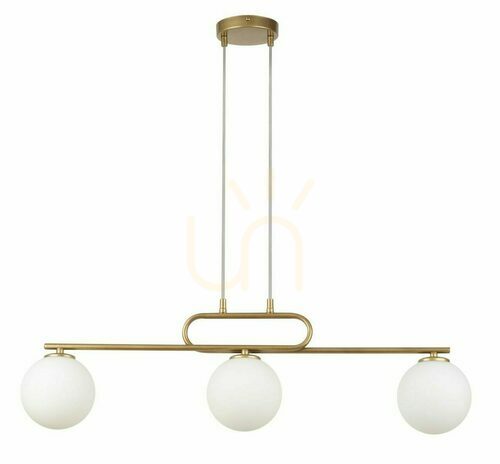
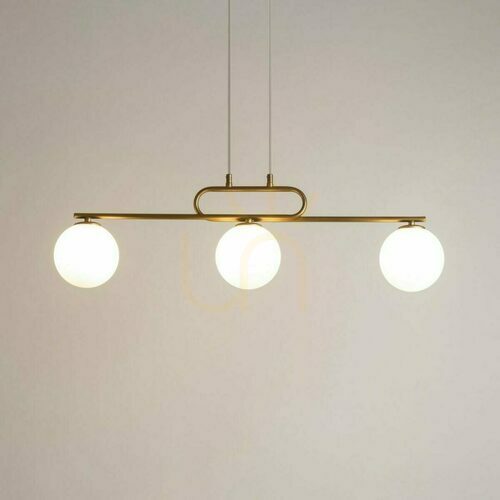
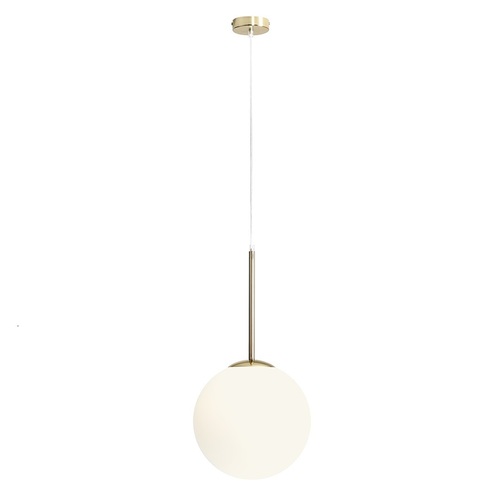
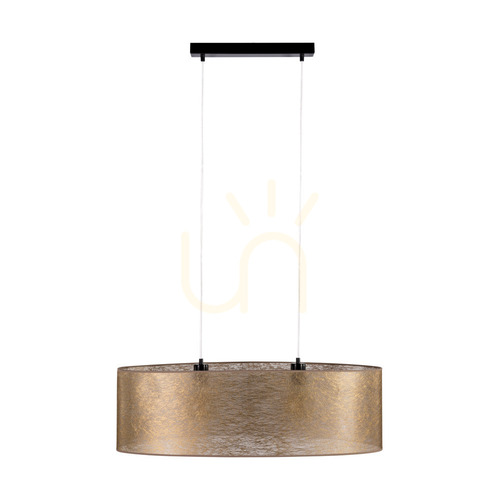
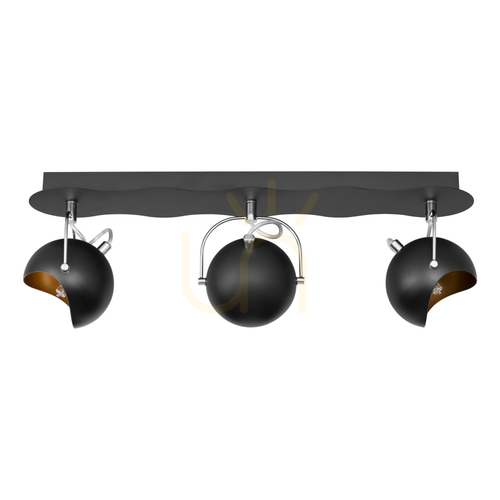
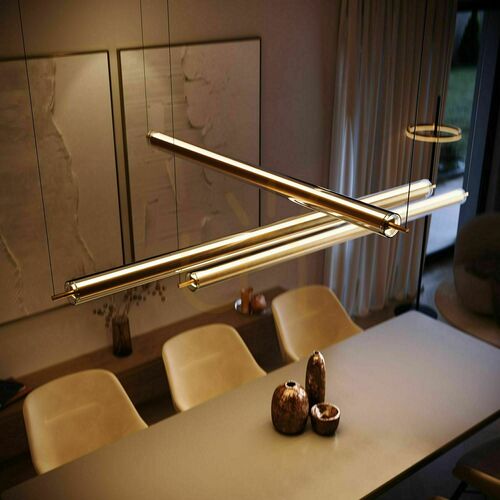
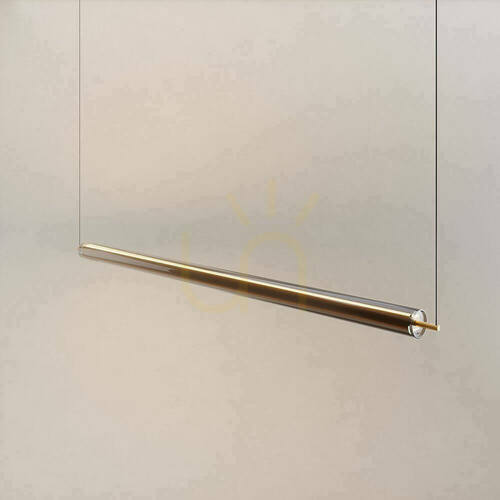
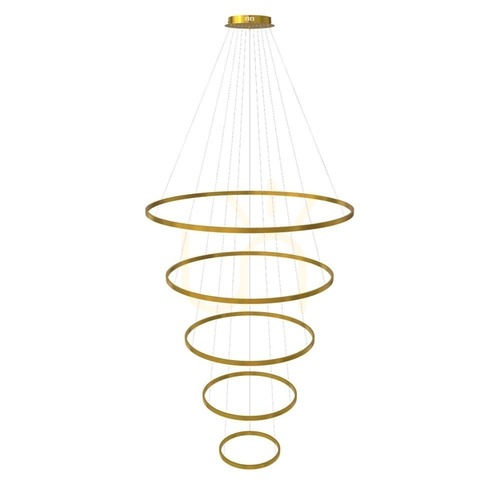
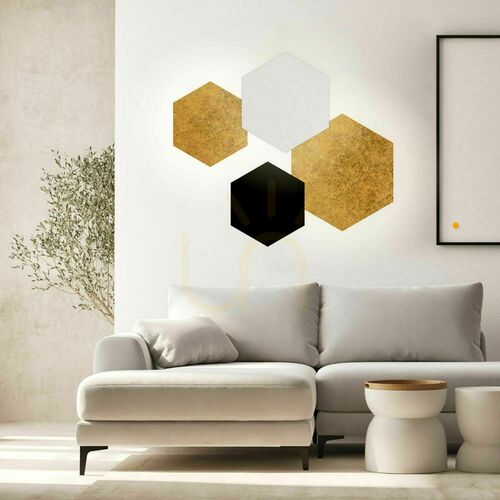
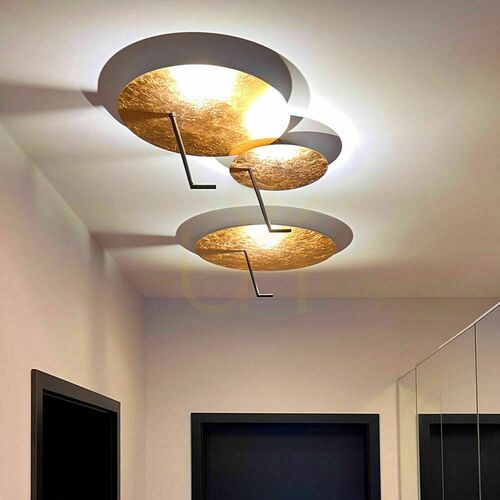
A gold ceiling light is any flush, semi-flush, pendant or chandelier fitting finished in a gold tone, from mirror-polished gold to satin brass and darkened antique brass. The finish does more than decorate. Metal throws light back with a warmer cast, so a room lit by gold feels softer in the evening than the same shape in white or chrome would.
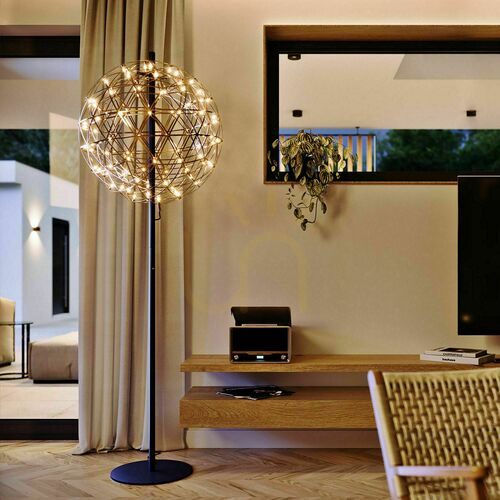
Gold also turns up on wall lights, floor lamps and table lamps, and most rooms look best when the ceiling fitting and one or two smaller pieces share the same tone. The useful questions come down to three: which gold, which type of fitting for your ceiling height, and which bulb.
Gold, brass and antique brass: what you are actually buying
Very few lights contain real gold. “Gold” on a fitting usually means one of the following:
-
Solid brass – heavy, naturally warm. Left unlacquered, it darkens and builds a patina over the years, which is exactly the point in a period home.
-
Plated steel – a thin electroplated layer of brass or gold. Smooth and bright, but abrasive cleaners will wear through it.
-
Gold paint or powder coat on steel or aluminium – tougher, usually matt, easy to live with.
-
Gold-tinted or metallised glass – often on shades and chandelier drops, giving amber reflections rather than metal shine.
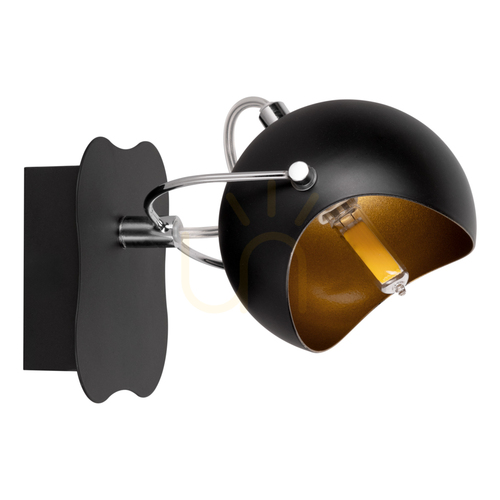
Polished gold sparkles and suits crystal, glass and art deco rooms. Satin or brushed brass looks calmer and hides fingerprints, which makes it the easier choice for kitchens and Scandi-style spaces. Antique brass brings a muted, slightly brown tone that sits well with dark wood and deep green walls. Black and gold together give a crisp outline with a warm glow inside.
Choosing a gold fitting for your ceiling
Many new-build homes in the UK have ceilings of around 2.4 m, while Victorian and Edwardian houses often reach 2.7–3 m or more. That height decides whether the light should hug the ceiling or hang from it. The figures below are typical guidance rather than rules, so always check the drop of the fitting itself.
| Fitting |
Best for |
What to check |
Colour temperature |
| Flush gold ceiling light |
Ceilings around 2.4 m, hallways, bedrooms |
A diffuser or opal glass so the bulb is not visible |
2700–3000 K warm white |
| Semi-flush |
Living rooms with standard ceilings |
Overall drop, usually short enough to keep headroom |
2700–3000 K, dimmable |
| Pendant |
Dining tables, kitchen islands, stairwells |
About 75–85 cm from table top to shade; at least 2.1 m clear over walkways |
2700–3000 K, up to 4000 K over a worktop |
| Chandelier |
Higher ceilings, period living rooms |
Diameter in cm roughly (room length + width in m) × 10 |
Warm filament bulbs, dimmable |
| Bathroom ceiling light |
Over the bath or shower |
BS 7671 asks for at least IPX4 in zones 1 and 2; IP44 is the common choice |
3000–4000 K |
Bulbs and the colour of gold
Under 2700–3000 K, gold looks rich and warm. Neutral white at 4000 K takes that warmth away and the metal can look flatter and more yellow. If you want brass and timber to read true, look for a colour rendering index of CRI 90 or higher.
Check the lamp holder before you buy. Many UK fittings use the B22 bayonet cap, others E27 or E14 screw, G9 capsules or GU10 spots, and some have integrated LED. A fitting with a holder lets you swap to a warmer or dimmable bulb later; integrated LED allows slimmer shapes but fixes the light colour for good. In a gold shade with an exposed bulb, a warm clear filament bulb looks far better than a bright frosted one.
Living with a gold finish
- Switch off and let the fitting cool before cleaning.
- Dust with a dry or barely damp microfibre cloth; for grease, a drop of mild washing-up liquid in water, then dry straight away to avoid marks.
- Avoid abrasives, solvents and ammonia-based sprays. Use brass polish only on bare, unlacquered solid brass – on lacquered, plated or painted gold it strips the finish.
- Repeat gold two or three times in the room – mirror frame, handles, a lamp base – so the ceiling light looks intended rather than stranded.
- Fixed wiring at 230 V is a job for a qualified electrician.
Frequently asked questions
What is the brightest light for a living room?
Brightness comes from the bulb or LED module, not the finish. As a rough guide, a living room needs around 100–200 lm per square metre in total, spread across a main ceiling light and lamps. A dimmable gold ceiling light lets one fitting cover both bright and cosy evenings.
Do I need an electrician to fit a gold ceiling light?
For anything wired into the ceiling, yes – use a qualified electrician. Swapping a like-for-like fitting is usually a short job, but bathrooms and new circuits bring extra rules.
Are gold ceiling lights a passing trend?
Brass and gold have come back into favour again and again because they suit both period and modern homes. Brushed and antique finishes date least; very bright polished gold makes a stronger statement.
What is the best layout for ceiling lights?
Use the gold fitting as the centrepiece and layer it with wall lights or lamps. Centre a pendant over the table rather than the room, and in long spaces use two smaller fittings instead of one large one.
Are gold ceiling lights suitable for a bedroom?
Yes. A flush or semi-flush fitting in satin or antique gold with warm 2700 K light is restful, and wall lights either side of the bed can replace bedside lamps.
Do modern and vintage gold ceiling lights need different bulbs?
Often, yes. Vintage designs show the bulb, so warm filament bulbs suit them; modern fittings tend to use integrated LED or hidden bulbs behind a diffuser.
Further ideas
For lighting the rest of the home, start with indoor lights. To carry the same warm finish to the bedside, see gold bedside lamps.