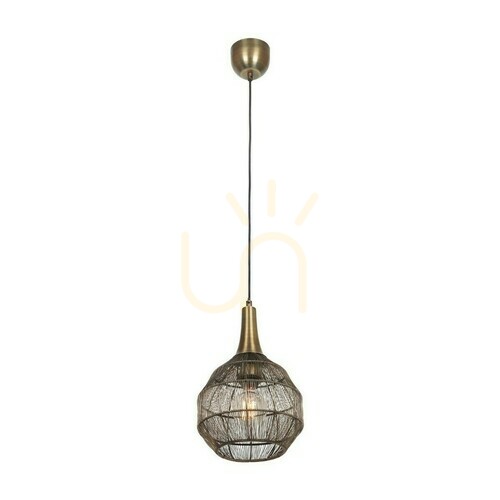
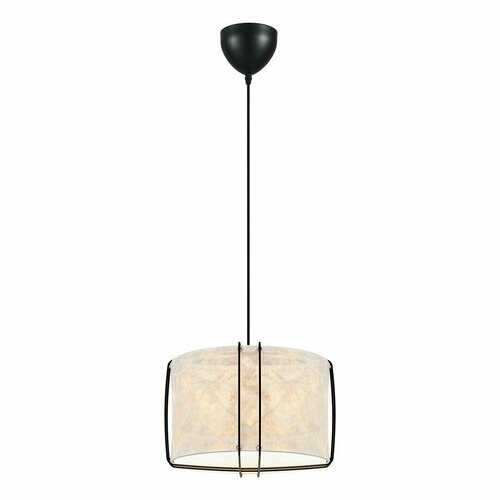
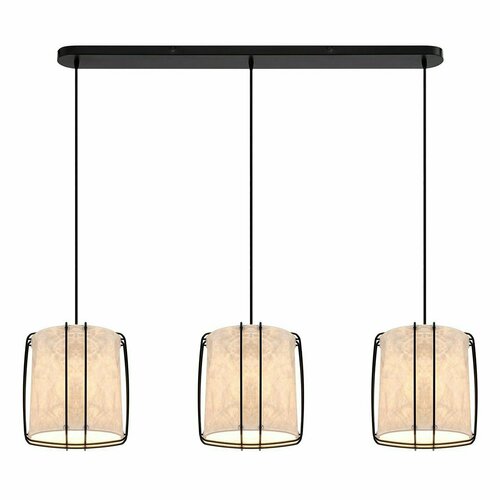
An oriental lamp lights a room twice: once with the light that escapes it, and once with the pattern it throws onto the walls. That is the whole point of the style. A Moroccan pierced brass lantern, a Turkish mosaic glass pendant, an Indian jali screen shade — each one is a container whose surface has been cut, drilled or glazed so that light leaves through a designed pattern rather than through a plain diffuser. Choose one for the shadows and you will be happy with it; choose one expecting a bright, even room and you will not.
Three traditions, three different effects
What each tradition does to the light
| Tradition |
Technique |
Pattern on the wall |
Light through the fitting |
| Moroccan lantern |
Brass or nickel-plated sheet, hand-pierced with a punch, sometimes with coloured glass panels behind |
Sharp geometric stars and lattice, thrown several metres |
Low. Most of the surface is solid metal |
| Turkish mosaic |
Small pieces of coloured glass and bead set in plaster or resin on a glass globe |
A dense scatter of coloured dots rather than a defined shape |
Moderate, and strongly tinted by the glass colours |
| Indian jali screen |
Pierced or fretted panels in brass, timber or stone, in repeated geometric or botanical figures |
A regular grid, softening with distance from the wall |
Moderate, and directional if the frame is open at top and bottom |
| Painted or etched glass shade |
Coloured or frosted glass with a painted or acid-etched figure |
Little or none; the pattern stays on the shade |
High, since the glass diffuses rather than blocks |
How the shadow play actually works
A pierced metal shade behaves like a pinhole projector. Every hole in the surface casts a beam, and the size and sharpness of the patch that beam makes depends on two things: how big the light source is, and how far the wall is from the shade. A small, near-point source — a clear filament lamp or a compact LED capsule — throws hard-edged stars you could photograph. A large frosted globe fills the shade with light from many directions at once, the beams from adjacent holes overlap, and the pattern turns to mush. This is the single decision that determines whether a Moroccan lantern looks like the photograph.
Distance does the rest. A pendant hung 40 cm from a wall throws a small, crisp pattern; the same fitting in the middle of a room throws a large, soft one across the ceiling. If the pattern is the reason you are buying, hang the fitting closer to a surface than you normally would, and give it a plain wall to work on. Patterned wallpaper and a pierced lantern cancel each other out.
This is a different mechanism from a woven shade, which scatters light through an irregular weave and produces a soft, textured shadow with no repeat. If the softer version is what you want, the woven end of the same idea is on boho ceiling lights.
Choosing the lamp is choosing the pattern
-
Source size. Clear, small, and single. A clear filament lamp, a G9 capsule or a compact LED — the smaller the lit area, the sharper the star.
-
Colour temperature. 2200 K to 2700 K. Brass wants warm light; under 4000 K a hand-beaten brass lantern goes the colour of a filing cabinet.
-
Output. Lower than you think. A pierced lantern lets out perhaps a fifth of what goes in, but the light that escapes is concentrated into bright points, which are dazzling if the lamp is over-specified. 400 lumens is usually plenty.
-
Position of the lamp inside. Centred, not high in the shade — an off-centre source throws the pattern unevenly and the fault is impossible to correct afterwards.
Which fitting for which room
The style covers the whole range of indoor fittings, and each form does something different with the same technique.
Pendants and lanterns
The classic form, and the one that throws pattern onto the ceiling as well as the walls. In a hall, a single hanging lantern at 210 cm or above is the strongest use of the style. Over a dining table, hang it 75 to 85 cm above the top and accept that it is atmosphere — add another layer if the table is also used for work.
Wall lights
Pierced brass at 160 to 175 cm throws its pattern up the wall behind it and across the adjacent wall, which is why a pair in a corridor is more effective than one in the middle of a room. Keep the projection under 12 cm in a narrow hall.
Table and floor lamps
A pierced or mosaic table lamp beside a sofa lights the wall behind it and casts pattern at seated eye level, which is the most comfortable place for it. This is the easiest way to introduce the style into a room that already has its main lighting settled.
Candle lanterns and floor lanterns
The same pierced bodies, without wiring. Worth knowing that the pattern from a real flame moves, which no electric source reproduces.
Living with pierced brass
Hand-pierced brass has burrs and slightly uneven edges — that is evidence of the punch, not of poor quality, and machine-cut work is recognisable by being perfectly regular. Unlacquered brass darkens over years and can be brought back with a metal polish, but many people prefer it dark. Lacquered brass keeps its colour and must never be polished, since polish cuts the lacquer and leaves a patchy surface. Dust with a soft brush; a cloth catches on the piercing and leaves fibres behind.
Common questions
Will an oriental lamp light a whole room?
Rarely. A pierced or mosaic fitting is a decorative light — most of its output stays inside the shade. Plan it as the character in a room that already has a working light source, not as a replacement for one.
Why is my pattern blurry?
Almost always the lamp. A frosted or opal bulb inside a pierced shade destroys the pattern, because light arrives at each hole from many directions at once. Swap to a clear lamp with a small filament or a compact capsule and the pattern comes back.
Does coloured glass reduce the light a lot?
Yes, and unevenly by colour. Blue and green absorb heavily, amber and honey much less. A mosaic globe with a lot of blue in it is a low-output fitting whatever lamp goes inside.
How does this relate to Tiffany and Art Nouveau?
They share an interest in coloured glass and hand technique but come from different places and periods. The American leaded-glass tradition is on Tiffany ceiling lights, and the European botanical style of the same decades on art nouveau lamps.
Does the style work in a plain modern flat?
Better than in a heavily decorated room, because it needs empty wall to project onto. One lantern against plain plaster does more than three in a room full of pattern.