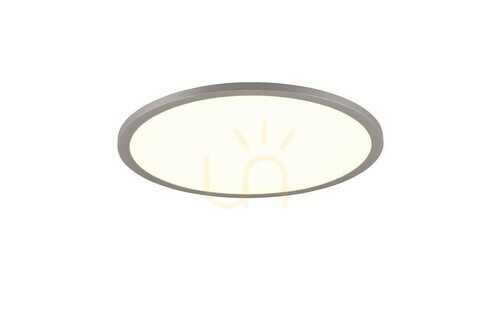
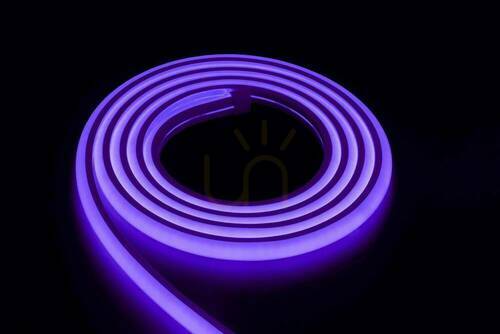
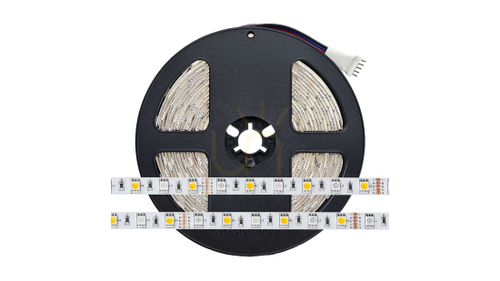
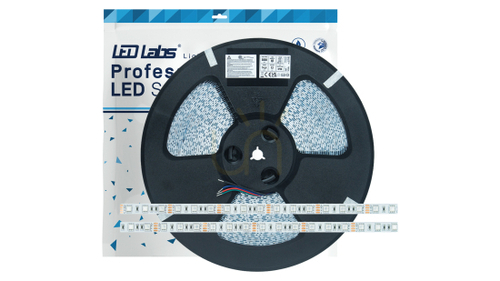
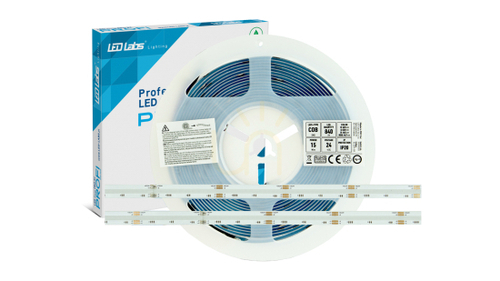
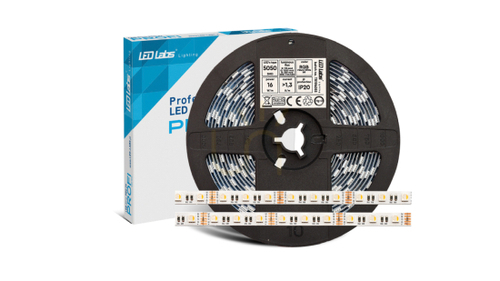
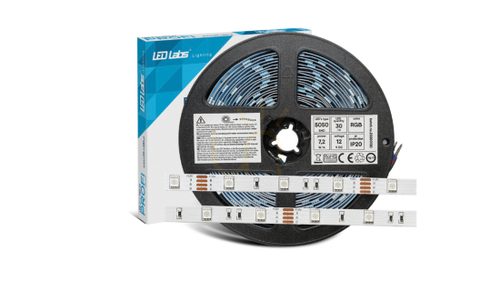
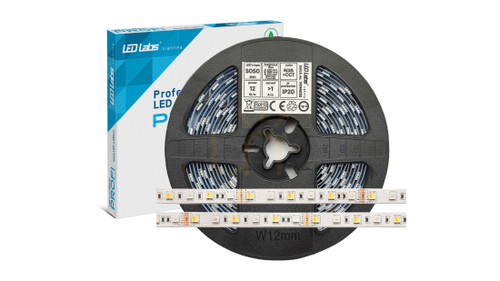
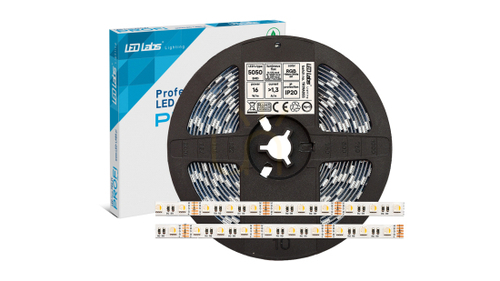
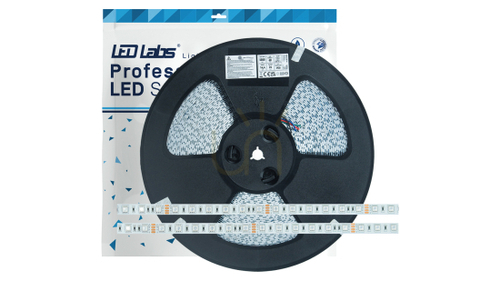
RGB LED lights build their colour from three tiny emitters – red, green and blue – sitting side by side in every LED, each dimmed independently by a controller. Mix them at different strengths and a single indoor light can go from deep blue to amber to something close to white, all from a remote, an app or a voice command.
Indoors, that ability turns up in many shapes: flush ceiling lights with a coloured halo, wall lights that wash the plaster with colour, corner floor lamps, bedside lamps and plain-looking bulbs that screw into a lamp you already own. What they share is the light engine. What separates a good one from a gimmick is how it handles white, how it is powered and how you control it.
How to choose an RGB light for a room
Start with the job. If the fitting is going to be the main light in a bedroom or living room, colour is the bonus and white is what you will use every day. In that case look past the letters RGB to RGBW (a dedicated white chip) or RGB+CCT, sometimes written RGBWW or RGBCW, where the white is tunable – typically from 2700–3000 K for a warm evening glow up to around 6500 K. Plain RGB makes white by running all three colours at full power, and the result is cold and slightly blue or pink, with skin tones looking washed out.
If the light is purely for atmosphere – a corner of the lounge, a games room, the wall behind the TV – plain RGB is fine, and a floor or table lamp on a UK 3-pin plug means no wiring at all.
| Type |
Typical output in white |
Power |
Best use |
| Ceiling light or panel |
18–50 W, roughly 1400–5000 lm |
hard-wired, 230 V |
main light with a colour accent |
| Wall light |
a few watts up to around 20 W |
hard-wired or plug-in |
washing a wall, landings, bedrooms |
| Floor or corner lamp |
usually 10–25 W |
3-pin plug, often via an adapter |
lounges, gaming corners, behind a sofa |
| Table or night light |
under 1 W to a few watts |
USB 5 V, rechargeable or batteries |
bedsides, children's rooms, desks |
| Smart bulb (E27, E14, GU10) |
E27 around 8–10 W, about 800 lm |
existing lamp holder |
adding colour to a lamp you already like |
One thing the spec sheet will not tell you plainly: lumens are quoted for white. In a pure red, green or blue only one of the three channels is working (two for colours like yellow or magenta), so a ceiling light that floods a room in white gives a much softer glow in colour.
Controllers, apps and making several lights work together
An infrared remote needs a clear line of sight; a radio-frequency remote works through furniture. Bluetooth apps pair directly with your phone but rarely reach beyond the room. Wi-Fi lights add schedules, scenes and voice control, though most only connect on the 2.4 GHz band. Zigbee is reliable but needs a hub or bridge, and Matter lets lights from different systems sit in one app.
If you are planning several RGB lights in one space, keep them on one platform. Lights from different apps will not change colour together, and even the same setting can look different between two makers, because LED batches vary in tint. An RGBW light also needs a four-channel controller – a three-channel RGB remote will not drive its white.
Installation, switches and safety
Ceiling and wall fittings connect to the lighting circuit like any other light. In the UK, fixed wiring follows BS 7671, and in England and Wales some work is notifiable under Part P, so use a qualified electrician. Do not put an integrated RGB fitting on a traditional wall dimmer unless the maker says it is compatible; brightness belongs to the remote or app. A smart light cut off at the wall switch drops out of its app, so a memory function that restores the last colour on power-up is worth having if the switch is going to be used.
Fast flashing and strobe modes look fun for a minute but are tiring, and they can trigger seizures in people with photosensitive epilepsy. In the late evening, dim warm shades are kinder to sleep than bright blue. Clean fittings switched off, with a dry cloth. Integrated LEDs are not replaced one by one, so check the rated life – usually quoted at 15,000–50,000 hours – and the warranty.
RGB LED lights: questions people ask
What does RGB stand for in lighting?
Red, green and blue – the three primary colours of light. Each has 256 brightness steps, which gives about 16.7 million combinations.
How do I check whether an RGB LED is working?
Set the light to pure red, then pure green, then pure blue. If one of them is missing or flickers, that channel or its driver has failed; if only the colours mix oddly, try re-pairing the remote or resetting the controller first.
Can an RGB light give proper white?
Plain RGB gives a cool, bluish white that is fine for effect but poor for reading. For warm, natural white choose RGBW or RGB+CCT.
What is an RGB light controller?
The small electronic unit that sets the brightness of each colour channel. In most lamps it is built in and you talk to it through a remote, a touch button or an app.
Is RGB lighting just for a PC setup?
No. Gaming rigs made it popular, but the same technology sits in ceiling lights, wall lights and lamps for lounges, bedrooms and hallways.
Are RGB lights expensive to run?
No. A bedside lamp draws a few watts and a large ceiling light up to around 50 W at full white; colour modes use less.
If you want to run colour along a shelf, a bed frame or the back of a TV, see RGB LED strip lights. For every other kind of fitting for the home, browse indoor lights.