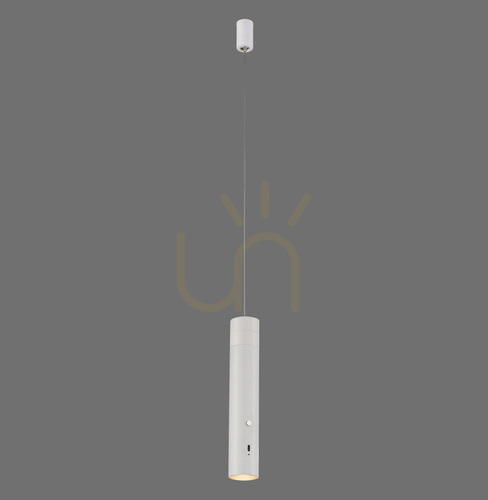
A battery operated pendant light hangs from a hook rather than a ceiling rose, so it can go exactly where you need it – over a table that isn't centred under the old light fitting, above a kitchen island added after the wiring was done, or in a summerhouse with no power at all. A rechargeable battery or a set of AA cells does the work, and nobody has to lift floorboards or chase cable into plaster.
The trade-off is simple: a pendant running on a battery is a light for one spot, not for the whole room. Treat it as table or accent lighting and it does the job well.
Are they actually any good?
For the right job, yes. A decent rechargeable pendant gives warm, dimmable light at table height, keeps going through a power cut and moves house with you. Where buyers get disappointed is in expecting it to replace a main ceiling light. Typical output sits somewhere around 100–300 lumens, which is plenty over a table for two or a reading chair and far too little to light a 20 m² living room. Runtime is the other limit: the brighter you run it, the sooner it needs charging.
How they are powered
-
Built-in lithium-ion battery charged by USB, usually USB-C on newer designs, in roughly 2–4 hours. On many pendants the battery and LEDs sit in a module that unclips from the shade or ceiling plate, often magnetically, so only the module comes down to charge.
-
Two swappable modules – one lights the table while the other charges. Handy for a pendant that is on every evening.
-
AA batteries, often four in a separate pack and sometimes with a timer that runs for six hours and switches on again the next evening. Good for a pergola or summerhouse you only use at weekends.
-
A rechargeable LED bulb in an ordinary lightweight pendant, usually with a remote. It turns a favourite shade into a cordless one.
Reading the spec sheet
Manufacturers tend to quote runtime for the lowest setting, so compare lamps at the brightness you will really use.
| Spec |
Typical range |
What it means at home |
| Brightness |
about 100–300 lm |
mood light at the low end; 200 lm and up for eating or cards |
| Runtime |
about 4–6 hours on full, dozens of hours dimmed |
several evenings per charge on a middle setting |
| Battery capacity |
about 1,600–5,200 mAh |
more capacity, longer runtime, a heavier module |
| Charging |
USB or USB-C, about 2–4 hours |
a standard UK USB plug does the job |
| Colour temperature |
2700–3000 K |
warm white, the tone you expect over a dining table |
| Drop |
from about 50 cm to 2 m, often adjustable |
set it to the table without shortening the cord |
| IP rating |
IP20 indoors, IP44 or higher outside |
IP44 at least for a porch, pergola or open-sided gazebo |
Think about controls as well. A touch dimmer on the shade works when the pendant hangs low over a table. If it hangs higher, a remote, an app or a timer saves you reaching up every night.
Hanging it
Most cordless pendants weigh a few hundred grams, typically up to about half a kilo, so a ceiling hook in a plasterboard fixing is usually enough. Some come with a self-adhesive ceiling plate that is meant to peel off cleanly, which suits renters. Over a dining table, aim for the bottom of the shade around 60–75 cm above the tabletop: high enough not to block faces, low enough for a battery-sized light output to reach the plates. Keep the battery module within easy reach. If charging needs a stepladder, the lamp will soon stay off.
If you would rather have a mains pendant over the table, moving the ceiling point is a job for a qualified electrician working to BS 7671, not a weekend project.
Looking after the battery
A lithium-ion cell normally lasts a few hundred full charge cycles. Heat and running it completely flat do the most harm. Cold reduces runtime for a while and charging below about 0 °C damages the cell, so bring a pendant in from the summerhouse over winter. Before a long break, leave it about half charged and top it up every few months. If yours runs on AA cells and you use it nightly, rechargeable NiMH batteries save money and waste.
Frequently asked questions
Are there any battery operated chandelier lights?
Yes, usually small multi-arm or crystal-effect designs with LED candles or a battery pack hidden in the canopy. They give decorative sparkle rather than the output of a mains chandelier.
What is the difference between a hanging light and a pendant light?
In everyday use there is little difference. A pendant usually means a single shade on a cord, rod or chain, while ‘hanging light’ also covers chandeliers, lanterns and clusters.
Are battery hanging lights good for a bedroom?
They work well beside or above a bed, especially with a remote, as there is no flex running down the wall. Choose warm 2700 K light and a dimmer.
Can I get a battery operated pendant light with a remote?
Many have one, as do most rechargeable bulbs. A remote usually switches, dims and sometimes sets a timer.
How long does a rechargeable pendant light last on one charge?
A few hours on full brightness and up to dozens of hours dimmed, depending on battery capacity.
Do I need an electrician to fit one?
No. It does not connect to the mains, so a hook or ceiling plate is all the installation it needs.
To compare shapes and shade sizes regardless of how they are powered, start with pendant lights. To keep a pendant you already love and simply cut the cord, consider rechargeable light bulbs instead.