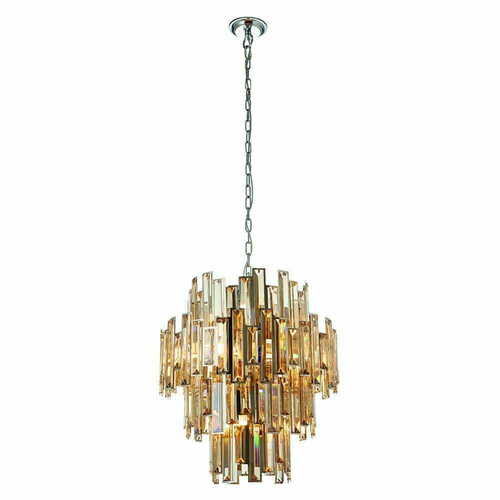
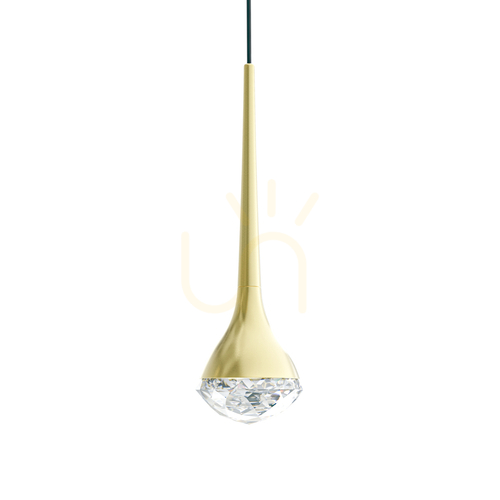
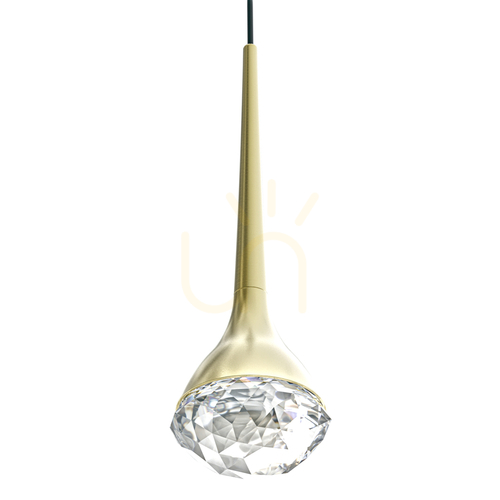
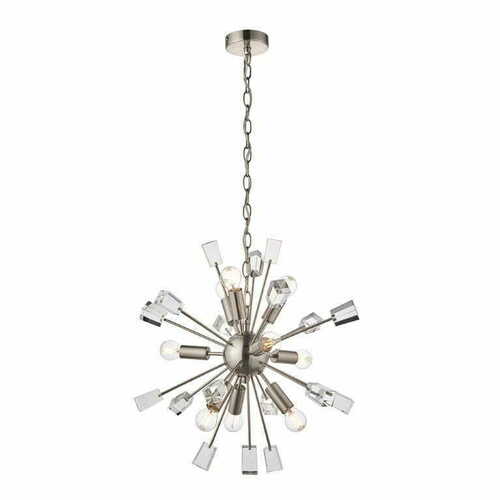
Crystal is the one pendant material where the specification and the effect are directly connected. How much the fitting sparkles is not a matter of taste or price bracket — it follows from what the pieces are made of, how they are cut, and what bulb you put behind them. Three facts explain almost everything you will see on a product page.
Lead crystal, K9 glass and acrylic
Lead crystal contains at least 24 per cent lead oxide, which raises the refractive index to about 1.55 and above. A higher refractive index bends light more sharply as it enters and leaves each facet, and that is literally what "fire" is — the flashes of separated colour you see as you move past the fitting. More lead also means more weight and a softer material that takes a deeper cut.
K9 is an optical crown glass with no meaningful lead content and a refractive index around 1.52. The difference sounds small and it is visible: slightly less colour separation, slightly cooler glints. In exchange it is lighter, harder-wearing and much cheaper, which is why it dominates the mid-market. Acrylic is a polymer — lightest, cheapest, effectively unbreakable, and it does not sparkle in the same way at all. It is the right answer in a child's room and the wrong one if the sparkle is the point.
You will also see origins quoted: Bohemian crystal from the Czech lands, Asfour from Egypt. These are real manufacturing traditions rather than technical grades. Treat a bare "Swarovski-style" claim as a description of the look, not of the component.
The bulb decides the sparkle
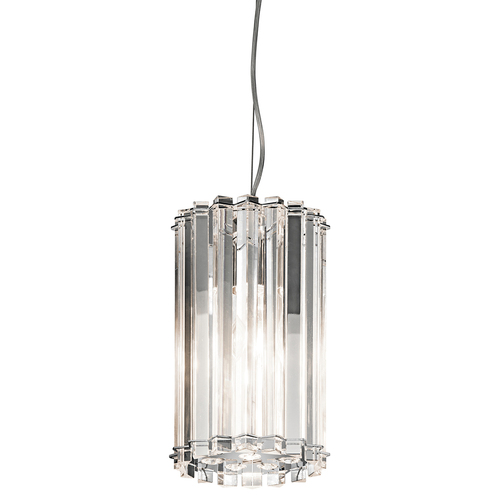
This catches people out more than anything else here. Cut crystal works by taking a small, bright source and splitting it across dozens of facets. Give it a clear bulb with a compact filament and every drop throws sharp points of light. Give it a frosted or opal bulb and the source becomes large and diffuse, the facets have nothing sharp to refract, and an expensive fitting looks like a slightly shiny lampshade.
So: clear bulbs, small envelopes — a clear candle or golf-ball LED in E14 or a clear G9 capsule is the usual pairing. The trade-off is glare, since a clear bulb in an open fitting is visible. That is normally solved by hanging the fitting high enough, or by dimming.
Warm or cool, and how it changes the room
Colour temperature changes the character of the same fitting completely. At 2700 to 3000 K the crystal reads amber and the sparkle is soft and golden — the traditional dining-room effect. At 4000 K and above the glints read white and the whole fitting looks brighter, crisper and more clinical. Neither is wrong; they suit different rooms, and it is worth deciding which you want before you buy bulbs, because it is a cheaper decision than changing the fitting.
What the ceiling has to hold
Crystal is heavy, and this is the one practical constraint that is easy to underestimate. A modest crystal pendant of a few kilos is fine on a standard ceiling rose. Once a fitting gets past roughly 3 to 4 kg it should not be hanging from the flex and the rose alone — it wants a hook or bracket fixed into a joist, or a noggin or plywood plate fitted between joists. Heavy-duty plasterboard anchors are rated for a surprising amount, but a joist fixing is the sensible default for anything chandelier-sized. Check the stated weight before you fall in love with a fitting; it appears on the specification for a reason.
Pendant or chandelier
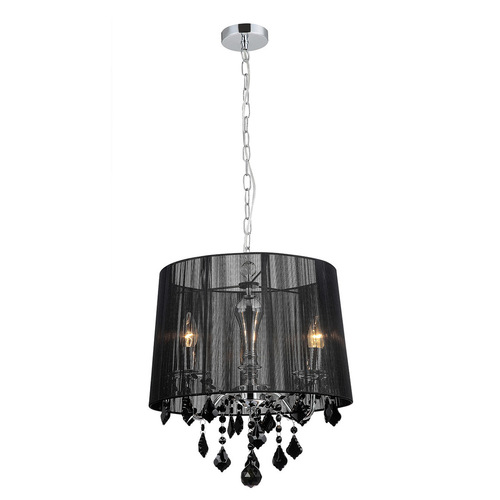
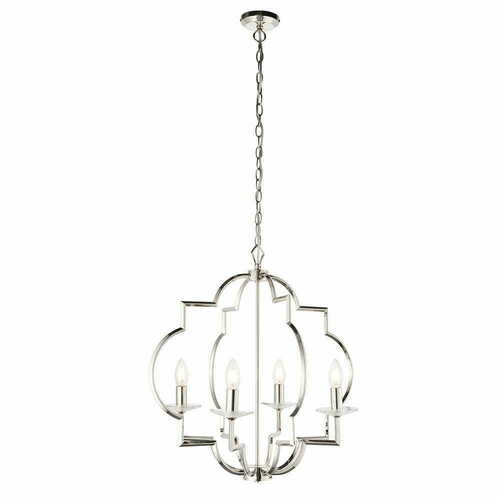
The words blur in marketing copy, but the distinction is useful when you are searching. A pendant is a single fitting on one cord or rod, usually with one lamp or a few close together. A chandelier has arms, branches or tiers and several lamps spread across them. A crystal pendant suits a smaller room, a stairwell or a row over a counter; a chandelier wants a dining table or a hall with the height to carry it. The material and everything above applies equally to both.
Common questions
How do you clean a crystal pendant?
Switch it off and let it cool. Wipe each drop with a lint-free cloth dampened with a weak solution of isopropyl alcohol in distilled water, and dry with a second cloth. Never spray liquid onto the fitting, where it runs into the lampholders.
Is K9 crystal real crystal?
It is optical glass rather than lead crystal. It is a genuine, good-quality material and it sparkles well; it simply does not have the refractive index or the weight of a full-lead piece.
Why doesn't my crystal light sparkle?
Almost always the bulb. Frosted and opal bulbs cannot produce facet glints. Swap to clear bulbs with a small filament and the fitting changes character immediately.
Are crystal pendants only for traditional rooms?
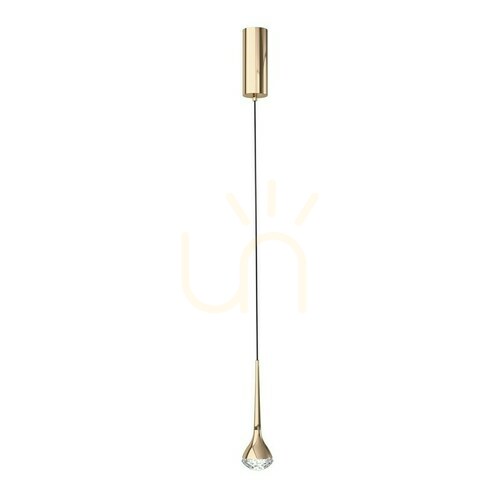
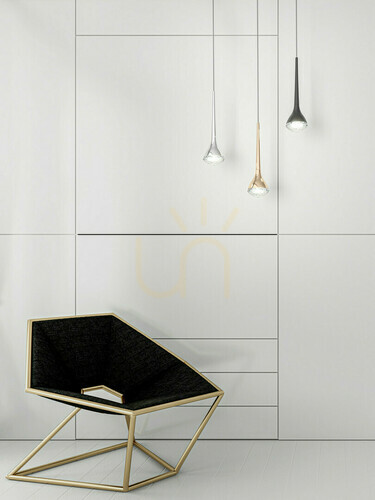
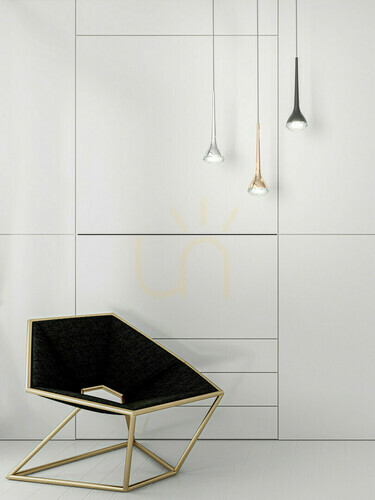
No. A single geometric crystal drop on a slim black rod is a very different object from a tiered chandelier, and reads as modern in a plain room.