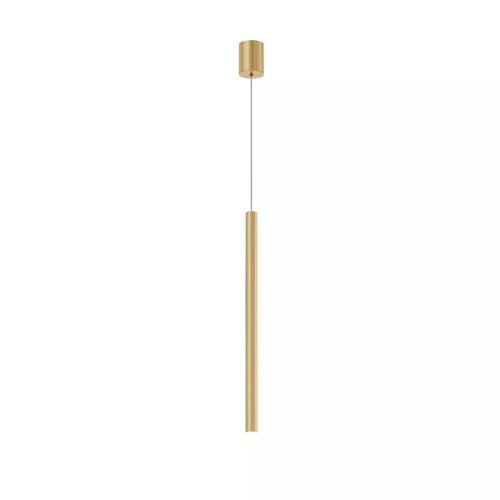
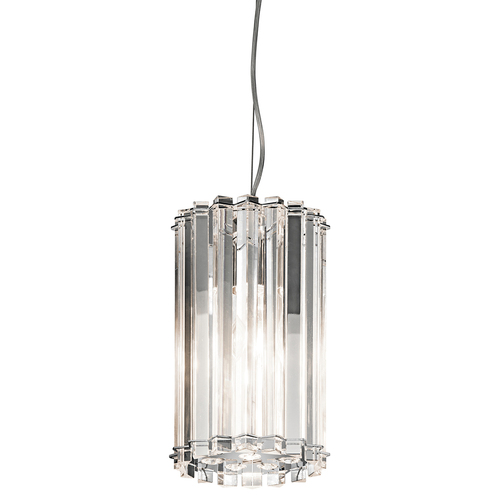
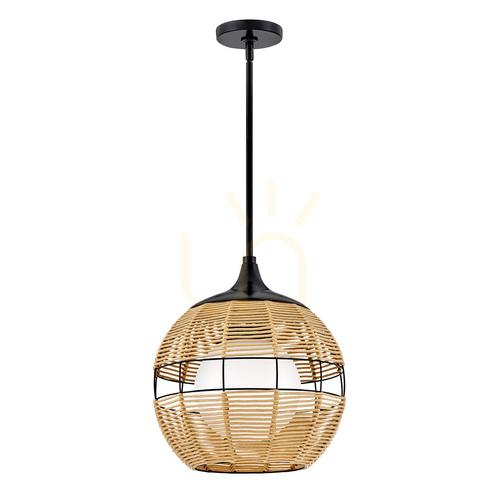
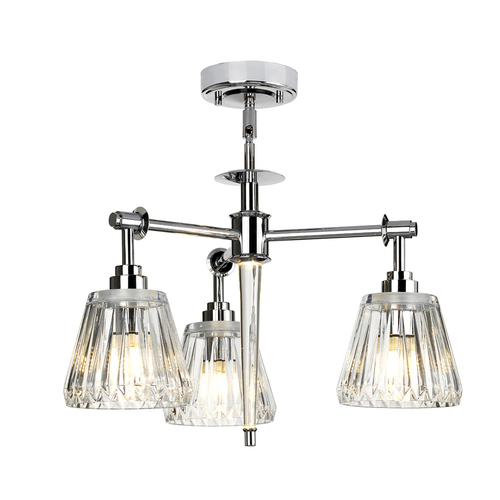
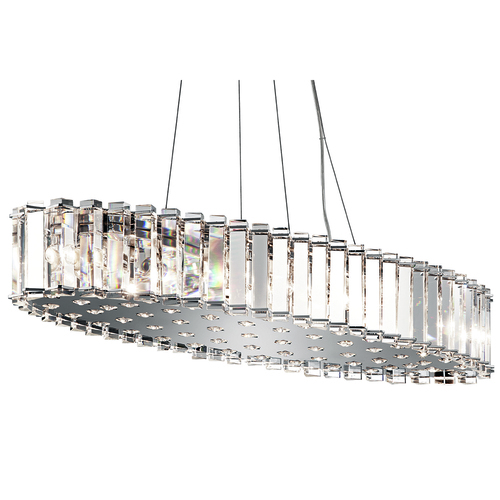
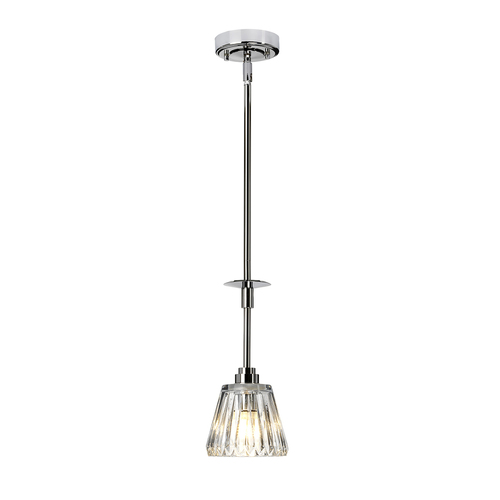
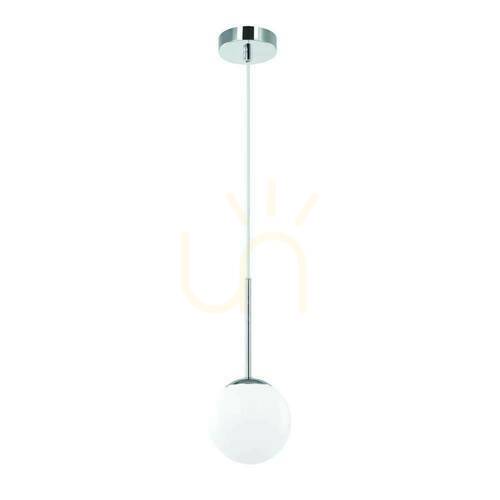
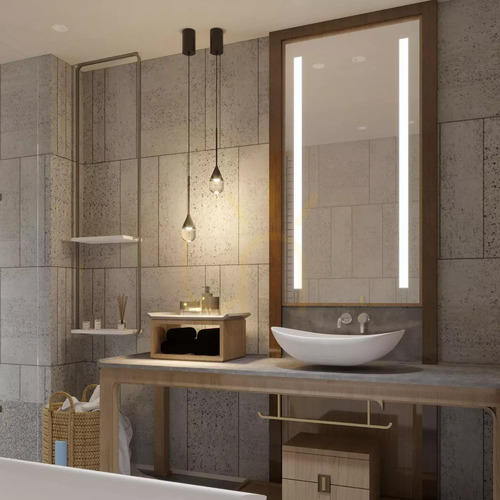
A pendant in a bathroom is one of the few lighting choices where taste is the second question. The first is where the fitting will hang, because a bathroom is divided into zones and the zone decides what is allowed there. Settle that and the rest — drop, finish, glass or metal — is ordinary shopping.
The zones, and why they decide everything
The scheme comes from IEC 60364-7-701, applied across Europe with national variations; in the UK it is Section 701 of BS 7671. Four areas matter.
-
Zone 0 — inside the bath itself or the shower tray, where water actually sits.
-
Zone 1 — the space directly above that footprint, from floor level up to 2.25 m, or up to the height of a fixed shower head if that is higher.
-
Zone 2 — a further 0.6 m horizontally beyond the edge of Zone 1, to the same 2.25 m height.
-
Outside the zones — everything else. There is no longer a "Zone 3".
A ceiling pendant lands in Zone 1 or outside the zones, depending on where the bath is and how far the fitting hangs down. That is what separates a bathroom pendant from an ordinary one.
What IP44 actually promises
The two digits after IP are solids, then water. Zone 0 requires IPX7 — proof against temporary immersion — which in practice means a purpose-made low-voltage fitting, not a pendant. Zones 1 and 2 need IPX4 as a minimum, which is exactly what a fitting sold as IP44 provides: splashing from any direction. IPX5 covers water jets during cleaning, which matters in a gym or a hotel far more than in a family bathroom.
Outside the zones there is no minimum, but a bathroom is still a humid room: an unrated fitting above a shower will not fail a regulation, it will fog its diffuser and corrode its connections instead.
Voltage is where a lot of internet advice goes wrong. Extra-low-voltage SELV is mandatory only in Zone 0. A fixed mains luminaire is permitted in Zone 1 provided it carries the right IP rating and the circuit has 30 mA RCD protection — which, in a modern installation, every bathroom circuit has anyway. Have it installed by a qualified electrician, who will read the zone off the room rather than off a product page.
Hanging one over a freestanding bath
This is the arrangement most people arrive looking for, and the one that needs care. If any part of the fitting sits above the bath's footprint and below 2.25 m, it is in Zone 1 and has to be rated for it, however decorative it is. With a 2.4 m ceiling, a pendant with even a 30 cm drop is comfortably inside Zone 1.
Two honest ways out. Rate the fitting — IP44 or better — and hang it where it looks right. Or move it at least 0.6 m clear of the bath in plan, where it falls outside the zones and an unrated decorative fitting becomes an option. Centring it on the room rather than on the bath usually satisfies both the rules and the photograph.
Drop, ceiling height and the switch
Bathroom ceilings are rarely generous, so the useful question is not how long the flex is but how short it can be made — cable and chain shorten easily, a rod suspension gives fixed increments. Over a basin, keep the bottom of the shade above head height, roughly 2.0 m, unless it is deliberately hung to one side as a mirror light. Switching belongs to the same job: a wall switch has to sit outside the zones, so the normal answers are a ceiling pull-cord above 2.25 m with only the cord hanging down, or a switch outside the bathroom door.
Materials that survive the steam
Warm wet air finds every gap. A gasketed shade with a proper cable gland keeps humidity off the lampholder and the driver; an open shade over a bath does not, which is why unrated fittings here fail early rather than dramatically. Chrome, brushed nickel, stainless steel and glass all cope. Untreated brass and copper patinate faster in a bathroom than anywhere else in the house. Natural fibres such as rattan belong in a dry room; here they hold moisture and eventually smell of it.
Common questions
Can you put a pendant light over a bath?
Yes, if it is rated for the zone it occupies. Above the bath footprint below 2.25 m is Zone 1, which needs IPX4 as a minimum and a 30 mA RCD on the circuit.
Does a bathroom pendant have to be IP44?
In Zones 1 and 2, yes, IPX4 is the minimum. Outside the zones there is no legal requirement, though a sealed fitting still lasts longer in a humid room.
How high is Zone 1?
2.25 m from the floor, or the height of a fixed shower head if that is higher. Above that line, and clear of the footprint in plan, you are outside the zones.
What about a shower with no tray?
Zone 1 becomes a 1.2 m radius measured horizontally from the fixed water outlet, up to the same 2.25 m.