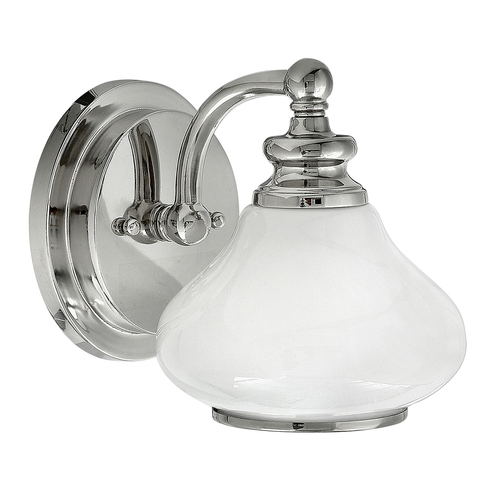
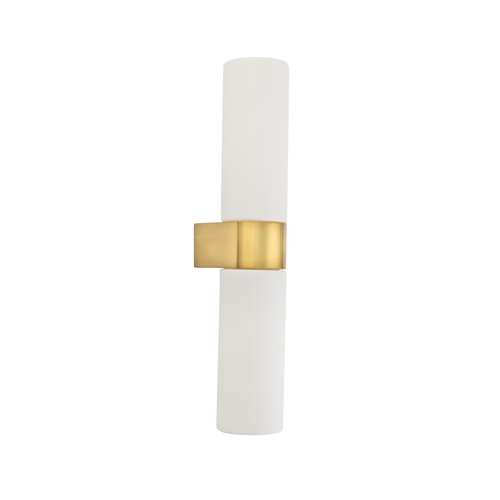
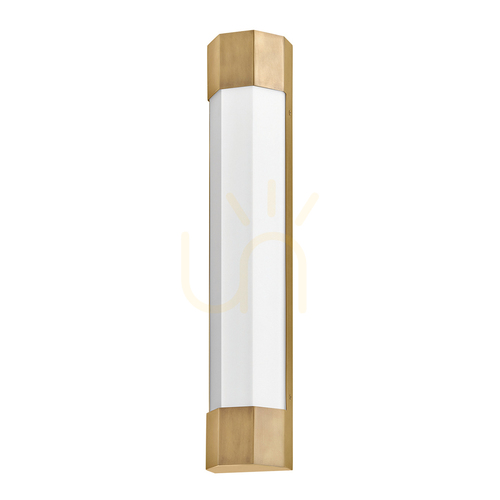
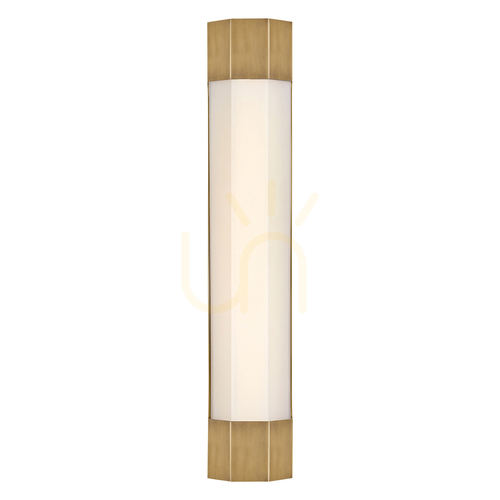
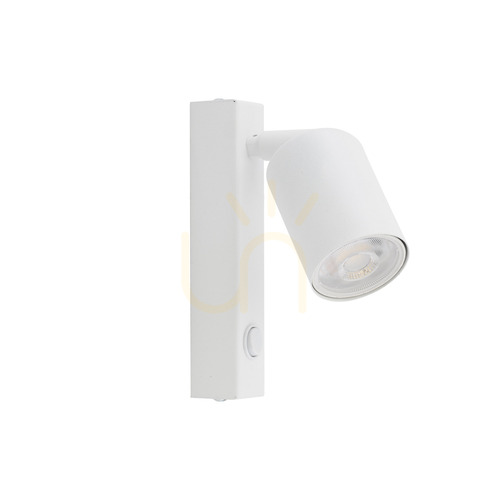
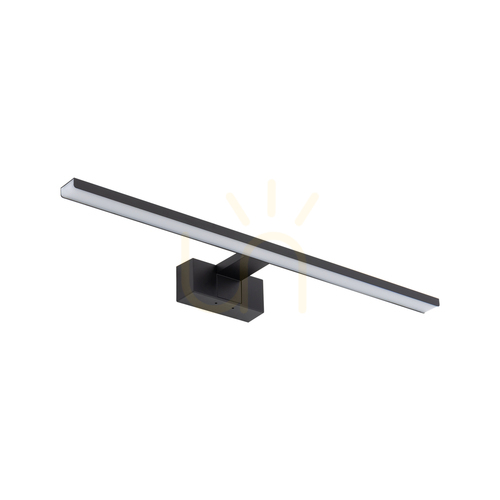
Bathroom wall lights are governed by the wiring regulations before they are governed by taste. The room is split into zones, and each zone sets a minimum IP rating — get that wrong and the fitting is not merely unsuitable, it is non-compliant.
Zones and IP ratings
| Zone |
Where |
Minimum rating |
| Zone 0 |
Inside the bath or shower tray |
IPX7, 12 V SELV |
| Zone 1 |
Above bath or shower to 2.25 m |
IPX4 (IPX5 if jet-washed) |
| Zone 2 |
0.6 m beyond Zone 1, and around a basin |
IPX4 |
| Outside zones |
Rest of the room |
IP20 is acceptable |
A light beside a basin is normally Zone 2, so IP44 is the practical default for any wall light in a bathroom. If in doubt, specify IP44 throughout — it costs little and removes the argument.
Lighting a face, not a wall
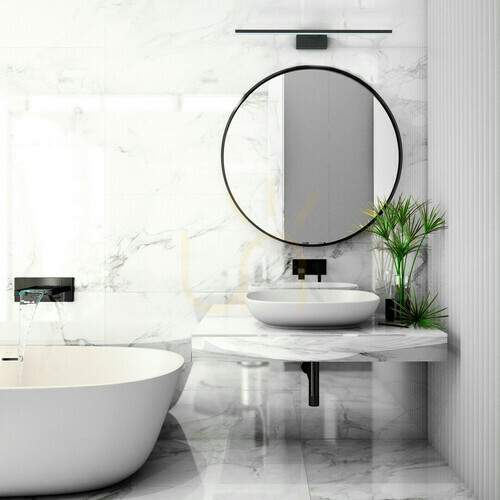
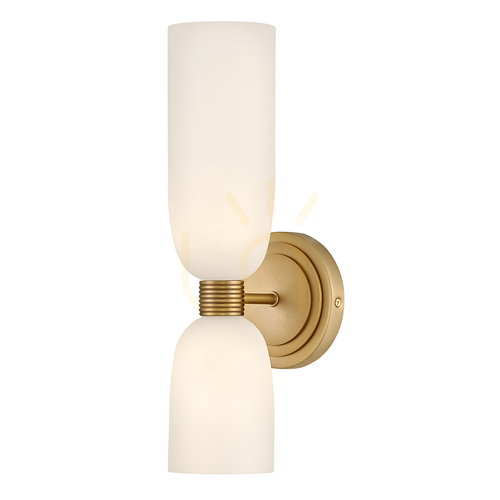
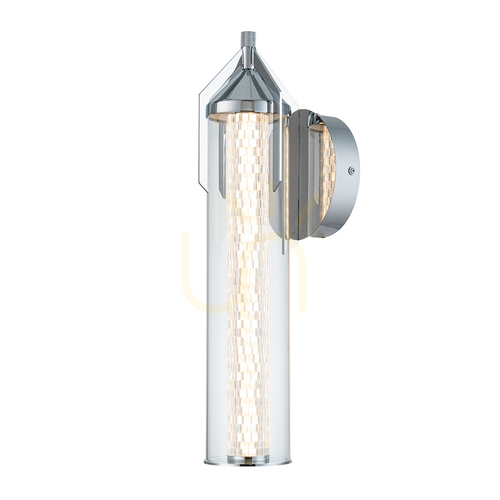
Downlight from the ceiling casts shadows into the eye sockets, which is why you shave better in a hotel than at home. Put light either side of the mirror at roughly 1.6–1.7 m — level with the face, not above it. A pair of vertical fittings flanking the mirror beats a single light over it every time. Choose 4000 K here for colour accuracy, and keep the rest of the room at 3000 K.
Materials that survive
Chrome, stainless steel and powder-coated aluminium hold up. Untreated steel and thin lacquer will spot within a couple of years in a room that gets steamy twice a day. Check that any gasket can be removed for cleaning rather than being glued in.
Frequently asked questions
Can you put wall lights in a bathroom?
Yes, provided the IP rating matches the zone. IP44 covers almost every wall position outside the shower itself.
What are the best wall lights for bathrooms?
IP44 fittings mounted in pairs either side of the mirror, with a diffuser rather than a bare lamp, at around 4000 K.
What kind of light is best for a bathroom?
Layered: a ceiling fitting for general light and mirror-side wall lights for the face. One overhead source alone is the most common mistake.
See also Ceiling Lights.