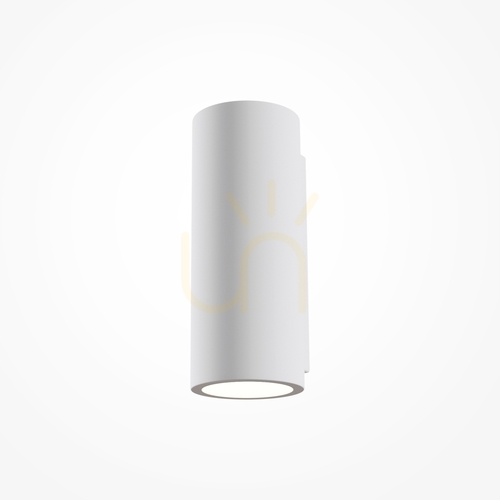
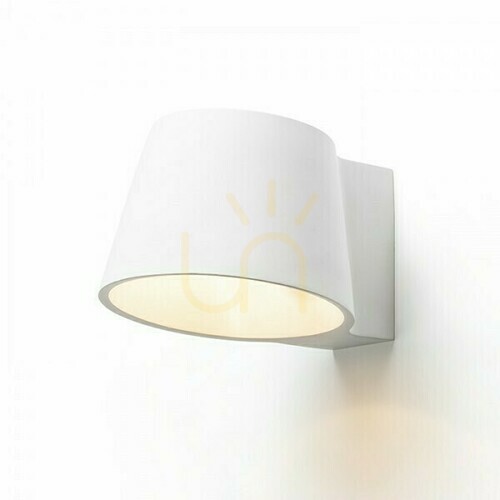
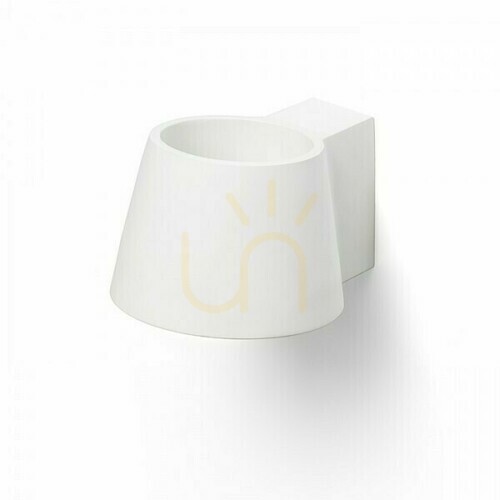
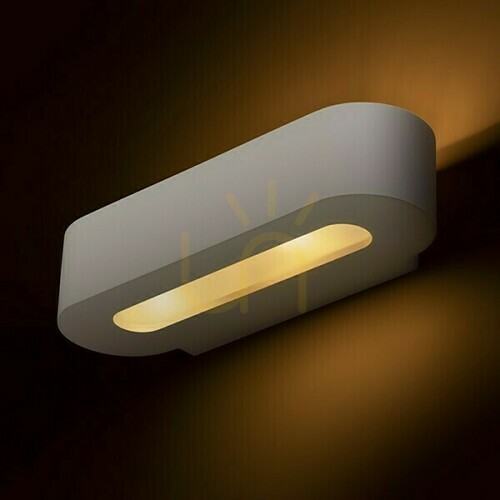
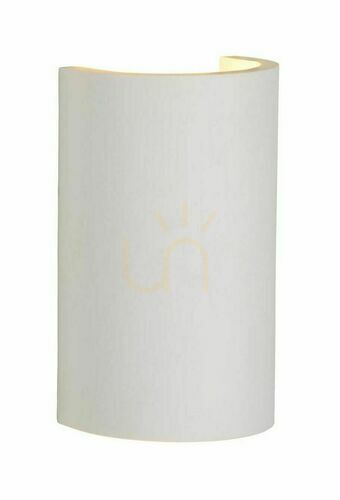
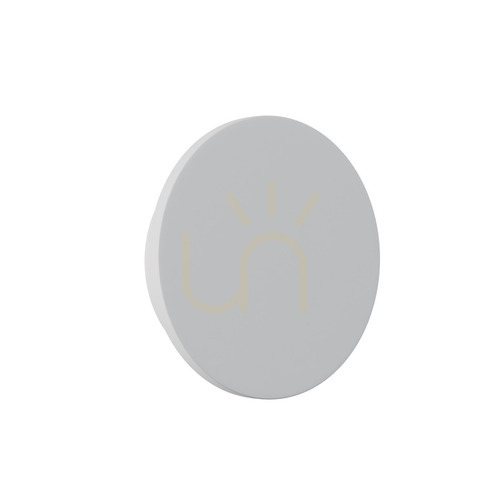
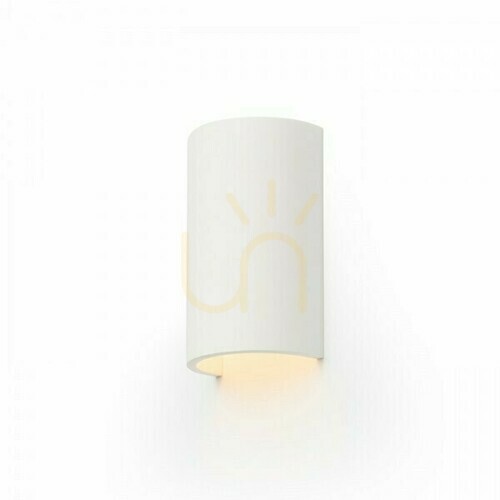
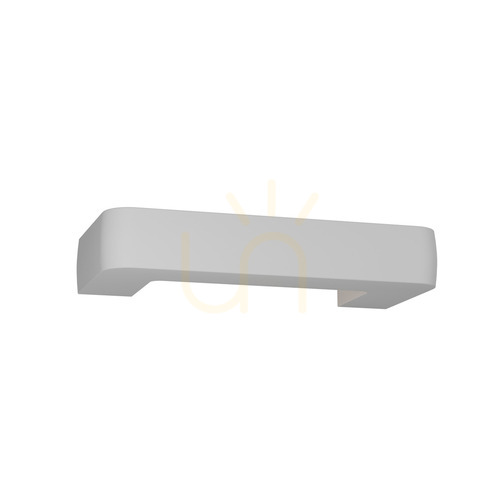
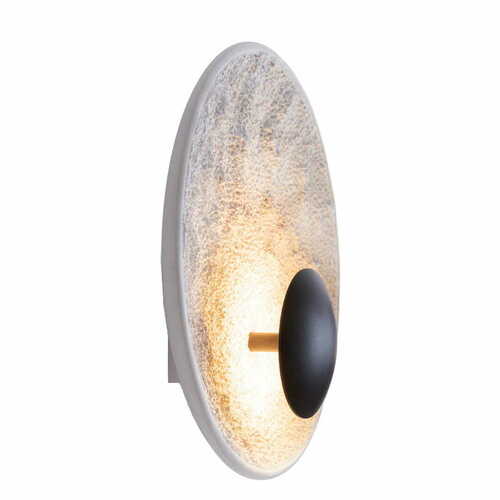
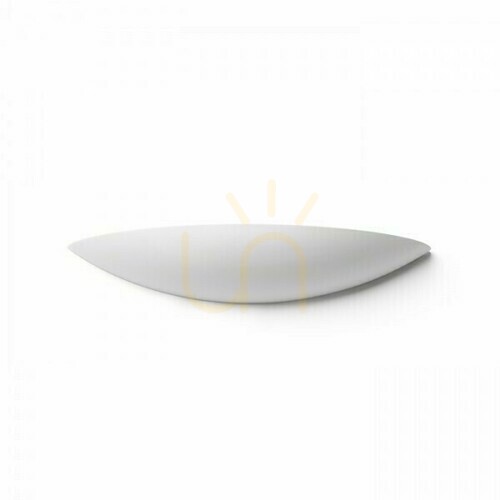
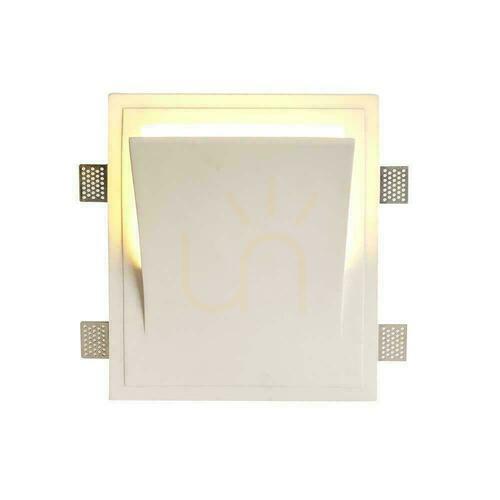
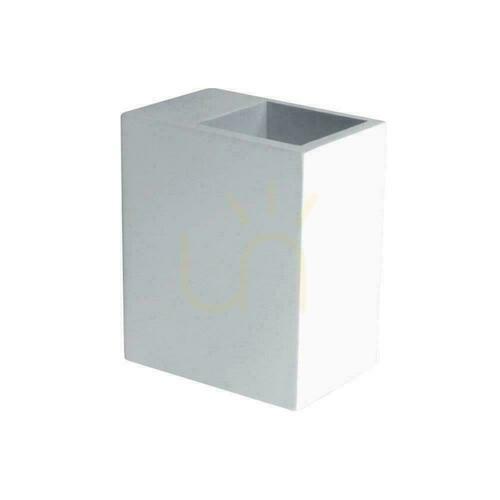
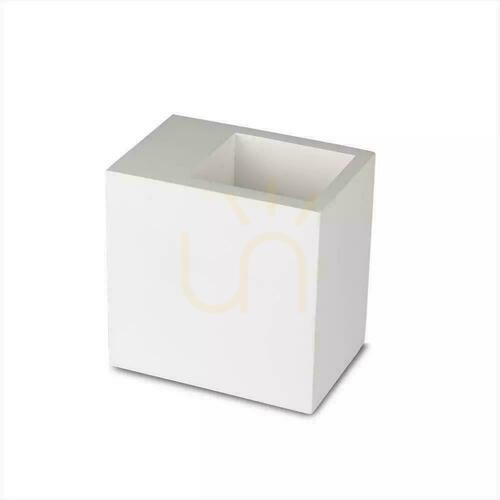
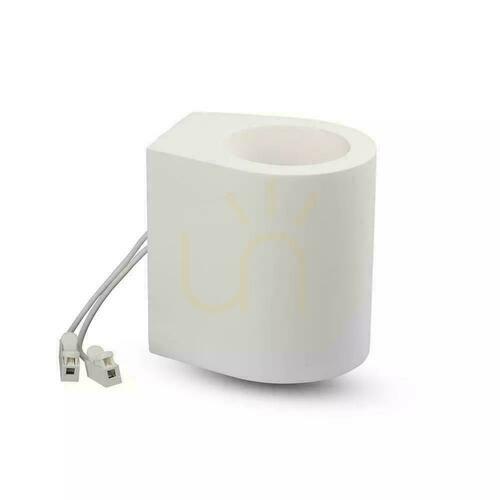
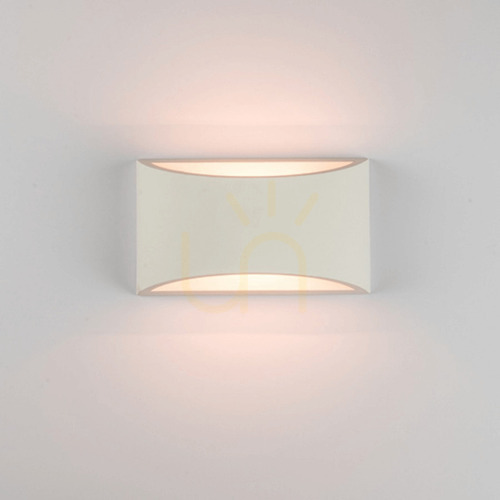
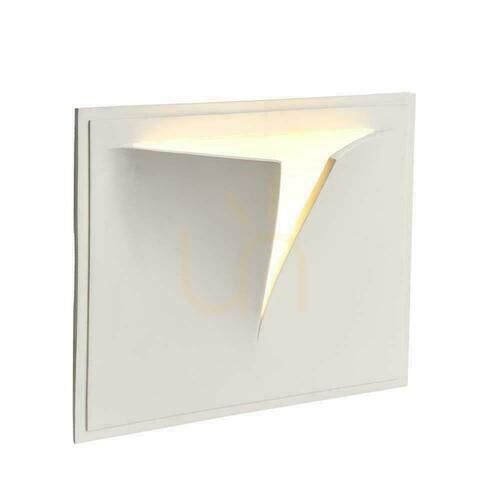
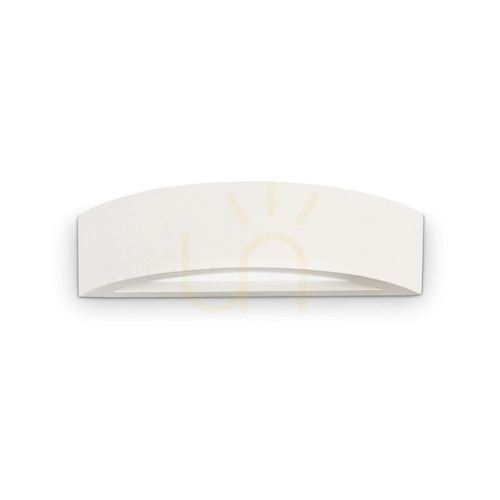
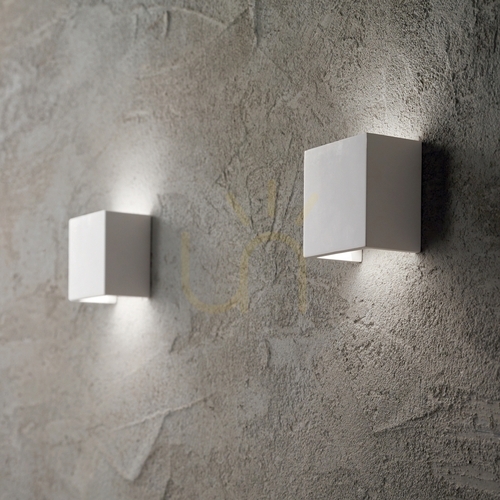
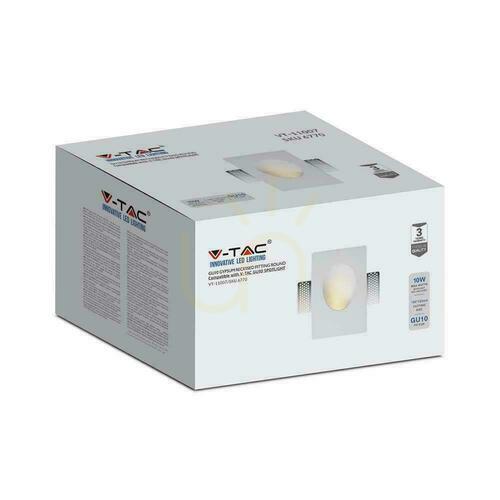
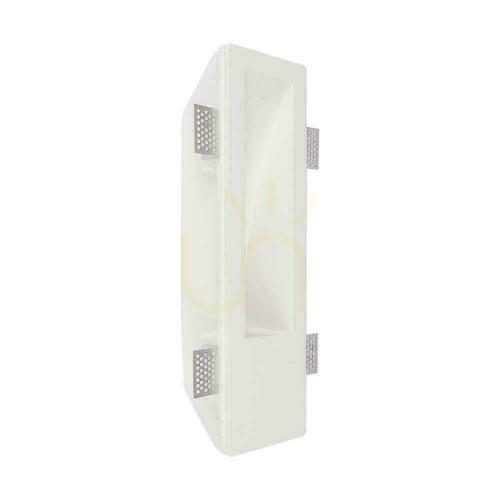
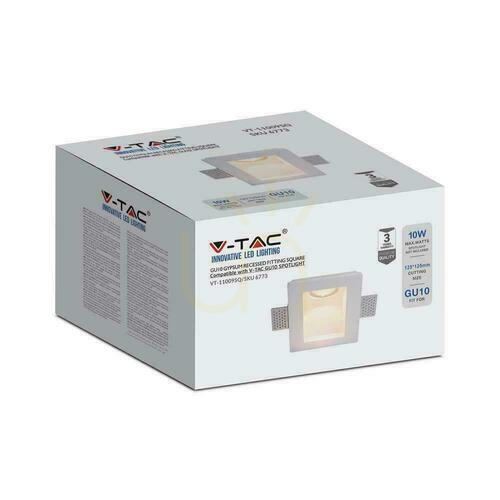
Plaster wall lights are the ones you stop noticing. Cast in gypsum and finished raw or in white primer, they take ordinary emulsion, so once the decorator has been round the fitting is the same colour as the wall and only the light gives it away. That is the whole point of them — and it is also why the decisions have to be made early.
Plaster-in or surface-mounted
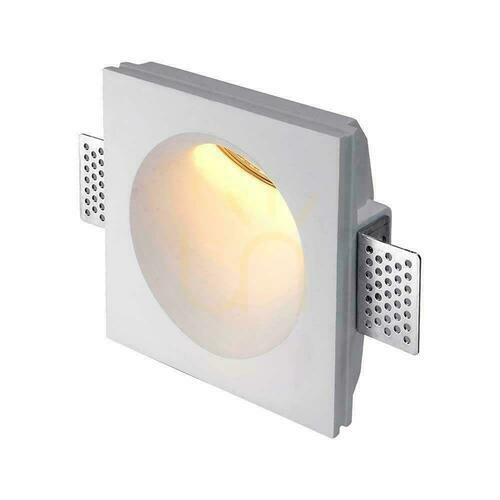
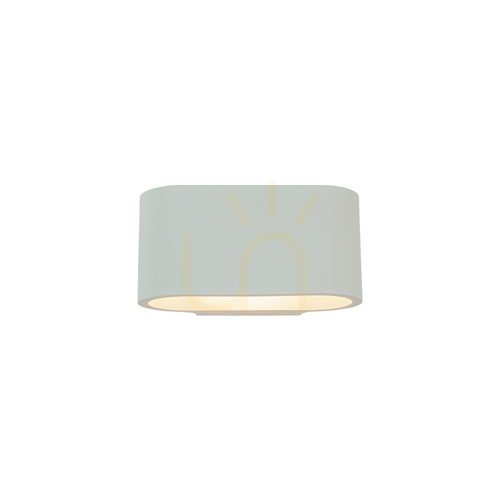
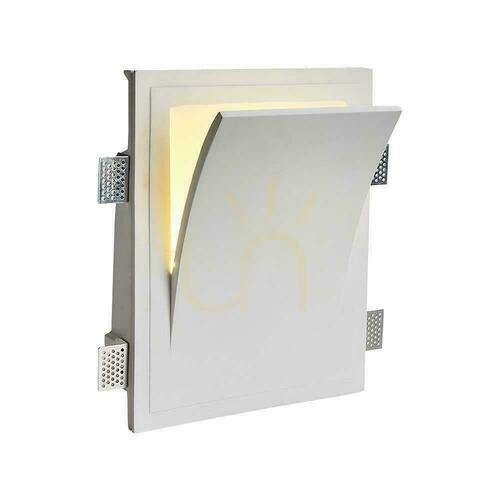
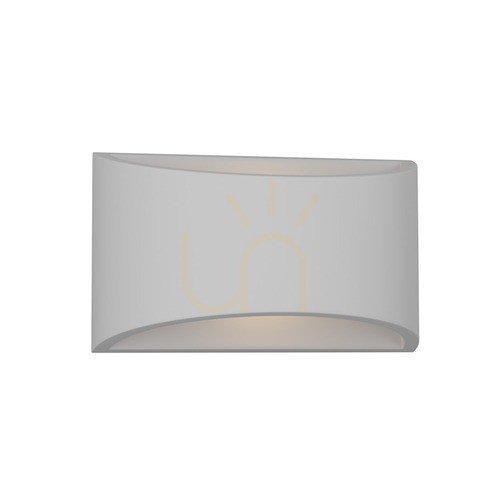
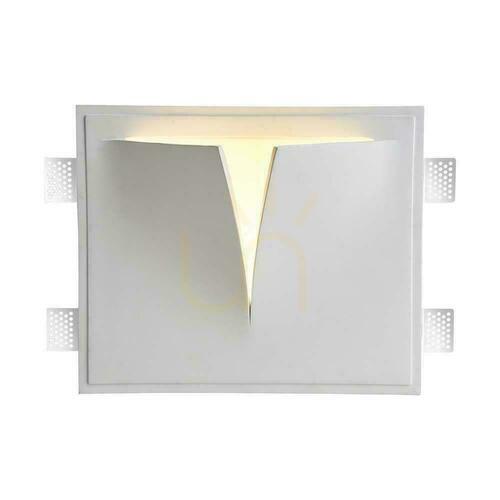
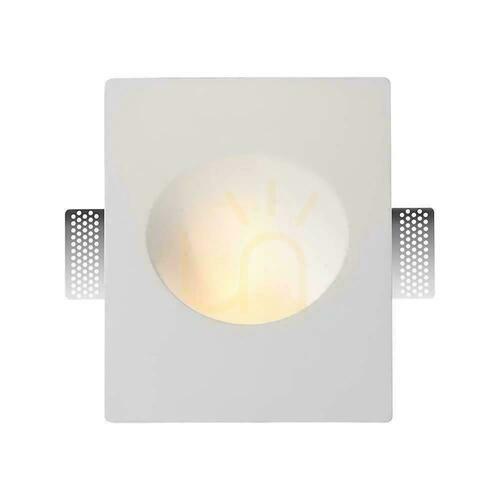
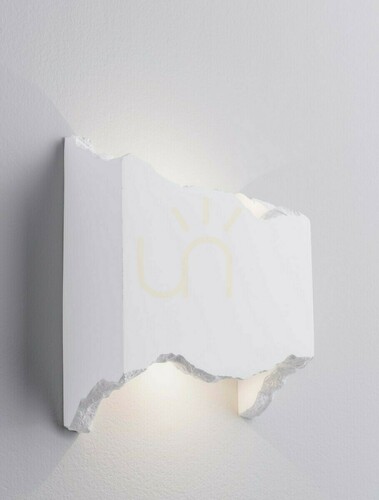
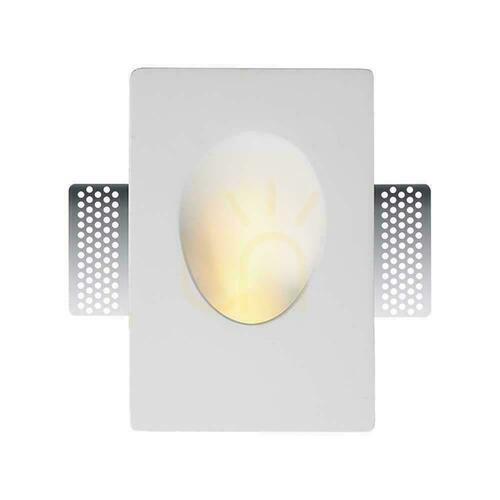
Two very different products share the name. A plaster-in fitting is recessed into the wall and skimmed over so the edge disappears — no visible trim, no shadow gap, a slot of light in a flat surface. A surface-mounted plaster fitting screws onto a finished wall like any other wall light; it stands proud, but it can go up at any point in a project and comes off again without a repair. If the wall is already painted, the second one is your option.
Getting it in before the skim
Plaster-in fittings belong to first fix. The back box and the cable go in while the wall is open, the fitting is set flush with the plasterboard, and the plasterer skims up to its edge with the supplied mesh or tape. Retrofitting one into a finished wall means cutting out, patching and repainting a patch that will always be visible in raking light. Book it in with the electrician and the plasterer in the right order, and confirm the cut-out size before the boards go up rather than after.
Painting it in
Raw gypsum drinks paint, so it takes a mist coat first, then two coats of the same emulsion as the wall. Mask the lamp aperture and the reflector — paint on the inner surface changes the beam and, on a reflector, dulls it permanently. Matt emulsion works; heavy silk or gloss looks wrong on a matt cast surface and shows every fingerprint. If the room gets repainted in five years, the fitting simply gets painted again.
The beam, the lamp and the wall behind it
Most plaster fittings are wall washers: a narrow slot throws a fan of light up, down or both, and the wall itself becomes the visible light source. That effect depends entirely on the wall being flat. Textured wallpaper, uneven old plaster or a bad patch will be picked out mercilessly by grazing light — pick a fitting with a shielded, softer beam if the surface is not perfect. Sockets are usually GU10 or G9; where a lamp is replaceable, dimming depends on the lamp and dimmer you pair, not on the plaster body.
Frequently asked questions
Can plaster wall lights be painted any colour?
Yes, with standard emulsion, provided the aperture and any reflector are masked first. Matt finishes look best on gypsum.
Can I retrofit a plaster-in fitting?
Physically yes, tidily no. It means cutting the wall open, fitting the box and re-skimming. Choose a surface-mounted plaster fitting for a finished wall.
Are they suitable for bathrooms?
Standard gypsum fittings are dry-room products at IP20. A bathroom needs a fitting rated for the zone it will occupy.
Are they fragile?
They are cast plaster, so an edge will chip if it is dropped or knocked hard during the fit. In place, on a wall, they are as durable as the wall itself and any chip can be filled and repainted.
For the same trimless look overhead see Flush Ceiling Lights, or line the wall with LED strips and profiles.