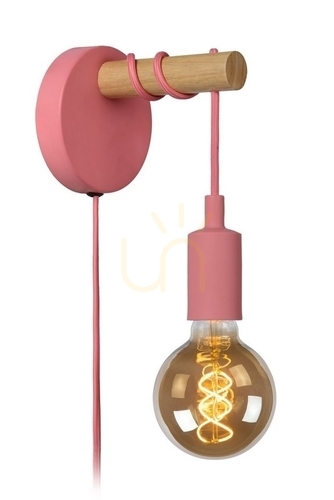
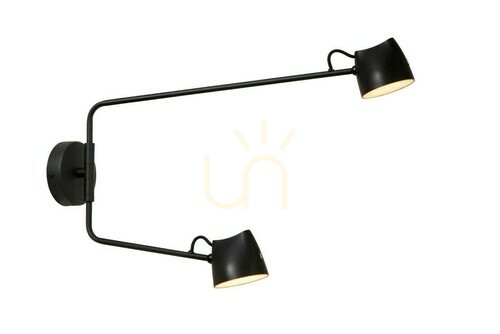
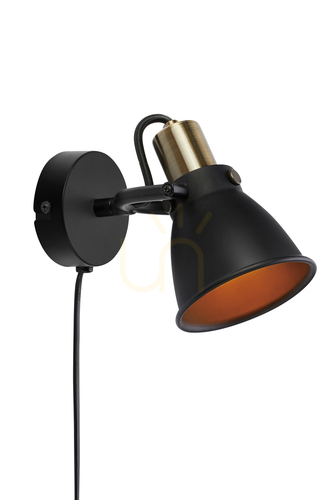
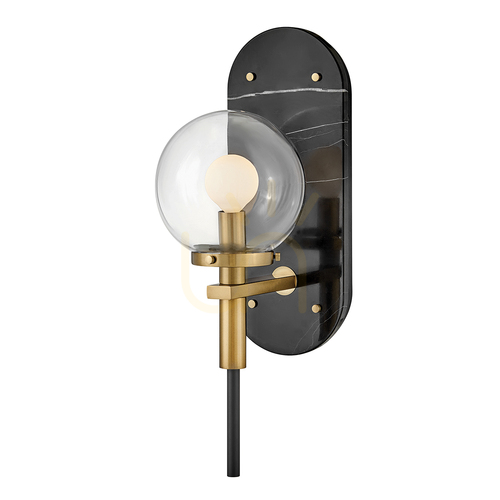
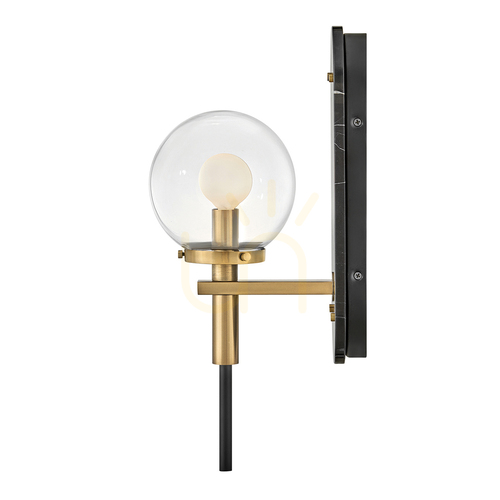
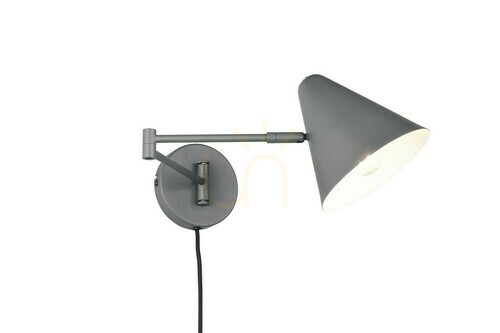
Plug in wall lights are wall-mounted fittings that run from an ordinary socket via a flex and plug, so you get light on the wall without anyone touching the fixed wiring. The fitting is still screwed to the wall; only the power supply changes – from a hidden cable in the plaster to a visible lead with its own switch.
That makes them the usual answer for rooms that were never given wall-light points, which describes a lot of British homes, older properties especially. No chasing walls, no making good, no redecorating – and if you rent, the lights leave with you.
What changes when a wall light has a plug
A hardwired wall light is switched from the door and sits wherever the electrician put the cable. A plug-in version reverses both. It sits wherever its flex reaches a socket, and you switch it where you actually use it: most often with an inline switch on the lead, sometimes with a rocker on the fitting itself, a touch pad, a pull cord or an inline dimmer.
The shapes are as varied as any wall light. Swing-arm reading lights, adjustable spots, picture-light styles, sconces with fabric shades, up-and-down lights and simple brackets with an exposed bulb all come in plug-in form. Some are designed to work both ways, with a flex for the socket now and a back plate that allows hardwiring later.
Plug, fuse and flex: the UK details
In the UK the lead should end in a standard 13 A three-pin plug. Lighting usually takes a 3 A fuse in that plug – check the fitting's instructions, and replace a blown fuse with the rating it states, not a 13 A one because that's what's in the drawer. If a light arrives with a two-pin European plug, have a proper UK plug fitted rather than relying on a travel adaptor that sits loose in the socket.
Most plug-in wall lights are Class II, meaning double insulated with no earth wire; a few are Class I and need an earthed plug. Almost all are rated IP20, which means dry rooms only.
How to choose
| Feature |
What's typical |
What to check |
| Flex length |
about 1.5–2 m |
measure the route along the wall to the socket, not the straight line; avoid extension leads |
| Flex finish |
white or black PVC, braided fabric |
fabric flex looks good on show; plain PVC hides more easily in trunking |
| Switch |
inline, on the fitting, touch, dimmer |
by a bed it must be reachable lying down |
| Lamp holder |
E27, E14, G9, GU10 or integrated LED |
a holder lets you change bulbs; integrated LED keeps the fitting slim |
| Colour temperature |
2700–3000 K bedroom, around 4000 K desk |
a frosted bulb glares less in an open fitting |
| Head |
fixed, swivel, swing arm |
for reading, an adjustable head or arm is far more comfortable |
Not every light comes with a bulb, and the maximum wattage on the fitting matters even with LED. If you want to dim, the bulb must be marked dimmable.
Where they work best
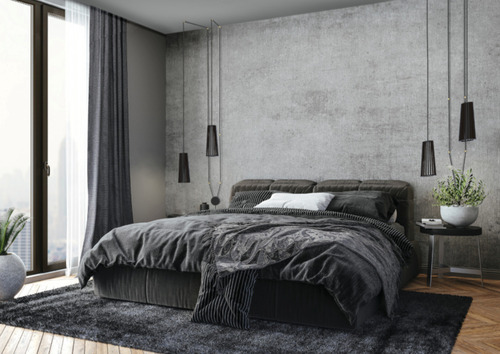
Bedside is the classic spot. Fit a reading light so its lower edge sits roughly 50–60 cm above the top of the mattress, and with a double bed give each side its own light and switch, so one person can read while the other sleeps. In a living room, a light beside an armchair at about 120–150 cm, or a pair over a sofa or sideboard, adds a warm layer that a single ceiling pendant can't. Plug-in wall lights with a shade soften the light for lounges; open spots suit desks, alcoves and studies, where they free up surface space. They are a second layer of light, not a replacement for the main one.
Fitting it and tidying the flex
Fixing takes a drill, two wall plugs and the screws supplied – use cavity fixings in plasterboard. The flex then runs down to the socket. To keep it neat, use stick-on trunking painted to match the wall, small cable holders spaced every 30–50 cm (they suit fabric flex you want on show), or run it behind a headboard. Don't staple the flex, pull it taut, run it under a rug or trap it behind furniture.
Frequently asked questions
Are plug in wall lights safe?
Yes, used as intended: correctly fused plug, flex not crushed or stretched, bulb within the stated wattage, and the fitting in a dry room away from curtains and pillows. Don't daisy-chain extension leads to reach a socket.
How do you install a wall light without wiring?
Choose a plug-in model whose flex reaches a socket, mark and drill two holes, fix the bracket and hang the light. Plug in, switch on. If there's no socket nearby either, a rechargeable light is the other option.
Can I wire a wall light to a plug?
Some hardwired fittings can be converted with a flex, plug and inline switch, but only if the fitting has a proper cable entry and cord grip. If you're not sure, ask a qualified electrician – a loose conversion is exactly where things go wrong.
Can a plug-in wall light be hardwired later?
Often, with a bulb-type fitting: the flex is removed and the fitting connected to a wall point. Integrated-LED lights with a driver on the lead are much harder to convert. Any change to fixed wiring should be carried out by a qualified electrician in line with BS 7671.
What is the best plug-in wall light for reading?
One with a swing arm or swivel head, a switch you can reach from the bed or chair, and a warm white bulb that's frosted rather than clear.
Are plug in wall lights good for a living room?
Yes. A pair either side of a sofa, chimney breast or mirror gives soft, even light. If the inline switch would end up hidden behind the sofa, choose fittings with a switch on the body.
If you already have wall-light points, more ideas for hardwired fittings are under wall lights. Where there's neither a point nor a socket in reach, battery-operated wall lights are worth a look.