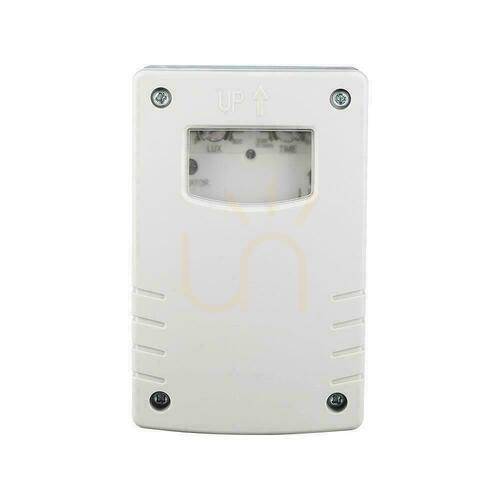
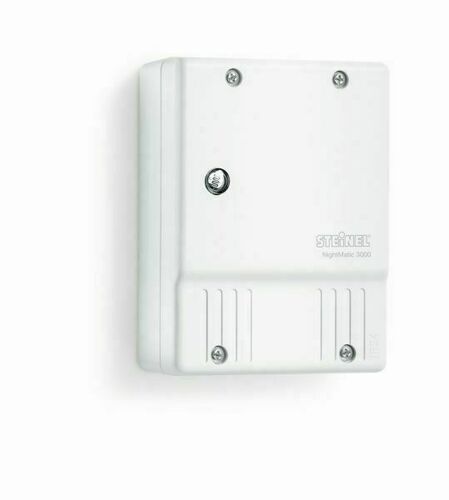
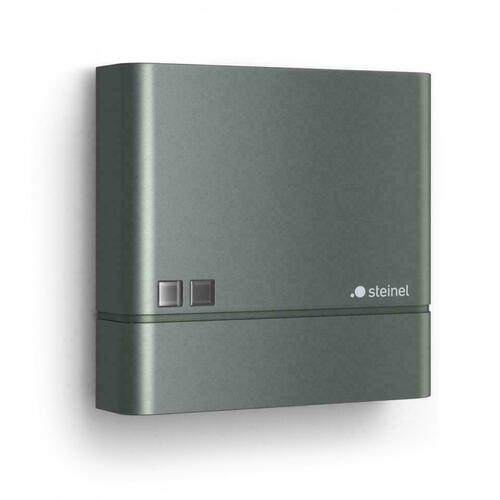
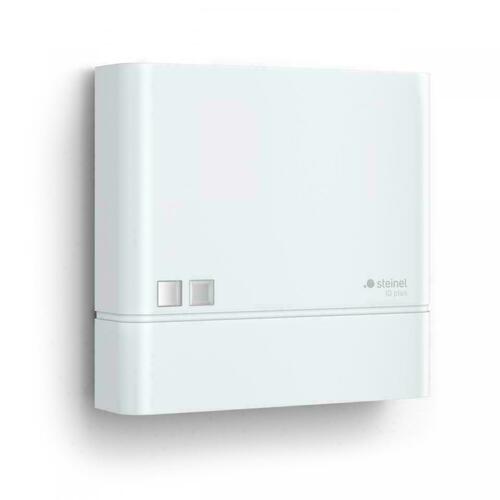
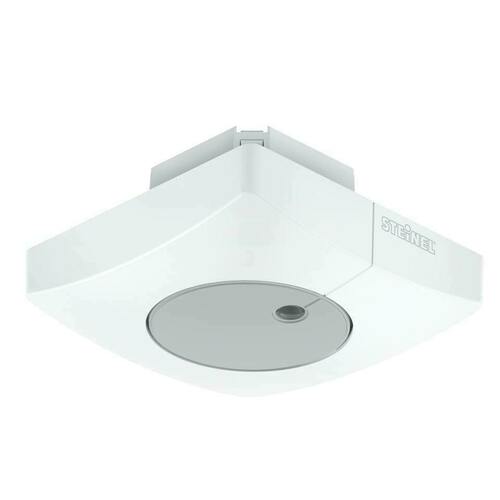
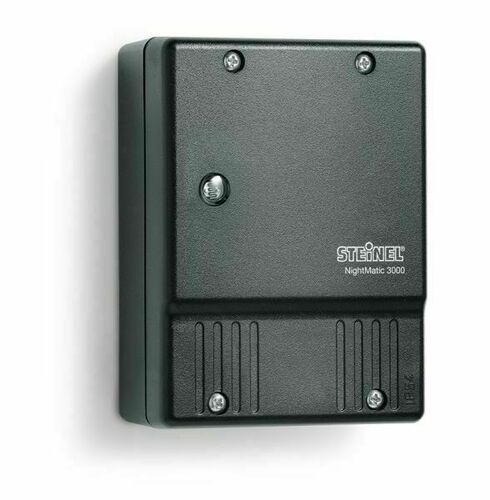
A photocell sensor – also sold as a dusk to dawn sensor or daylight switch – measures the light around it, turns your lights on once it falls below a set level and off again at first light. On a motion sensor, the same cell decides whether the detector reacts to movement at any time of day or only once it is genuinely dark.
Unlike a plug-in or wired timer, it never needs resetting when the clocks go forward or back. It follows real daylight, so lights come on earlier on a gloomy November afternoon and later in midsummer.
How a photocell sensor works
Inside is a photodiode, phototransistor or light-dependent resistor. The electronics compare its reading with the threshold you set on a small dial and switch a relay. Two things stop the lights hunting on and off: a short delay, from a few seconds up to about a minute, so passing headlights are ignored; and hysteresis, meaning the switch-off level sits slightly above the switch-on level.
You will come across several formats:
-
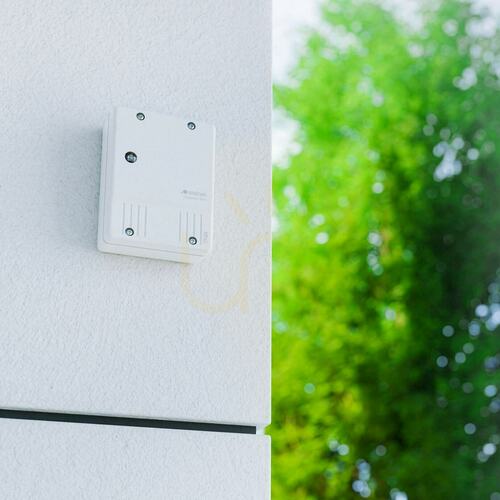
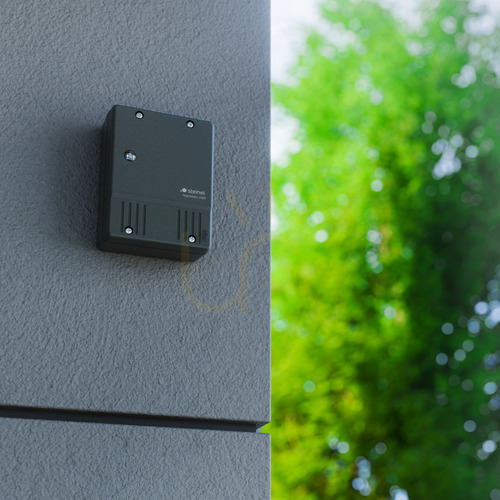
Wall-mounted photocell with a built-in sensor – a weatherproof unit that sits on the house wall or a post and switches the lights wired through it.
-
DIN-rail photocell – a module in the consumer unit or an enclosure, with a small remote sensor outside. Handy when one control has to run several circuits.
-
PIR with dusk setting – here the light level does not switch the lamp itself; it arms the motion detector. In daylight, movement is ignored.
-
Photocell with timer – on at dusk, off at a chosen time such as midnight, sometimes back on before dawn.
-
12 V photocells for low-voltage garden systems and solar set-ups.
What to look for
| Specification |
Typical values |
Why it matters |
| Adjustable lux range |
roughly 2–200 lux; dusk is around 5–50 lux |
signage and shop fronts often need a higher setting so they light earlier |
| Switching delay |
a few seconds to several tens of seconds |
too short and car headlights will trip it |
| Load rating |
relays commonly 6–16 A, with a separate LED figure |
LED drivers draw a high inrush current; for big loads use a contactor |
| IP rating |
outdoors IP44 as a minimum, IP54–IP65 on exposed walls |
a DIN-rail module is IP20, so its remote sensor needs its own rating |
| Supply |
230 V mains, or 12 V for low-voltage kits |
never connect a 12 V unit to the mains |
Add up the wattage of every fitting on the circuit and leave headroom. The LED limit on the data sheet is often several times lower than the incandescent one.
Where to fit it
The sensor needs a view of the sky but must not see the light it controls. A north- or east-facing wall at around 2 m works well, low enough to wipe clean. Avoid deep eaves, dense hedges, a street lamp opposite and pale neighbouring walls that bounce light back.
Wiring is straightforward on paper: permanent live to L, neutral to N, switched live out to the lamp, with brown for live and blue for neutral in UK fixed wiring. In practice, work on a 230 V circuit should be done by a registered electrician and meet BS 7671. Bring the cable into an outdoor unit from below so rain cannot run into the gland.
Common problems and care
Two faults turn up more than any other. LED lamps that glow faintly when they should be off are usually on an electronic switch without a proper relay or neutral; a relay-output photocell with the neutral connected cures it. And a photocell that switches perfectly for a single fitting may struggle once a string of LED floodlights is added, because their drivers draw a surge at switch-on – check the LED rating, not just the amps.
Once a season, clear dust, cobwebs and leaves off the sensor window. In winter, brush off snow: a covered cell thinks it is night and leaves the lights burning all day.
Frequently asked questions
How does a photocell sensor work?
A light-sensitive component reports the brightness in lux. When it drops below the level set on the dial, a relay closes and the lights come on; when daylight rises above the switch-off level, the relay opens again.
What does dusk to dawn mean on a motion sensor light?
It means the built-in photocell only lets the PIR work after dark. Turn the lux dial to the sun symbol and the light reacts day and night; turn it towards the moon and it responds to movement only once the light has faded.
Why does my sensor light keep blinking on and off?
Usually the cell can see its own lamp, or its reflection off a wall, window or wet drive. The light comes on, the sensor reads “daytime” and switches it off again. Move or shade the sensor rather than turning the threshold up.
How do you tell if a photocell is bad?
Signs include lights burning all day, never coming on, or switching at random. Before blaming the unit, clean the window, check that nothing shades it and try the dial at both ends of its range. If it still ignores darkness, the cell or relay has probably failed.
How can you test a dusk to dawn sensor?
In daylight, cover it completely with your hand, black tape or an opaque bag and wait for the delay to run out. The light should come on within about a minute and go off once you uncover it.
Is there a dawn to dusk timer?
Yes: astronomical timers work out sunrise and sunset from your location without any sensor. They are precise on clear days but cannot react to storm clouds or fog, which is where a photocell has the edge.
If you only want light when someone walks up, carry on to motion sensors. Prefer the sensor built into the fitting itself? Look at dusk to dawn outdoor wall lights.