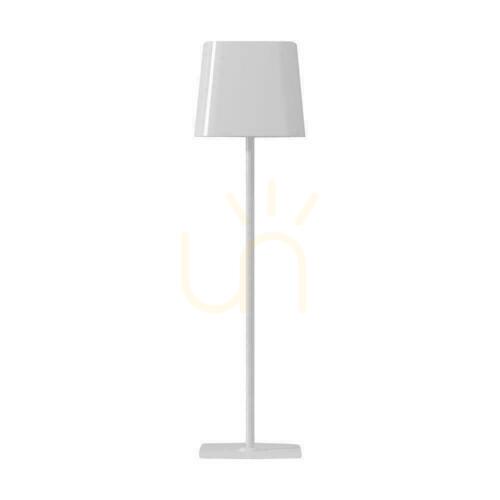
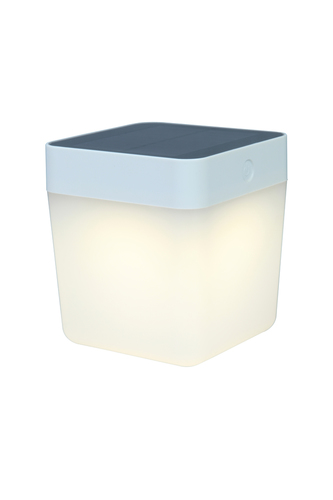
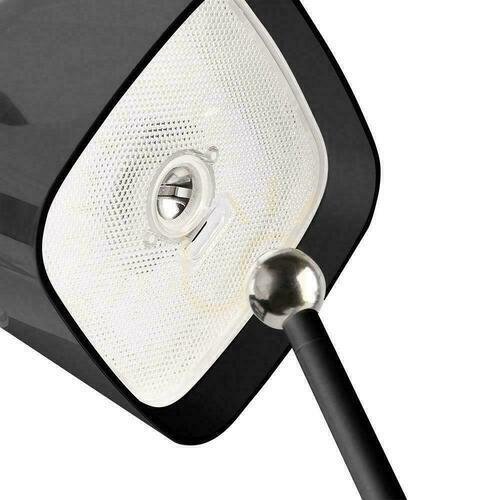
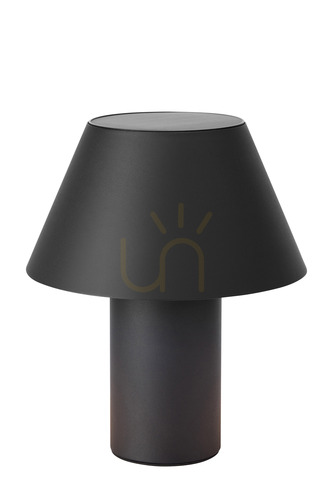
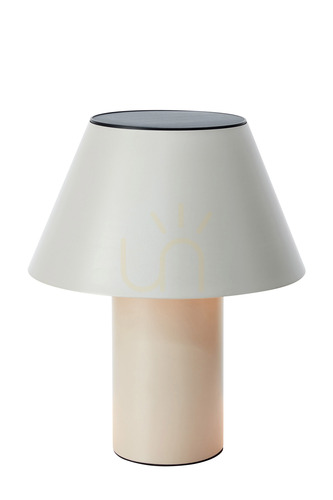
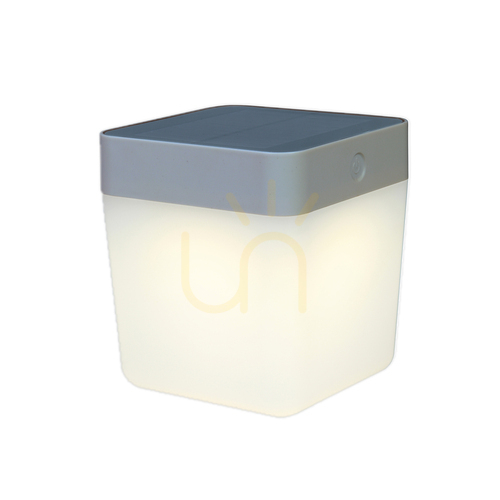
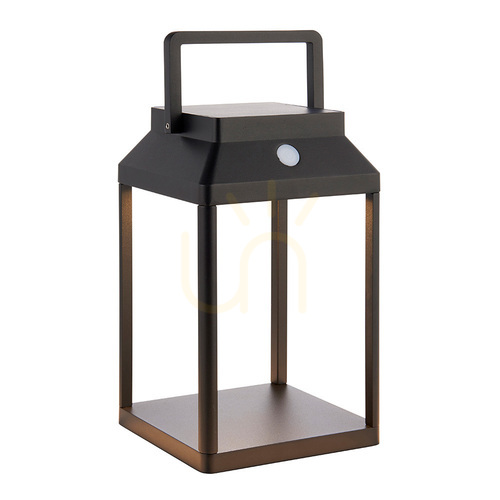
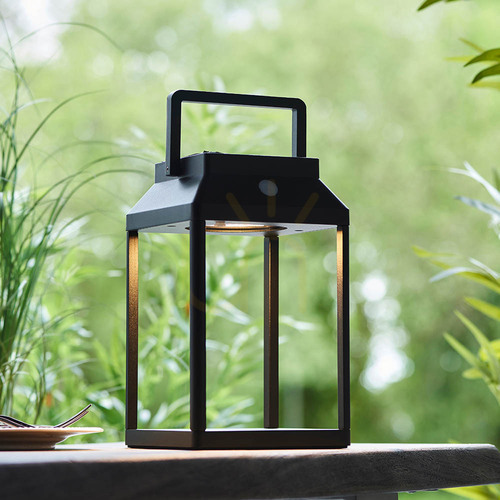
A solar table lamp charges its own battery from a small panel during the day and lights up the table after dark, with no flex, no socket and no extension lead trailing across the lawn. That one difference decides how you choose it: a solar lamp can only give back the light it has stored, so the battery, the panel and the weather rating matter more than they would on a lamp you plug in.
In Britain the question is less "does it work?" than "when does it work?". A clear June day charges it generously, but the sun sets late and you may barely need it before ten. By September the evenings are dark at dinner time and the charge is smaller. Choose with the second half of summer in mind.
What is the best outdoor solar table lamp?
The one whose numbers match your evenings. These are the specs worth reading on the box, and what they mean in a British garden.
| Spec |
Typical values |
What it means here |
| Brightness |
10–50 lm or 100–300 lm |
The low figure is candle-like glow; the high one lets you see your plate and a menu |
| Run time after a bright summer day |
6–10 h on a low or medium setting |
Easily covers a long June or July evening |
| Run time in September and October |
Noticeably shorter |
Shorter days and a lower sun mean a smaller charge; dim the lamp or top it up by USB |
| Battery |
3.7 V lithium-ion, often around 1200–2000 mAh; or 1.2 V NiMH cells |
A bigger battery only helps if the panel can fill it in a British day |
| Weather rating |
IP44, IP54, IP65 |
IP44 is shower-proof under cover; IP54 suits an open patio; IP65 shrugs off driving rain |
| Shade |
Opal glass, acrylic, rattan-look weave, metal |
Woven shades throw patterned light; glass gives the most even glow |
| Height |
15–50 cm |
Larger lamps of 40 cm and more suit a six-seat table; small ones a bistro set |
Two features earn their keep in this climate. A dimmer, usually three-step or touch, stretches the same charge much further on its lowest setting. A USB or USB-C port lets you top the lamp up from a phone charger after a grey week, which on these islands is not a rare event.
How the light actually works
The panel usually sits on top of the shade or in the lid of a lantern. It feeds a rechargeable battery: simple lamps use 1.2 V NiMH cells, better ones a 3.7 V lithium-ion cell. The light source is a built-in LED, from a fraction of a watt in mood lamps to around 2–4 W in the brightest models, which run for less time at full power. Many lamps have a dusk sensor and switch on by themselves; others have a button or a touch-sensitive shade.
Everything runs at safe extra-low voltage. There is nothing to wire and no electrician involved, unlike mains garden lighting, which in the UK falls under BS 7671.
Where it works best
Most British gardens have one sunny corner and plenty of shade from fences, walls and next door's extension. The trick is to separate the charging spot from the sitting spot. Leave the lamp on a south- or west-facing sill, wall top or step in the morning, then carry it to the table at dusk. Most weigh little and many have a handle for exactly this.
-
Terraced-house garden: high fences can shade the patio by mid-afternoon, so charge the lamp at the sunny end of the garden.
-
Balcony of a flat: a north-facing one gets too little direct sun, so pick a lamp with a USB port and treat the panel as a bonus.
-
Allotment shed or caravan pitch: no supply, no cable, and unlike a tealight it will not blow out in the wind.
Rattan-look and woven shades are a favourite for outdoor table lamps, and they pair well with solar: the panel sits on a flat lid and the weave scatters the light into a soft pattern. Powder-coated metal bodies cope best with damp, while plastic is lighter and survives a fall onto paving.
Damp, frost and care
Our winters are wetter than they are cold, so damp is as much of a threat as frost. Water creeping into a battery compartment, a corroded contact or a panel coated in green film does more damage than a few frosts. Wipe the panel with a soft damp cloth every few weeks, especially under trees, where sap and bird droppings collect.
From late October, bring the lamp in. Charge it fully, switch it off and keep it somewhere dry rather than in a damp shed. Lithium-ion cells should not be charged below 0 °C, and a frosty clear night still happens in most of the country. In spring, give it a day or two on a sunny sill before nightly use.
If it will not come on at dusk, check what it can see: a porch light or a lit kitchen window can convince the dusk sensor it is still daytime. Moving it half a metre usually fixes it.
Questions people ask
Can you leave solar lanterns and table lamps out in the rain?
A lamp rated IP44 is splash-proof and will cope with a shower on the garden table. For an exposed spot choose IP54 or higher; only IP67 and above are rated for immersion. Even then, a lamp left standing in a puddle on a table top is asking for trouble.
How long do outdoor solar lamps last?
The LED lasts for many years; the battery is the part that wears. NiMH cells tend to fade after a few seasons, lithium-ion usually lasts longer if kept out of frost. On many models the battery can be replaced with one of the same type and voltage, never with ordinary alkaline batteries.
Are there waterproof solar lights that work in winter?
Waterproof, yes; bright all winter, rarely. Between November and February the panel simply gets too little light. A lamp with USB charging can carry on indoors through the dark months.
Is a large solar table lamp worth it?
For a big dining table, yes, because a taller shade spreads light further. Check that the panel grows with it, though. A big lamp with a small panel will look impressive and run out early.
Solar or rechargeable outdoor table lamp?
A solar lamp tops itself up in daylight; a rechargeable one needs a regular trip to the charger but gives the same light every night. Many solar models now do both through a USB port.
Do solar table lamps work indoors?
On a sunny windowsill they do charge, though glass slows it down. Indoors they make a pleasant cordless lamp for a window seat or a dinner table.
If you would rather charge from the mains every time, have a look at cordless table lamps. For woven shades with or without solar panels, see rattan table lamps.