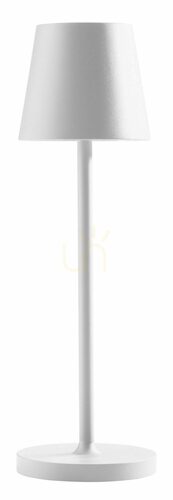
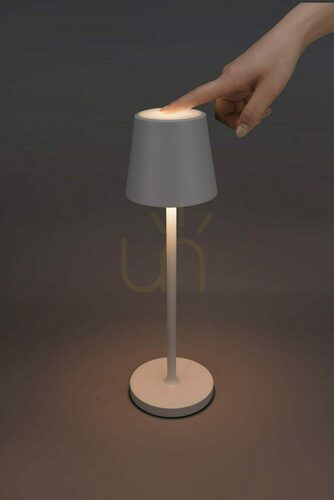
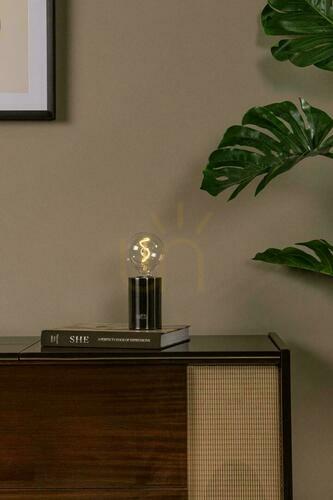
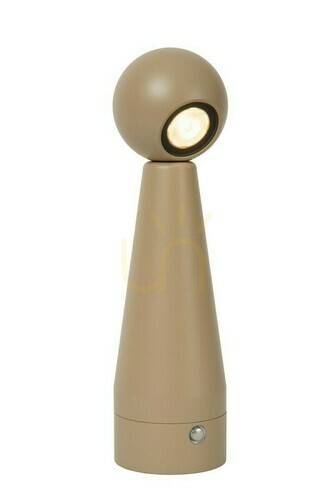
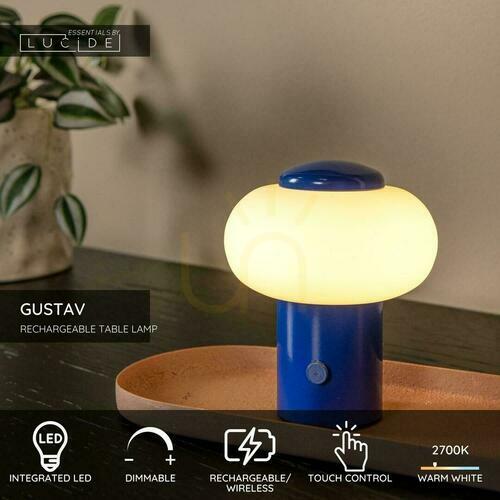
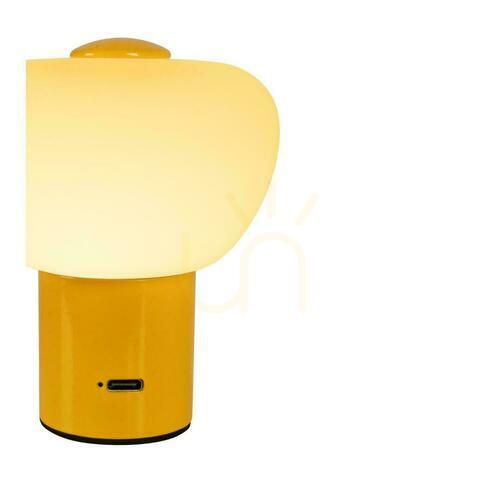
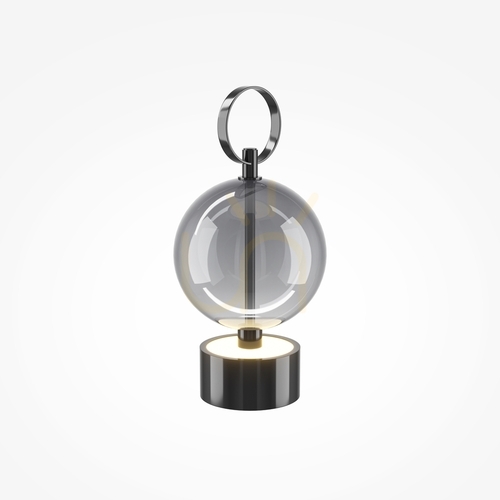
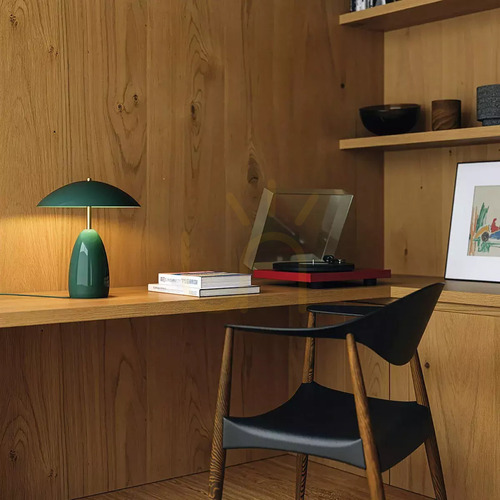
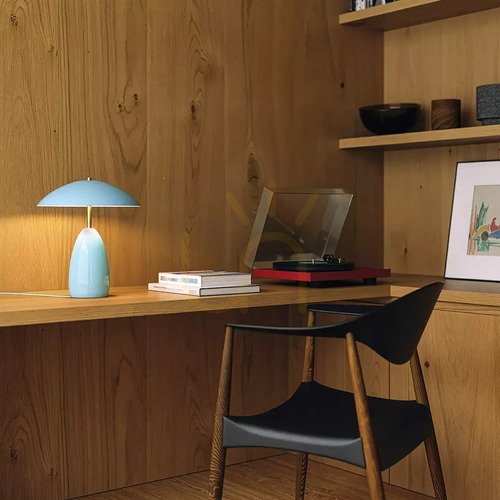
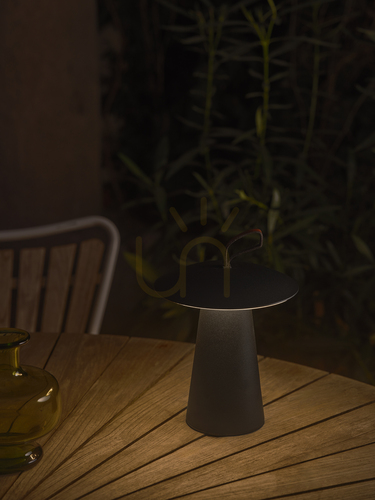
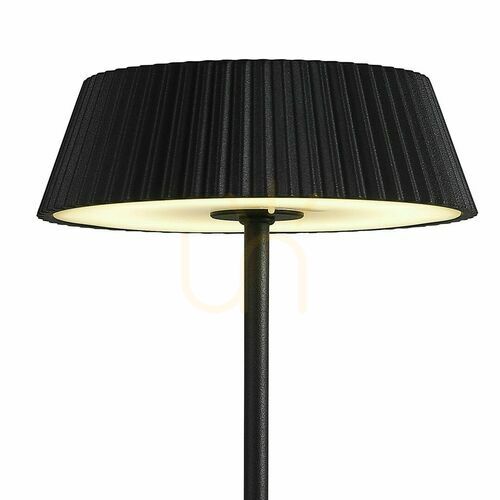
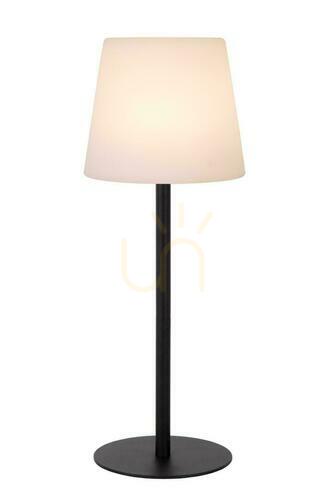
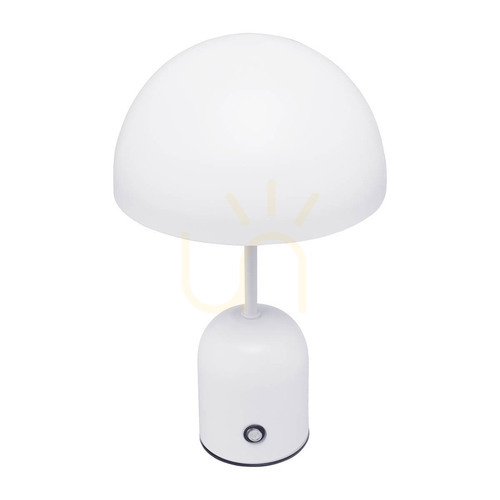
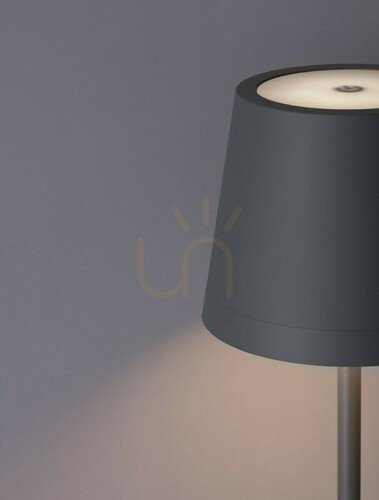
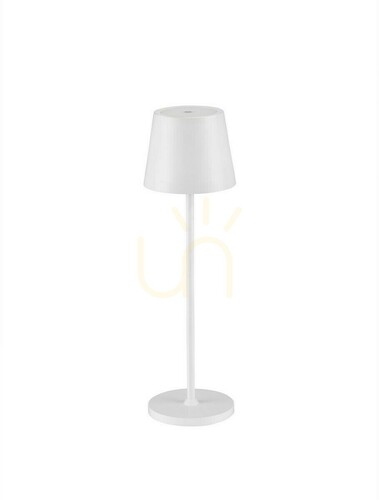
A rechargeable table lamp runs on a built-in battery, so it gives proper lamp light in places no socket reaches: the middle of a dining table, a kitchen island, a deep window sill or a garden table. The cable only comes out when the battery needs topping up; the rest of the time the lamp stands free and moves from room to room with you.
That freedom changes the job a table lamp does. A cordless lamp is accent and mood lighting rather than the main light of a room – closer to a candle that never drips than to the lamp on your side table.
What “cordless” means for a table lamp
Most cordless table lamps carry a lithium-ion battery, typically somewhere between 2,000 and 5,000 mAh, charged by USB cable – USB-C on recent designs, micro-USB on older ones. Some decorative lamps sit on a charging base or click onto a magnetic connector instead, which is why you see them on every table in restaurants and hotel bars: staff simply line them up on their docks during the day.
A smaller group takes replaceable AA or AAA batteries. They cost less to buy, but nightly use gets through cells quickly, so swap in rechargeable NiMH batteries if you go that way.
British homes, particularly older ones, rarely have a socket where you would like a lamp. Alcoves either side of a chimney breast, a bookcase in the hall or the centre of a farmhouse table all tend to end up with a trailing lead or no light at all. A cordless lamp solves exactly that problem.
What to look for
Three figures tell you most of what you need: brightness in lumens, runtime and IP rating. Check that the runtime quoted matches the brightness you will actually use – manufacturers like to give the figure for the lowest setting.
| Feature |
Typical range |
What it means at home |
| Runtime |
about 4–8 h on full, tens of hours on the lowest step |
several evenings per charge at a medium setting |
| Brightness |
25–90 lm for ambience, 100–300 lm at maximum |
aim high if you want to read by it |
| Colour temperature |
2200–3000 K, some switchable up to 4000–6500 K |
2700 K feels like an old filament bulb |
| Charging time |
about 3–6 h |
a standard 5 V USB phone plug is usually enough |
| IP rating |
IP20 indoors, IP44 or IP54 splash-proof, IP65 weatherproof |
IP44 at least for a patio or bathroom |
Controls make a bigger difference than you might expect. A touch dimmer with three steps or a smooth slide is the norm, and many lamps remember the last level you chose. Some add a remote, an app or a timer. A switch hidden under the base is fiddly in the dark; a touch pad on top of the shade is easier.
Where they work best
-
Dining tables and kitchen islands – a lamp of 20–30 cm sits below eye level, so nobody squints across the table, and no flex hangs off the edge.
-
Patios and balconies – choose IP44 or higher. Splashes and dew are fine; a night of British rain is not, so bring it in.
-
Bedrooms and nurseries – no lead to trip over or pull. For children’s rooms, look for opal glass or a soft silicone body that won’t dazzle or shatter.
-
Bathrooms – a battery lamp with IP44 gives soft light for a bath without any wiring work.
-
Shelves and alcoves – a small lamp lifts a dark corner without anyone running a new circuit.
Battery care and common mistakes
A lithium-ion cell generally manages a few hundred full charge cycles, roughly two to three years of everyday use before capacity drops noticeably. Heat and running it completely flat do the most harm, so keep the lamp off sunny sills and away from radiators. If it is going into a cupboard for winter, leave it about half charged and top it up every couple of months.
In the cold it will run for less time; that recovers once it warms up. Don’t charge a lamp that has been out on a frosty balcony until it has come back to room temperature. Before buying, check whether the battery can be replaced, as many are glued in. Wipe it with a dry or barely damp cloth, never while it is on charge.
FAQ
Are rechargeable table lamps any good?
For mood and accent light, yes. They give a warm, steady glow anywhere you like and cost very little to run. They are not bright enough to light a whole room, and the battery will eventually wear, so treat them as a second layer of light rather than the only one.
How long does a rechargeable table lamp last?
Per charge, usually 4–8 hours on full brightness and far longer dimmed. Over its life, the battery typically keeps most of its capacity for a few hundred cycles – a couple of years of nightly use.
Which rechargeable lamp is best?
The one whose runtime, brightness and IP rating match where it will live. For a dining table, a warm 2200–2700 K lamp with a dimmer; for a patio, IP44 or above; for reading, the higher end of the lumen range.
Can I use a cordless lamp while it is charging?
Many allow it, some switch off on charge – the instructions will say. If it would spend most of its time plugged in, an ordinary mains table lamp is the better choice.
Can a rechargeable table lamp go outside?
Only if it is rated IP44 or higher, and ideally under cover. Bring it in overnight and store it indoors for the winter.
For a lamp that stays put by a socket and never needs charging, browse table lamps on mains power. If the spot you have in mind is the bedside, have a look at battery-powered bedside lamps.