
The 10 best garden lights of 2026 – ten makers compared, with the specs that decide
Most garden lighting advice stops at “light the path and the plants”. Then you are standing in a shop in front of forty lamps and every one of them looks like it can take rain. So we did it the other way round. Ten lamps from ten manufacturers, each for a different job: a ball light on the lawn, a lantern by the door, a bollard along the path, a spike spot in the border, a drive-over fitting in the driveway. For each one we give the things that really decide whether it survives its second winter: IP rating, impact rating, the bulb and the warranty. Almost every one of them has siblings in other sizes and finishes, so we say what else is in the range too. In a hurry? The table is enough. Want to know why the cheaper lamp is sometimes the better one — keep reading.

Table of contents
- How we picked these ten
- The four specs that actually decide
- The comparison table
- 1. Lunares LUNA BALL – the decorative ball light
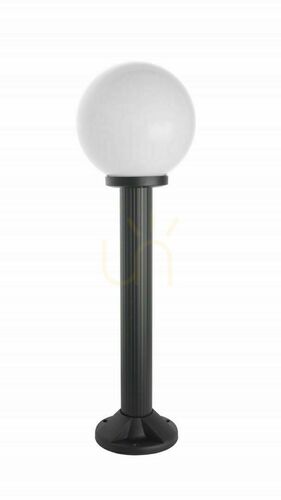
- 2. Norlys – the one built to outlast the house
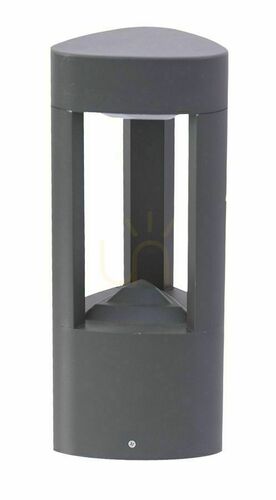
- 3. SU-MA FORM – the path bollard
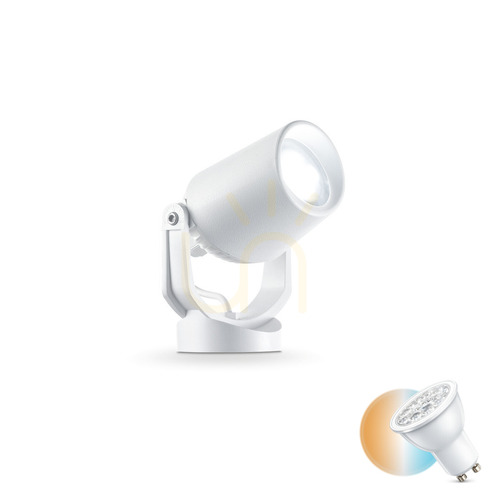
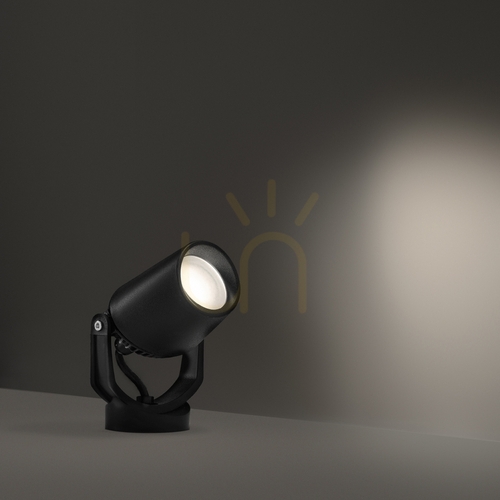
- 4. Maytoni Scope – the spike spotlight
- 5. SpectrumLED LUKKA – the drive-over fitting
- 6. Lutec CATE – the wall lantern
- 7. Ideal Lux Fiesta – the festoon
- 8. Mareco Luce TEO – the post-top lantern
- 9. Lucide ARNE-LED – the compact wall light
- 10. V-TAC VT-838 – the budget bollard
- Putting them together: light in layers
- Frequently asked questions
- Summary
How we picked these ten
Three rules we applied before anything made the list.
One manufacturer per place on the list. Ten versions of the same lamp is not a ranking, it is a product page. So every place goes to a different maker and answers a different question: the lawn, the front door, the path, a border, the driveway, a table under the open sky. Where several brands were in the running for one place, we took the one that publishes more data about its lamp.
In stock with us. Every lamp on the list is in stock and you can order it. That sounds like a detail, and it is the reason a few obvious candidates are missing. Recommending a lamp you cannot buy is not advice.
Numbers instead of adjectives. Every figure below comes from the product data we ship with the lamp: ingress protection, impact resistance, dimensions, lamp holder, whether a bulb is in the box, the length of the warranty. Where a manufacturer does not publish something, we say so. We do not guess.
The four specs that actually decide
IP rating, or how much water it survives. Look at the second digit. IP44 is protection against splashing from any direction, and that is enough for a lamp standing on a lawn, on a terrace or mounted on a wall under the open sky. IP54 adds dust protection, which suits a bollard beside a path. IP65 means the fitting survives a jet of water. That is what a spot sitting low in a planting bed needs, the one that gets hit by the hose. IP67 is temporary immersion, IP68 is continuous. Save that range for anything going into the ground, into a driveway, or anywhere water stands after heavy rain. Read the IP code first, but not last. It also matters whether the manufacturer intends the lamp for that spot at all, what load rating it declares where cars cross, and how you install it: drainage, cable protection, mounting.
IK rating, or how much impact it survives. Few manufacturers publish it, and in a garden it means more than indoors. Mowers throw stones, children throw everything else. IK08 is a five-joule impact, so a solid kick. Anything standing in grass at ankle height will make use of that. A lamp three metres up a wall will not.
Replaceable bulb or built-in LED. An E27 holder means you choose the colour of the light yourself, you replace the bulb when it blows, and you can dim it by fitting a dimmable bulb. A built-in LED module gives you a slimmer body, a known lumen figure and nothing to buy separately. But when the diode ages, the whole lamp is done. Neither is better in itself. For decorative light, where the point is a warm glow, the replaceable bulb wins. For a bollard that has to put a specific amount of light on a path, the LED module usually does.
Warranty, the one number you can compare. The manufacturer’s warranty period is one of the few figures you can put side by side across lamps. On this list it runs from two to five years. It is a commercial commitment with its own terms, separate from your statutory consumer rights, which look different in every country. Read the number as how much risk the manufacturer takes on, not as a promise about how the material will age. On metal lamps, look separately for an anti-corrosion warranty: it covers the finish rather than the function, and one manufacturer on this list gives twenty-five years of it.
One more thing, because it decides more purchases than everything above: warm white, 2700–3000 K, is the default outdoors. It suits brick, wood and greenery, it looks like evening rather than a car park, and it attracts noticeably fewer insects than cold white. Neutral white, 4000 K and up, has its place on a driveway and where you work. Almost nowhere else in a garden.
The comparison table
| # | Lamp | Where it works | What it survives | Bulb | Size | Warranty |
|---|---|---|---|---|---|---|
| 1 | Lunares LUNA BALL 30 cm | decorative light on a lawn | IP44, IK08 | E27, bulb included | ball, ⌀ 30 cm | 5 years |
| 2 | Norlys BOLOGNA 315B | a post that outlasts the house | IP54 | E27, you add the bulb | post, 117.5 cm tall | 5 years, and 25 on corrosion |
| 3 | SU-MA FORM 80 cm | lighting a path | IP54 | LED built in, 7 W and 700 lm | bollard, 80 cm tall | 3 years |
| 4 | Maytoni Scope | uplighting plants and walls | IP65 | GU10 up to 20 W | 29.5 cm tall, on a ground spike | 2 years |
| 5 | SpectrumLED LUKKA | driveways and terraces | IP67 | GU10, you add the bulb | ⌀ 10.8 cm, cut-out ⌀ 100 mm | 2 years |
| 6 | Lutec CATE | a wall by the door | IP44 | E27, you add the bulb | 20 cm tall | 5 years |
| 7 | Ideal Lux Fiesta SP10 | a dining area under the sky | IP44 | 10 × E27, bulbs included | string, 605 cm long | 5 years |
| 8 | Mareco Luce TEO | a lantern head for an existing post | IP54, IK06 | E27 up to 20 W, you add the bulb | 311 × 195 mm, fits ⌀ 60 mm posts | not published |
| 9 | Lucide ARNE-LED | a small wall light, no bulb to buy | IP44 | LED built in, 5 W and 350 lm, warm 2700 K | 11.5 cm tall | 2 years |
| 10 | V-TAC VT-838-45 | the cheapest way to start | IP44 | E27, you add the bulb | 45 cm tall, stainless steel | 3 years |
The table answers “which one”, but not “how many” – that comes at the end, in light in layers.
1. Lunares LUNA BALL – the decorative ball light
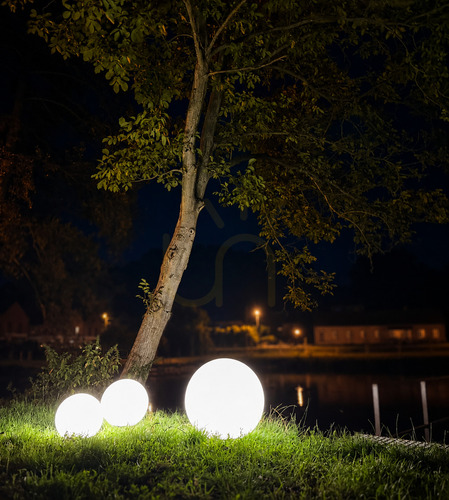
This is our own brand, and it opens the list for one reason: no other lamp here does the same thing. The sphere glows evenly all over and you cannot see the bulb inside it.
It comes down to how it is made. The diffuser is white PMMA, acrylic that holds up to UV, so it does not yellow after three summers. That is exactly where cheap garden balls fail. The walls are thick enough that the bulb stays hidden and the whole sphere glows instead of showing one bright spot. The 30 cm version, the size most people should start with, is IP44 and IK08, has an E27 holder with a bulb included, weighs 760 grams and comes with a five-year warranty.
What else is in the range: diameters from 15 to 60 cm. Sets of two, three and four spheres in mixed sizes, if you would rather have a composition than a single point of light. A PLINTO version on a plinth, for terraces and paving where a spike has no soil to grip. And a half-sphere wall version for walls, gateposts and pergola uprights. They all share the same IP44, but the warranty is not shared: the spheres and sets below carry five years, the PLINTO and the wall version three.
One limit, to be clear about it: IP44 is splash protection and no more. A LUNA BALL is for standing on a lawn, on gravel or on a terrace. Not in a border where water collects, and not in the ground. That is what position five is for.







2. Norlys – the one built to outlast the house
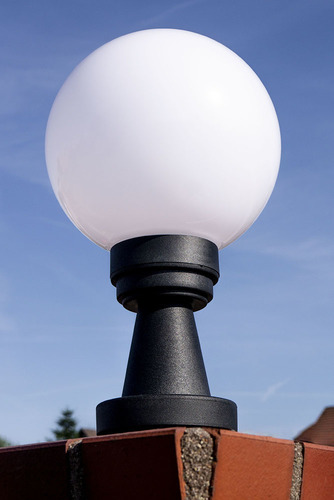
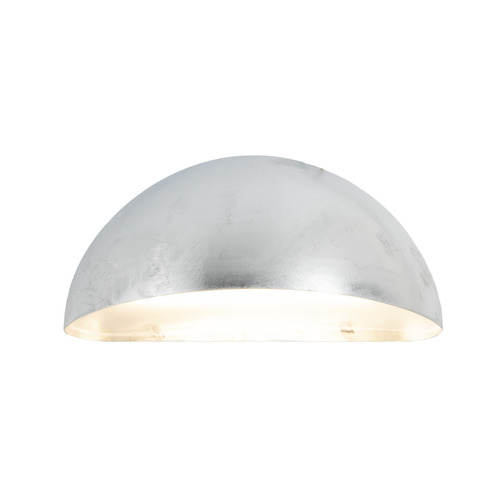
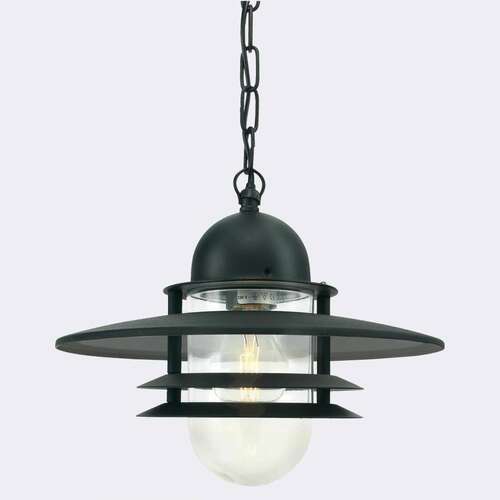
Norlys answers a question most garden lighting ignores: what happens in year fifteen. The BOLOGNA 315B is an aluminium post 117.5 cm tall with a sphere diffuser on top, IP54, with an E27 holder. Behind it sits a twenty-five year anti-corrosion warranty alongside five years on the product.
That figure is the whole argument here. Most outdoor lamps rust from the fixing outwards, and a warranty measured in decades means the manufacturer is putting its own money behind what it says. You see it most where the weather is worst: coastal air, roads salted through winter, a driveway that stays wet from November to March.
On many of its lamps Norlys also publishes a BUG rating, the classification for backlight, uplight and glare. It tells you directly how much light goes into your neighbour’s window and the sky instead of onto your path. Very few manufacturers publish it at all.
What else is in the range: the COMO 375B standing lamp at 110 cm, with a softer, vintage silhouette. The STOCKHOLM 281BL park lantern, adjustable in height from 151 to 248 cm. The PARIS 160 wall lantern in hot-dip galvanised zinc, a finish that ages instead of failing. And the OSLO pendant in copper at IP55 for a porch or a covered entrance. Black RAL 9005, graphite RAL 7016, galvanised zinc and copper come back across the range, so a whole garden can be done in one style.




3. SU-MA FORM – the path bollard
Ball lights and lanterns are decoration that happens to give light. A path you walk along after dark needs the opposite: light aimed downwards, in a specific quantity, below eye level.
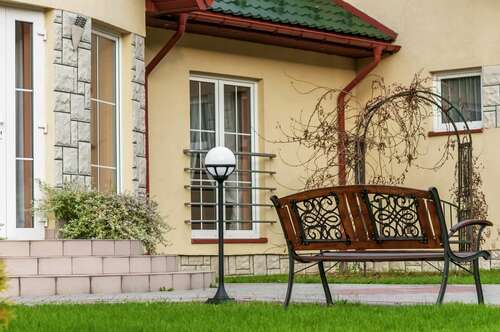
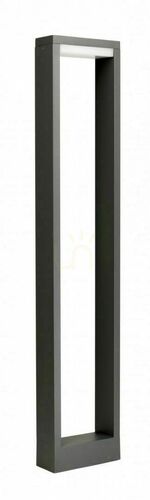
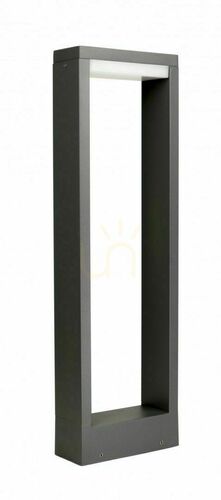
FORM is 80 cm of dark grey aluminium with a built-in 7 W LED module delivering 700 lumens, IP54, with switchable colour temperature (3000, 4000 or 6000 K) and a three-year warranty. It is here because the manufacturer publishes the lumen figure. On a path you need to know how much light you are getting, and 700 lm every four to five metres gives you a walkway you can see clearly without being dazzled.
Set them along one side of the path, not both, and stagger them where the path curves. The built-in module is the trade-off: nothing to buy, nothing to swap, but in ten years you cannot change the light in it.
What else is in the range: the same bollard in a 50 cm version, for lower plantings and shorter approaches, and the JOY post in polished stainless steel with an E27 holder — for anyone who would rather choose the bulb themselves and keep a lamp that can be repaired.
4. Maytoni Scope – the spike spotlight
Everything above lights a place. This one lights an object. One uplit tree does more for a garden after dark than any number of evenly spaced lamps, because it gives the eye something in the distance to settle on.
Scope is a black aluminium spike spot, 29.5 cm tall, IP65, with a GU10 holder taking up to 20 W and a two-year warranty. IP65 is what matters here. Pushed into a border, at ground level, it will be hit by the hose, by sprinklers and by the water running off a lawn in a storm. Splash protection would not be enough.
Aim it from the side rather than straight up, about a metre from the trunk, and let the light graze the bark. That is when you see the texture that flat frontal light hides completely. Two spikes on a multi-stemmed tree, one on a wall to wash a climber, and the garden has a depth that a dozen path lights will never give it.
What else is in the range: we carry spike spots from about 8 to 35 cm tall and from IP55 to IP66. The taller the spike, the easier it is to clear low planting without tilting the beam steeply upwards.




5. SpectrumLED LUKKA – the drive-over fitting
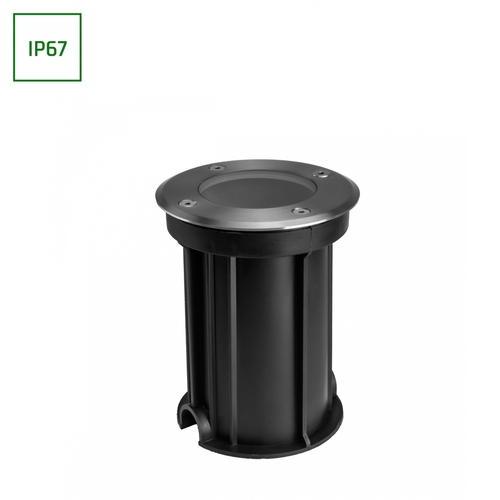
The fifth lamp is the one you never see. LUKKA is recessed into the surface: an aluminium and tempered glass body, 10.8 cm across, 14 cm deep, for a ⌀ 100 mm cut-out, IP67, rated for driving over. It sits flush with a driveway, a terrace or a path and takes the weight of a car. Add a GU10 holder, an operating range of −20 °C to +40 °C and two years of warranty.
IP67 is temporary immersion, and that is exactly what a fitting sunk into paving needs. Rainwater pools on a driveway, and anything below that rating will fill with water and fail sooner or later. The second requirement is the load rating. A fitting only belongs under a car if the manufacturer declares it drive-over — as this one does. That is why none of the lamps above can be used this way, however tempting the flush look is.
Spaced well, drive-over fittings mark the edge of a driveway without a single lamp standing up, so the view from the house stays clean. Spaced too closely, they turn the driveway into a runway. Keep them to one edge, leave good gaps between them, and plan them before the paving goes down, not after.
What else is in the range: the same fitting in a square body, 110 × 110 mm over the same ⌀ 100 mm cut-out — for paving laid in straight lines.


6. Lutec CATE – the wall lantern
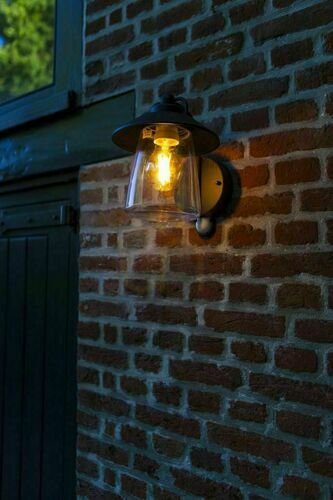
A garden has more vertical surfaces than most lighting plans use, and the wall beside the front door is the one you use every day. CATE is an aluminium and glass wall lantern in an industrial rust finish, 20 cm tall, IP44, with an E27 holder and a five-year warranty. It dims if you fit a dimmable bulb.
Five years of warranty in this price class is worth noticing. Manufacturers of lamps costing several times more give the same.
Mount it at 180–220 cm. Lower and it shines straight into the eyes of anyone walking towards it, higher and it lights the wall instead of the door. Two lanterns either side of a door look deliberate. One off to the side looks like it was added later.
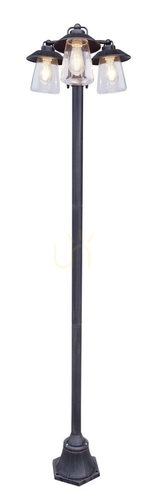
What else is in the range: the black aluminium version has a built-in motion sensor and dusk sensor. For a front door that is usually the one to buy, because light that greets you when your hands are full is worth more than light you have to switch on. The rust finish comes down to ground level too: there is a 94.5 cm garden post and a three-light 190 cm pole lantern, at the same IP44, on E27 and with the same five-year warranty as the wall lantern. The wall by the door and the walk up to it can come from one family.



7. Ideal Lux Fiesta – the festoon
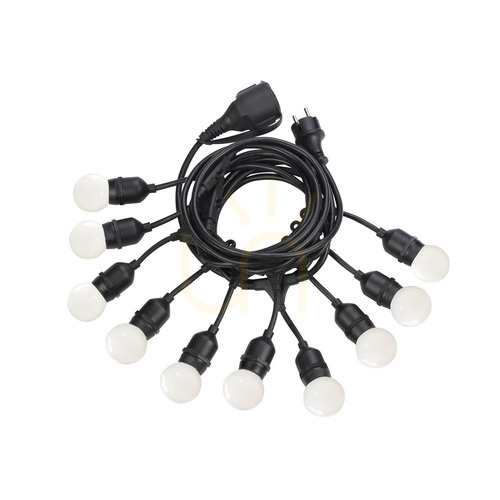
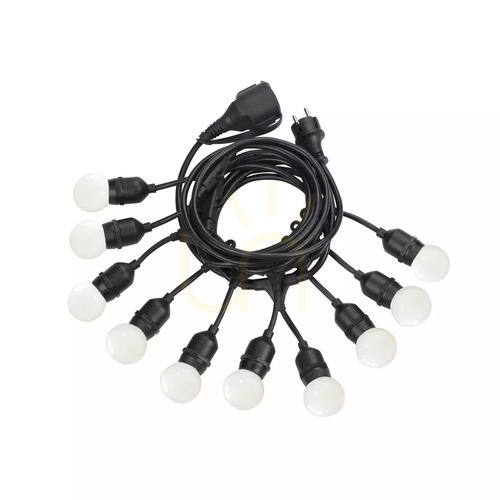
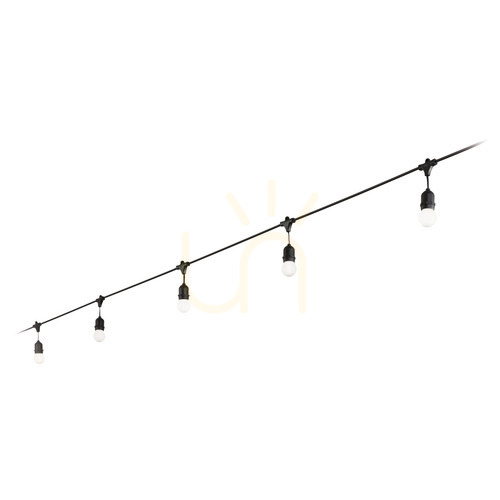
Nothing else on this list turns a terrace into an outdoor room the way a festoon does. Fiesta SP10 is 605 cm of black cable with ten E27 holders, IP44, bulbs included and a five-year warranty. Strung above a table it gives you the ceiling a terrace does not have.
Run it straight above the table, or in two or three gentle swags between the house and a tree. Support long spans on a steel wire rather than on the cable itself, and leave at least 210–220 cm of clearance where people walk underneath. The best atmosphere comes from warm filament bulbs of modest output, 2200–2700 K. They do not glare when they hang above your head.
What else is in the range: a 404 cm version with five holders, for smaller terraces and balconies, and extension leads for joining runs together. You fit the length to the space, not the space to the length.


8. Mareco Luce TEO – the post-top lantern
This one solves a problem nobody thinks about until they have it: there is a post in the garden and nothing good to put on top of it. TEO is an Italian lantern head, 311 × 195 mm, IP54 and IK06, with an E27 holder up to 20 W. It mounts directly on the top of a ⌀ 60 mm post, on two screws.
And that measurement is the whole point. Driveway posts, gate posts and older lighting columns are overwhelmingly ⌀ 60 mm at the top. A head that fits it renews an existing installation for the price of the fitting rather than the price of a rebuild.
The shade diffuses the light and sends it downwards, so the head does not behave like a streetlight. That is the usual failure of tall lamps in small gardens.
What else is in the range: the same head in metallic grey. The chone lantern, ⌀ 246 mm and 290 mm tall, at IK08, the toughest impact rating among these heads. The low luna disc, ⌀ 240 mm and only 121 mm tall, for when the head should not rise above the post. The wider saturno lantern at ⌀ 320 mm. And easy lux at ⌀ 80 mm, when all that should sit on the post is the light itself. Every one of them takes the same ⌀ 60 mm top.


9. Lucide ARNE-LED – the compact wall light
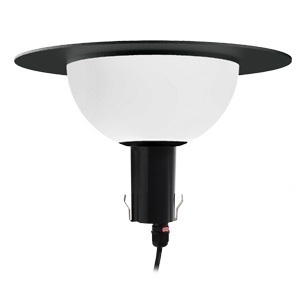
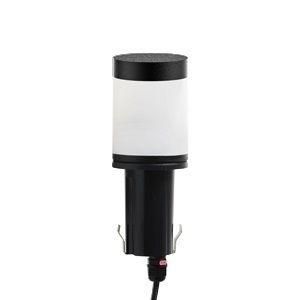
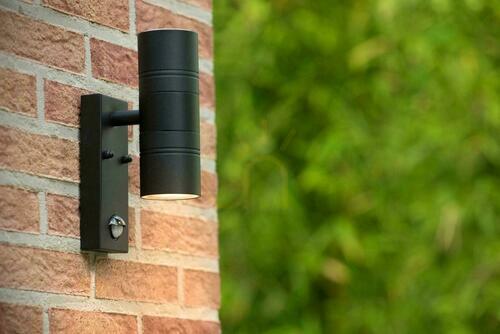
Not every wall needs a lantern. ARNE-LED is a stainless steel cylinder, 11.5 cm tall and 6.3 cm across, with a built-in 5 W LED delivering 350 lumens at 2700 K, a 38° beam, CRI 80, IP44 and a two-year warranty.
It throws a single narrow cone along the wall it is fixed to. Turned downwards on render or brick, it grazes the surface. That is one of the few effects that flatters a wall instead of showing up every flaw in it. In a narrow passage it has a second advantage: the light goes where you need it and nothing sticks out into the passage.
The colour and the output are fixed here: 350 lm at 2700 K. That is a real limitation, and also why this one is easy to buy. There is no bulb to choose, so there is no way to end up with cold white on the front of the house by accident.
What else is in the range: the same cylinder in black, for façades where bare stainless would stand out. Taller bodies at 16.3, 17 and 22.5 cm, among them versions with two light points that wash the wall above the lamp as well as below it. There are versions with a built-in motion sensor, which is usually what a side door or a passage wants. And the same cylinder again as a 36 cm garden post. They all keep the ⌀ 6.3 cm body, IP44 and two years of warranty. What changes is the length, the finish and how many directions they throw in.



10. V-TAC VT-838-45 – the budget bollard
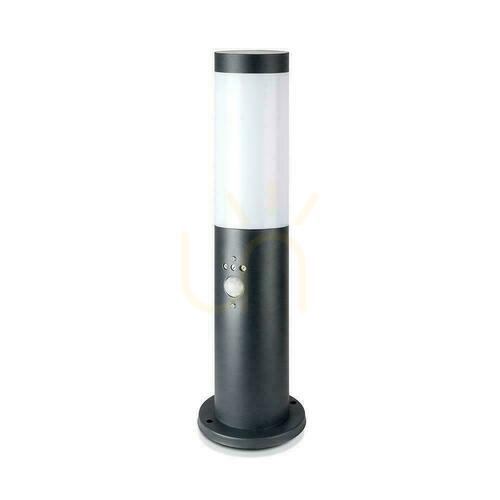
The last position is the most honest one: the cheapest sensible way to start. VT-838-45 is a black stainless steel bollard, 45 cm tall, with an E27 holder, IP44, 360° distribution, CE/EMC/RoHS certification and three years of warranty.
There is no built-in module, no published lumen figure and no colour temperature to quote, because all of that comes down to the bulb you fit. Which is the point. Three of these along a path, with warm 2700 K bulbs, cost less than one bollard from the top shelf and light the path perfectly well.
It loses to positions two and three in three places: IP44 instead of IP54, no published photometrics and a simpler finish. It does not lose in the others: stainless steel, an honest three-year warranty and an ordinary holder that will still take a bulb in ten years.
What else is in the range: the same bollard at 80 and 110 cm, for a path where the light has to sit higher. The same body in brushed steel and in grey, where black would disappear into the planting. There are also versions with a built-in motion sensor, which is usually what a drive or a side gate wants. They all keep the stainless steel body, IP44, the 360° distribution and the E27 holder.




Putting them together: light in layers
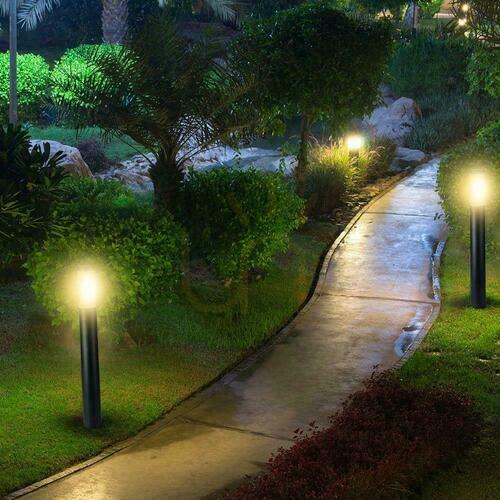
A garden that looks good after dark almost never has just one kind of lamp. You need three layers, in this order:
- Orientation — the light that lets you walk safely: bollards along the path, a lantern by the door, drive-over fittings at the edge of the driveway. Practical, aimed down, nothing to look at. You notice this layer only when it is missing.
- Atmosphere — ball lights on the lawn and the terrace, a festoon above the table. Low and warm, 2700–3000 K. This is the layer that makes a garden look lived in rather than merely lit.
- Accent — one or two spike spots on a tree, a shrub or a wall. In small amounts they give the garden depth. In large amounts they turn it into a car park.
A plan that works on an average plot: two to four bollards along the main path, three ball lights grouped together on the lawn, one lantern at the door, one spike spot on the best tree in the garden. Add a timer or a dusk sensor so it all comes on by itself. Keep everything that stays outdoors permanently at IP44 or better, and anything sitting at ground level at IP65 or IP67.
And two habits worth more than any purchase: aim the light downwards, and use less of it than you think. A garden lit as brightly as a room looks like an office car park. The same garden at a third of that brightness, warm, with one uplit tree, looks like somewhere you want to sit.
Frequently asked questions
What IP rating do garden lights need? IP44 is the minimum for anything that stays outdoors permanently, and it is right for lamps standing on a lawn or a terrace and for lamps on a wall. IP54 suits bollards and post-top lanterns. IP65 is for fittings at ground level in planting beds, where hoses and sprinklers reach them. Anything going into the ground, a driveway or paving needs at least IP67, because rainwater pools there. IP68 is continuous immersion. The IP code is the start of the answer, not all of it: check that the manufacturer intends the fitting for that position, and on a driveway, that it declares a drive-over load rating.
How many lumens do I need in a garden? Far fewer than indoors. A bollard giving around 700 lm every four to five metres lights a walkway perfectly well. Decorative lamps work best well below that, because the point is the glow, not the illumination. If you can read a newspaper by your garden lighting, it is too bright.
What colour temperature is right outdoors? 2700–3000 K, warm white, for everything decorative and anywhere people sit. It suits brick, wood and foliage, and attracts fewer insects than cold light. Keep 4000 K and above for driveways and work areas.
What is an anti-corrosion warranty and does it matter? It is a separate promise from the product warranty: it covers the finish against rust, not the lamp against failure. On metal lamps outdoors it is the more useful of the two, because corrosion is usually what ends a lamp’s life. Twenty-five years, as on position two, is exceptional. Three years is common. Most manufacturers publish none at all.
Can a ball light be buried in the ground or set flush in a lawn? No. Ball lights are IP44, which is splash protection, not immersion. Anything going into the ground needs at least IP67 and a fitting the manufacturer intends for that position — that is what position five is for. Ball lights stand on the surface, on a spike pushed into soil or on a plinth on paving.
Are solar garden lights an alternative? For accents in a spot that gets real sun all day, yes. For a path you rely on, no. Output falls after a cloudy day and collapses in winter, exactly when the evenings are longest. That is why every lamp on this list is mains powered.
Which lamp should I buy first? If the garden has no lighting at all, start with the path and the door, so a run of bollards and a wall lantern. That is the layer that changes how you use the garden. Buy decorative light second — it tempts more and does less on its own.
Summary
Ten lamps, ten manufacturers, four decisions. Choose the IP rating by where the lamp will physically sit: IP44 above ground, IP54 for bollards, IP65 in a border, IP67 and higher in the ground. While you are at it, check that the manufacturer intends it for that position at all. Choose between a replaceable E27 bulb and a built-in LED module by whether you care more about controlling the light or about knowing the lumen figure in advance. Compare the warranty periods, and on metal lamps look for a separate anti-corrosion number. And keep the light warm and low: 2700–3000 K, aimed downwards, less of it than feels right in the shop.
The full range is in Garden lamps and garden lighting, the ball lights are in Garden Ball Lights, and the bollards and path lighting in Bollard Lights.
Dawid Skłodowski


Maybe you will be interested in products from these categories?
Outdoor Lights, Garden Ball Lights, Bollard Lights
Tags & Blog Categories