Pendant lamps for the bedroom: functionality, style and mood in one
The bedroom is your private comfort zone - a place where you relax, read, talk and prepare for a new day. A well-chosen pendant lamp for the bedroom can transform this space like nothing else: it visually organizes the room, sculpts the textures of fabrics and wood with light, and in the evening turns the interior into a soothing, cozy oasis. In our "Pendant Lamps for the Bedroom" category, you will find solutions that combine timeless aesthetics, comfort and modern features - from dimming to control from your phone. The following guide will help you choose the perfect model for your space, style and rhythm of the day.
Why you should choose pendant lamps for the bedroom
Pendant lamps provide even general light and build a clear compositional point above the bed or in the axis of the room. Suspended lower above the zone where you do not move while standing (e.g.. above the bed), create a cozy dome of light, promoting relaxation. Depending on the shade and diffuser, they can either give a soft, diffused light or a clear, directional beam - ideal for highlighting architectural details. In addition, modern models offer dimming, change of color temperature (CCT) and compatibility with smart systems, so you can easily adjust the mood according to the time of day.
Materials and styles - match the lamp to the character of the interior
In the bedroom, materials that
diffuse and
soften the light usually work well. Choice creates ambience:
-
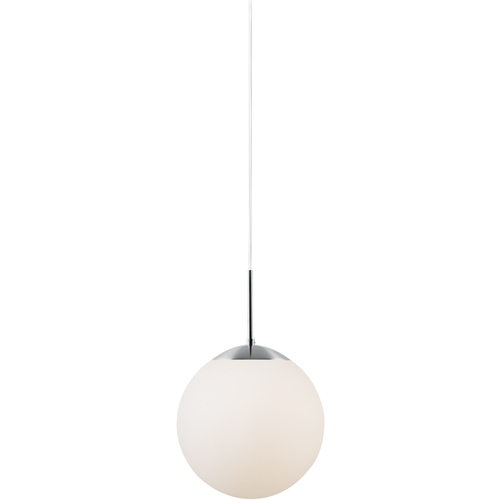
Opaque glass - guarantees uniform, soft light without glare; perfect for a relaxation area.
-
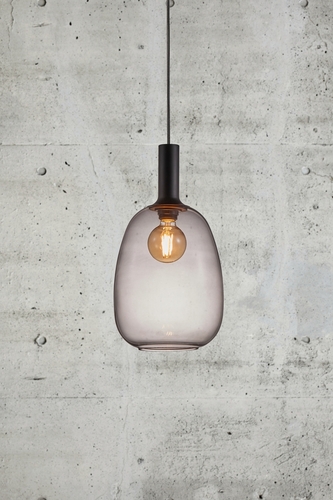
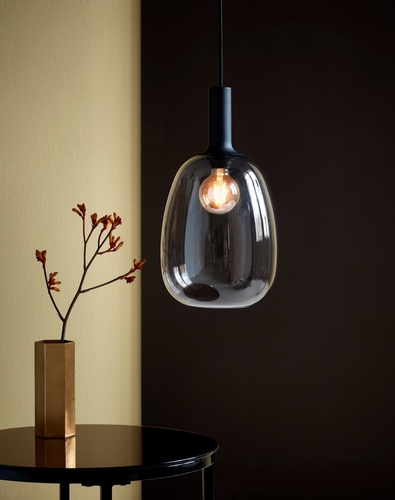
Transparent or smoked glass - adds depth and ambience; be sure to include an aesthetically pleasing
- light
bulb (e.g.. LED filament).
-
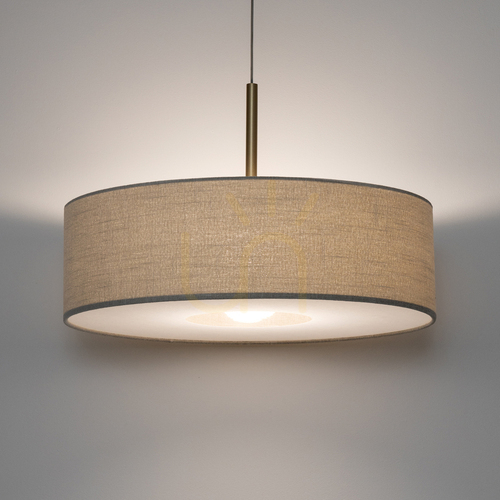
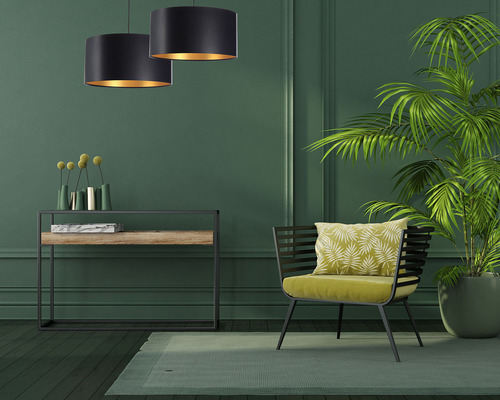
Fabric (linen, cotton, velour) - filters light, warms the interior and improves acoustics; great for soft glam and modern classic arrangements.
-
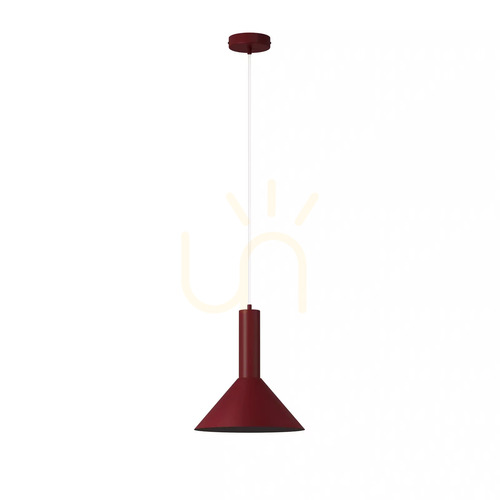
Metal (black, gold, brass, chrome) - introduces a jewelry accent and pairs the lamp with furniture hardware or mirror frames.
-
Wood/furnir - organic coziness; pairs nicely with white glass.
Stylistically, you can go in the direction of minimalism (one sculptural form), New York modern classic (opal spheres in a gold rim), soft loft (smoked glass on a black frame) or japanese (simple, natural materials, matte finishes).. The key is consistency: repeat the material or color of the lamp in other details (handles, frames, textiles), and the whole will "play".
Size and proportions - how to choose the diameter and height of the suspension
The scale of the lamp should correspond to the width of the bed and the size of the room. A simple rule of thumb works:
shade diameter ≈ 1/3-1/2 of the bed width. In practice:
- small bedroom (up to 12 m²): 30-40 cm, low height fixture;
- medium (12-16 m²): 40-50 cm - a universal choice;
- large (more than 16 m²): 50-70 cm or duo/trio of smaller fixtures on axis.
Suspension height depends on the location. Leave min over transition. 200-210 cm clearance. Above the bed, you can go lower - so that you do not hook your head when sitting down; usually 80-90 cm above the bed top works out, or so that the bottom edge of the lampshade is approx.. 120-150 cm above the mattress. For bevels, choose a lamp with a shorter cord or a plafond/hybrid.
Light that promotes rest - lumens, Kelvins and CRI
In the bedroom,
visual comfort matters. Instead of thinking "how many watts?", look at the
lumens (lm) - they tell you about the brightness. For general light, take a guideline of
100-150 lm/m². Example: room 14 m² → 1400-2100 lm at base. For reading, add a side layer: wall sconces or bedside lamps at
250-400 lm per spot.
Color temperature (K) shapes the mood:
-
2700-3000 K - warm, relaxing; ideal for evening, calms and "warms" gold and wood details.
-
3500-4000 K - neutral, useful for morning preparations and closet selection.
The greatest flexibility is given by CCT (Tunable White) - you will adjust the color to the time of day with a single gesture.
CRI (Ra) tells you about the fidelity of color rendering. In the bedroom, aim for a CRI ≥ 90 so that the colors of fabrics, wood and leather look natural, and makeup and closet are judged in reliable light.
Functionality in a modern way - dimmable and smart
-
Dimmable (dimmable) allows you to smoothly switch from "cleaning" to "relax" mode.
-
Memory of the last setting is a convenience - when you turn off, you return to your favorite brightness.
-
Smart control (Wi-Fi/Bluetooth/Zigbee) allows you to create scenes: "Reading", "Morning", "Goodnight", as well as schedules and wake-up lights.
-
Directional adjustment in multi-point sets or bedside lamps directs the beam at the book, not into the eyes of a partner.
Placement - centrally or asymmetrically?
Classically, a pendant lamp hangs centrally in the axis of the room or over the center of the bed. However, you don't have to stick to the canon. It is increasingly popular to hang a pair of slender pendants on the sides of the bed instead of traditional bedside lamps. This solution saves countertop space and builds elegant symmetry. Do you like dynamics? Opt for deliberate asymmetry: an overhang on one side, a wall lamp or table lamp on the other. In long, narrow rooms, two smaller overhangs aligned instead of one large one work well.
Layers of light - how to compose a complete scenario
The most convenient arrangement in a bedroom is
three layers:
-
General - the pendant lamp provides even, baseline brightness for daily activities.
-
Task - bedside lamps/shades with a narrower beam and their own switch; convenient for reading.
-
Accentual - an LED strip behind the headrest, a small table lamp on the dresser or a wall-wash sconce exposing the texture of the wall.
Thanks to the division into layers, the pendant lamp does not have to shine "to the max". You set the mood with a dimmer, and visual comfort remains high.
Small vs.. large bedroom - practical prescriptions
Small bedroom (up to 12 m²): low, visually light 30-40 cm luminaire, opal shade and dimming. Add two compact wall lamps/hangings by the bed and a small table lamp. Use glossy metals sparingly so as not to "clutter" the space.
Medium (12-16 m²): a 40-50 cm lamp, preferably with CCT and dimming; bedside lamps with directional control and USB port; a soft LED behind the headrest.
Large (16 m² and above): "statement" model 50-70 cm (opal spheres, LED rings, champagne brass) or a duo of lamps on axis; decorative wall lamps and two table lamps on the dresser will close the composition.
The most common mistakes and how to avoid them
-
Too cold light color in the bedroom takes away from the coziness. Stay with 2700-3000 K for evening; use neutral color only on an ad hoc basis.
-
One "do-it-all" lamp results in either excessive brightness or underexposure. Add side layers and accents.
-
Wrong scale (too small/too big lamp) disturbs proportions. Match the diameter to the bed and square footage, or use two smaller overhangs.
-
Glare with transparent shades - choose milky glass, blends, deeper LEDs and dimming.
-
Random mix of metals - decide on a dominant finish (e.g.. Gold, black, chrome) and repeat them consistently.
Maintenance and care - simple habits for years to come
Clean glass and acrylic with microfiber and glass cleaner; avoid rough sponges. Vacuum fabric lampshades with a soft brush or clothes roller; treat tougher stains with a mild upholstery cleaner (test in an invisible area). Wipe metal finishes dry; strong detergents can dull the coating. Touch light bulbs/LEDs by the shaft, not the bulb.
Safety and installation - what to remember
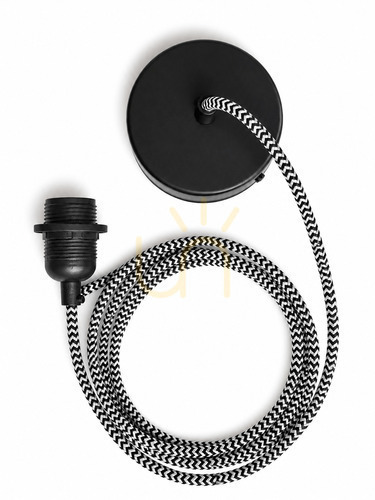
Always turn off the circuit in the switchboard and check the absence of voltage with a tester. Match the studs to the substrate (concrete/brick/GK) and make sure the ceiling will support the weight of the luminaire. Pay attention to the space for the LED power supply - in shallow boxes, choose lamps with mounting space. If in doubt, entrust the installation to an electrician. If your bedroom is in the attic, consider short-slung fixtures or hybrid plafonds.
Shopping checklist - a quick summary
- Room square footage and ceiling height (count the lumens needed).
- The role of the pendant lamp: base, accent, replacement for bedside lamps?
- Light color and CRI (2700-3000 K for evening, CRI ≥ 90).
- Functions: dimming, CCT, smart control, setting memory.
- Shade material and ease of cleaning; consistency with hardware and fabrics.
- Proportion to bed and ability to hang lower over mattress.
- Installation: load-bearing capacity, studs, driver space, secure connection.
FAQ - frequently asked questions
What lamps are best suited to a modern bedroom?
The most common choice is simple, geometric forms with opal glass, black or gold detailing. Minimalism or modern classic will work well in most arrangements.
How to choose a bulb for a pendant lamp in the bedroom?
Look for LED with a color of 2700-3000 K, power matched to the target lumens and CRI ≥ 90. Filament bulbs are a great match for the transparent lampshades.
Is a pendant lamp suitable for a small bedroom?
Yes, provided you choose the scale and height. In small rooms, a low, visually light fixture or two small overhangs on the sides of the bed will work.
At what height to hang the lamp over the bed?
Most often 80-90 cm above the surface of the bed, or so that the lower edge of the lampshade is approx.. 120-150 cm above the mattress. It is the comfort of sitting down and the lack of contact with the head that counts.
Is it worthwhile to have a specialist install the pendant lamp?
Yes - this guarantees safety, correct suspension and aesthetic cable routing. This is especially important with heavier fixtures and GK ceilings.
A well-designed pendant lamp for the bedroom combines function and style: it gives comfortable general light, builds mood and is the jewelry of the interior. By choosing the right material, color and proportions, and planning layers of lighting, you will get a space you want to return to - bright in the morning, soothing in the evening and always tailored to you.