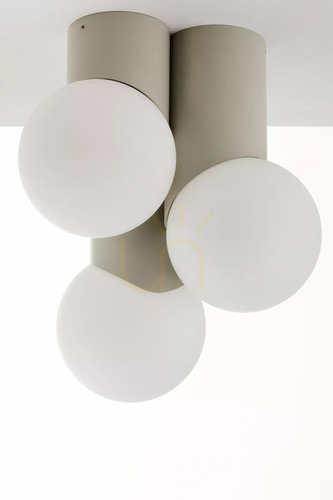
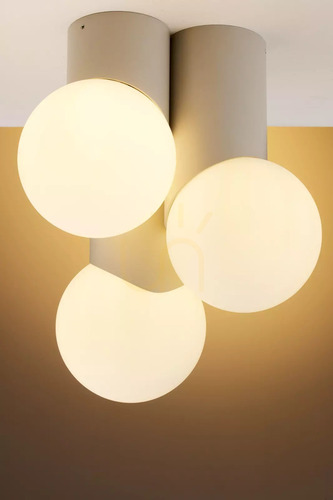
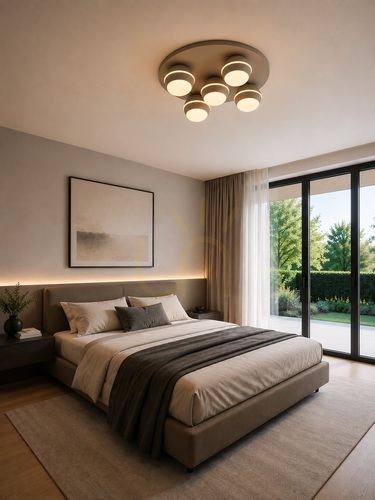
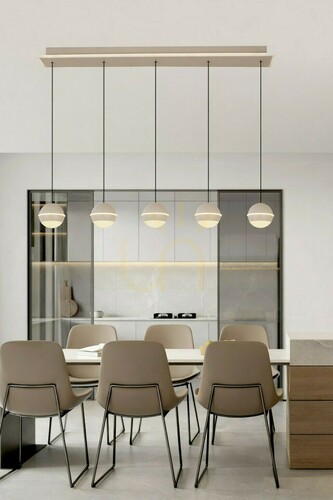
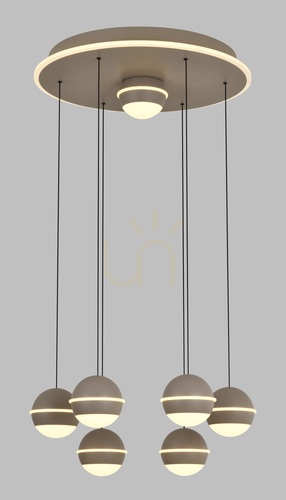
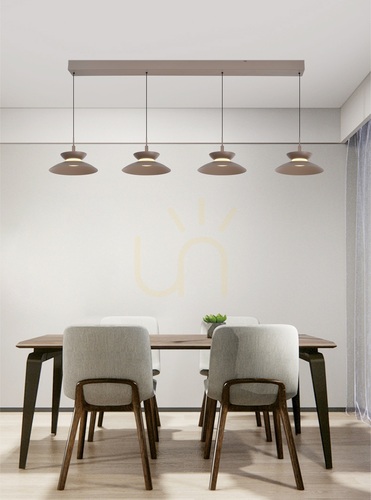
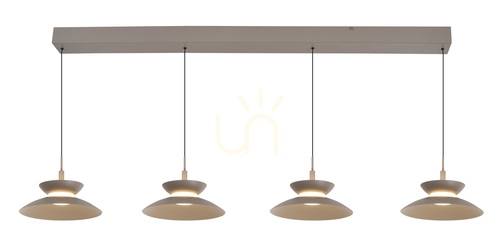
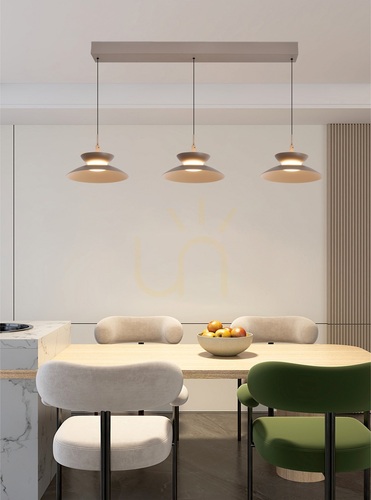
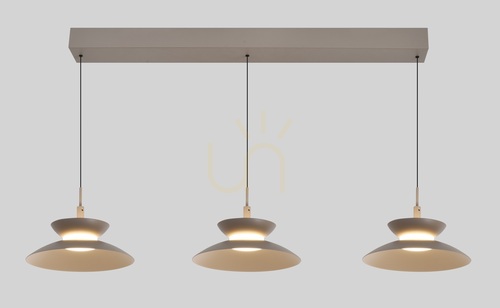
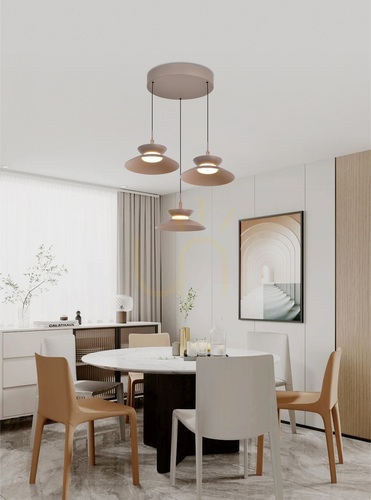
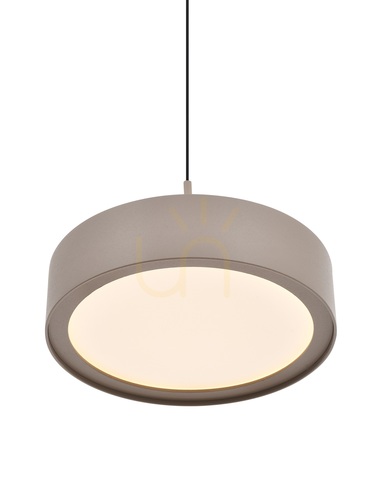
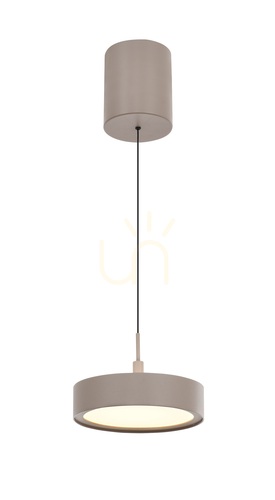
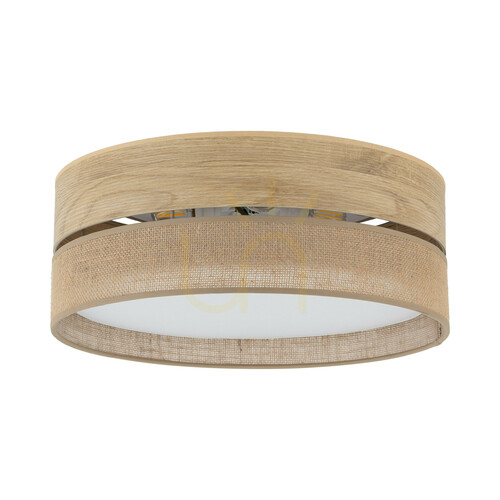
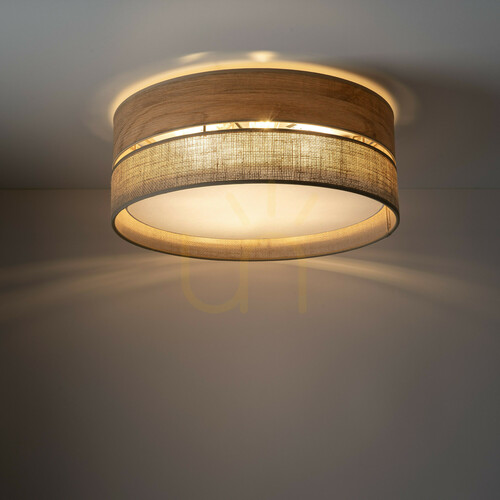
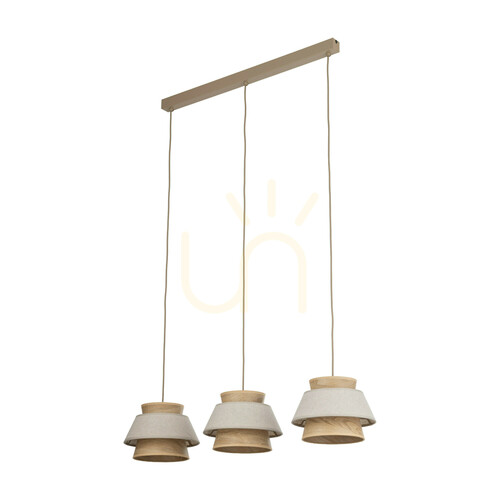
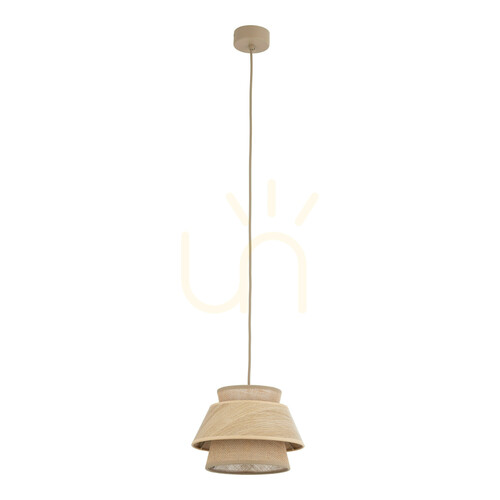
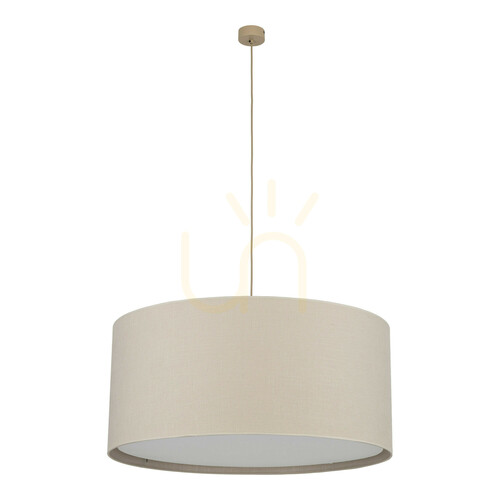
A beige ceiling light fixed flush to the ceiling gives a low room its main light in a soft, warm neutral – a linen or cotton drum, sand-tinted glass, plaster, or metal powder-coated in cream. Against a white ceiling it reads as a deliberate piece of décor rather than a plain fitting, and the light that passes through a beige shade comes out a touch warmer and gentler than it would through white opal.
In shops the same colour turns up as cream, ivory, ecru, oatmeal, stone, taupe or mushroom. They overlap, but they are not interchangeable: a yellowy cream next to a grey-beige wall can look grubby, so hold a photo of the fitting up against your paint or curtains before you decide.
How to choose the shade
With a flush fitting the shade is most of what you see, and with beige it also decides how much light reaches the room. A coloured material absorbs more than white does.
-
Fabric drum (linen, cotton, faux silk): glows across its whole surface and hides the bulb, especially when it has a frosted diffuser underneath. Low profile, which suits bedrooms and rooms with 2.4 m ceilings.
-
Natural weaves (rattan, seagrass, jute, paper): beige by nature and lovely for patterned shadows, but too dim on their own for a main light in a large room.
-
Tinted or frosted glass: lets through more light than fabric while warming it. The easiest to wipe clean, so the safer pick for a kitchen.
-
Plaster, ceramic or painted metal: opaque. Light goes down and washes across the ceiling; the body itself stays a matte block of colour. Raw plaster can be painted to match your own shade of beige.
Size, brightness and bulb
For diameter, add the room's length and width in metres and multiply by 5–6 to get the diameter in centimetres: a 4 × 3.5 m bedroom suits about 40–45 cm. In a new-build with 2.4 m ceilings keep the depth under about 15 cm; a Victorian or Edwardian room at 2.7–3.3 m can take a deeper, larger fitting.
| Room |
Diameter |
Light output behind a beige shade |
Colour temperature |
| Hall, landing, WC |
25–35 cm |
800–1,200 lm |
3000 K |
| Double bedroom |
40–50 cm |
1,500–2,000 lm |
2700–3000 K, dimmable |
| Nursery or child's room |
35–45 cm |
1,500–2,000 lm |
3000 K, dimmable |
| Living room, 20–25 m² |
50–70 cm, or two fittings |
2,500–4,000 lm |
2700–3000 K |
| Kitchen or home office |
30–45 cm |
2,000–3,000 lm |
3500–4000 K |
These figures sit a little above what you would plan for a white fitting, because the fabric keeps some of the light. A beige shade also adds warmth of its own, so a 3000 K bulb often looks better behind it than 2700 K, which can tip towards yellow.
One British catch: many bulbs and older fittings here use the B22 bayonet cap, while fittings made for the continental market take the E27 (ES) screw cap. Check the lampholder before you buy bulbs. Fittings with an integrated LED module are usually the slimmest, but you cannot change their colour temperature later.
Fitting it safely
A ceiling light is hard-wired, so have a qualified electrician fit it; in the UK the work must comply with BS 7671. Heavy plaster or ceramic bowls need fixings into a joist or plasterboard fixings rated for the weight. A metal-bodied Class I fitting must have its earth connected, while a double-insulated Class II fitting has no earth terminal.
-
Bathrooms: fabric fittings are typically IP20, dry rooms only. Within the bathroom zones you need an IP44 or higher rating.
-
Kitchens: fabric over the hob soaks up grease and cooking smells. Glass or lacquered metal copes far better.
-
Maximum wattage: check the label – fabric fittings are often rated 25–60 W per holder. LED bulbs stay well below it.
-
Dimming: pair dimmable LED bulbs with an LED-compatible dimmer, or expect flicker and hum.
Keeping a beige shade looking fresh
Beige hides dust better than white, but linen still collects it. Switch off, let the fitting cool and go over the fabric with a soft brush, the upholstery nozzle of a vacuum or a lint roller every few months. Don't soak it: the fabric is often glued to a plastic liner and may stain or lift. Dab marks with a barely damp cloth. Glass diffusers can come off and be washed in warm soapy water. Years of strong sun may fade darker tones such as taupe or mocha slightly.
Frequently asked questions
How do I choose a ceiling lamp shade?
Size it to the room (length plus width in metres, times 5–6, gives centimetres), choose a material by how much light you need – fabric for soft, glass for brighter – and make sure the bulb is hidden if you will look up at it, as you do in a bedroom.
What kind of ceiling light gives the most light?
A fitting with several lampholders or a strong LED module behind a white or clear diffuser. A beige fabric shade gives a cosier, slightly dimmer result, so compensate with brighter bulbs or add lamps.
What colour wires go together for a ceiling light?
In current UK wiring brown is live, blue is neutral and green and yellow is earth. Older homes may have red and black, and the switch loop complicates things, which is one more reason to leave it to an electrician.
Is cream or beige better for a ceiling light?
Cream is paler and closer to white, so it blends with the ceiling and lets more light out. Beige and oatmeal are richer and stand out more. Pick the one that matches your textiles.
Does a large cream ceiling light suit a low room?
Yes, if it is flush. A wide, shallow drum spreads light well and does not eat headroom. Avoid deep bowls and semi-flush stems below about 2.5 m.
Can I use a beige flush light in a bathroom?
Only one rated IP44 or higher, typically glass or acrylic. Fabric shades belong in dry rooms.
More on sizes, finishes and styles of ceiling-hugging lights: flush ceiling lights. If you would rather have a little period character in the same low profile, see vintage flush ceiling lights.