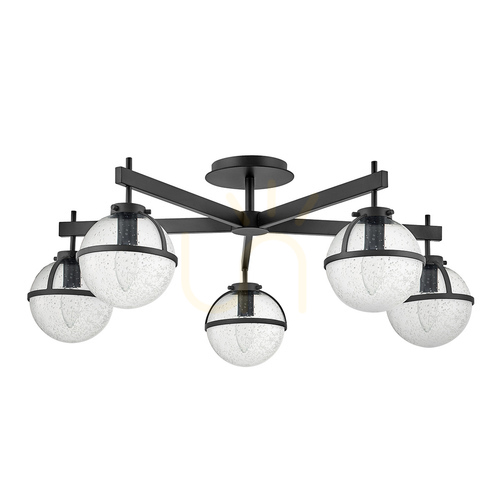
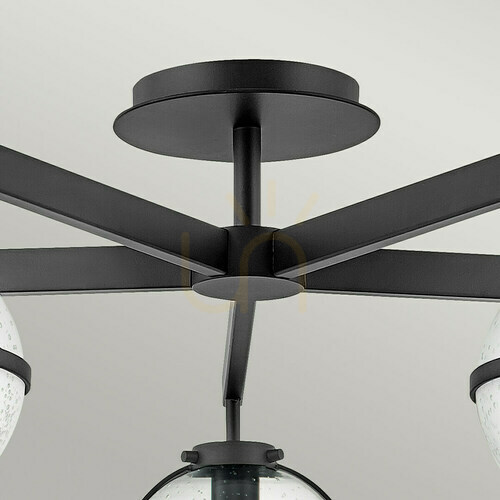
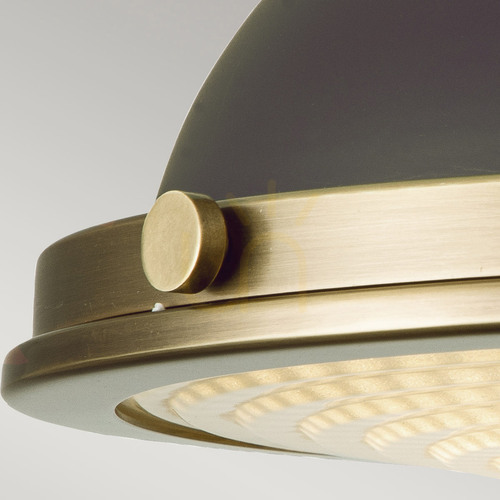
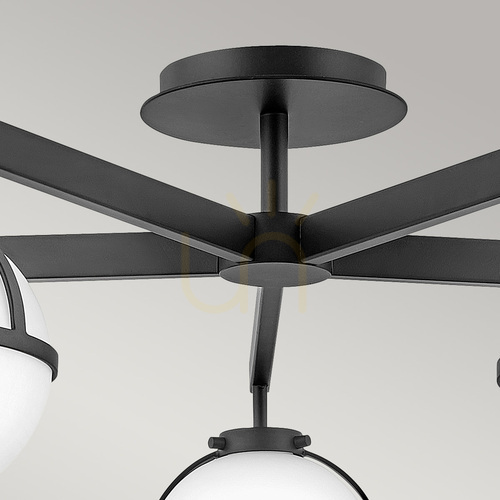
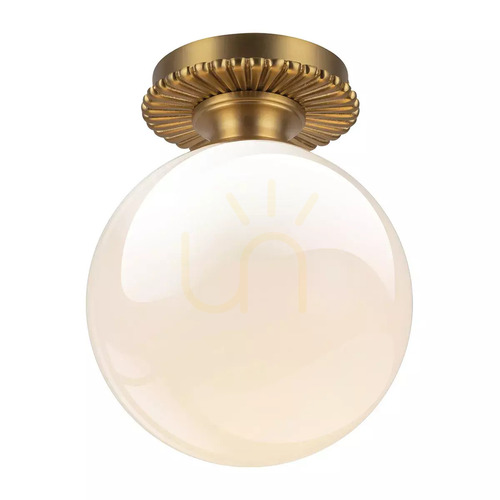
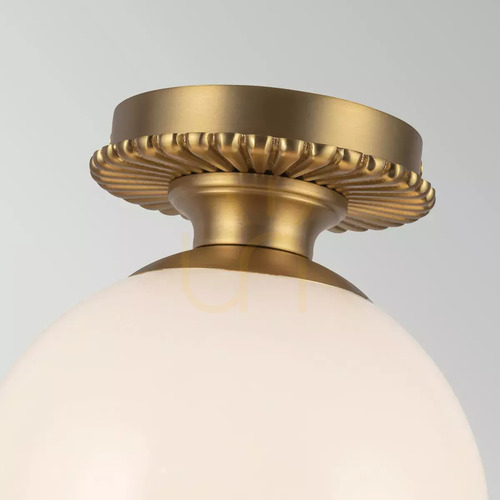
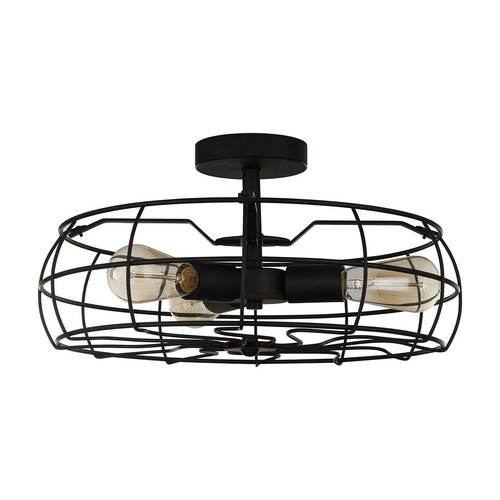
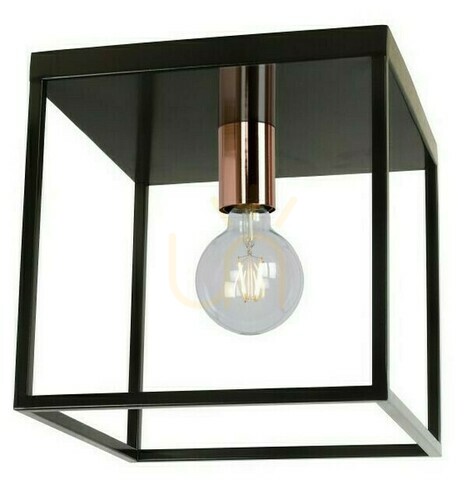
On a landing, in a box room or under the low ceiling of a modern semi, a pendant on a long flex is the thing everybody ducks. A retro ceiling light built as a flush or semi-flush fitting keeps the period character – an opal globe, a brass gallery, an enamel dish – and gives that headroom back. What changes is the bulb: it sits much nearer your line of sight, so the shade you pick and what goes in the lampholder decide whether the room feels warm or glary.
Where a flush retro fitting earns its place
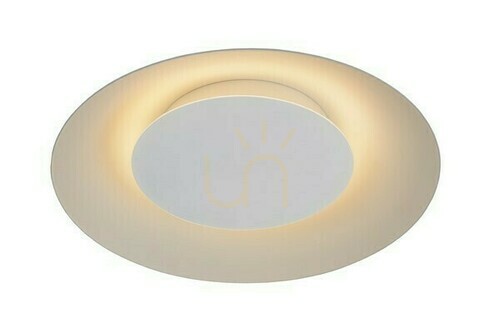
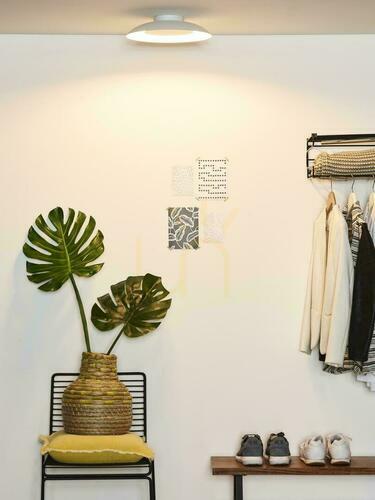
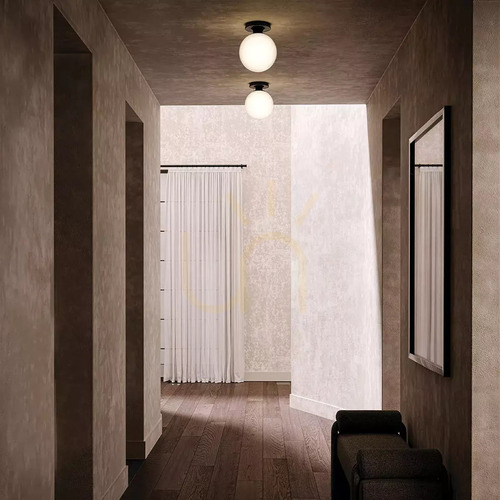
British housing makes the case on its own. A new-build usually has ceilings of about 2.4 m, and anything that hangs much below the ceiling over a walkway ends up at forehead height. Landings are worse, because you look straight across at the fitting as you climb the stairs. Here a shallow body of 10–30 cm, ideally with an opal or frosted shade that hides the bulb, is the sensible answer.
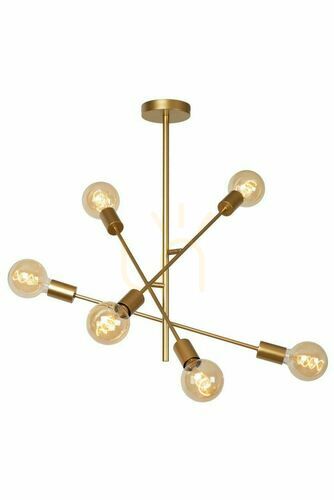
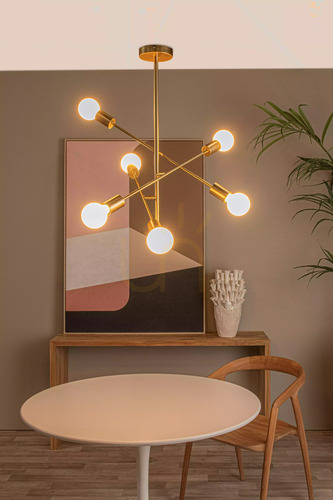
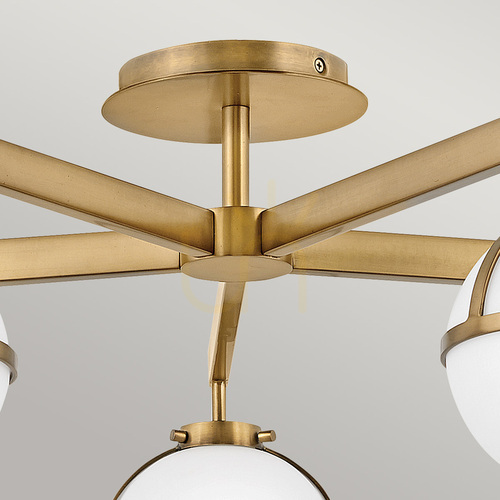
A Victorian or Edwardian terrace is different. With 2.7–3.3 m to play with, a completely flat fitting can look lost against a tall ceiling and a deep cornice, so a semi-flush design on a short rod or arms, typically 30–50 cm overall, sits better in the proportions of a front room. Cottages pull the other way again: beams bring the usable height down, so a fitting placed between the beams, never below them, keeps the shade out of your eyes.
What ‘vintage’ usually means on a ceiling
‘Vintage’ is a broad label rather than one style. The looks you meet most often:
-
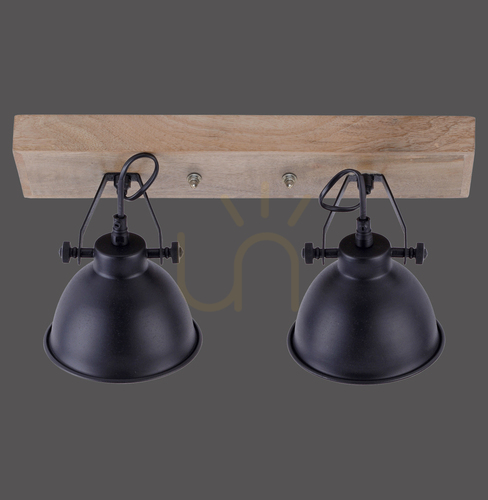
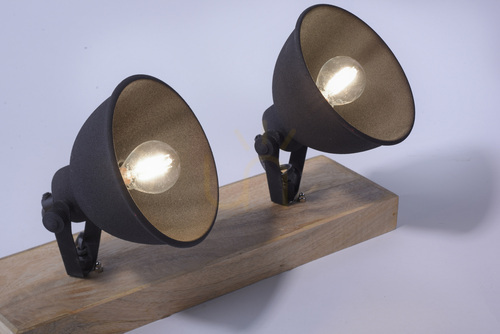
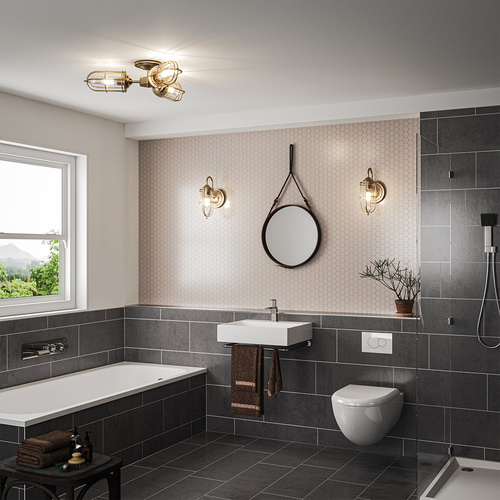
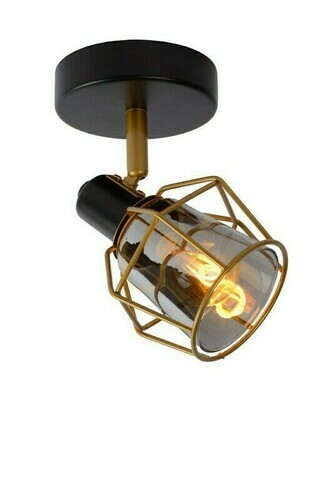
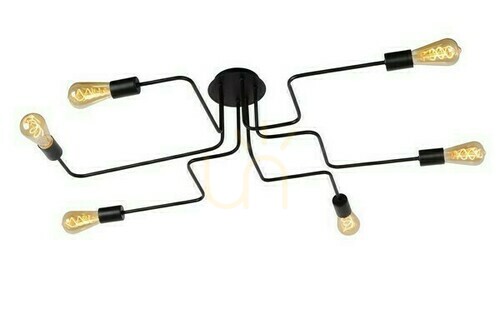
Retro industrial – black, zinc or rust-effect metal, wire cages, factory enamel and exposed lampholders; at home with brick and reclaimed timber.
-
Mid-century and seventies – opal globes, polished brass, smoked glass, shades in mustard, orange or olive; the ‘funky retro’ end of the spectrum.
-
Art deco – stepped, geometric shapes in frosted or etched glass with brass or nickel trim.
-
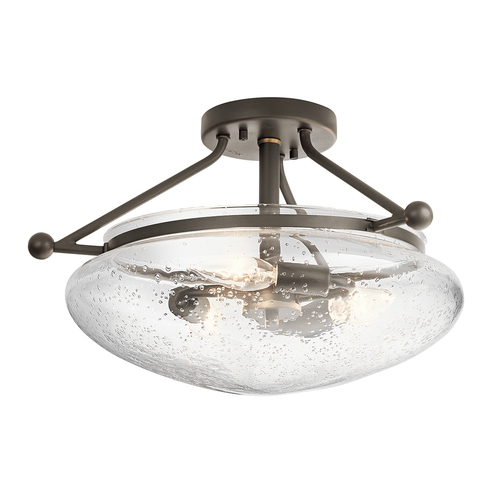
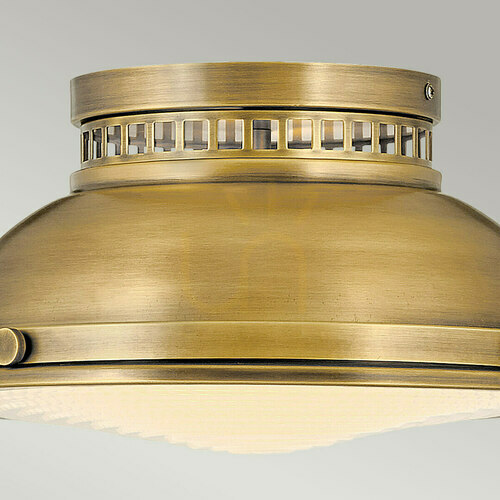
Period and cottage – cut-glass or opal bowls on a brass gallery, wooden beams with iron details, pleated fabric shades.
‘Modern retro’ designs keep those outlines but use a slimmer body and often an integrated LED, which helps in a low room where every centimetre counts.
Matching the fitting to the room
| Where |
Typical ceiling |
Fitting that suits |
Bulb to pair with it |
| Landing or hallway in a new-build |
around 2.4 m |
Flush, opal or frosted glass, 25–35 cm |
Frosted LED, 2700 K, about 800 lm |
| Box room or small bedroom |
2.4–2.5 m |
Flush, diffusing glass or fabric shade, 25–30 cm |
Frosted LED, 2700 K, 800–1000 lm |
| Victorian front room |
2.7–3.3 m |
Semi-flush, multi-arm or large opal dome, 45–60 cm |
2–4 candle or globe LEDs, 2700 K |
| Beamed cottage room |
low, broken up by beams |
Flush between the beams, fabric or opal shade |
Warm LED, 2200–2700 K |
| Kitchen |
any |
Enamel dish or ribbed glass |
Clear filament, 2200–2700 K, 400–800 lm, plus task light |
| Bathroom |
any |
Compact fitting rated IP44, often G9 |
Compact LED, 3000 K |
As a size guide, 25–30 cm suits a landing or box room, around 35 cm a 3 × 4 m bedroom and 45–50 cm a 4 × 5 m living room. Larger rooms usually look better with a multi-arm semi-flush than with an ever wider dish.
Bayonet or screw: B22, E27 and the bulb on show
Many British fittings and bulbs use the B22 bayonet cap, while fittings designed for continental Europe use the E27 screw cap, and smaller pieces E14. Check the lampholder before you buy spare bulbs. Adapters exist, but they add length, which matters in a cage or a shallow glass dish where the bulb is meant to sit just so.
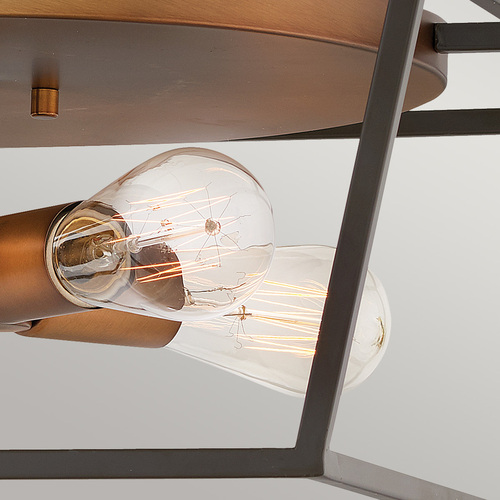
If the bulb is visible, it becomes part of the design. An amber LED filament at 1800–2200 K and 250–500 lm gives the old-filament glow but very little working light; a clear filament at 2700 K with 600–800 lm is the stronger choice when the fitting has to light the whole room. Behind opal glass, shape no longer matters and a frosted LED does the job.
Reclaimed fittings and getting it on the ceiling
Salvage yards and house clearances are full of old ceiling lights, and many are worth saving. Before one goes up, have it checked: rubber and cloth-covered flex perishes, old lampholders crack, and older metal fittings often have no earth terminal at all. A rewire and a new lampholder usually solve all three.
Fitting is a job for a qualified electrician, and in the UK the work has to meet BS 7671. Older ceilings often have loop-in wiring at the ceiling rose, with several cables meeting there, so the flush fitting’s base needs room for the connections or the electrician adds a junction box. Lath-and-plaster ceilings crumble around a plug, so heavy brass and glass should be screwed into a joist or a timber noggin. A metal-bodied Class I fitting must have its earth connected.
Looking after brass, glass and enamel
-
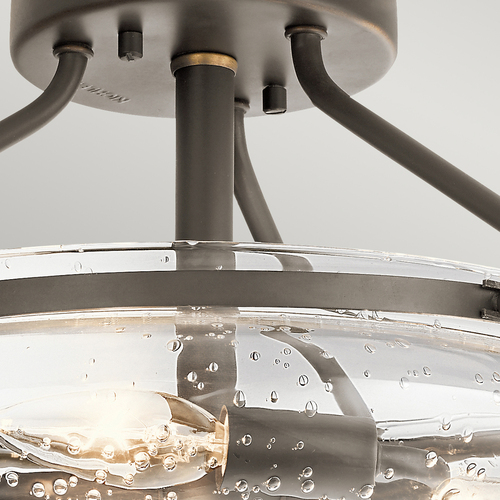
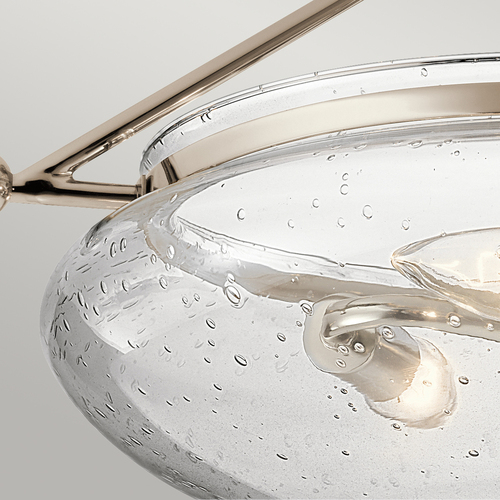
Glass. Switch off, let it cool, then wash shades in warm soapy water. Bowls that face upwards collect dust and insects, so empty them every few months.
-
Brass. Lacquered brass only wants a dry, soft cloth – no ammonia or abrasive polish, which strip the lacquer. Unlacquered brass darkens over time; polish it or let the patina be.
-
Enamel and painted metal. A barely damp cloth, then dry it; chips on old enamel are worth sealing before rust spreads.
-
Heat and dimming. Respect the maximum wattage on the label of an enclosed bowl, and pair dimmable LEDs with an LED-rated dimmer to avoid flicker and buzzing.
Frequently asked questions
What is a modern retro ceiling light?
One that borrows a period shape – a globe, a dome, a cage – but uses current materials and often an integrated LED. It suits a contemporary room that wants a nod to the past without full period styling.
Which retro ceiling light suits a living room?
Usually a larger piece: a 45–60 cm opal dome, or a multi-arm semi-flush if the ceiling is high enough. Pair it with floor and table lamps so the ceiling light is not doing all the work.
What works in a cottage with low ceilings?
A flush fitting with a diffusing glass or fabric shade, placed between beams. Rustic timber and black iron suit the setting; avoid caged bare bulbs that end up right at eye level.
Are retro industrial ceiling lights bright enough as a main light?
With a cage and a 300 lm amber filament, not really – that is mood light. Fit a brighter clear filament (600–800 lm) or choose a model with two or more holders.
Can a vintage flush light go in a bathroom?
Only if it carries a suitable IP rating. Most decorative fittings are IP20, which means dry rooms only. Within bathroom zones 1 and 2 at least IPX4 is required, so look for IP44 pieces or keep a decorative IP20 fitting well outside the zones.
Do vintage flush lights need special bulbs?
No – any LED with the right cap works. A filament bulb only matters if the bulb is on show, and then shape (globe, teardrop, squirrel cage) and warm colour become part of the design.
If you are choosing a filament to go on show, the shapes and colour temperatures are covered under vintage light bulbs. For ceiling-hugging fittings in every other style: flush ceiling lights.