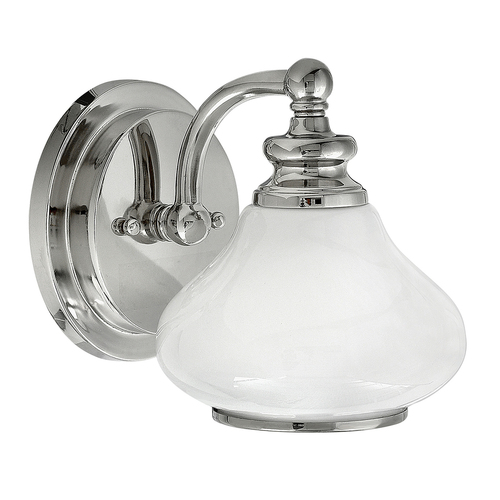
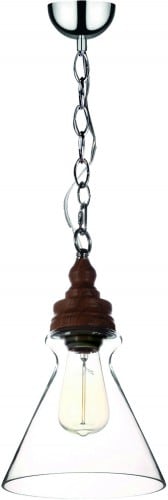
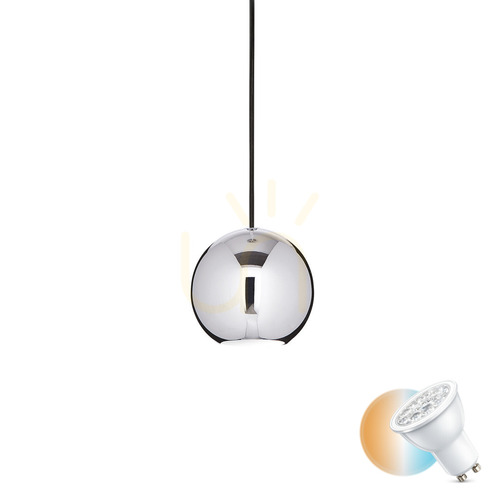
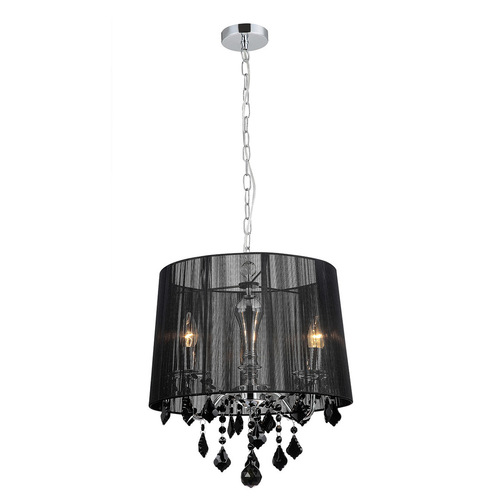
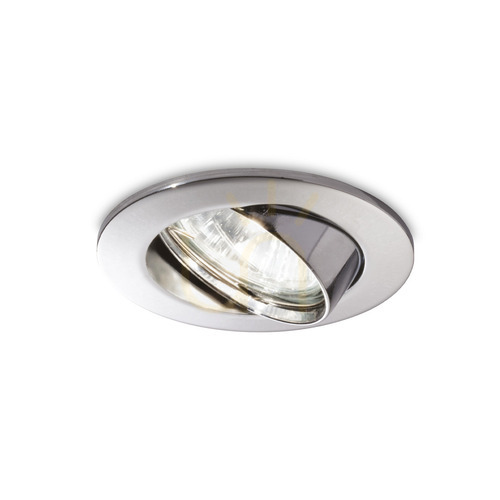
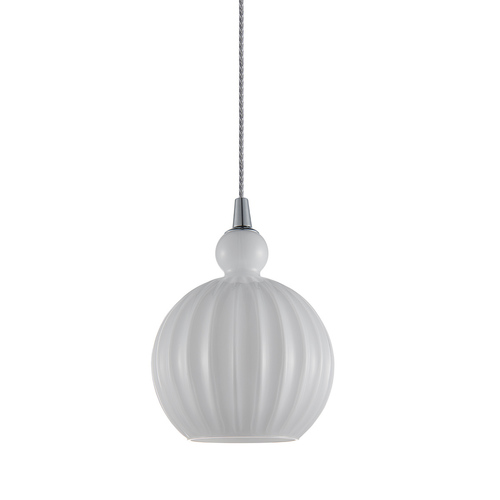
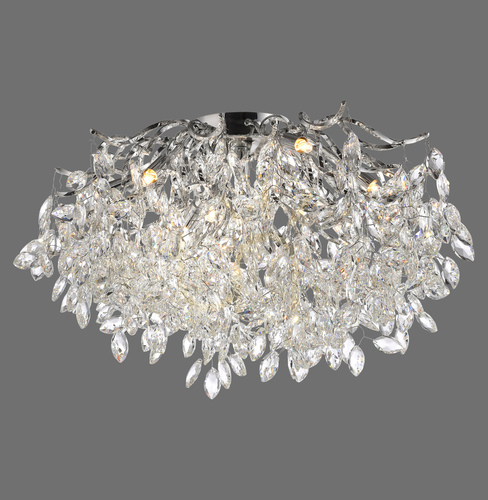
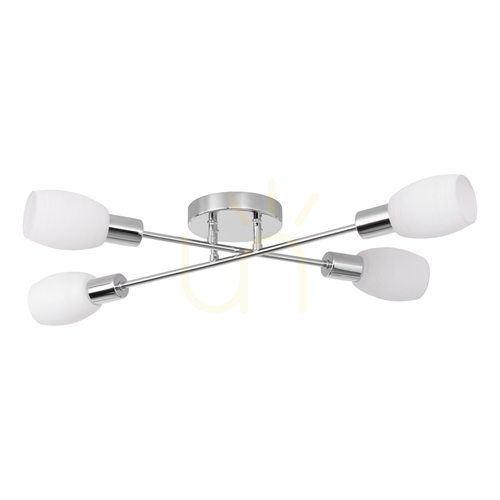
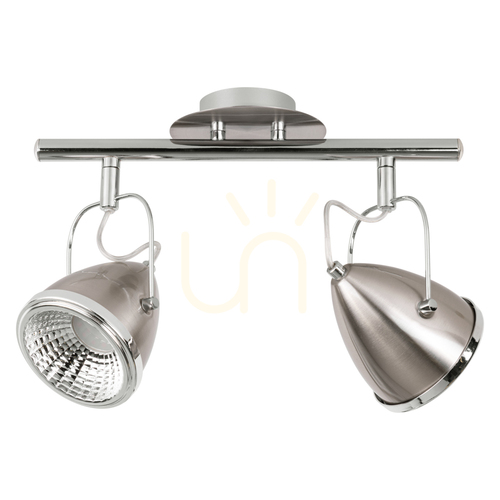
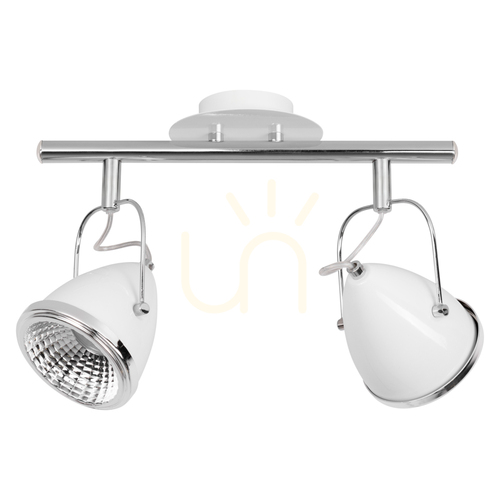
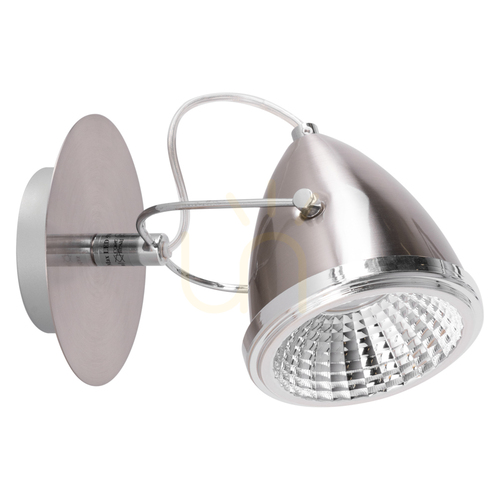
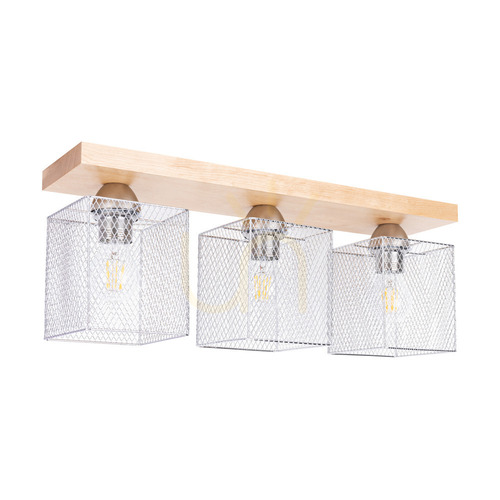
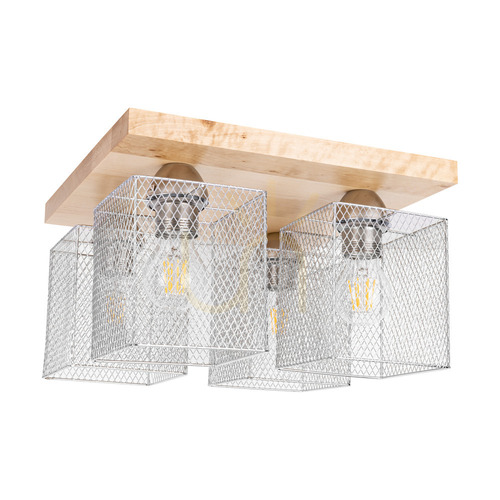
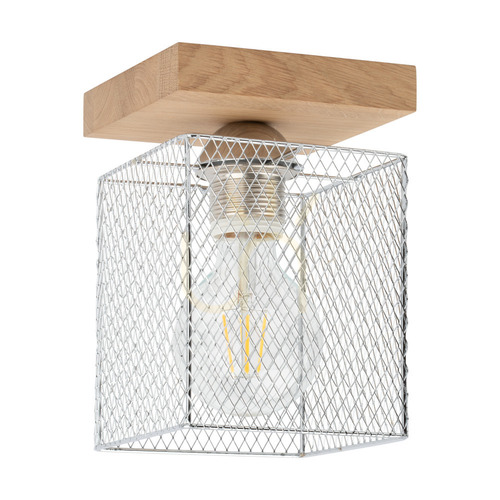
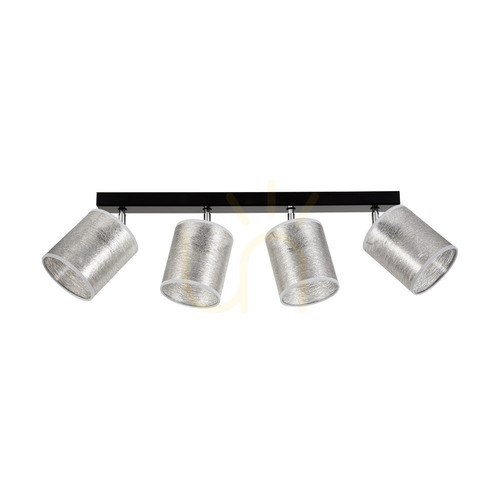
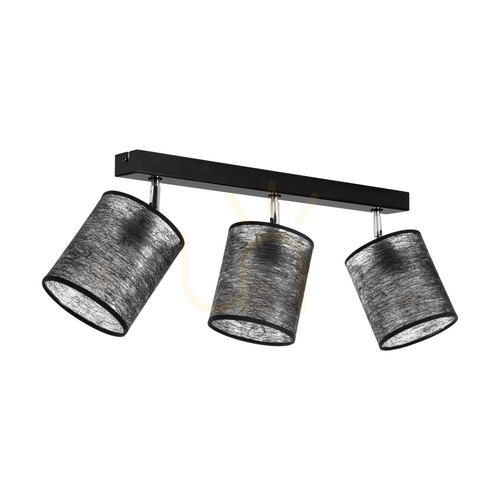
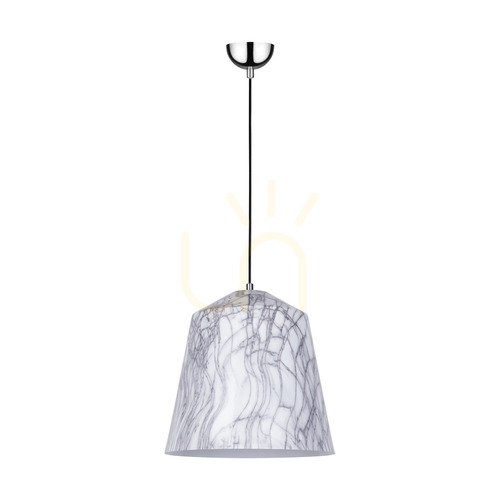
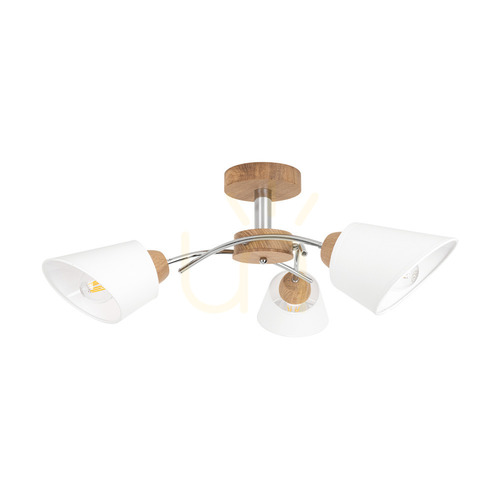
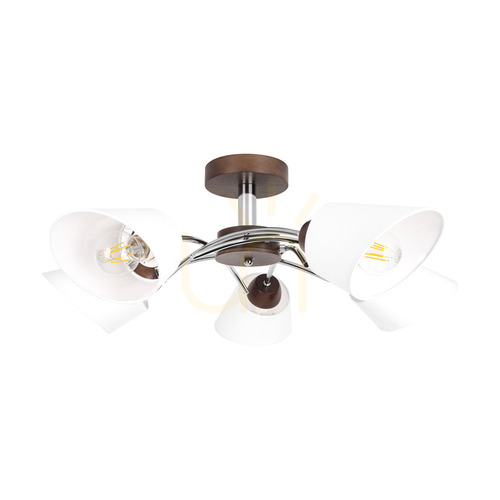
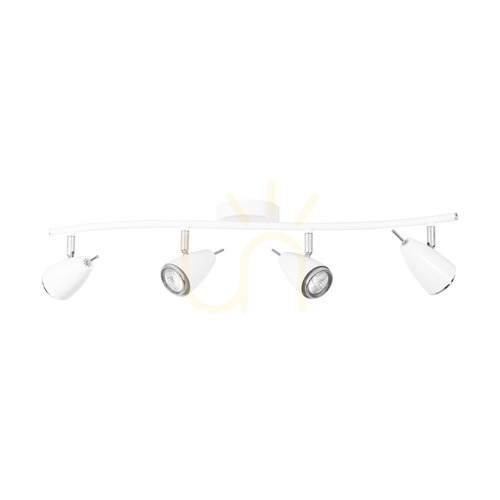
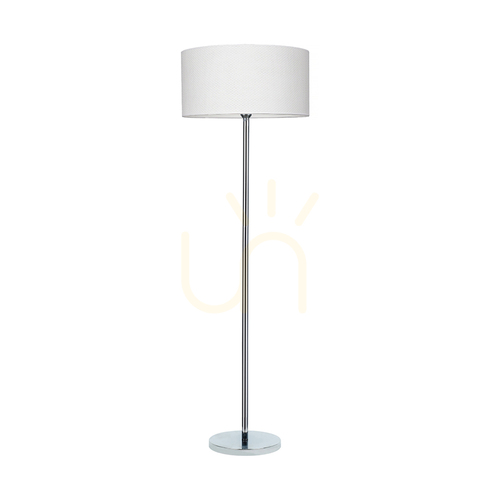
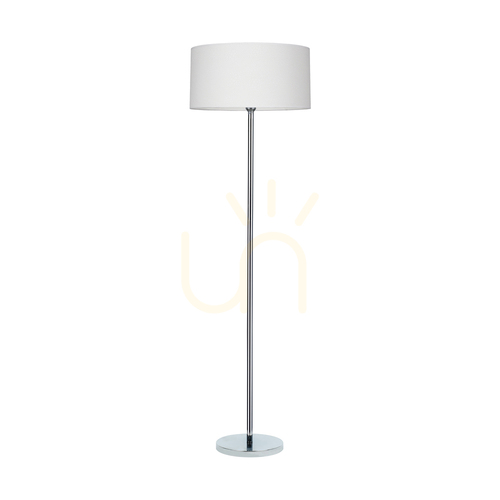
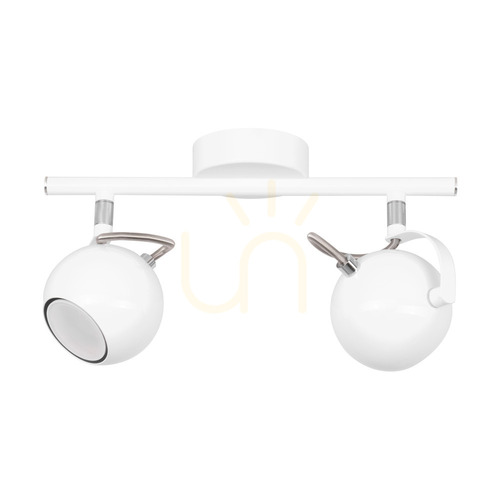
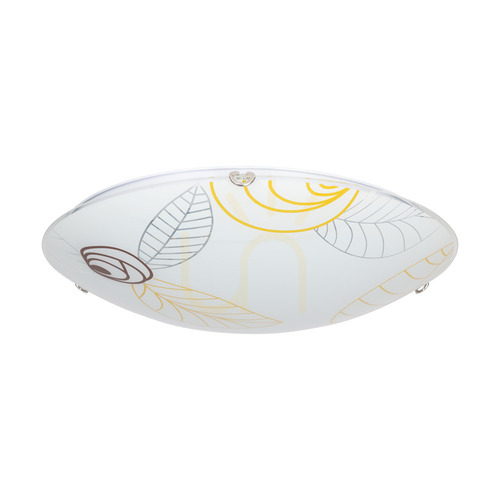
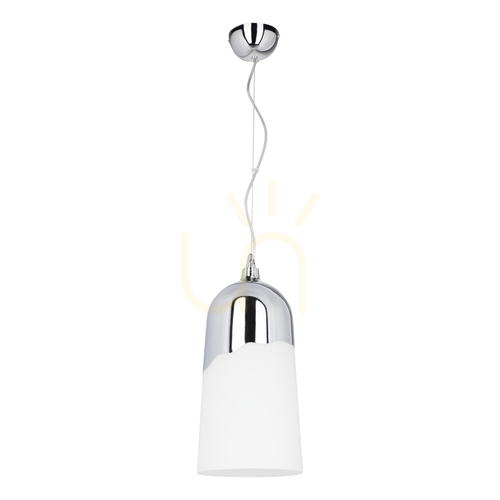
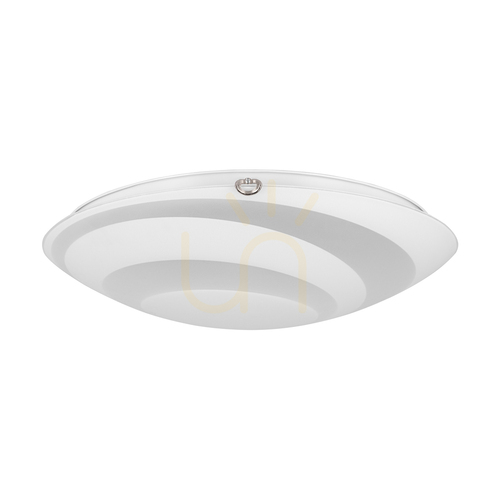
A chrome lamp is any light fitting whose metalwork has been plated with a thin, mirror-bright layer of chromium, so the frame itself throws light back into the room and makes glass or crystal sparkle. Choosing chrome over brass, black or white changes more than the colour: it affects glare, how often you will be reaching for a cloth, and how the fitting sits next to your taps, switches and door handles.
Chrome turns up on almost every type of fitting – pendants and globe lights, flush ceiling lights, bathroom bar lights, crystal chandeliers, table and floor lamps. The finish behaves the same way on all of them, and a few of its habits are worth knowing before you buy.
Polished, satin or chrome effect?
Chrome is electroplated, usually over a layer of nickel, onto steel, brass, zinc alloy, aluminium or plastic. The plating is hard and keeps the base metal from rusting, but it is far thinner than a human hair. Retailers describe the results in several ways, and they are not interchangeable.
| Finish |
How it looks |
Living with it |
Works best |
| Polished chrome |
Mirror-like, cool with a faint blue tint |
Shows fingerprints and water marks, wipes clean easily |
Pendants with clear glass or crystal, bathrooms with chrome taps |
| Satin or brushed chrome |
Fine lines soften the shine |
Hides smudges, forgiving on fittings you touch |
Kitchens, wall lights, contemporary interiors |
| Polished nickel |
Shiny but warmer, slightly yellow |
Similar care to chrome |
Period homes, warm woods, brass accents |
| Chrome effect |
Plated or metallised plastic, chrome look |
Lighter, less tolerant of knocks and heat |
Shade rings, lightweight decorative parts |
Matching chrome around the house
Chrome looks deliberate when it is repeated in two or three places: a ceiling light, the light switch plates, a mirror frame or the bathroom taps. Many UK homes already have chrome sockets and switches, so a polished or satin chrome fitting picks those up without effort. Polished chrome next to satin chrome in the same room is the combination that most often looks like a mistake – decide which one leads and stick with it.
The finish has a long history, from the tubular-steel modernism of the thirties through Art Deco bathrooms to the space-age globes of the seventies, so it suits both a Victorian terrace and a new-build flat. With black it gives a crisp graphic contrast; with dark wood, marble or a linen shade it reads warmer and more relaxed.
Picking the right type for your ceiling
Ceilings in many British houses and flats sit at about 2.4 m, which rules out long drops in most rooms. Flush and semi-flush fittings keep headroom, while a pendant comes into its own over a dining table, kitchen island or stairwell. Hang it with the bottom edge roughly 60–75 cm above the tabletop. In a room of 10–15 m² a fitting of about 40–50 cm across is usually enough; a large living room or a period hallway with high ceilings can take a 60–80 cm chandelier, ideally paired with matching wall lights.
Bulbs, glare and colour temperature
Mirror-polished metal reflects the bulb as well as the light, and a bare lamp next to a shiny arm can be harsh at eye level. Opal or frosted glass, frosted bulbs or crown-silvered bulbs (which bounce the light back into the fitting) take the edge off. Check the cap before you order replacements: bayonet B22 is still common in the UK, alongside ES (E27), SES (E14), G9 capsules in multi-arm fittings and GU10 in spotlight bars.
Warm white at 2700–3000 K counters the coolness of the metal in living rooms and bedrooms. Around 4000 K suits a kitchen or bathroom but can make a chrome lounge feel clinical. If you plan to dim, make sure the LED bulbs are dimmable and compatible with the dimmer switch.
Chrome in the bathroom
The finish never decides whether a light can go in a bathroom – the IP rating and the zone do. Under BS 7671, zone 1 covers the space above the bath or shower tray up to 2.25 m, and zone 2 extends 0.6 m beyond it. Both need at least IPX4, which is why bathroom fittings are usually sold as IP44, with IP65 a common pick right by the shower. Any wiring in a bathroom is a job for a registered electrician.
Looking after chrome
- Switch off and let the fitting cool before cleaning.
- Wipe with a microfibre cloth dampened with warm water and a drop of washing-up liquid, then buff dry to stop water spots.
- Shift limescale with diluted white vinegar, then rinse straight away.
- Avoid scourers, cream cleaners, bleach and silver polish – once the plating is scratched, moisture reaches the metal beneath and rust spots follow.
- Take glass shades and crystal drops off to wash them, and refit only when completely dry.
Frequently asked questions
Is polished chrome the same as brushed chrome?
Same plating, different surface. Brushed chrome has fine lines worked into the layer beneath before it is chrome-plated, which dulls the reflection and hides fingerprints; polished chrome is plated over a mirror-smooth base.
Is polished chrome shiny?
Very – it is the most mirror-like of the common decorative finishes on light fittings, far shinier than brushed chrome or nickel. That is what makes crystal and clear glass sparkle, and also why every smudge shows.
Is chrome a good choice for a living room lamp?
Yes, especially paired with a fabric shade or opal glass and warm white bulbs, which soften the metal. Bare bulbs on polished chrome are better kept for kitchens and hallways.
What are the different types of chrome ceiling light fittings?
Flush and semi-flush fittings for low ceilings, pendants and globe lights, multi-arm chandeliers, spotlight bars and bathroom ceiling lights rated IP44 or higher.
Are chrome spotlights a good idea in a kitchen?
They are practical and easy to aim. Choose satin chrome if they sit within reach of cooking steam, as grease shows less.
Can I mix chrome with brass or brushed nickel?
It can work if one metal clearly leads and the other is a small accent. Two near-identical silvers side by side tend to look unplanned.
To compare chrome with other finishes and styles, start with indoor lighting. For a bathroom, it also helps to read up on IP44-rated fittings before you choose.