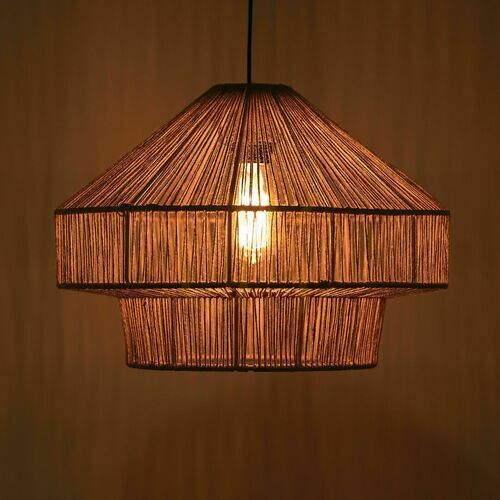
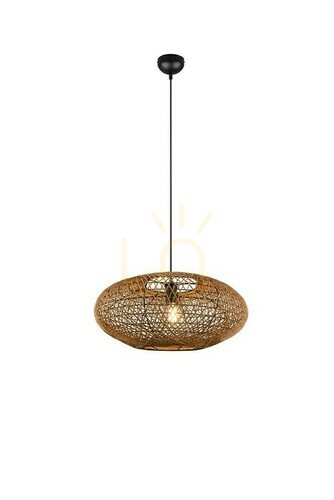
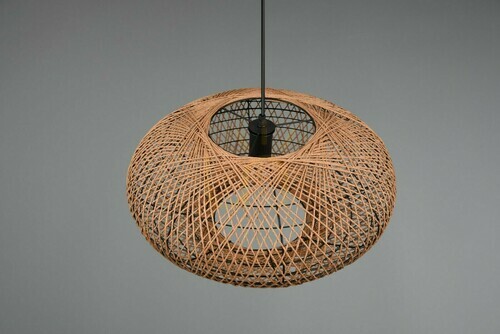
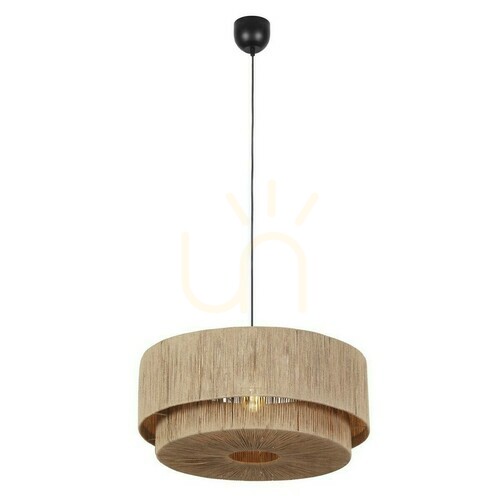
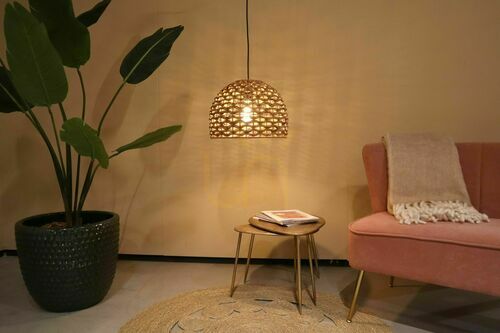
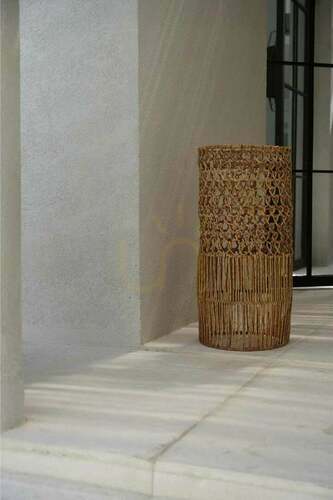
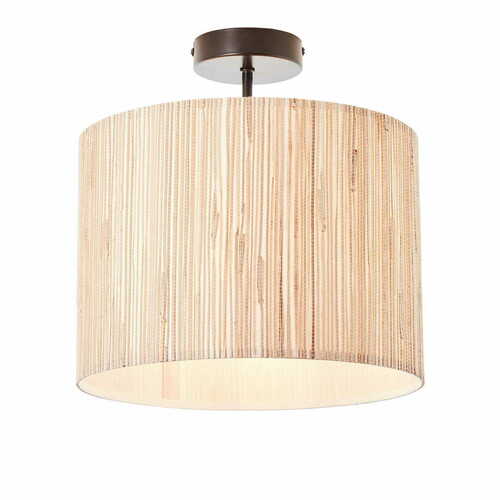
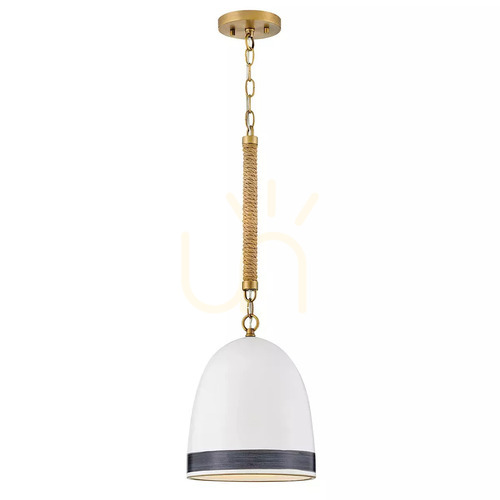
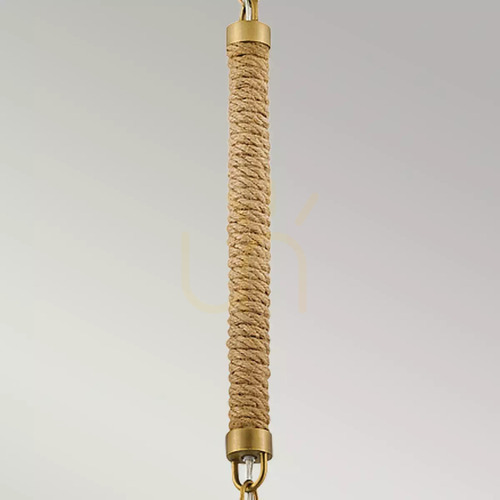
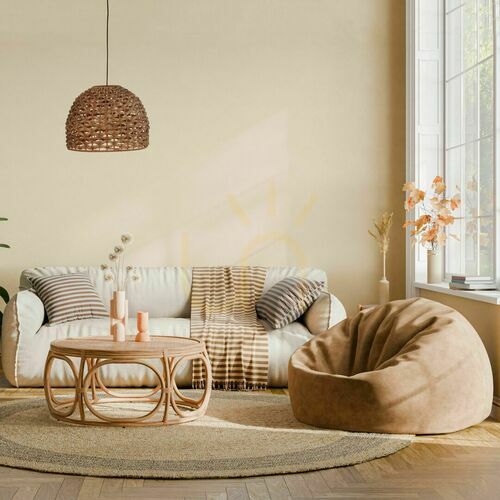
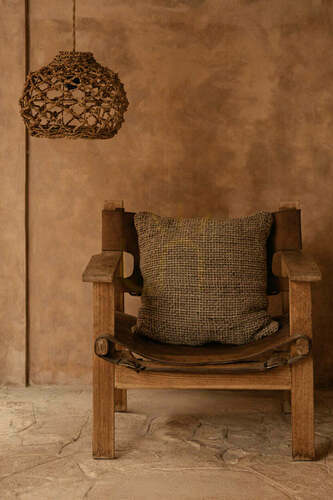
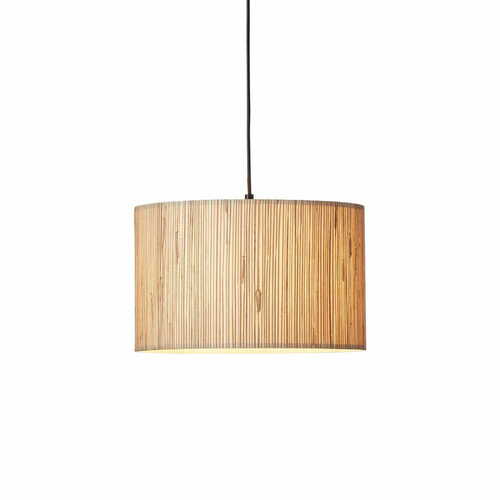
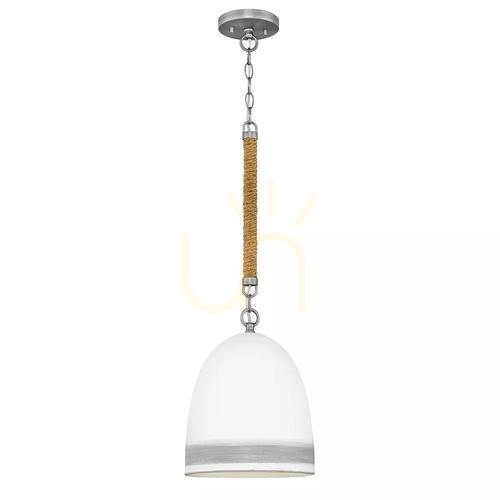
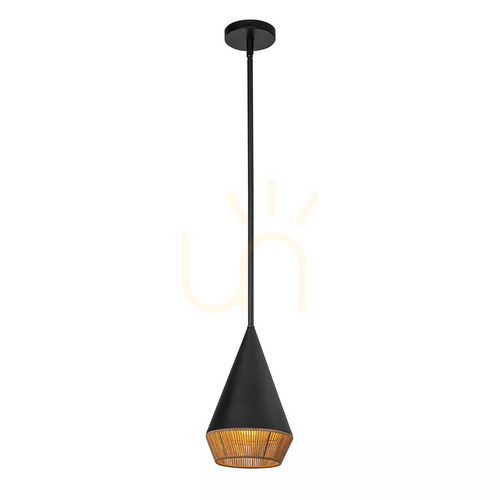
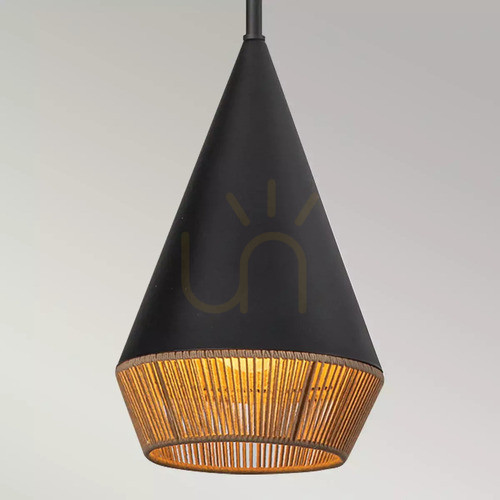
A rope lamp uses twisted plant fibre – jute, sisal, hemp, cotton cord or seagrass – either as the shade itself or wrapped around the flex and frame. The fibre warms and softens the light, and an open weave scatters a lacy pattern across the walls that a smooth fabric shade never gives you.
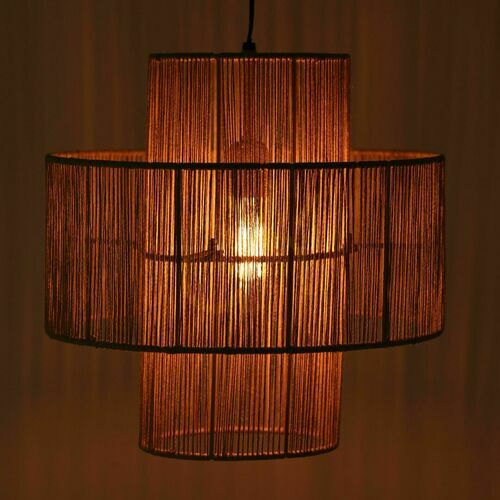
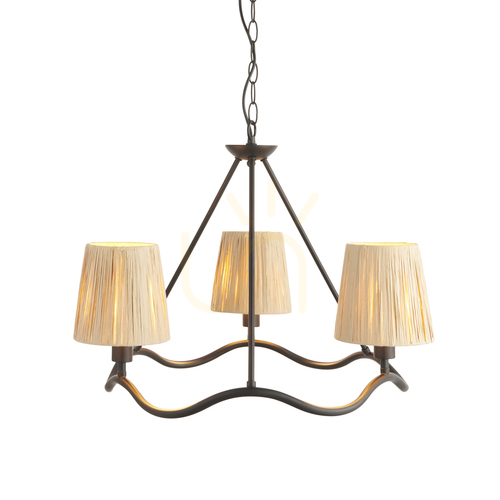
Natural fibre turns up in indoor lighting in a few distinct ways. There is cord wound tightly over a metal frame into a drum, dome or globe; a stiff shell of glued string; a hand-woven shade made like a basket; macramé; and the chunky nautical look, where thick rope covers the cable of a pendant or the arms of a multi-light fitting. These behave very differently once switched on, so judge a design by a photo of it lit, not just in daylight.
Jute, sisal, hemp or cotton?
Jute is golden-brown with a slightly hairy texture and a soft, rustic look. Sisal, from agave leaves, is paler and stiffer, so it holds a shape well. Hemp makes the strong, heavy rope behind most vintage and industrial rope pendants. Cotton cord is smooth, usually white or cream, and the go-to for macramé. All of them are plant fibres, which means two things you have to plan around: they burn, and they soak up moisture.
Hanging, ceiling, floor or table?
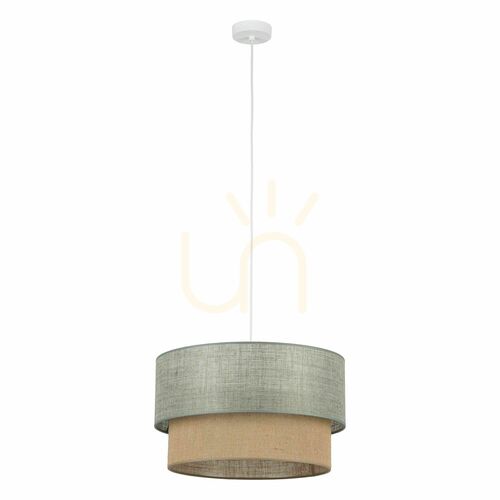
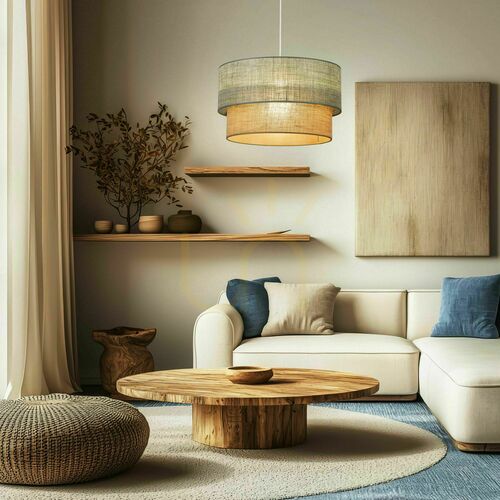
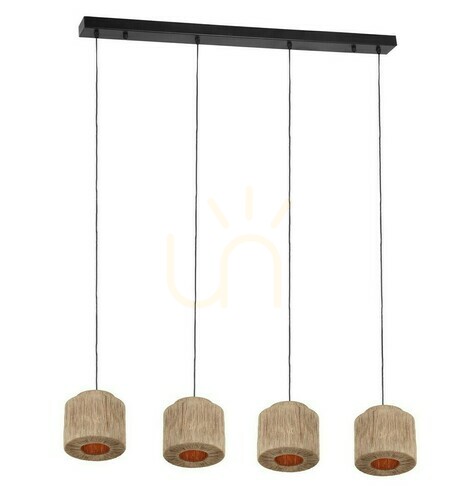
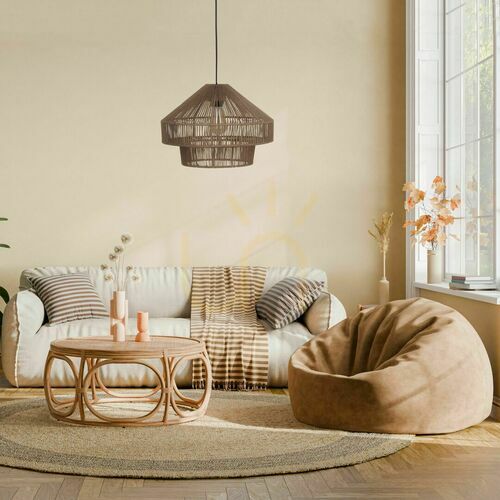
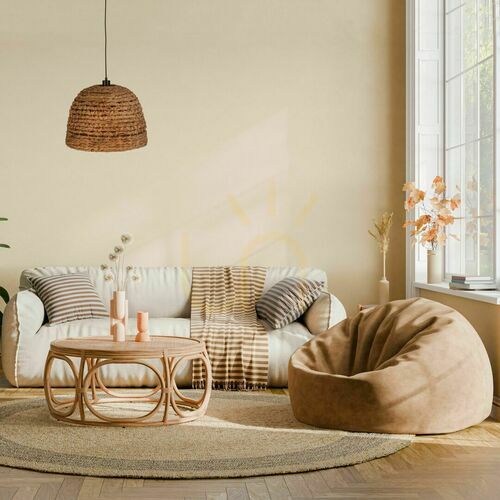
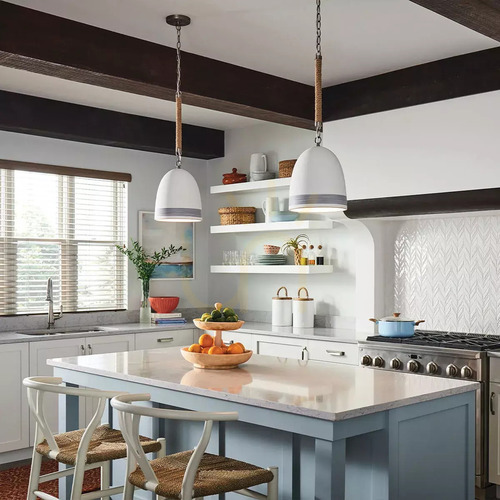
The rope pendant is the most familiar version – a single drop over a dining table, or a row of three above a kitchen island. With the typical British ceiling at around 2.4 m, a big shade on a long drop can crowd a living room, so measure first. Keep at least 2 m clear underneath anywhere people walk; a flush or semi-flush fitting with a jute shade suits low hallways and bedrooms better.
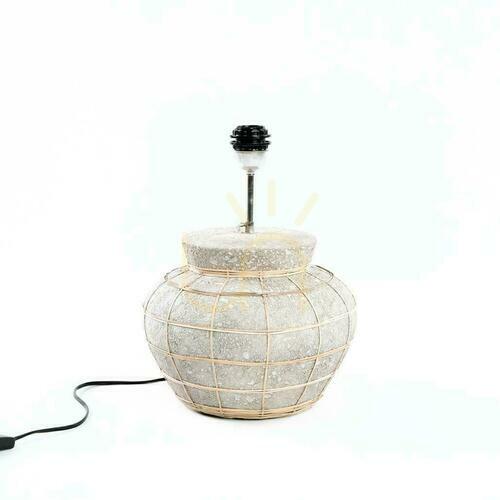
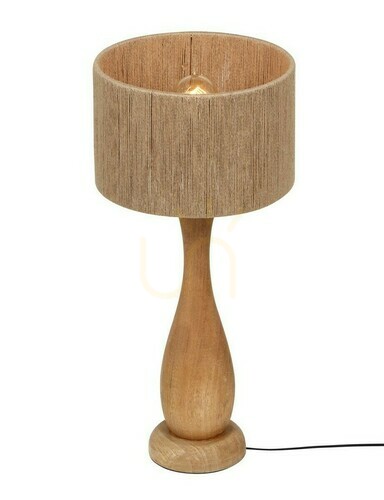
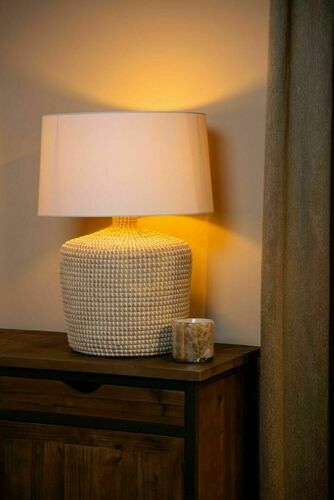
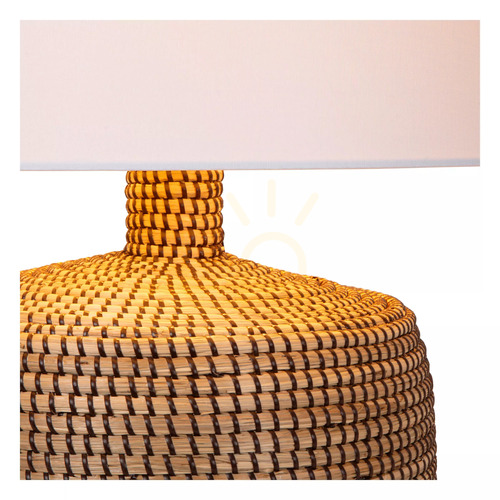
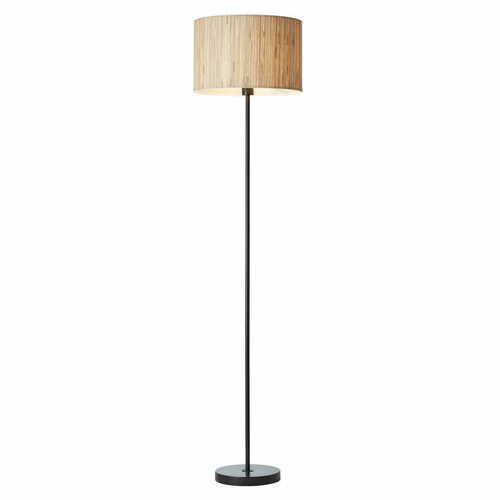
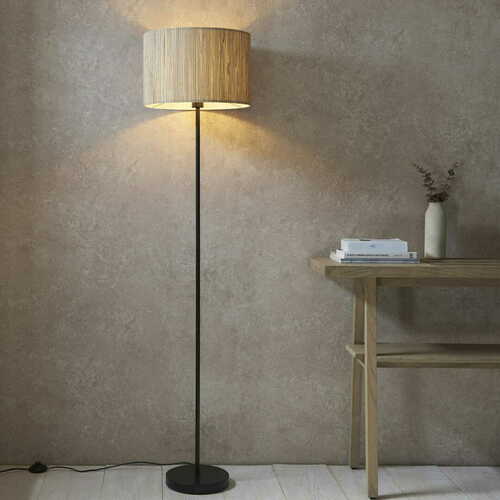
A rope floor lamp brings texture to a reading corner, and the knotted or rope-wrapped bases look just as good switched off. A table rope lamp works on a sideboard, console or bedside table, where the warm glow matters more than raw brightness. Vintage and industrial rope ceiling lights pair the fibre with black metal and exposed filament-style bulbs – choose LED filament versions rather than real incandescents.
| What to check |
Typical value |
Why it matters |
| Lamp holder |
E27 or B22, small designs E14 |
buy the matching LED bulb |
| Bulb |
LED 7–9 W, about 800 lm |
little heat near the fibre, as bright as an old 60 W bulb |
| Colour temperature |
2700–3000 K |
warm white brings out the honey tone of jute |
| Pendant shade diameter |
usually 30–60 cm |
roughly half to two-thirds of the table width |
| Height above a dining table |
60–75 cm |
lights the table without glare in your eyes |
| IP rating |
usually IP20 |
dry rooms only |
Dense or dark weaves let less light through and push most of it down and out of the bottom opening. If the fitting has to light the whole room rather than just the table, go for a brighter bulb or add a second source such as a floor lamp. On a dimmer, the bulb must be marked dimmable and suit the dimmer.
Safety and fitting
The maximum wattage printed on a natural fibre shade is a hard limit. Some are rated as low as 15 W per lamp holder, which only makes sense with LED. Keep halogen and incandescent bulbs out of rope and jute shades altogether, and make sure the bulb never touches the fibre. Ceiling fittings are hard-wired to the mains, so have a qualified electrician fit them to BS 7671, with the power off at the consumer unit.
Looking after natural fibre
-
Dust: use a soft brush or the brush attachment of a vacuum on low suction; a hairdryer on cold clears tight weaves.
-
Keep it dry: no soaking and no sprays. Dab a mark with a barely damp cloth and let it dry quickly.
-
Steam and grease: fibres trap both, so do not hang a jute shade straight over the hob or in a bathroom.
-
Sunlight: UV gradually bleaches jute, so a shade in a south-facing window lightens faster.
-
New shades: a faint earthy smell and a few loose hairs are normal at first and settle within days.
Rope and jute lamp questions
What material is good for lampshades?
It depends on the job. Linen and cotton diffuse light evenly and are easy to clean. Jute and sisal give warmer, patterned light and more texture but need gentler care and a cool-running LED bulb. Paper is the most translucent; rattan is the most rigid.
Can I dye or paint a jute lampshade?
You can, but it is rarely worth it. Fabric dye needs soaking, which can warp the frame and leave the weave uneven, and paint clogs the gaps that make the light pattern. Buying the colour you want – natural, bleached, black – gives a cleaner result.
How low should a hanging rope pendant be?
Around 60–75 cm above a dining table or island worktop. Over open floor, keep the bottom of the shade at least 2 m up so nobody walks into it.
Is a rope lamp safe in a bathroom?
Not usually. Most are IP20 and the fibre absorbs steam, which leads to sagging and mould. Bathrooms need fittings with an IP rating suited to the zone.
Does a rope floor lamp give enough light to read by?
Only if the shade is fairly dense or the bulb is bright enough. Open weaves are atmospheric rather than practical; pair one with a small task light by the chair.
Will an industrial rope ceiling light suit a modern room?
Yes, if you keep the rest simple. Black metal, rope and a warm LED filament bulb sit well in loft-style and Scandi rooms alike.
For a woven look in a firmer material, see rattan lights; for lighting ideas across the whole house, browse indoor lighting.