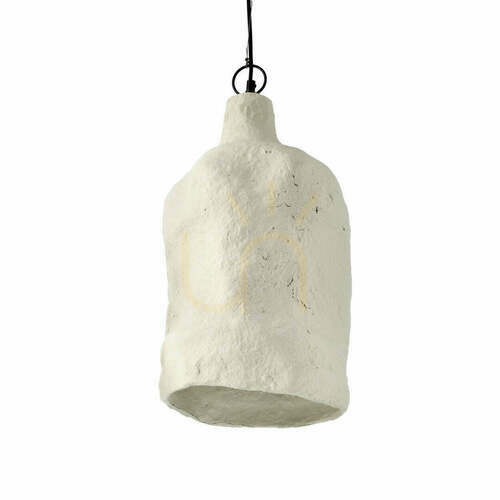
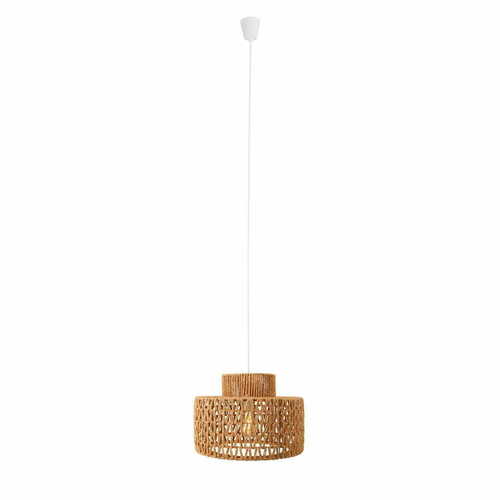
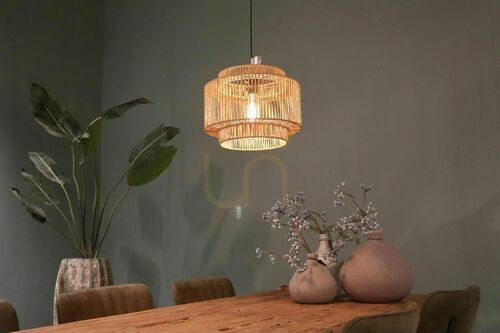
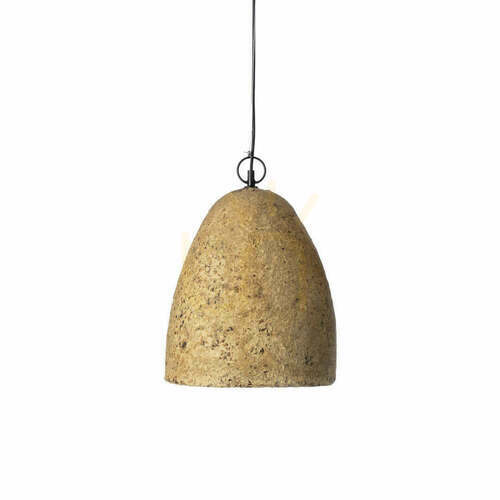
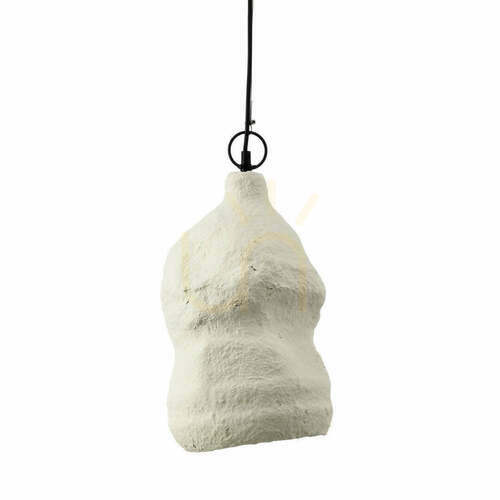
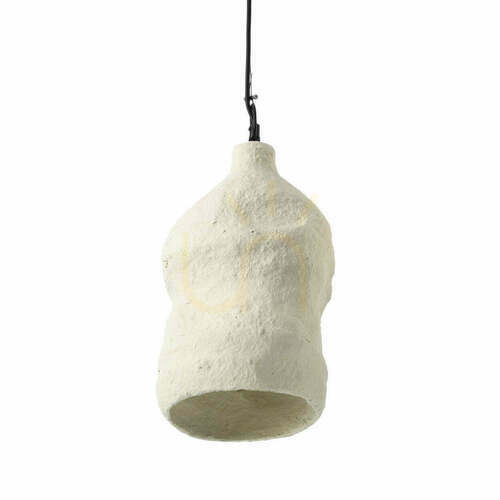
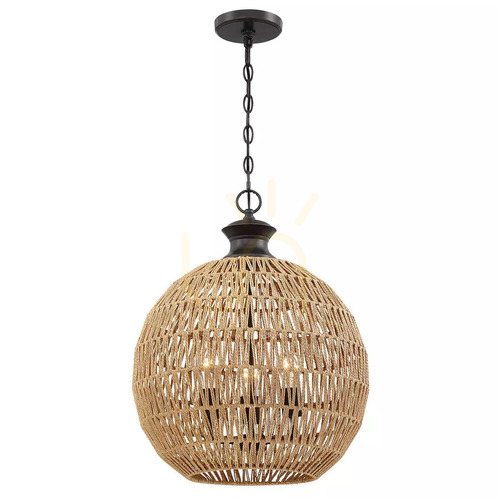
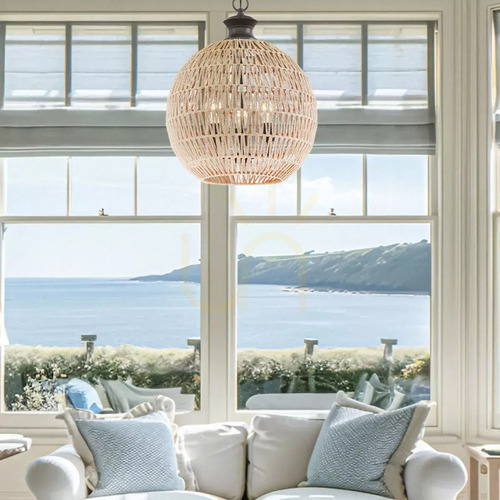
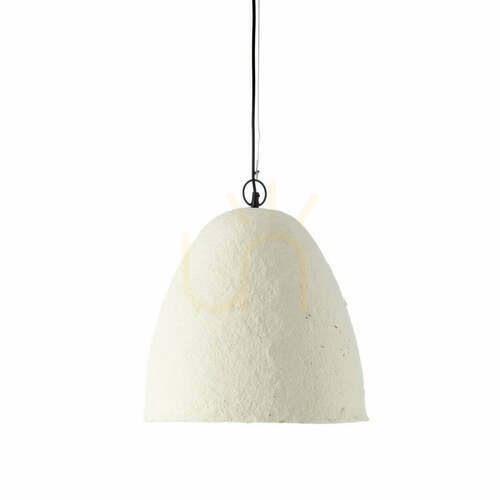
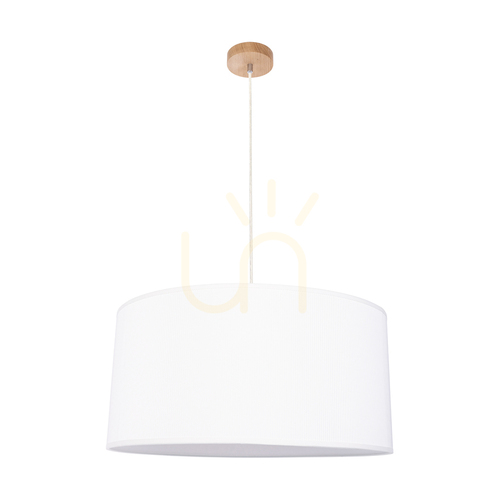
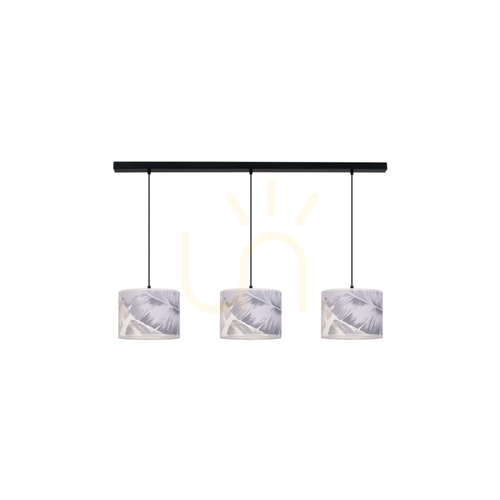
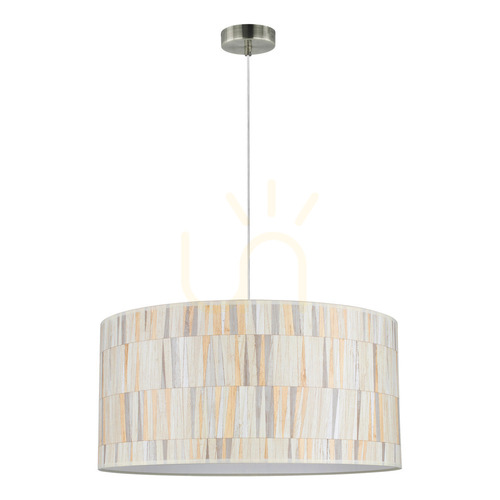
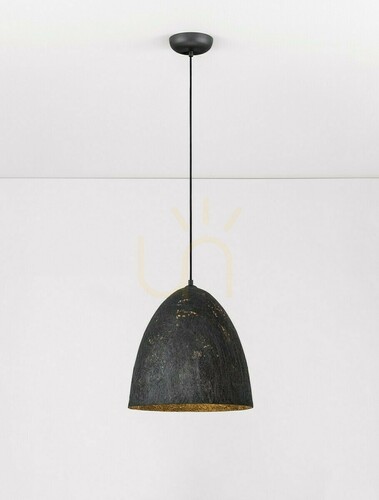
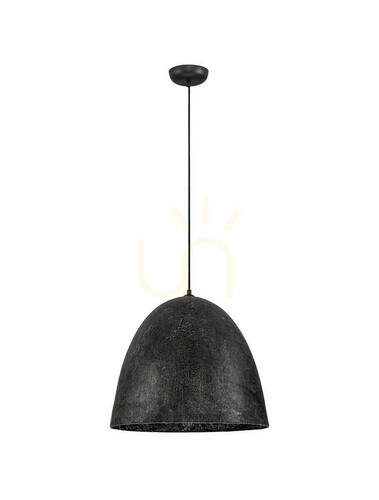
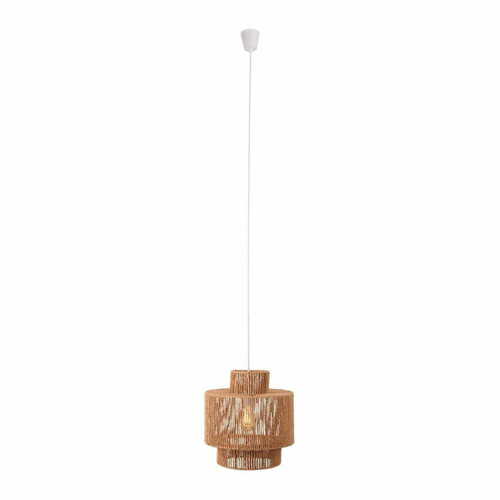
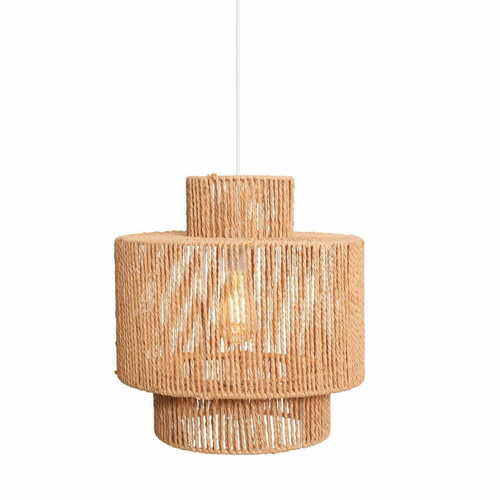
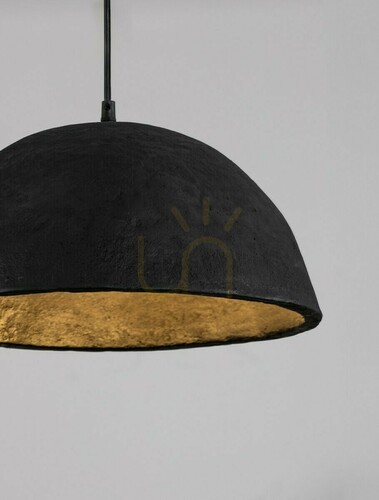
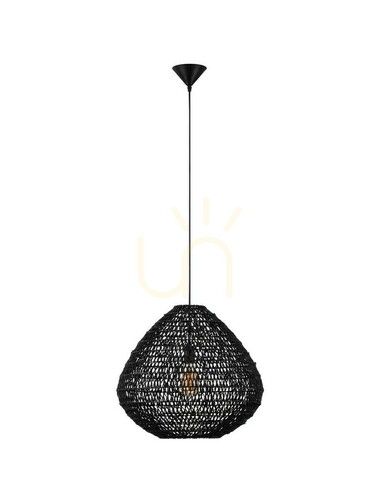
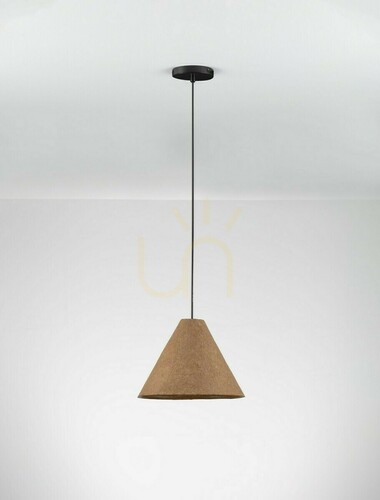
A paper pendant light is a ceiling light whose shade is made of thin paper stretched over a wire or bamboo frame, hanging from a flex with a lampholder. Choosing paper changes one thing above all: instead of a bright point you get a soft, even glow that doesn't dazzle, even when the shade hangs low over a dining table.
Glass and metal shades direct light; paper lets it through its whole surface. A paper globe lights the table, the walls and the ceiling at once, which makes a room feel calmer and a little taller.
Japanese paper pendant lights and what they're made of
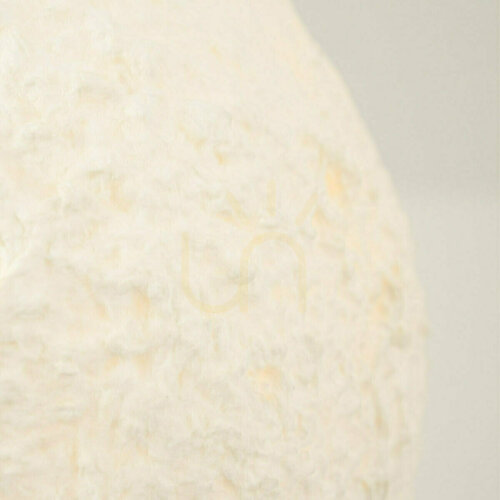
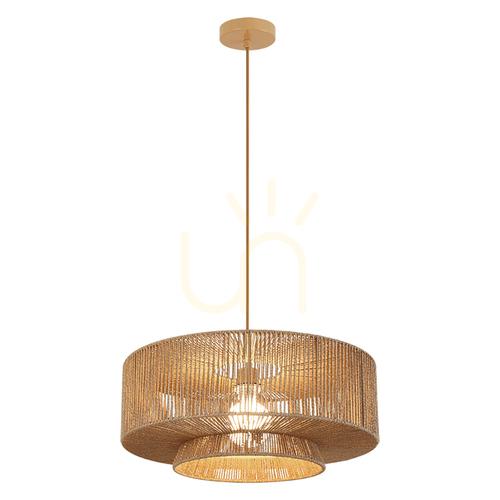
The idea comes from Japanese paper lanterns. "Rice paper" is the name everyone uses, but the paper is rarely made from rice; it's usually a thin, long-fibred paper from plant fibres such as mulberry bark, often called washi. It's tougher than it looks and very translucent. You'll also come across silk paper, pleated paper, woven paper cord and stiffer card folded into geometric slats.
Inside there's usually a wire spiral or a set of ribs that holds the shape and keeps the bulb away from the paper. Many globes fold flat and are simply pulled open and clipped in place once they're up.
Shade only or a complete pendant?
Read the listing carefully. Some paper pendants come complete with flex, lampholder and ceiling cup; many are shades only, meant to go on a pendant set you already have or buy separately. The shade normally clips onto the lampholder ring with an expanding wire bracket.
Check the lampholder too. UK pendant sets are often B22 bayonet, while paper pendants made for the wider European market tend to use an E27 screw fitting, with E14 on small shades. Swapping a pendant at the ceiling rose is work on fixed wiring, so leave it to a qualified electrician working to BS 7671. If the pendant is double insulated with no earth core in the flex, the circuit's earth conductor still stays sleeved and connected to the ceiling rose's earth terminal – it is never cut off.
Shapes worth knowing
-
Globe – the classic; glows evenly in every direction and suits the middle of a room.
-
Flattened oval or ellipse – wider than it is tall, so it takes less drop than a globe of the same width, handy under a 2.4 m ceiling. Onion shapes and upright ovals go the other way and need more height.
-
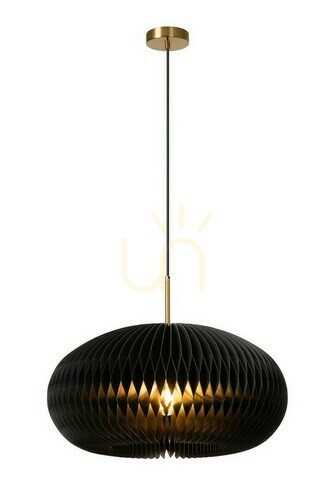
Pleated and honeycomb – the folds create light and shadow bands, so the shade still looks good switched off.
-
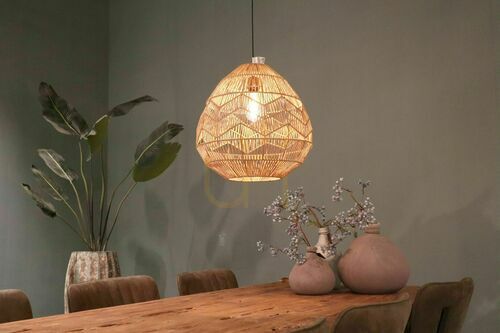
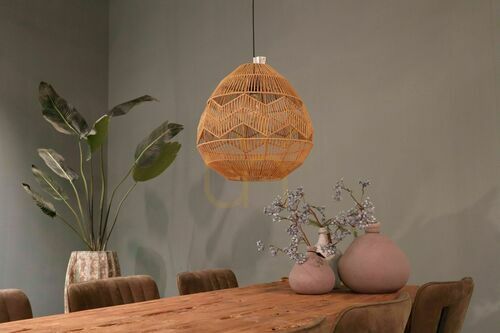
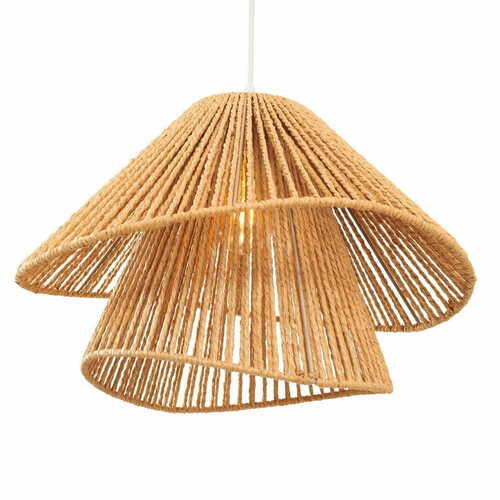
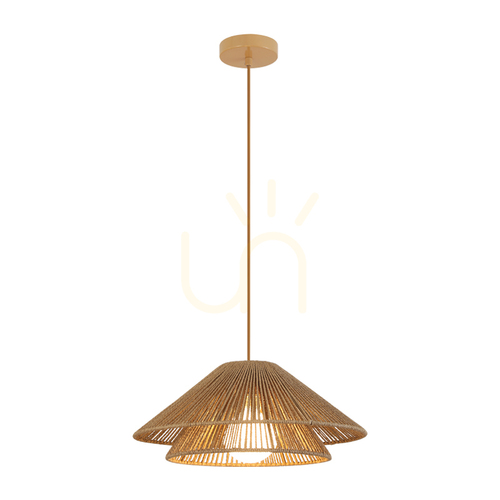
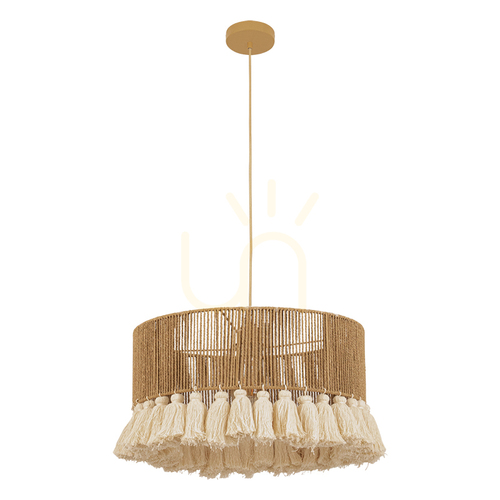
Woven paper cord – gaps in the weave cast patterns on the walls; a natural fit for relaxed, boho rooms.
-
Clusters – two or three globes stacked, or a group at staggered heights over a table or stairwell.
Sizing a paper pendant for a British home
Newer houses and flats usually have ceilings of around 2.4 m; Victorian and Edwardian rooms are often much taller, and that's where a large paper pendant of 70 cm or more really earns its place.
| Where |
Shade diameter |
Bottom of the shade |
| Dining table for four |
40–50 cm |
60–75 cm above the table |
| Long table for six to eight |
2–3 shades of 35–45 cm in a row |
60–75 cm above the table |
| Living room, 2.4 m ceiling |
30–40 cm, or a flattened oval or drum hung close to the ceiling |
about 2.1 m where people walk underneath |
| Over a coffee table or sofa |
45–60 cm globe |
can hang lower, as nobody walks beneath it |
| High-ceilinged period room |
60–90 cm |
at least about 2.1 m, longer drop |
| Bedroom or nursery |
35–50 cm |
well out of reach of heads and hands |
| Hallway, 2.4 m ceiling |
25–35 cm or a flat shade, tight to the ceiling |
about 2.1 m off the floor |
| Stairwell with a tall void |
30–40 cm, several at staggered heights |
at least about 2.1 m above each tread |
Over a table, keep the shade to roughly half the table's width. A row of smaller globes over a long table looks lighter than one giant.
Bulbs: what goes inside paper
Paper burns, so use an LED bulb. It runs far cooler than an old incandescent or halogen and won't scorch or dry out the shade. Never exceed the maximum wattage marked on the lampholder, and make sure the bulb doesn't touch the paper anywhere.
- Warm white at 2700–3000 K brings out the creamy tone of the paper; cooler light makes a white shade look grey.
- For a main room light, aim for roughly 806–1055 lm – paper swallows some of the output.
- A frosted or globe-shaped bulb avoids a hot spot in the middle of the shade.
- A dimmable LED on a compatible dimmer makes a paper pendant work over a bed or dining table.
Pitfalls and care
Paper shades are featherlight, so they sway in a draught – shorten the drop near a back door. Steam and cooking grease soften and stain the paper for good, which rules out the spot above the hob and the bathroom. White paper yellows slowly in strong sun. Dust it with a soft brush, a feather duster or a hairdryer on cold; water leaves tide marks. A small tear can be patched from inside with a strip of thin paper. On the plus side, there's no glass to break, which is why paper is so popular in children's rooms.
Paper pendant light FAQs
What size paper pendant light do I need?
Over a table, about half the table's width. In the middle of a room, the higher the ceiling, the larger you can go. Under a 2.4 m ceiling, where people walk underneath, stay around 30–40 cm or pick a flattened oval hung close to the ceiling; keep a 45–60 cm globe for the space over a coffee table or sofa.
When does a large paper pendant light make sense?
In tall rooms, stairwells and over long tables. In a low room, a 70 cm globe dominates everything and eats headroom.
Can I put a rice paper lampshade on my existing ceiling light?
Usually, if you have a plain pendant set and the shade's bracket fits your lampholder. Check whether it's B22 or E27 and that the bulb will sit clear of the paper.
Are paper pendant lights safe?
With an LED bulb, an intact frame and the shade away from heat and steam, yes. The risk comes from hot incandescent bulbs touching the paper.
What makes the best paper pendant light?
A frame that holds its shape, paper that glows evenly without seams showing, and a size that suits the room. Everything else is taste.
How do I clean a paper pendant?
Dry only, with the light off and the bulb cool: a soft brush, a duster or cool air. Stains can't be washed out of paper.
More on drop heights and other shade materials, from glass to fabric: pendant lights. If a pendant set is already up and only the shade is missing, read on with paper lampshades.