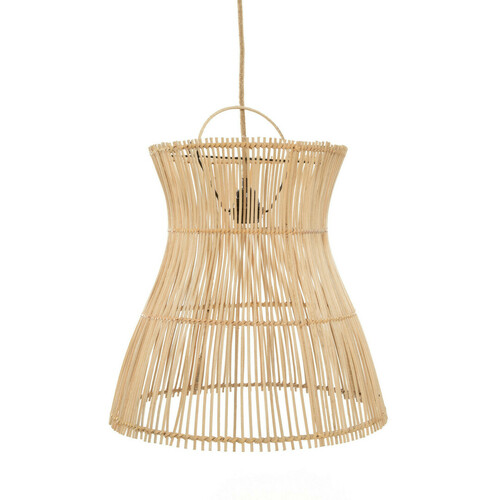
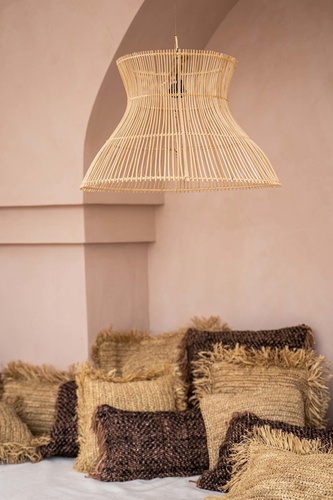
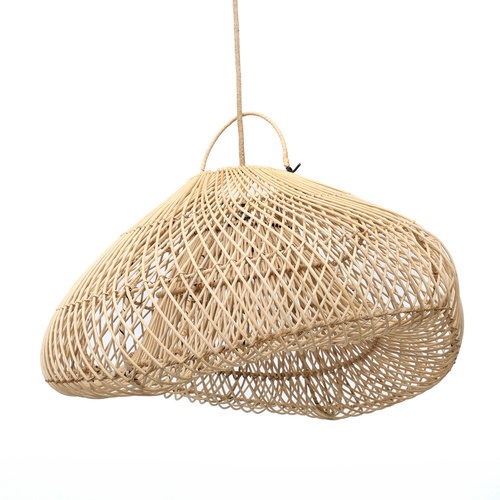
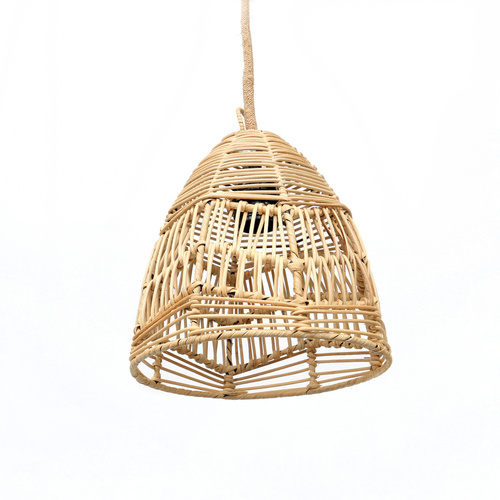
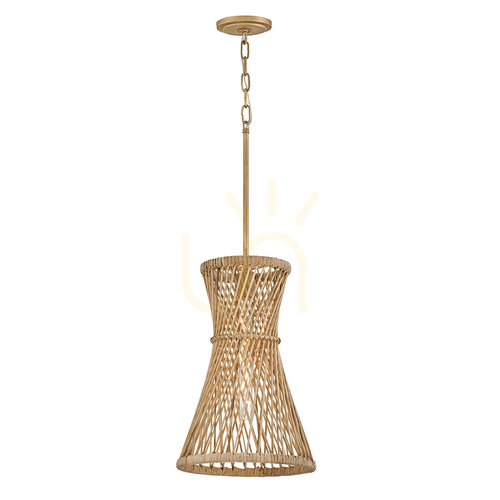
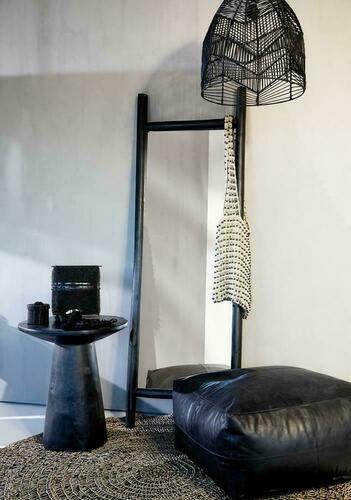
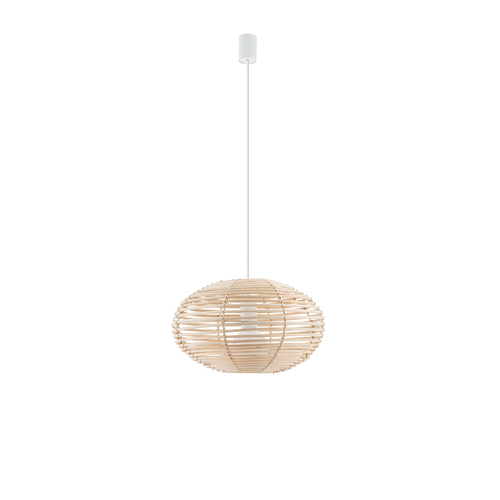
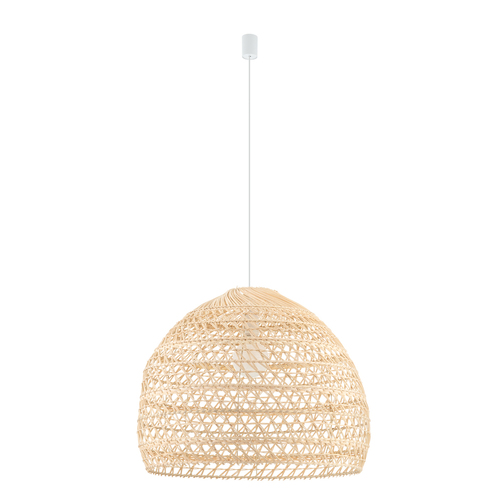
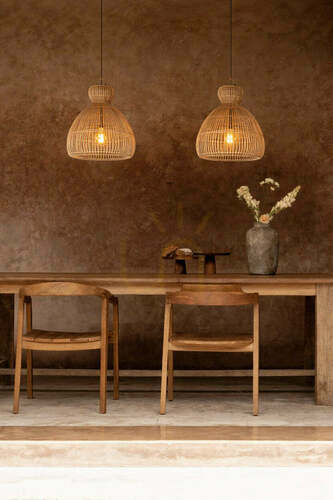
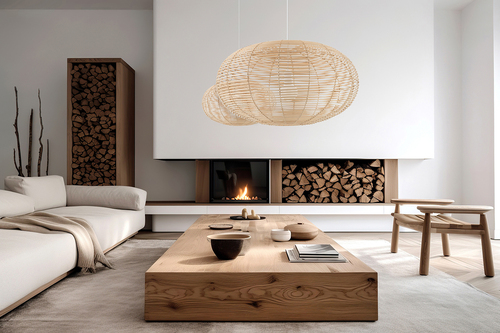
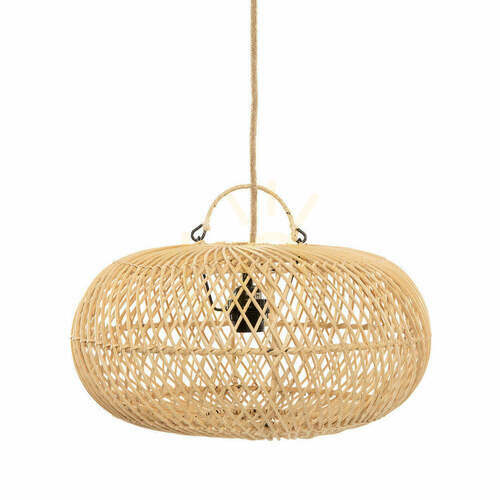
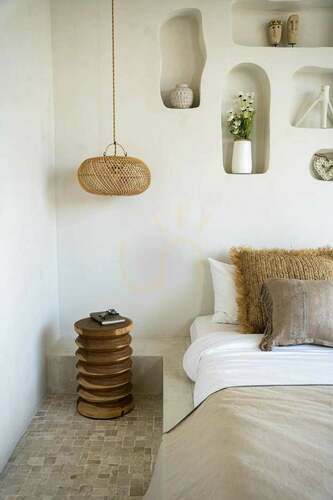
Rattan is having a long moment, and for once the trend has a practical basis behind it: a woven shade is light, it softens a hard-edged room, and it does something to the light that no metal or glass shade can. It also comes with a short list of things it will not tolerate. Both are worth knowing before you hang one.
Rattan, wicker, bamboo and seagrass are not the same thing
Retail copy uses these interchangeably and they are not. Rattan is the stem of a climbing palm from South-East Asia — solid all the way through, dense enough to be structural, and bendable under steam, which is why it can be shaped into a shade without a frame. Bamboo is a hollow grass with visible node rings; it is very strong in tension but splits more readily. Seagrass is a thin, slightly brittle grass that usually needs a wire armature to hold a shape. Water hyacinth is softer and more pliable than seagrass, jute is a bast fibre normally spun into cord, and wicker is not a material at all — it is the weaving technique, and any of the above can be woven wicker-fashion.
The practical difference is structure. A rattan shade holds its own shape; a seagrass or hyacinth one is a covering over a frame.
What an open weave does to the light
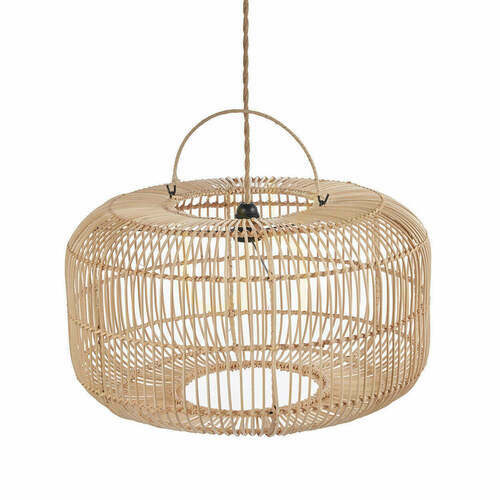
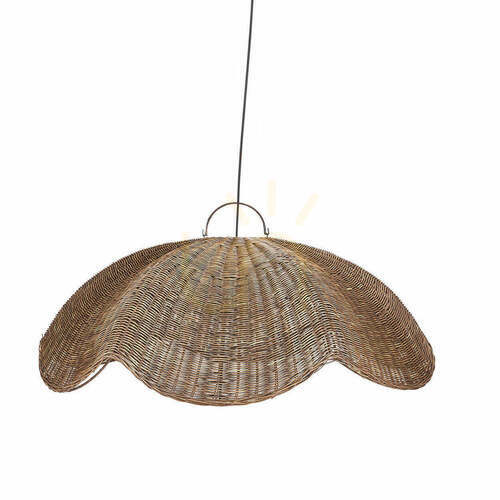
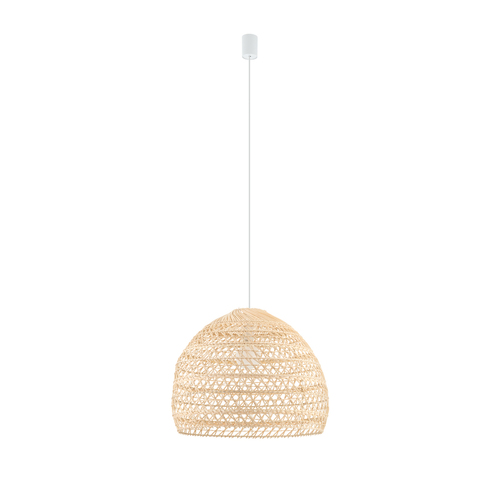
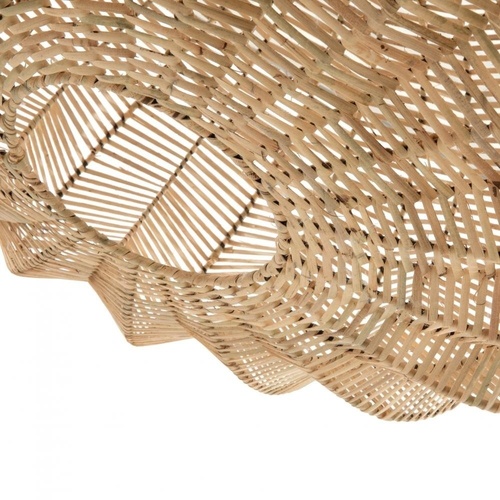
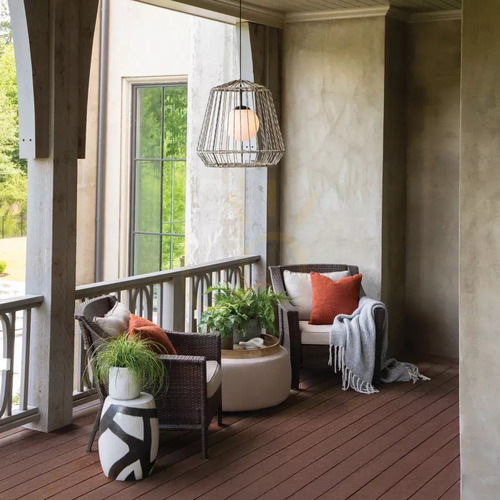
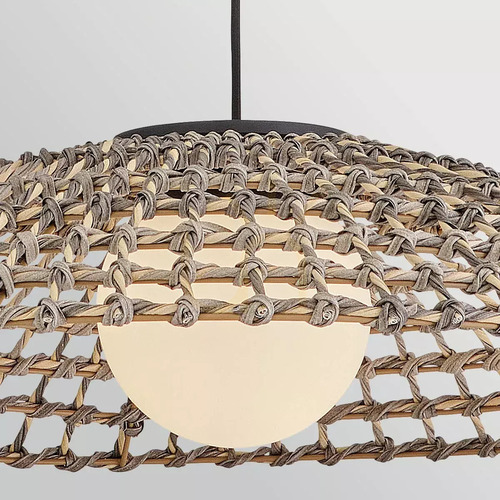
This is the actual reason to buy one. A closed shade produces a defined circle of light. An open weave leaks light sideways through every gap, so the fitting throws a pattern of shadows onto the ceiling and walls around it — the effect people describe as warm before they can say why. The tighter the weave, the more the light stays inside the shade and the more the pattern reduces to a soft halo; a loose basket weave scatters shadows right across the room.
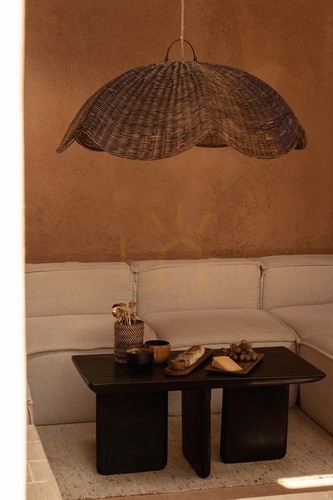
The corollary is that a rattan pendant is a poor task light. It is excellent over a coffee table, in a hallway, above a bed or as one of a row over a counter, and disappointing as the only light in a kitchen where somebody has to chop things.
The bulb matters more here than usual
Because the weave is open, the bulb is visible through it from most angles in the room. A clear bulb behind an open weave is genuinely uncomfortable to look at — you get the filament in the eye through the gaps. An opal or frosted bulb removes the point source and leaves the shadow pattern intact, which is the combination you want; some shades ship with an inner diffuser that does the same job.
Choose LED, and not only for running cost. An LED bulb runs at roughly 30 to 50 °C where a halogen of the same output sits at 150 to 250 °C, and sustained heat inside a closed weave dries the fibre from the inside and eventually cracks it. Most rattan pendants take a standard E27 lampholder, so the choice is entirely yours.
Light enough for an awkward ceiling
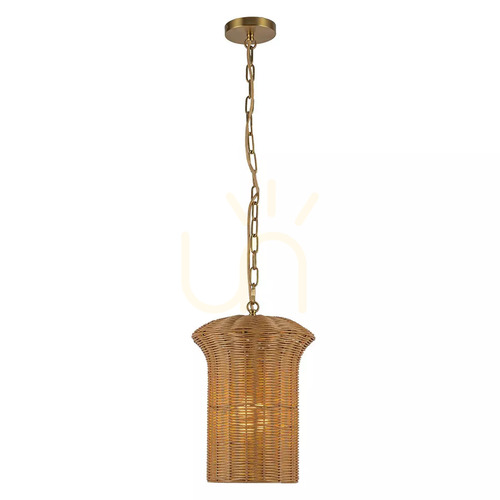
A woven shade of 40 cm weighs a fraction of a glass or metal one of the same size, and that has consequences. It can be hung from an ordinary ceiling rose without a joist fixing, it suits plasterboard and lath-and-plaster ceilings, and a cluster of three is still lighter than one modest metal fitting. It is also why rattan shades come so large: 25 to 50 cm is the common range, and 60 to 80 cm statement pieces stay practical because weight never becomes the problem.
Where rattan should not hang
Natural fibre wants stable, middling humidity — roughly 40 to 60 per cent. Above about 70 per cent it holds moisture and eventually smells musty, which rules out bathrooms and unventilated shower rooms whatever the fitting's rating. At the other extreme, dry radiator heat and direct sunlight shrink and crack the fibre and can bleach a natural finish within a season. Keep it away from a radiator directly below, and away from a south-facing window that gets hours of unfiltered sun.
Everywhere else it is easy: living rooms, bedrooms, dining rooms, hallways and well-extracted kitchens.
Care and common questions
How do you clean a rattan shade?
Dust it with a soft brush or a dry cloth, and use a vacuum on a low setting with a brush head for the weave. Do not soak it or use chemical cleaners — water sits in the joints of the weave and stays there.
Is rattan the same as wicker?
No. Rattan is the material; wicker is the way it is woven. A wicker shade might be rattan, bamboo, seagrass or synthetic polyrattan.
Can a rattan pendant go in a bathroom?
Not sensibly. The humidity will get into the weave, and no IP rating changes what damp does to a natural fibre.
Will it fade?
In direct sun, yes, and it will dry out as well as lighten. Out of direct sun a natural finish mellows slowly and most people prefer it after a year or two.
What size should I choose?
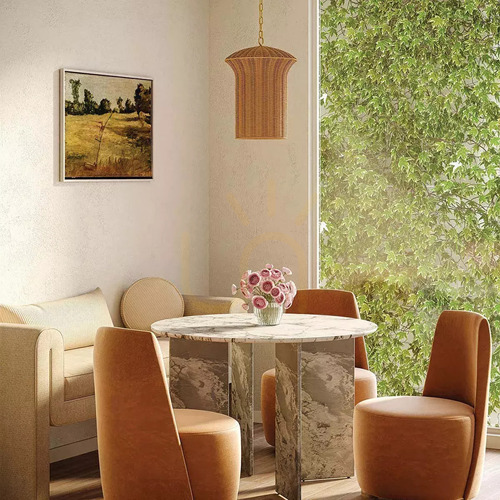
Larger than the equivalent in glass. The material is visually light, so a 30 cm woven shade reads much smaller than a 30 cm opal one in the same room.