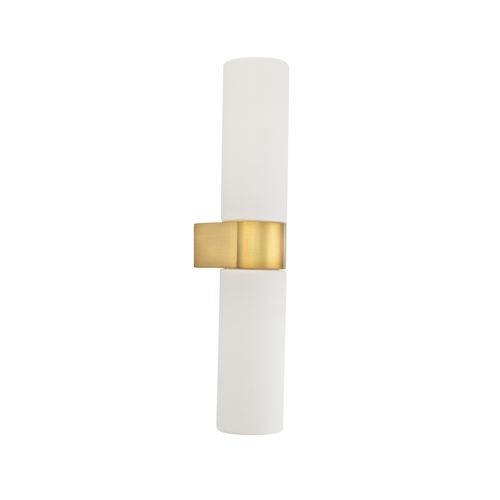
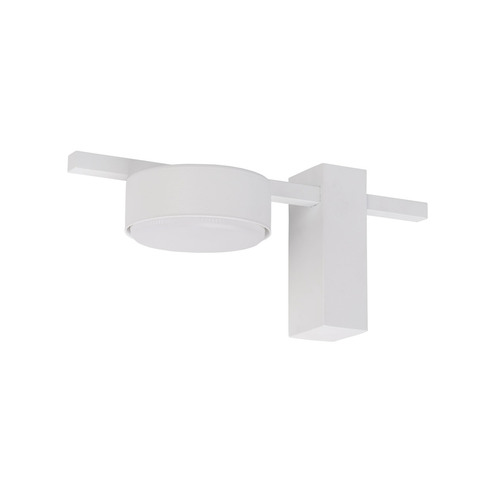
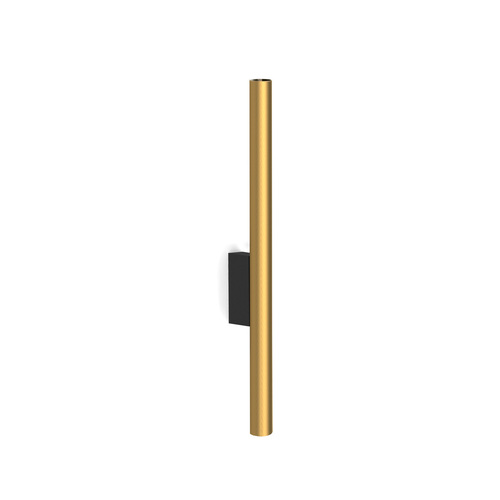
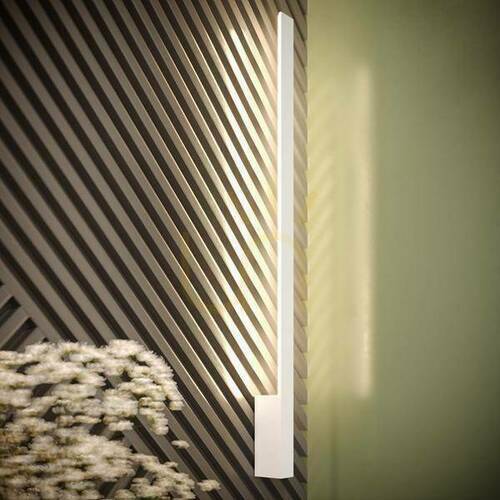
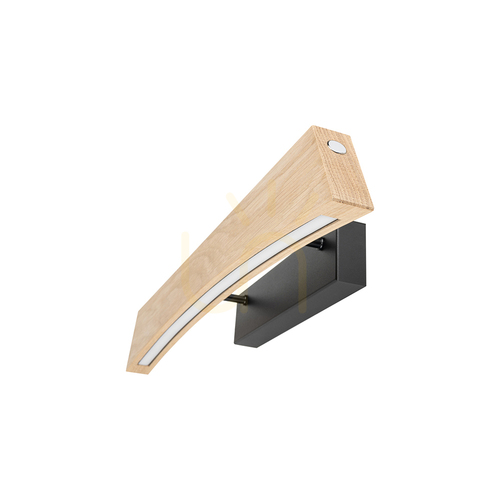
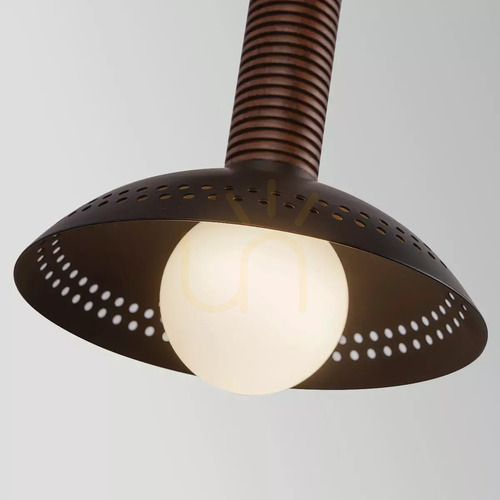
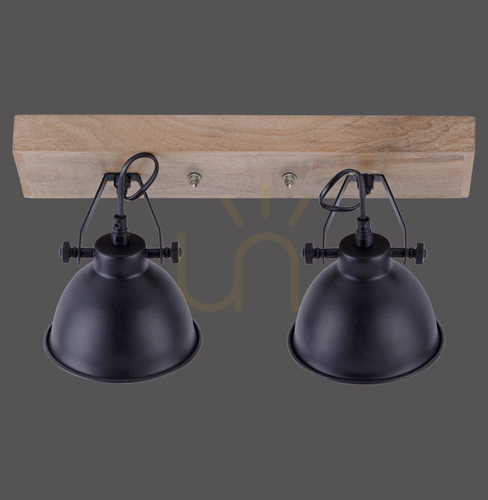
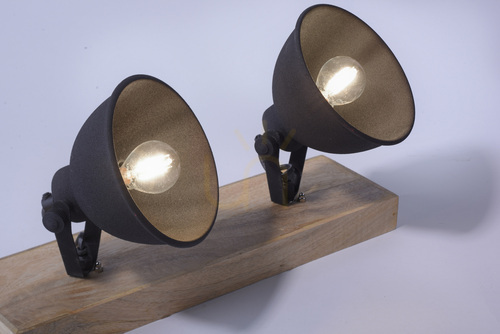
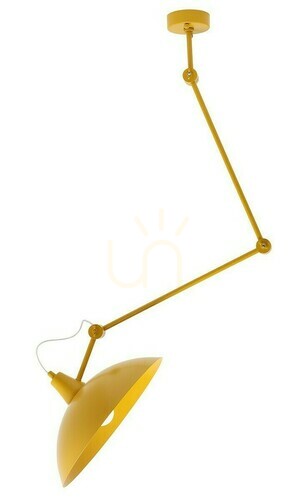
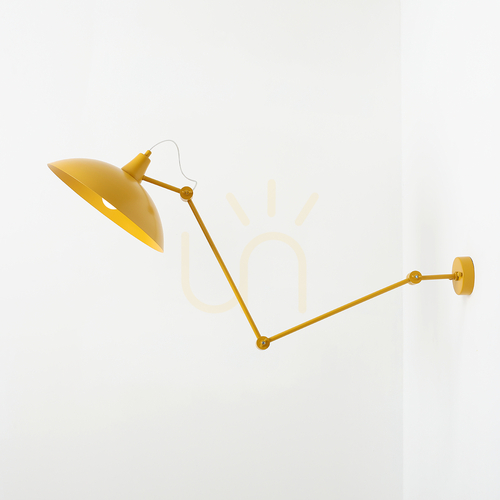
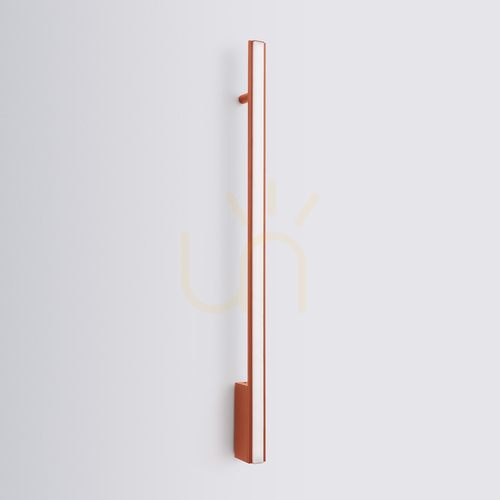
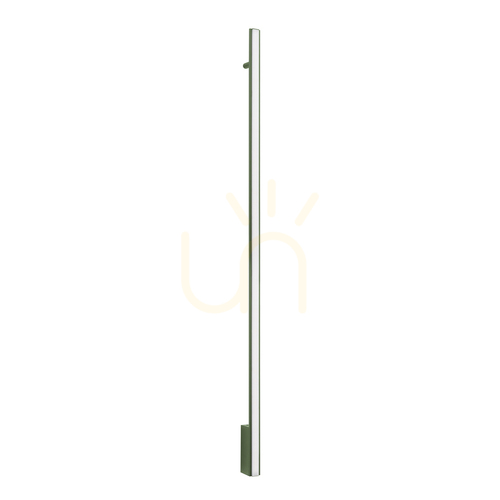
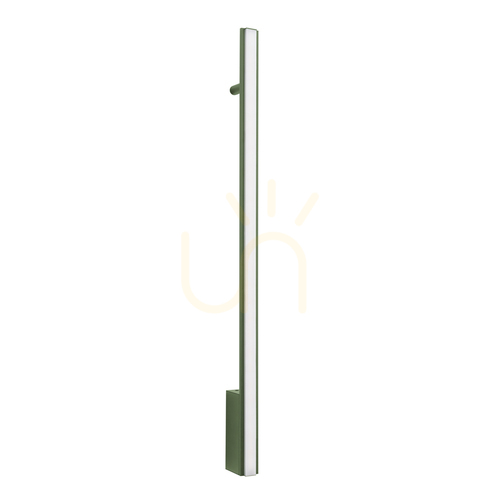
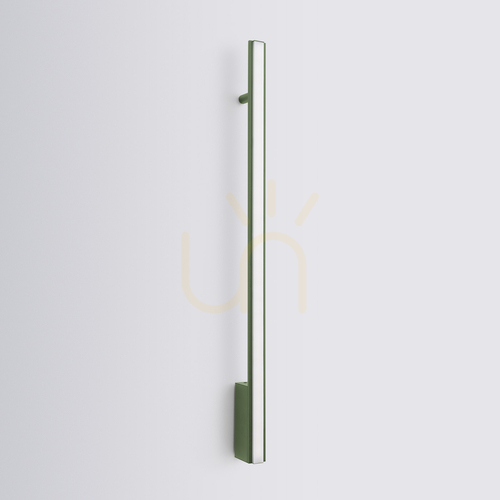
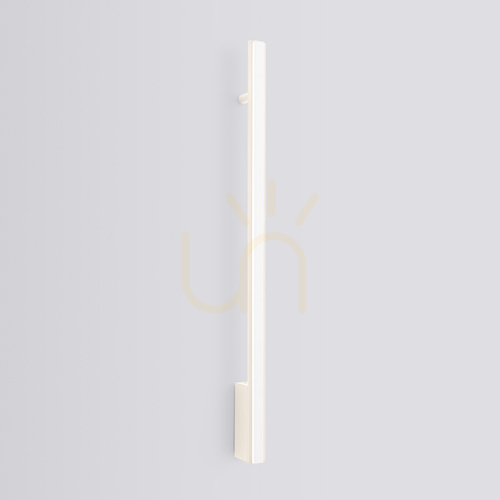
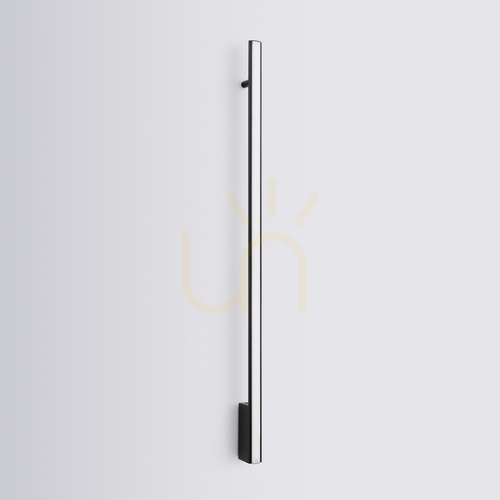
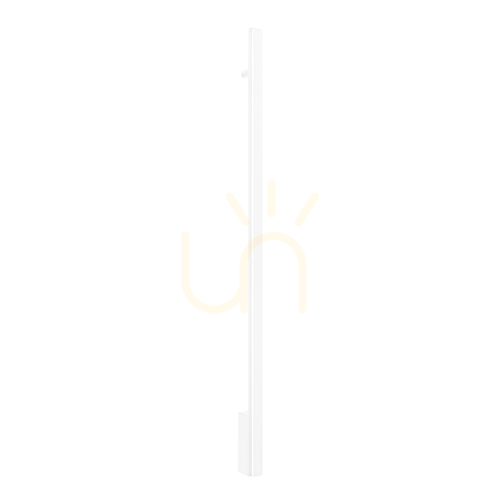
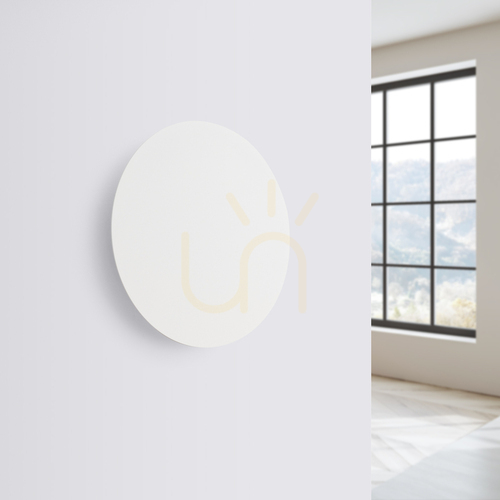
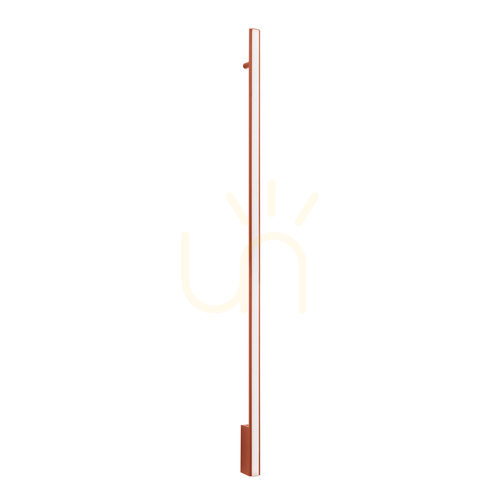
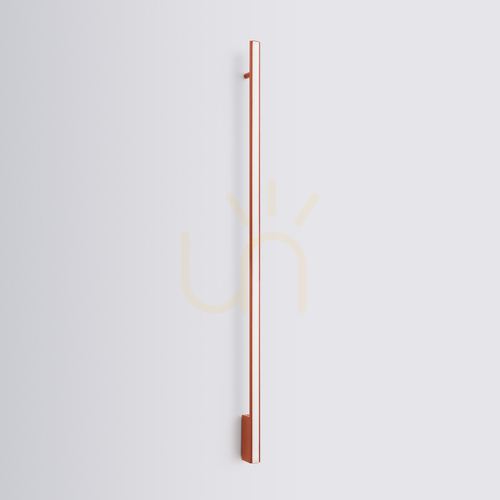
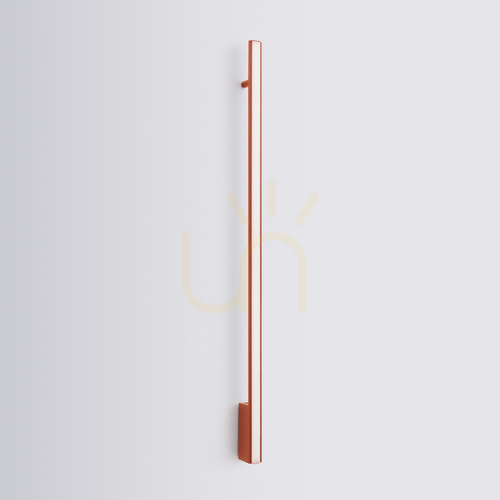
Kitchen wall lights exist to solve the shadow problem. Ceiling downlights sit behind you when you face the worktop, so your own head and shoulders land on the chopping board. Light arriving from the wall comes in sideways, at the height you are actually working, which is why a kitchen with two or three wall fittings is easier to cook in than one lit only from above.
Where a wall fitting earns its place
Walls without cupboards are the ones to use: over the sink, above a run of open shelves, either side of a range, or on the wall of a breakfast nook. Where a stretch of wall already carries wall units, under-cabinet strips do the task light better and a wall light has nowhere sensible to sit.
Height, projection and the worktop
A standard worktop sits around 90 cm off the floor. Mount so the light lands on the surface without the lamp itself in your eyeline when you stand at it — roughly 55 to 70 cm above the worktop for a task fitting, higher for something purely decorative. Projection matters more than people expect: in a galley kitchen under 2.5 m wide, anything standing more than 12 cm off the wall gets caught by a shoulder or an open cupboard door.
| Position |
Height from floor |
What suits it |
| Over the sink |
1.7–1.9 m |
Downward-facing or a swing arm, splash-rated near the tap |
| Beside the hob |
1.6–1.8 m |
Glass, ceramic or painted metal — never fabric |
| Above open shelving |
15–25 cm over the top shelf |
Narrow downlight or a picture light |
| Breakfast nook or bench |
1.5–1.6 m |
Shaded, dimmable, warm |
Steam, splashes and grease
A kitchen is not a bathroom, but the half-metre around the sink and the hob still gets wet and greasy. IP44 is worth having there; elsewhere IP20 is fine. Smooth glass, glazed ceramic and painted metal wipe clean with a damp cloth, while woven and fabric shades hold cooking smells and yellow quickly above a hob.
Colour, rendering and dimming
2700–3000 K keeps the room reading as a room rather than a workshop; 4000 K is worth it only where the fitting is genuinely doing task duty over a prep area. Colour rendering of 90 or better is not a luxury in a kitchen — under a poor lamp, raw meat and cooked meat look the same colour. Put the wall lights on their own switch rather than the ceiling circuit, and choose dimmable lamps if the kitchen doubles as the room you eat in.
Hard-wired or plug-in
A hard-wired fitting needs a cable in the wall and, for most people, an electrician. Plug-in wall lights with a switched flex are the practical answer in a rented kitchen or on a wall that is already tiled: the same light, no chasing out plaster.
Frequently asked questions
How high should a kitchen wall light be?
Around 55–70 cm above the worktop for task light, and 1.5–1.6 m from the floor on any wall you walk past. Lower than that and you look straight into the lamp.
Can one go directly over the sink?
Yes, if it is rated for splashes and its switch is out of arm's reach of the tap. If you are unsure, offset it slightly and angle the head instead.
Are wall lights enough on their own?
Rarely. They are the second layer, working alongside the ceiling light and under-cabinet lighting.
Up-and-down or single direction?
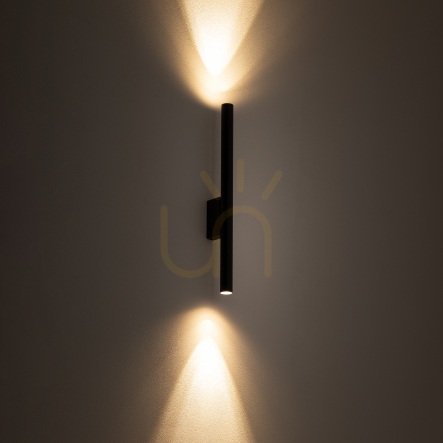
Up-and-down fittings suit a plain wall between units; a single downward head is better directly over a work surface, where uplight only bounces off a ceiling you are not using.
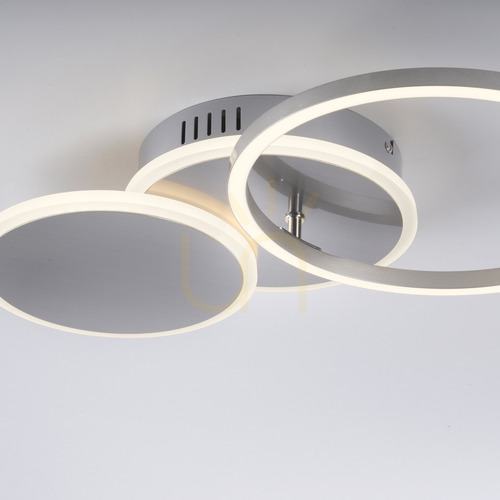
Add LED strips and profiles under the wall units, or keep the overhead layer with Flush Ceiling Lights.