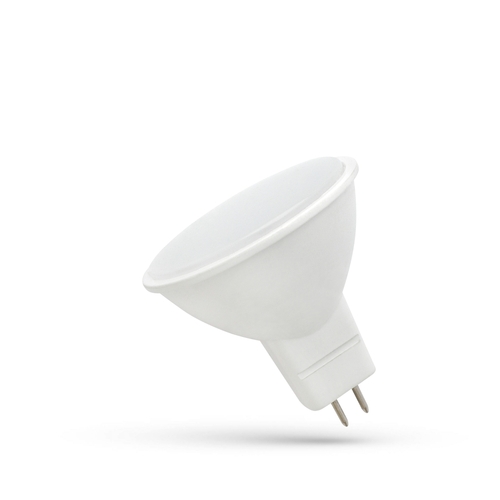
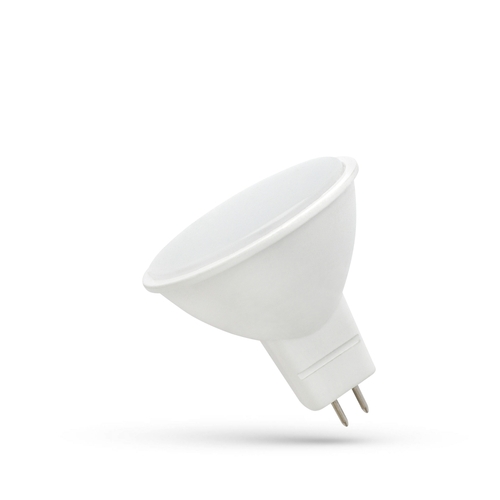
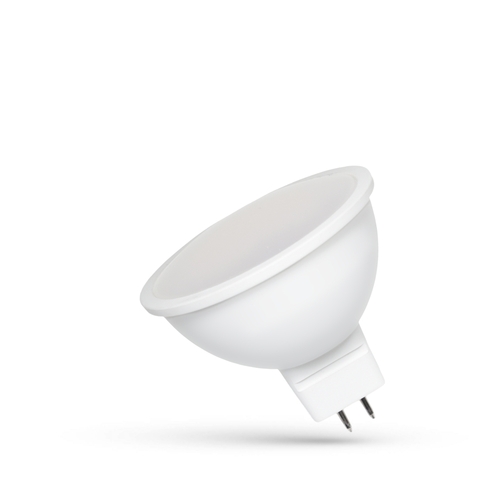
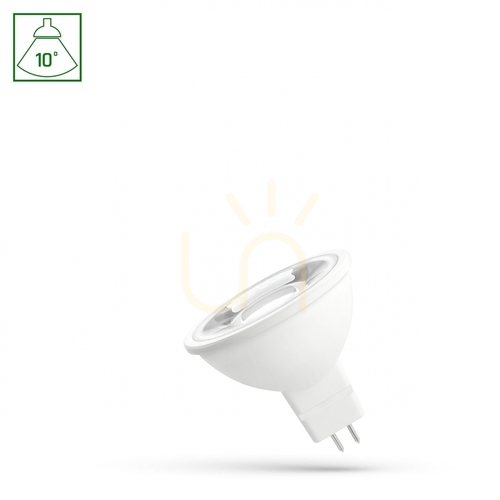
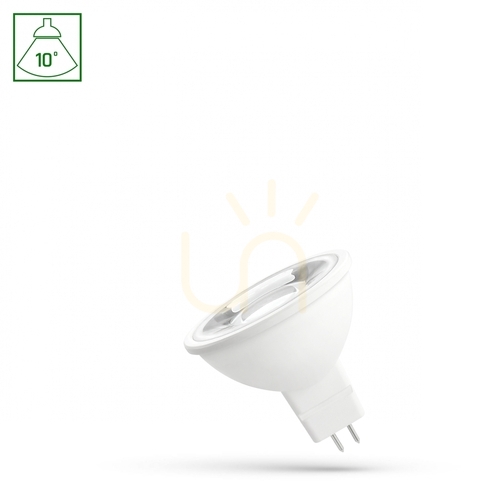
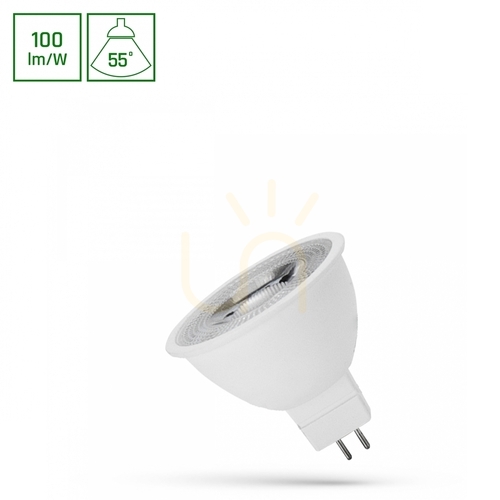
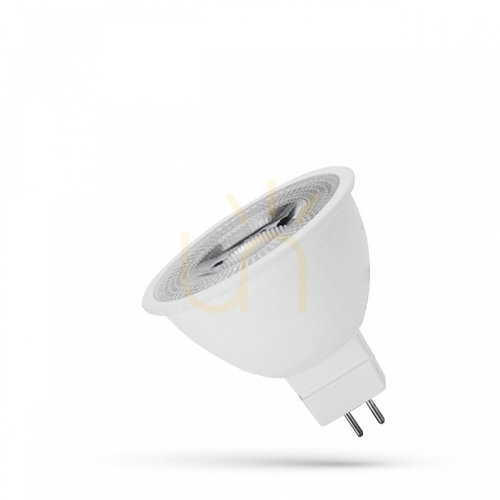
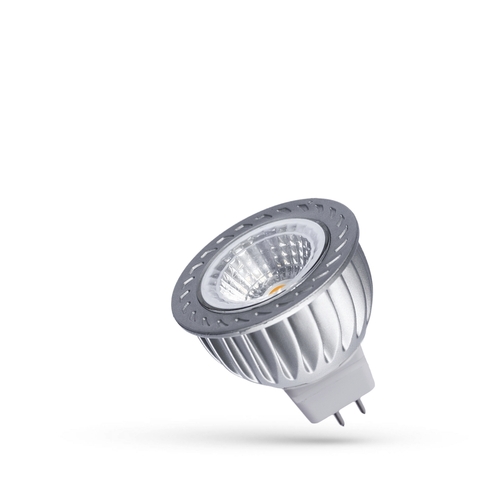
An MR16 bulb is a compact reflector lamp about 50 mm across, the classic low-voltage spotlight found in older downlights, kitchen pelmets and display cabinets. Most have a GU5.3 base with two thin pins and run on 12 V, so replacing one is as much about the transformer above the ceiling as about the bulb itself.
In UK homes the GU10 has taken over most mains downlights, but MR16 never went away. It is still common in plasterboard ceilings fitted with low-voltage spots, under-cabinet and cooker hood lights, glass display cases, tensioned wire and track systems, and 12 V garden spike lights.
What MR16 actually tells you
MR stands for multifaceted reflector, the mirrored bowl that shapes the beam. The 16 is the diameter in eighths of an inch: 16/8 is 2 inches, or roughly 50 mm. That describes the size and shape, not how the bulb connects. The connection is the base, and for MR16 that is usually GU5.3: two straight pins 5.33 mm apart that push straight into the holder.
The same 50 mm reflector shape also comes on other bases, which is where people go wrong:
-
GU10 has stubby pins with thickened ends, twists and locks into place and runs directly on 230 V mains. Same diameter, completely different circuit.
-
230 V GU5.3 versions exist for fittings that have no transformer. They look identical to 12 V bulbs, so always read the voltage printed on the body.
-
MR11 is the smaller sibling at about 35 mm, normally on a GU4 base with pins 4 mm apart, used in compact fittings and furniture lights.
Choosing an LED MR16
Wattage on an LED says how much power it draws, not how bright it is. Compare lumens against the halogen you are taking out, then choose the beam and colour:
| What you are replacing |
LED equivalent to look for |
Typical use |
| 20 W halogen |
2–3 W, about 200–230 lm |
display cabinets, hallways |
| 35 W halogen |
4–5 W, about 320–400 lm |
living room downlights |
| 50 W halogen |
6–7 W, about 450–600 lm |
kitchens, bathrooms, higher ceilings |
| Narrow beam, under 25° |
tight pool of light |
pictures, alcoves, feature walls |
| Medium beam, 36–40° |
the usual halogen look |
general downlighting at 2.4 m |
| Wide beam, 60–120° |
soft, even spread |
widely spaced spots, task areas |
For colour, 3000 K is the closest match to a halogen spot and works well in kitchens; 2700 K is a shade warmer, like an old incandescent bulb, and suits living rooms and bedrooms. 4000 K works over worktops, in utility rooms and in display lighting where you want neutral white. If colours matter – food, artwork, make-up at a bathroom mirror – look for a colour rendering index (CRI or Ra) of 90 or above.
Are MR16 halogen bulbs being phased out?
Effectively, yes. Efficiency rules in both the UK and the EU have pushed mains and low-voltage halogen reflectors off general sale, so replacements today are LED. The GU5.3 base itself is not going anywhere, which is why a fitting that took a halogen MR16 can usually take an LED one – provided the power supply cooperates.
Why LED MR16s flicker on old transformers
Electronic transformers designed for halogen often need a minimum load before they run steadily, commonly somewhere around 20 W. A single 5 W LED falls well short, and the result is flicker, a pulsing blink, a buzz or a lamp that will not start. Options, roughly in order of effort:
- Choose LEDs stated as compatible with electronic transformers.
- Where one transformer feeds several spots, make sure the combined LED load sits within its working range.
- Replace the transformer with a constant-voltage 12 V LED driver sized for the total wattage with some headroom.
Older wire-wound transformers often cope better with low loads, though some hum. Changing a transformer means working on the 230 V side, which in the UK falls under BS 7671 and is a job for a qualified electrician. Dimming adds one more condition: the bulb must be dimmable and the driver and dimmer must suit LED, usually a trailing-edge type.
Fitting tips and long-term care
LED MR16s carry a heat sink at the back, so many are slightly longer than the halogen they replace – typically 45–56 mm. Check the depth of the downlight and that the retaining spring clip still closes over the bulb. Heat is the main enemy of LED life: avoid sealed fittings without airflow and keep loft insulation from being packed tightly over the downlight (or fit a downlight cover). Treated well, an LED MR16 typically lasts 15,000–30,000 hours against 2,000–4,000 for halogen. The IP rating of a bathroom or outdoor spot belongs to the fitting, not the bulb.
MR16 bulb FAQ
What does MR16 bulb mean?
A multifaceted reflector bulb with a diameter of 16 eighths of an inch, about 50 mm. The base is listed separately, most often GU5.3.
What is the difference between GU5.3 and GU10 bulbs?
GU5.3 has thin straight pins and usually runs on 12 V through a transformer. GU10 has thick twist-lock pins and runs straight off the mains. They are not interchangeable without changing the lampholder.
What's the difference between MR11 and MR16 bulbs?
Size: MR11 is about 35 mm wide, MR16 about 50 mm. MR11 usually sits on a GU4 base.
Can I put an LED MR16 into a 12 V 50 W halogen fitting?
Usually, yes, if the transformer is happy with the much lower load. Look for an LED of 450–600 lm to keep similar brightness.
Do I need a special bulb holder?
No. LED versions use the same GU5.3 holder; just check the bulb is not too long for the fitting.
Sorting out other bases and lamp types around the house? Start with light bulbs in general. If the smaller 12 V capsules in your cooker hood or chandelier need replacing too, read more about G4 bulbs.