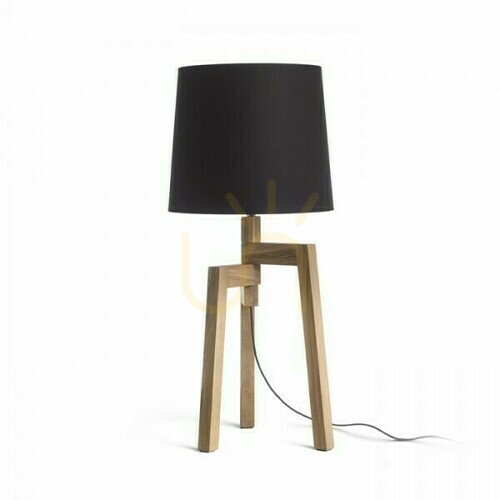
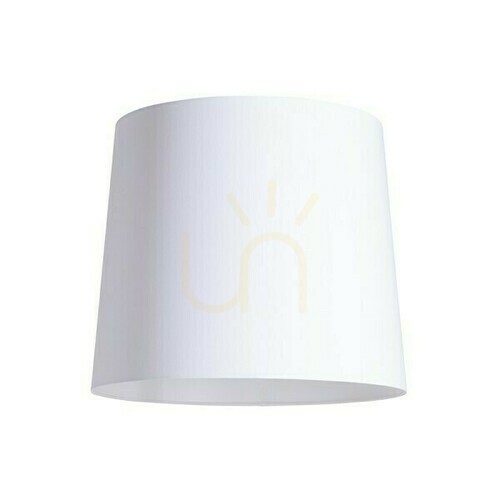
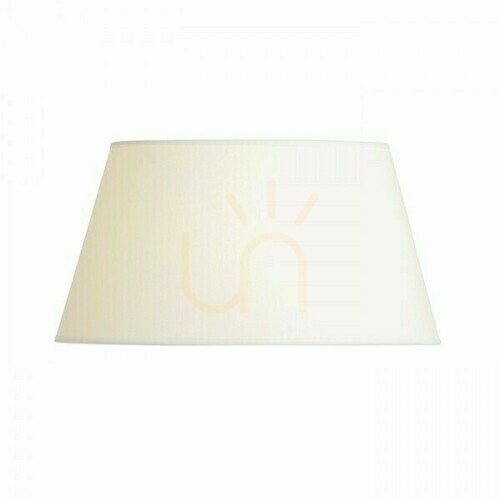
The right lampshade for a floor lamp is bigger than most people expect, usually 40–55 cm across at the base, and it has to do two jobs at once: fit the lampholder properly and hide the bulb from both the sofa and the doorway. A floor lamp often lights the whole living room in the evening, so the shade sets the mood of the room, not just a reading corner.
Plenty of people come to this because an old standard lamp still has a lovely base but a tired, yellowed shade. Swapping the shade is the easiest way to bring it back. Get the fitting, the size and the drop right and nobody will guess the two parts did not start life together.
What makes a floor lamp shade different
Scale and viewing angle. Most floor lamps stand 150–180 cm tall, so you see the shade from the side when standing, sometimes straight into the top opening, and from below when sitting. A table lamp shade is seen mostly from one height. That is why floor lamp shades tend to be deeper and wider, often with a diffuser or a lining, and why the position of the fitting inside the shade matters so much.
What is the lampshade rule for floor lamps?
There is no official standard, but interior designers use a few rules of thumb. They help you avoid the two classic mistakes: a small shade perched on a heavy base like a hat, and an enormous drum wobbling on a slim tripod.
| Measurement |
Typical for a floor lamp |
Rule of thumb |
| Bottom diameter |
40–55 cm (about 16–22 in); large shades 60 cm and over |
widest point roughly twice the width of the lamp's base |
| Top diameter |
same as the bottom on a drum, 25–35 cm on an empire or coolie shape |
a wider top sends more light to the ceiling |
| Shade height |
25–40 cm |
the lower edge should hide the lampholder and bulb |
| Lower edge above the floor |
around 100–120 cm beside a reading chair |
roughly at seated eye level |
| Fitting |
29 mm ring (B22), 40–42 mm ring (E27) with a reducer, duplex ring with a shade carrier, or harp and finial |
check the lampholder, not just the bulb |
UK retailers often list shades in inches, so a 16 in shade is about 40 cm and a 20 in one about 50 cm. When you measure an empire or coolie shade, check whether the height given is vertical or along the slope, because the two differ by a few centimetres.
Will any lampshade fit any lamp?
No, and the fitting is usually why. Most UK lamp bases have a B22 bayonet lampholder, which takes a shade with a 29 mm ring. Continental E27 shades have a ring of about 40–42 mm and need a reducer ring to sit on a B22 holder. Shades with a duplex ring at the top need a separate shade carrier on a lamp base. A small E14 holder also takes a ring of roughly 29 mm. Some traditional standard lamps carry the shade on a harp, with the shade's spider resting on top and held by a finial. Clip-on shades that grip the bulb are meant for small shades and are rarely a good idea on a floor lamp.
Then look at where the ring sits inside the shade. A ring near the bottom edge leaves the shade standing tall above the holder and shows the bulb. A ring set higher lets the shade drop and cover it. If an old lamp's flex or lampholder looks worn, have it replaced by a qualified electrician before you fit the new shade.
Fabric, colour and the light you get
Pale linen, cotton and paper let a lot of light through and turn the lamp into a soft source of general light. A dark or opaque shade in velvet or metal pushes the light up and down instead, which is good for reading but leaves the rest of the room in shadow. Rattan throws patterned shadows on the walls, and glass gives a crisper, brighter light but adds weight. A white or gold lining bounces more light out of the same bulb.
A drum shade suits modern and Scandinavian rooms, while empire, bell and pleated shades suit traditional ones. In a room with a standard ceiling height of about 2.4 m, an open top casts a gentle wash of light upwards.
Placement, bulbs and care
Stand a reading lamp just behind the shoulder, with the lower edge of the shade near eye level. In a corner, a large shade lights two walls and makes the room feel bigger. Keep big drums out of narrow walkways and away from curtains, and remember that a heavy shade on a light tripod is easy to topple with children or dogs about.
Use LED bulbs in fabric and paper shades, as they run far cooler than incandescent or halogen, and always respect the maximum wattage on the shade's label. For a floor lamp lighting a living room, around 800–1500 lm in warm white (2700–3000 K) is typical. If you can see the bulb through the top when standing, switch to a frosted one. Dust fabric with a lint roller or a soft brush, spot clean with a barely damp cloth so the glue does not soften, and keep paper dry. Turn the seam towards the wall.
Frequently asked questions
What size lampshade do I need for a floor lamp?
For most living rooms, 40–50 cm suits a slim stem and 50–60 cm a chunky base. Measure the old shade's top, bottom and height and stay within a few centimetres.
Is a drum lampshade good for a floor lamp?
Yes. A drum has the same diameter top and bottom, so it spreads light evenly up and down and suits most modern bases. Check that its height still covers the lampholder.
Can I put a 60 cm lampshade on a floor lamp?
On a heavy base in a spacious room, yes. On a slim tripod a 60 cm shade looks top-heavy and is easier to knock over.
How do I find a replacement shade for a floor lamp?
Identify the fitting (29 mm or 40–42 mm ring, duplex ring or harp), measure the old shade and note how far the ring sits from the bottom edge. Those three details matter more than the style.
Will any lampshade fit any lamp?
Only if the fitting system matches and the shade clears the bulb. A table lamp shade usually fits the thread but looks too small on a floor lamp.
Which floor lamp shades work best in a living room?
Pale, translucent fabric if the lamp is the main evening light, a darker or lined shade if it is purely for reading.
More on choosing shades for pendants and table lamps: lampshades. If natural fabric appeals, carry on to linen lampshades.