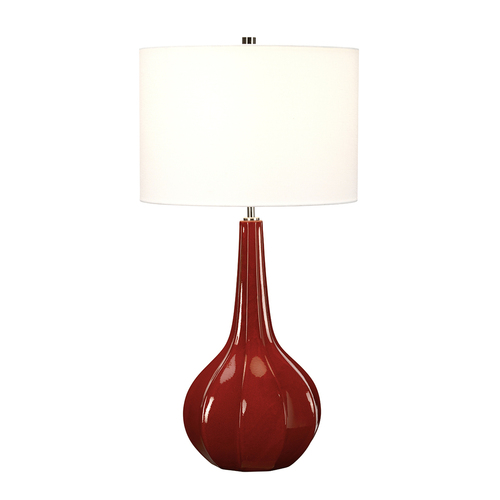
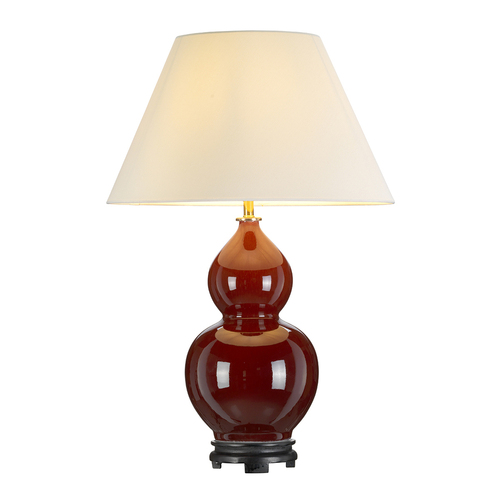
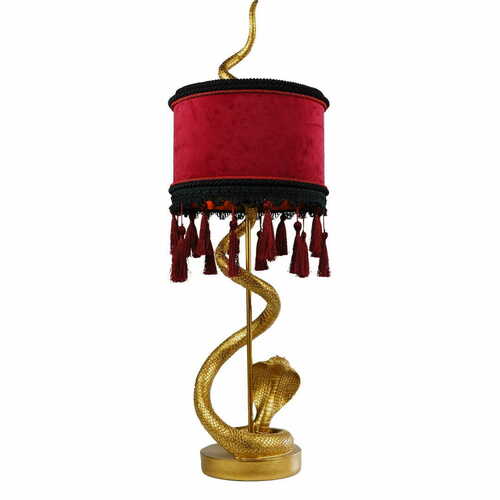
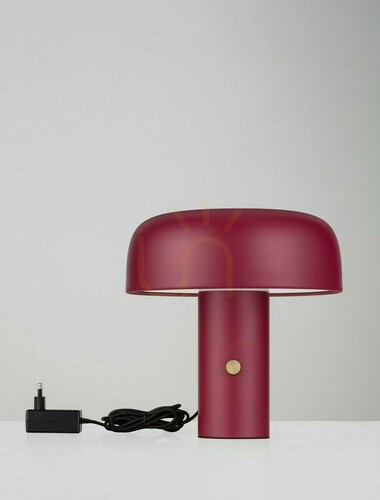
Red table lamps are an accent, and accents work by being outnumbered. One red lamp on a console in an otherwise restrained room does more than three would, because the eye goes to it and then relaxes. The colour also happens to sit on the same side of the spectrum as the light a warm bulb produces, which is why a red base behaves so differently after dark from every other colour in the catalogue.
The range, from terracotta to oxblood
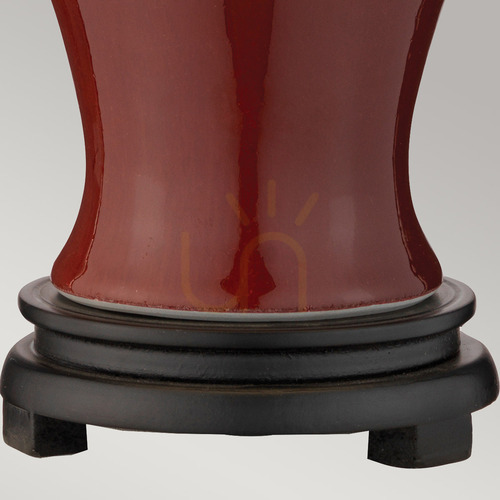
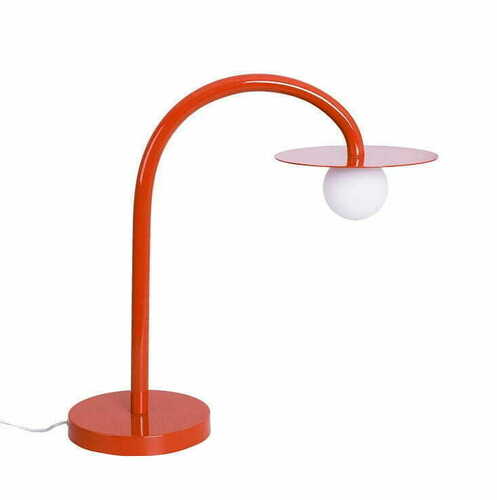
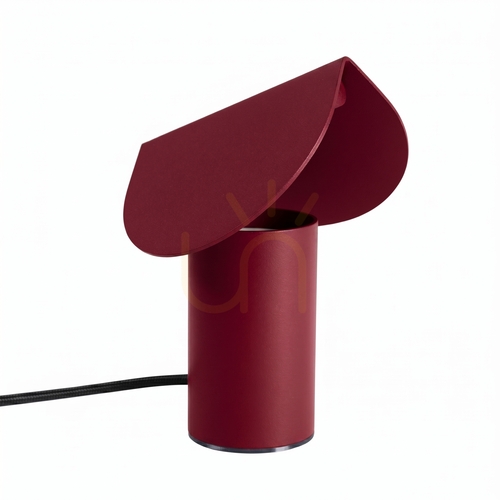
Terracotta and rust barely register as red at all in an earthy scheme — they read as warm neutrals and sit happily with linen, oak and cream. Brick and tomato are the mid-range, cheerful and quite loud in daylight. Burgundy and oxblood are deep enough to work like a dark neutral, close to how navy behaves, and they suit traditional rooms and dark wood. Scarlet and lacquer red are the statement end, at their best on a simple glossy shape where the colour is the whole idea.
Warm light is a multiplier
Warm white at 2700 K is rich in exactly the wavelengths a red surface reflects, so red intensifies in the evening while blues and greys fade. A glazed red base can look startlingly saturated under its own lamp. This cuts both ways: a red that seemed manageable in daylight photographs can dominate at night, so if you are hesitating between two tones, the calmer one is usually the right buy.
Red base or red shade — not the same purchase
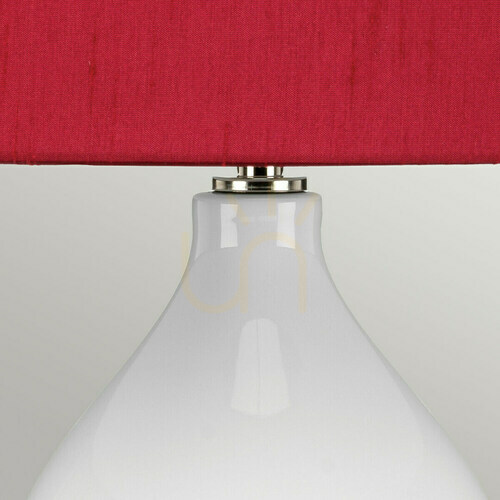
A red base with a cream or white shade gives you neutral, usable light and a coloured object. A red fabric shade, particularly a pleated one, turns the lamp into a source of pink-warm light that washes the wall and ceiling and drops the useful output considerably. That is a beautiful thing on a hall table or a sideboard and a poor choice beside a reading chair. Decide which of the two you actually want before filtering by colour.
What to put red next to
Brass and dark timber are the natural partners; both are warm and neither competes. Cream and putty walls let a red lamp behave like a piece of art. Green is the complementary that works in practice as well as in theory — a rust or brick lamp against a deep green wall is one of the most reliable combinations there is. Keep red away from pink and orange unless the whole room is committed to that family, and remember that gloss makes red louder while a matte or chalky finish tempers it.
Finishes and how they age
Fired red glaze is colour-stable and will not fade, though gloss shows dust and fingerprints more than any other colour. Painted metal in a bright red can chip to a pale primer, which shows badly, so check the edges. Red fabric shades are the vulnerable part: strong dyes in direct sun will shift within a couple of years, so keep a red-shaded lamp out of a south-facing window or turn it occasionally.
Before you buy
Is a red lamp too much for a small room?
Not if it is the only saturated thing in it. In a small room, scale is the constraint, not colour — keep the lamp proportionate to the table.
Which red is easiest to live with?
Terracotta and burgundy. Both behave like neutrals in most schemes and do not date the way a bright scarlet can.
Does a red shade make the room look pink?
The light it throws onto nearby walls does take a warm pink cast, yes. That is the effect people buy them for, but it is not neutral light.