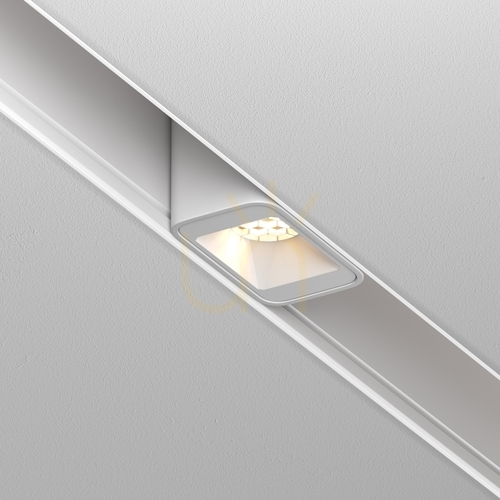
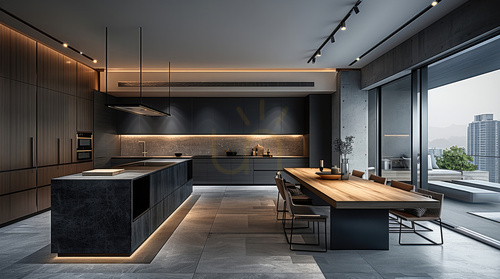
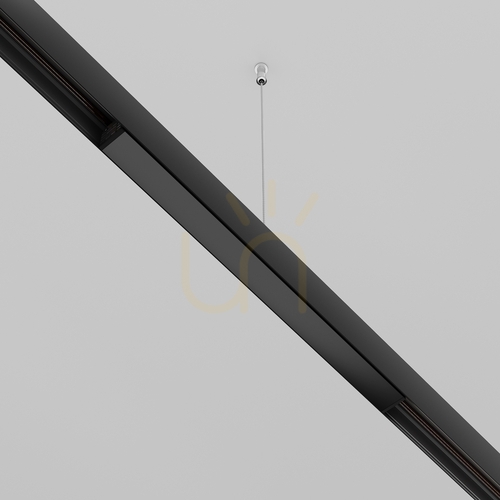
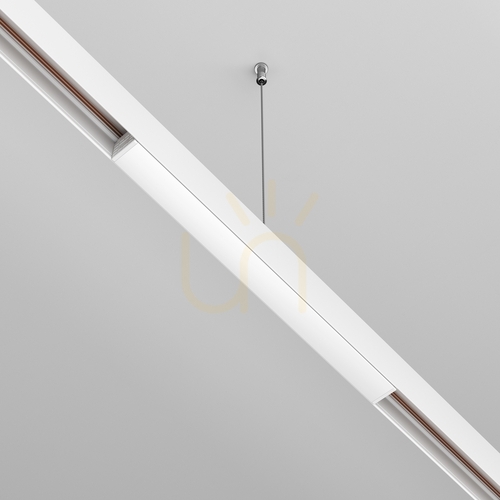
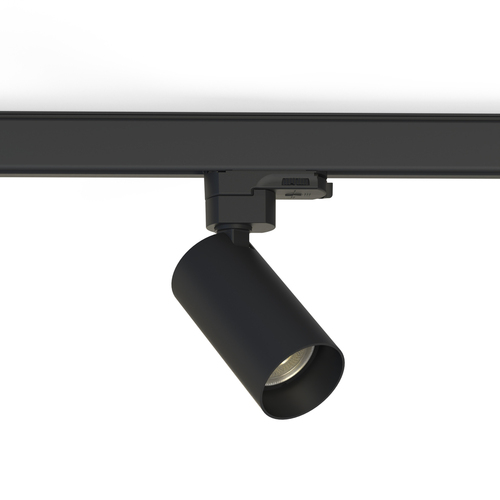
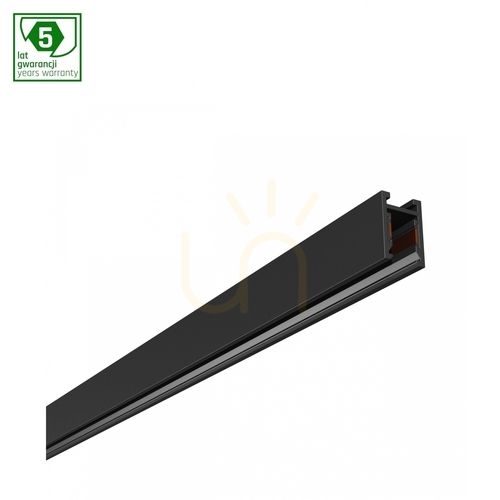
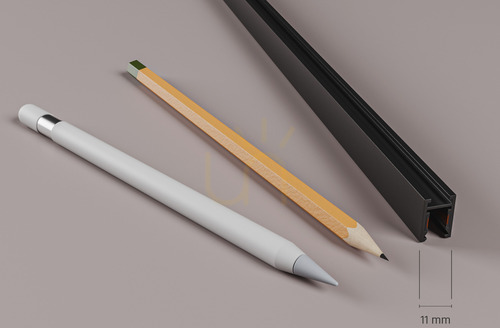
Black track lighting is the quickest way to give a ceiling an industrial feel: a matt black rail, spots shaped like tubes or cones, and the hardware left on show instead of hidden. The industrial version works exactly like any other mains track, but the look changes what you pick, from the finish of the heads to the colour of the light and how you lay the run across the room.
What makes track lighting look industrial
Most contemporary track tries to disappear into a white ceiling or a plaster recess. Industrial track does the opposite and treats the rail as part of the décor, in the same spirit as exposed ductwork, steel beams or braided flex. Look for:
- matt black, graphite or raw brushed aluminium, sometimes with brass or copper details;
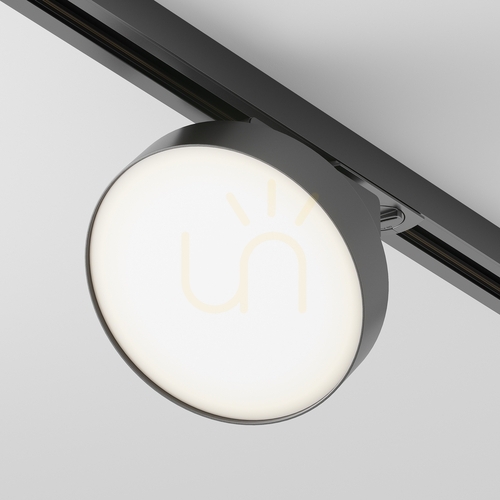
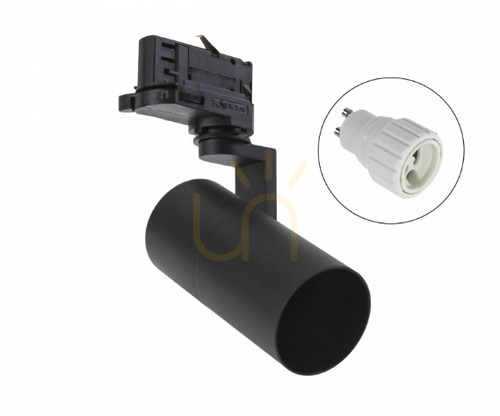
- plain cylinders, cones, bell shades, cage guards or heads styled on old workshop lamps;
- pendant adaptors that hang a fabric-cable drop with an Edison-style filament bulb from the track, handy over a dining table or island;
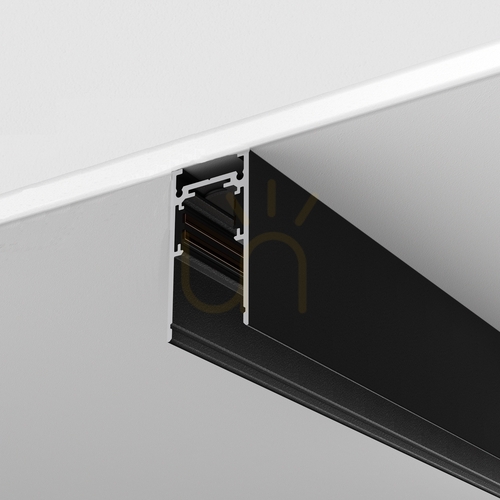
- surface-mounted or suspended track rather than recessed.
It sits best against brick, concrete, timber floors and black-framed glazing. In a plain white room a black rail draws a strong graphic line, so run it parallel to the walls or along the table, never at an awkward angle.
The different types of track lighting
Choose the track first and the heads second. Adaptors are not standardised across systems, so a head built for one rail rarely clicks into another, even when the profiles look alike. Keep track, connectors and spots in one family.
| Track type |
How it works |
Suits |
| Single-circuit, 230 V |
every head switches together from one feed |
kitchens, hallways, a single run over a table |
| Three-circuit, 230 V |
each head is set to one of three circuits on its adaptor |
open-plan kitchen-diners, shops, cafés |
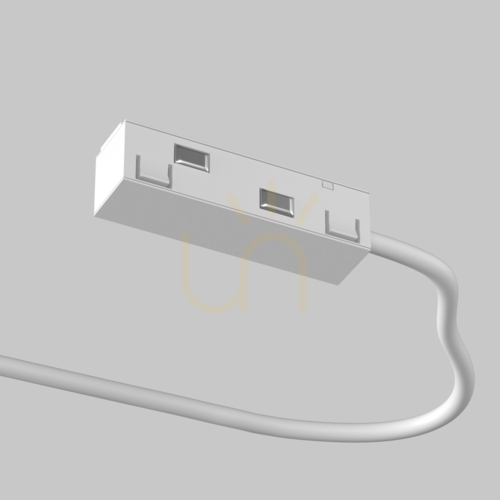
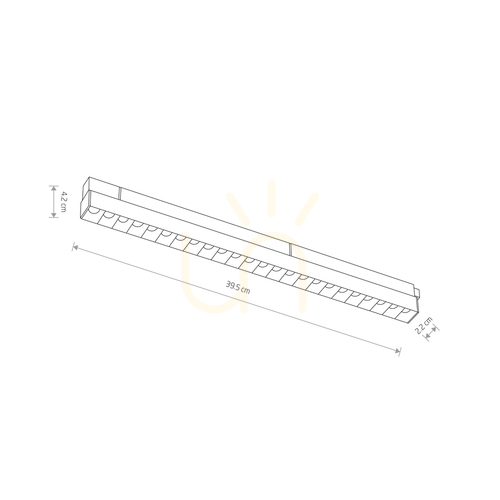
| Magnetic, 48 V |
heads clip on by magnet; needs a driver |
slim profiles, frequent rearranging |
| Suspended |
surface track dropped on cables or rods |
warehouse conversions, ceilings over 3 m |
For the heads themselves, a GU10 lampholder lets you change beam and colour temperature by swapping the bulb. Integrated LED heads are usually slimmer and more efficient, but what you buy is what you keep.
Beam, colour and spacing for an industrial scheme
Exposed brick and concrete come alive under a narrow beam of about 10–25°, which rakes across the texture. Heads for general light over a worktop do better at 36–60°. Warm white of 2700–3000 K flatters brick, timber and leather; neutral 4000 K is the one to use in a home workshop or a hard-working kitchen. If you light artwork, open shelving or food, a CRI of 90 or above keeps reds and wood tones honest.
Typical UK ceilings are around 2.4 m, where heads spaced roughly 60–80 cm apart give even coverage. In a converted warehouse with 3–5 m to the soffit, either suspend the track to bring it down to around 2.6–2.8 m above the floor, or switch to narrower beams so the light still lands where it is needed.
How to make track lighting look better
-
Follow the architecture. Line the track up with a beam, a kitchen island or the centre of the table so it reads as deliberate.
-
Do not overload it. Four well-aimed heads on a 2 m run look cleaner than eight crowded ones.
-
Aim, do not point. Angle accent heads at about 30° from vertical towards a wall. Straight down they create hard pools; towards the sofa they glare.
-
Match the finish. Black heads on black track; mixing finishes tends to look accidental rather than industrial.
-
Mix in a pendant. One or two pendant drops on the same track break up a row of identical spots.
Installation and care
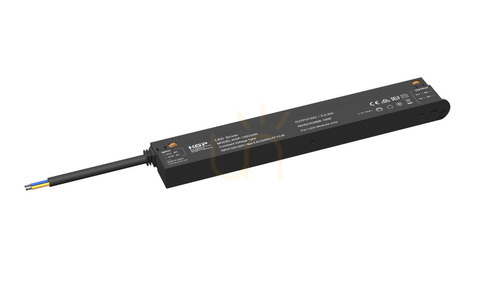
Surface track fixes straight to the ceiling and takes power from one point through a live end or a centre feed, with a dead end closing the far side. Most aluminium track can be cut to length with a hacksaw, and L, T or X connectors and flexible joints take it round corners or down a wall. Hard-wiring a 230 V track is notifiable work in some cases and must meet BS 7671, so use a qualified electrician. Magnetic systems also need space for the driver, sized to the total wattage with some headroom. Indoor track is normally IP20, so keep it out of the wetter zones of a bathroom.
Matt black shows dust sooner than white, especially on the top of each head. Switch off and wipe with a dry microfibre cloth; LED heads stay cool enough to handle after a few minutes, unlike old halogen spots.
Frequently asked questions
Is track lighting outdated?
Not in an industrial or loft-style interior, where visible hardware is the point. What dates quickly is fussy chrome track; plain black or raw metal heads have stayed in favour because they suit the architecture rather than a trend.
What are the different types of track lighting?
Mains single-circuit and three-circuit track, low-voltage magnetic track, and tensioned cable or wire systems. Rigid track (mains or magnetic) can usually be surface-mounted, recessed into plasterboard or suspended; adaptor standards differ from one system to the next.
Can black track lighting go on a white ceiling?
Yes, and it is the classic industrial combination. The rail becomes a visible line, so plan its position carefully and keep every head in the same finish.
Can I plug track lighting into a socket?
Some kits come with a plug-in lead for a wall socket, which is useful in rented flats. A permanent ceiling connection still needs an electrician.
How many spotlights do I need on a track?
Roughly one head for every 60–100 cm of track, closer together under low ceilings or with narrow beams, further apart where heads mostly wash a wall.
Can track lighting be cut to size?
Most aluminium track can. Measure twice, deburr the cut edge and fit an end cap; check the instructions before cutting magnetic track, as some lengths have fixed feed ends.
Other finishes and track types are covered under track lighting. The same raw-metal look carries over well to industrial bedside lamps.