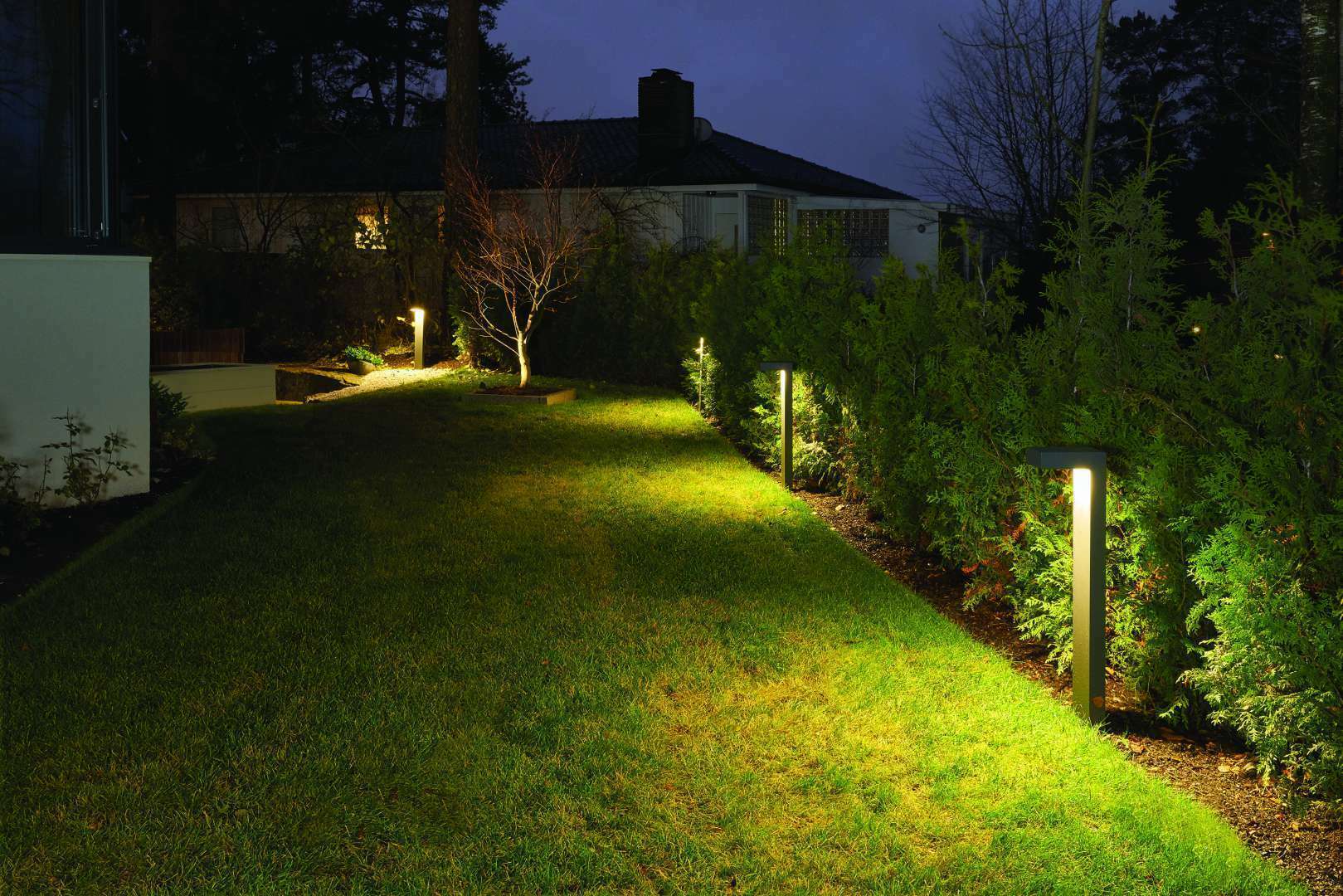
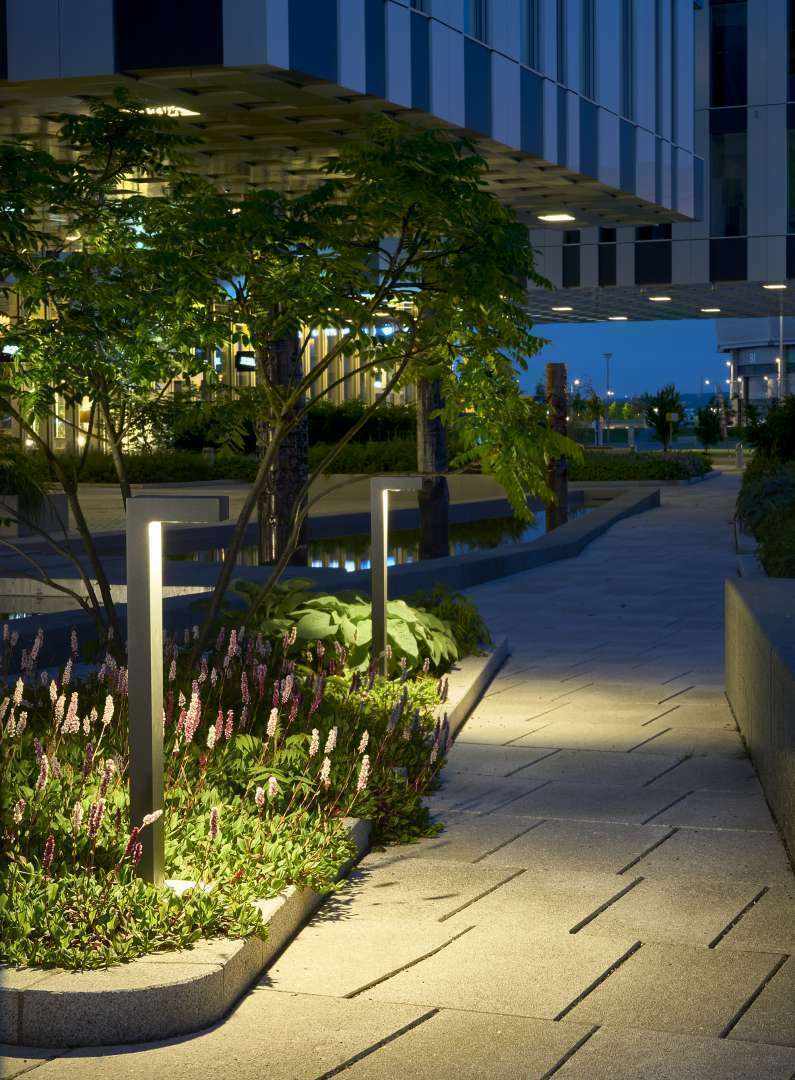
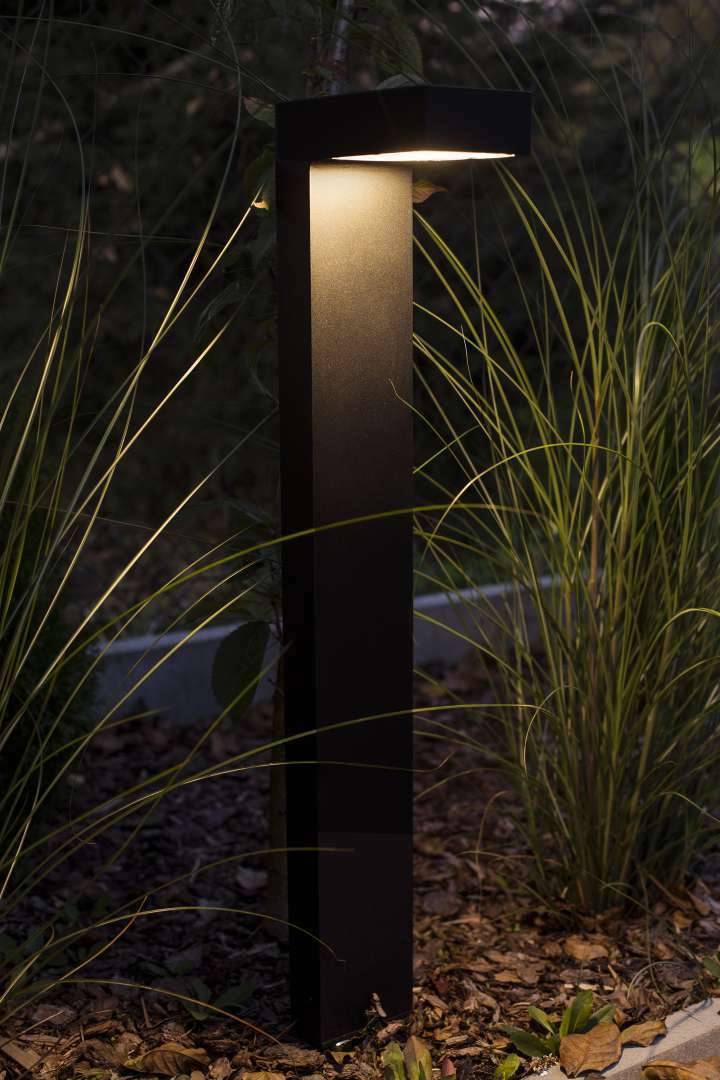
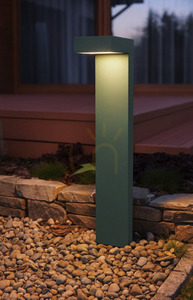
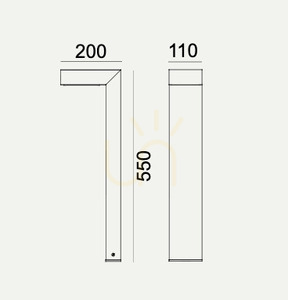
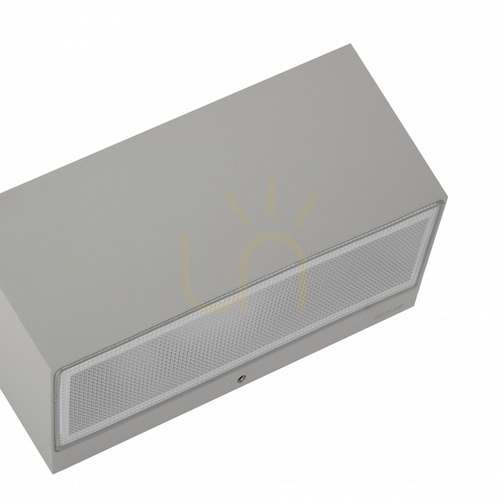
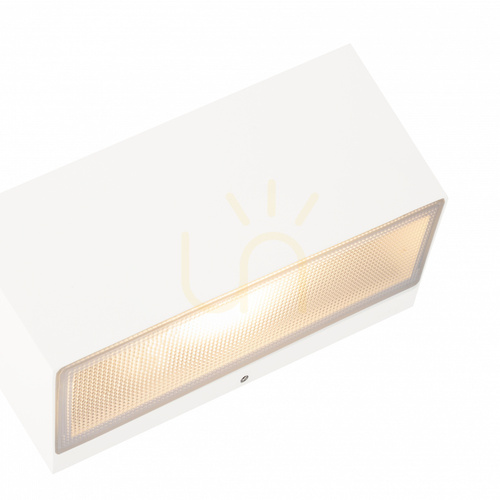
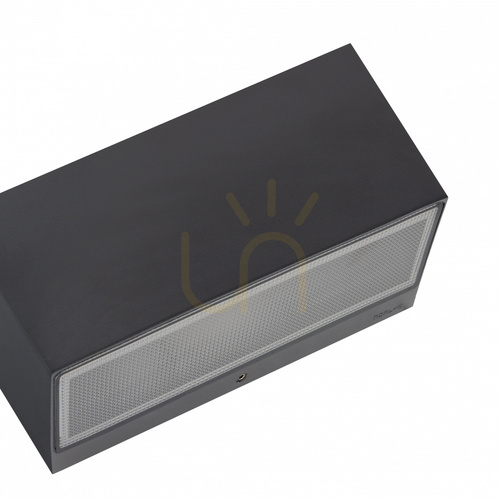
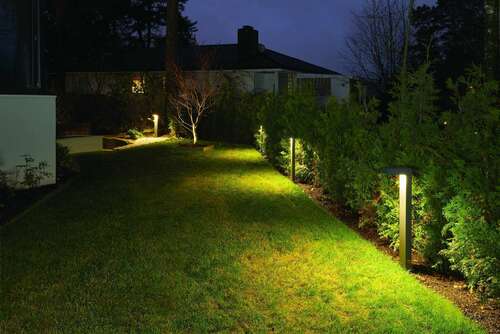
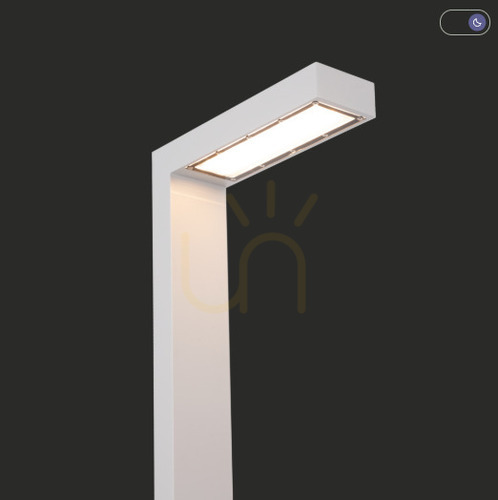
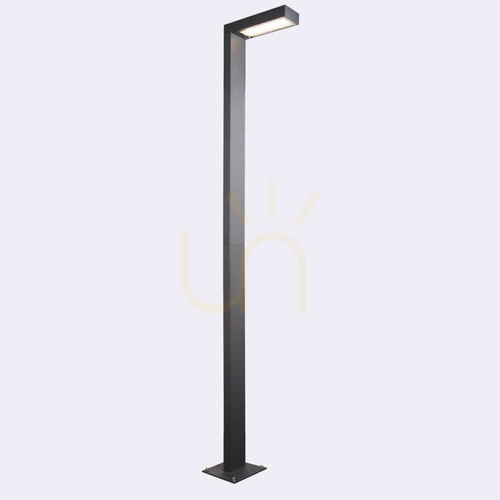
Asker 5120BL is an LED bollard shaped like an upside-down L: a rectangular shaft 11 cm wide and 55 cm high ends in a cap projecting 20 cm. The body is cast aluminium powder-coated in black RAL 9005. The LED module sits under the cap, behind a clear textured UV-stabilised polycarbonate diffuser, and shines downward only.
Size and installation
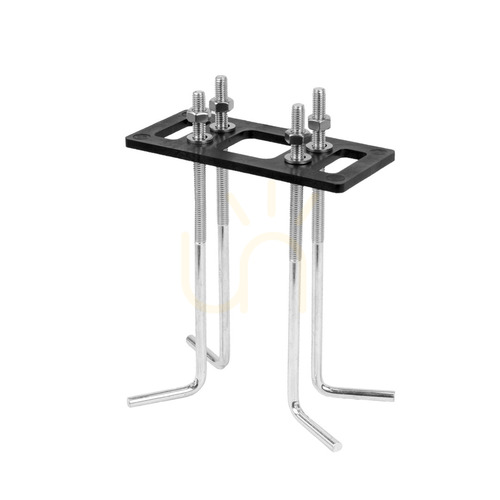
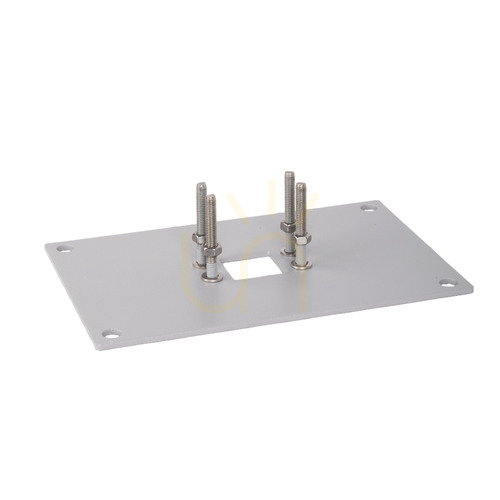
At 55 cm the light comes from about knee height, so the bollard lights the surface of a path, garden steps or a driveway right next to it. The base is bolted down through four ø8 mm holes spaced 18 × 50 mm. The anchoring part is bought separately: the concrete-in anchor 1907ZX0009, the ground spike 1908GA0009, the concrete-foundation adapter 1909GA0010, or the mounting adapter 3081XX0009 or 3090GA0009.
The terminals take conductors up to 3 × 2.5 mm², further bollards are fed through with cable up to 3 × 1.5 mm², and the round cable may be up to 12.5 mm in diameter. This is a protection class I fitting, so it needs a protective earth. The manufacturer allows up to 230 of these fittings on one B16 circuit breaker. The bollard weighs 3.04 kg.
How much light, and what kind
The Cree module draws 5.6 W and produces 1080 lm; the complete fitting at 7.2 W delivers 600 lm, or 83.3 lm/W – enough for orientation along a path rather than for lighting a whole garden. The cap shields the source, so only 0.6% of the flux escapes upwards and people walking past do not look straight into the LEDs. 4000 K is a neutral white, and SDCM3 keeps the same tint along a whole row of bollards.
The Philips Xitanium driver allows dimming with a trailing-edge (TE) phase dimmer. The LED module and driver are replaced by a professional service; the manufacturer states an L80 module life above 102,000 h – over 90 years at three hours a day – and 50,000 h for the driver.
Durability and use
IP65 means the fitting is dust-tight and protected against water jets, and IK10 means resistance to a 20 J impact, which matters where the bollard stands next to a walkway or a parking space. It operates from -20 to +45°C. Norlys intends it for private grounds and other architectural projects – beside a terrace, a driveway or a garden path. The plain, angular form without ornament suits modern architecture.