
Outdoor and facade wall lights – how to light the front of your house
A well-lit facade makes all the difference after dark – the house looks striking, the entrance is safe, and the dark corners around the walls stop being a hiding place for uninvited guests. The heart of such lighting is the outdoor wall light: mounted on the facade, it throws light up and down, emphasises the wall’s texture and guides you to the door. Here’s how to choose facade wall lights – from the up-down effect, through IP rating and light colour, to models with a motion sensor.

Contents
- Why light your house facade?
- Up-down wall lights and the wall-washing effect
- Where to mount wall lights on the facade
- IP44 or IP65? Durability and materials
- Light colour on the facade – warm or neutral?
- Wall lights with a motion sensor
- Lighting the entrance and porch
- Installation, power and control
- Summary
Why light your house facade?
Facade lighting plays three roles at once:
- Aesthetic – light models the shape of the building, brings out the texture of render, brick or wood, and makes the house look as good after dark as it does by day.
- Practical – it lights up the entrance, steps and driveway, so you reach the door safely and don’t trip on a stair.
- Security – a lit surrounding deters uninvited guests, and a wall light with a motion sensor responds to movement by the door or garage.
The simplest and most versatile tool for all three tasks is the outdoor wall light – mounted straight onto the wall, it needs no space in the ground and no separate posts.
Up-down wall lights and the wall-washing effect
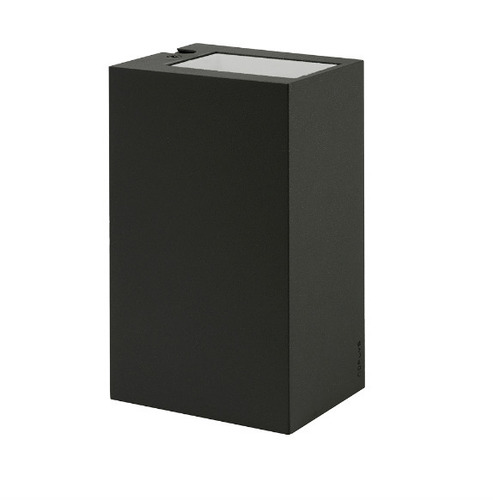
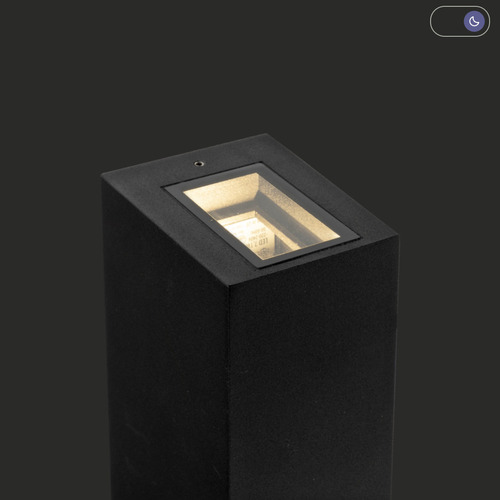
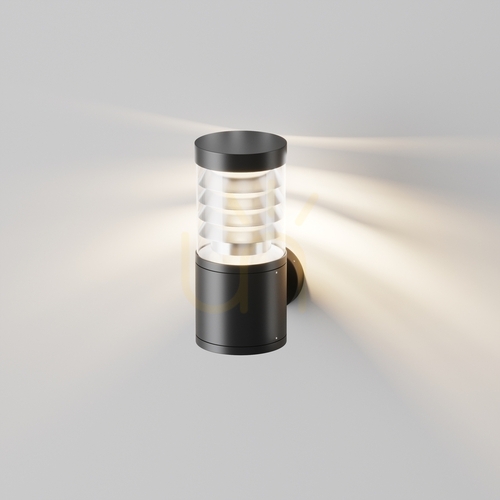
The most fashionable and decorative type is the up-down wall light. It has two beams of light – one aimed upward, the other downward – which create the characteristic, symmetrical streaks on the wall. Those are the effect people mount these fittings for:
- The wall-washing effect – a narrow slot releases light right along the wall, which “flows” down the texture, emphasising brick, stone or structural render.
- Rhythm on the facade – a row of identical wall lights at equal spacing orders the facade and gives it character.
- Glare-free light – a beam directed along the wall rather than straight ahead doesn’t dazzle neighbours or passers-by.
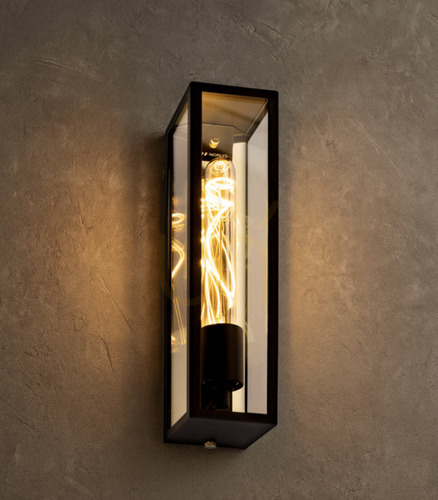
Besides up-down lights, classic facade fittings that shine in one direction and decorative wall lanterns by the entrance also work well. You’ll find the full range in the Outdoor Wall lamps category.



Where to mount wall lights on the facade
A few proven spots worth lighting:
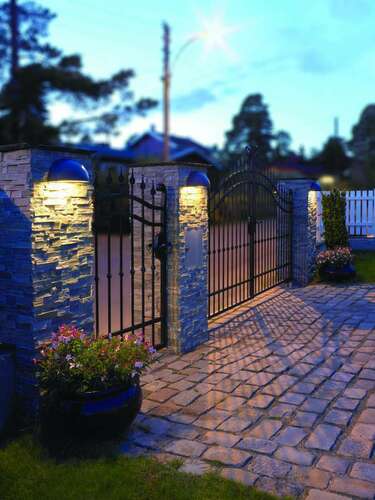
- By the front door – one wall light to the side, or two symmetrically on both sides of the frame; this is the basic point of any facade.
- By the garage door – ideally with a motion sensor, so the light comes on as you drive up.
- On the corners of the building – they emphasise the shape and light the passages along the walls.
- Between windows or on pillars – rhythmically spaced up-down fittings order a large, flat facade.
- By the steps and terrace – they guide the eye and improve safety.
The rule is simple: symmetry and repetition. Wall lights at equal spacing and the same height look orderly; scattered at random, they look chaotic.
IP44 or IP65? Durability and materials
An outdoor fitting has to withstand rain, dust and frost. The key is the IP rating (first digit – dust, second – water):
- IP44 – protection against splashing water from any direction. Enough for wall lights under the eaves, in a porch, sheltered by the roof overhang.
- IP54 / IP55 – a good compromise for a typical, partly sheltered facade.
- IP65 – full protection against water jets and dust. Choose it where the fitting is fully exposed, low near the ground or exposed to driving rain.
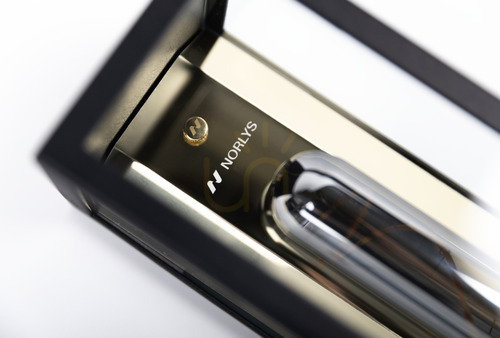
Material matters too. On a facade, powder-coated aluminium and stainless steel perform best – they don’t corrode and hold their colour for a long time. The most popular finish is matt black, matching modern joinery and anthracite details; for classic facades, graphite, white or steel shades are more common.
Light colour on the facade – warm or neutral?
The colour of the light decides the facade’s mood:
- Warm white 2700–3000 K – cosy, “homely”, it beautifully emphasises brick, stone, wood and classic render. It’s the safest choice for residential buildings.
- Neutral white 4000 K – cleaner and more modern; it suits light render, concrete and minimalist, anthracite facades.
- Cool white above 5000 K – on a house facade it looks “technical” and unpleasant; it’s better avoided.
Keep one colour across the whole facade – mixing warm and neutral looks unfinished. Also make sure of a high CRI so the colour of the materials looks natural, and don’t overdo the brightness: a few well-placed fittings give a better effect than flooding the wall with light that bothers the neighbours and adds to light pollution.
Wall lights with a motion sensor
By the entrance, garage and side doors, a wall light with a motion sensor is invaluable. It comes on when someone approaches and goes off after a moment – it saves power, greets the household with light and scares off intruders.
What to look out for:
- a PIR sensor with adjustable range, on-time and dusk sensitivity (it only shines after dark),
- a half-power mode – the fitting glows dimly all night and brightens when it detects movement,
- a sensible viewing angle, so the sensor doesn’t react to the street or branches moved by the wind.

Lighting the entrance and porch
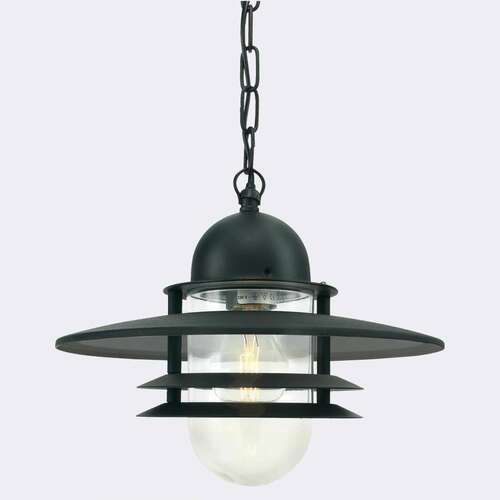
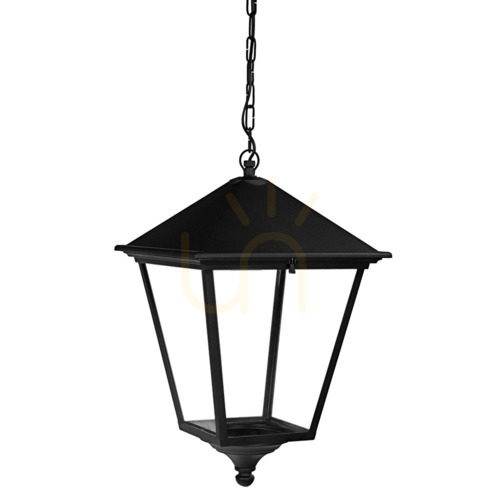
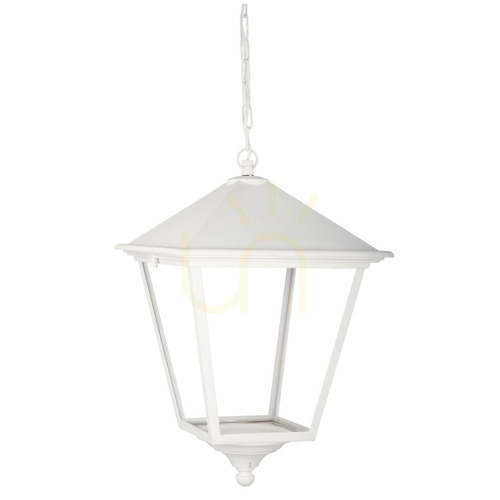
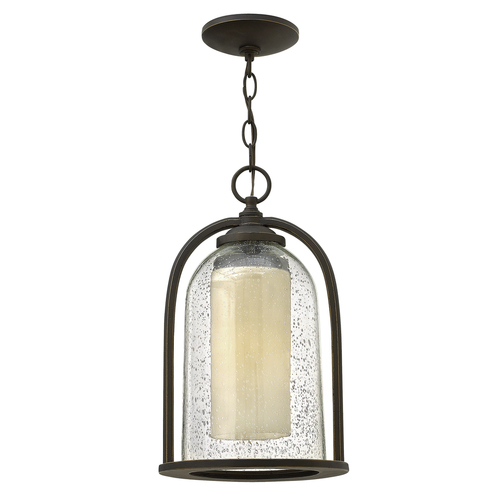
The entrance zone deserves separate attention – it’s the calling card of the house. Besides wall lights on both sides of the door, a hanging outdoor lantern looks great in a covered porch or over the front step. It gives soft, decorative light from above and completes the composition of the entrance.
Match the style of the lantern and the wall lights to each other and to the joinery, keep a common light colour, and remember that under a roof a lower IP rating is enough than on an exposed wall. You’ll find hanging outdoor fittings in the Outdoor Hanging Lamps category.


Installation, power and control
A few practical rules:
- Mounting height – wall lights by the entrance are usually placed at around 180–210 cm, so the light source sits slightly above eye level and doesn’t dazzle.
- 230 V power – it’s best to plan the cabling for facade fittings at the building or rendering stage; the cable run should be done by an electrician, in a sealed box.
- Symmetry and spacing – set out the mounting points so the gaps between wall lights are equal and the fittings on both sides of the door are at the same height.
- Control – you can choose a plain switch, a motion sensor, a dusk sensor or smart control (schedule, app). It’s good to combine them: decorative wall lights on the facade on a switch or timer, and those by the entrance and garage on a motion sensor.
If you’re planning the whole garden and surroundings lighting, treat the facade as one coherent element – the same colour and style of fittings repeated along the paths and in the garden give the best effect.
Summary
An outdoor wall light is the simplest way to light a facade strikingly and safely. Go for up-down fittings for the wall-washing effect, arrange them symmetrically and rhythmically, choose IP44 under the eaves or IP65 on an exposed wall, keep one, rather warm colour of light and add a motion sensor by the entrance and garage. Complete the entrance zone with a hanging lantern in the porch. You’ll find the full range in the Outdoor Wall lamps and Outdoor Hanging Lamps categories.
Przemysław Doliński


Maybe you will be interested in products from these categories?
Outdoor Wall lamps, Outdoor Pendant Lights
Tags & Blog Categories