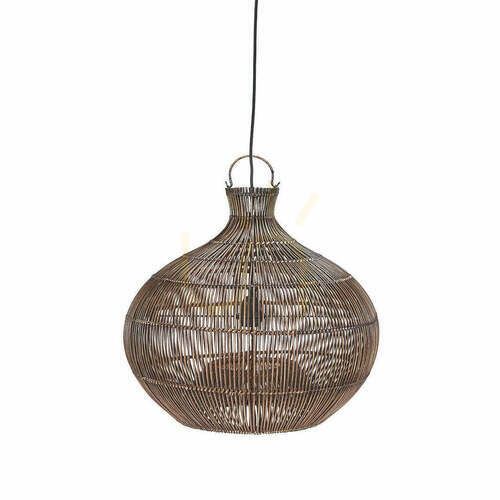
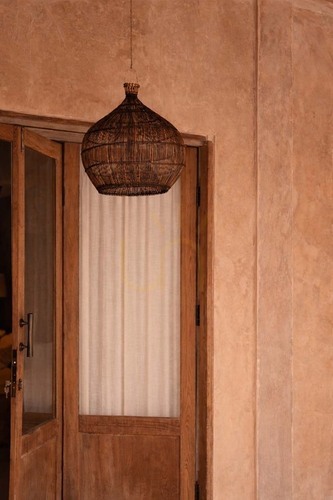
A handmade wooden lamp is one where a person, not a production line, shaped the timber: a base turned on a lathe, a shade of steam-bent ash, or a beam cut and sanded by hand. That changes what you are buying. No two pieces share the same grain, knots or colour, and the finish is usually oil or wax rather than a thick factory lacquer, so the wood looks and feels like wood.
It also changes what you should check. Solid timber moves with the seasons and sits close to a hot bulb, so species, finish, fitting and wiring deserve as much attention as the shape.
How handmade wooden lamps are made
Most craft lighting in wood comes from a handful of techniques, and each one leaves its own character:
-
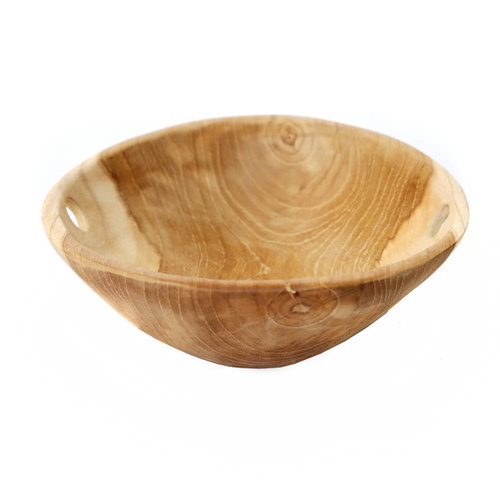
Turned bases – a single block or glued-up blank spun on a lathe. Expect solid, weighty forms, with the grain flowing along the curve of the profile. This is where chunky lamp bases come from.
-
Steam bending – thin strips softened with steam and bent into loops and ribbons. The result is light and open, and it casts soft patterns once switched on.
-
Beams and branches – a length of solid timber with a live edge, a split or a knot left in place, usually hung as a pendant over a table.
-
Cut veneer and plywood – slats or panels cut and assembled by hand into geometric shades that throw shadow patterns across the walls.
-
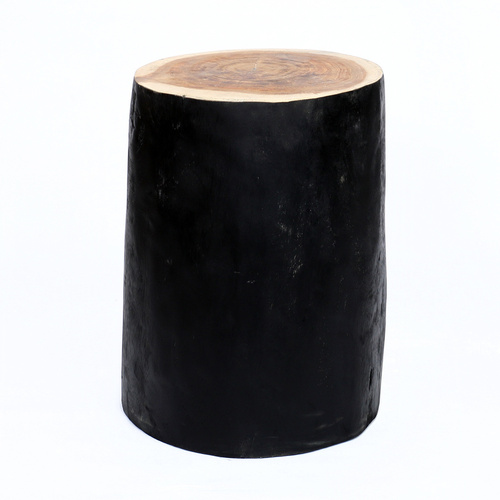
Charring – the Japanese yakisugi method scorches the surface of pine or larch to a deep black texture.
Tool marks, a slightly different tone from the photo, a few millimetres of variation in height: these are what handwork looks like, not faults.
Lamp base or complete lamp?
In British homes the table lamp often starts as a base, with the shade bought separately. That works well with wood, because a turned oak or mango base can take a linen, jute or paper shade depending on the room. A rough guide many makers use: the shade's diameter should be close to the height of the base, and its depth about two-thirds of it. A short wooden lamp base wants a wider, shallower drum; a tall, slim one suits a tapered empire shade.
Check the fitting before you buy bulbs. Lamps wired in the UK usually take a B22 bayonet cap, while pieces made on the Continent tend to use an E27 Edison screw or the smaller E14. Plug-in lamps sold in the UK should come with a BS 1363 plug, normally fused at 3 A.
| What to check |
Typical for a handmade wooden lamp |
| Bedside or side-table height |
usually 40–60 cm including shade |
| Living-room table lamp height |
usually 55–75 cm; shade bottom near eye level when seated |
| Bulb |
LED filament of 4–7 W, giving roughly the light of an old 40–60 W bulb with far less heat |
| Colour temperature |
2700–3000 K warm white brings out the grain; 4000 K and above makes wood look flat and grey |
| Fitting |
B22 bayonet on UK-wired lamps; E27 or E14 on continental ones |
| Rating |
IP20 in most cases, so dry indoor rooms only |
Choosing the wood
Oak is hard, durable and ambers gently with age. Ash is pale with a bold grain and bends well, which is why it turns up in steam-bent shades. Walnut gives a deep chocolate tone that can lighten slightly in strong sun. Beech and birch are pale and even. Mango wood is common in carved and washed bases, often finished in white, grey or brown washes. Pine is soft, knotty and yellows over time, though it chars beautifully. None of these is the best in every room: pick the tone that sits with your floor and furniture, and the hardness that matches how much handling the lamp will get.
Where it works, and where it doesn't
A turned base suits a sideboard or a table beside the sofa; a small fruitwood lamp sits well on a bedside table; a beam pendant belongs over a dining table, with its lower edge about 65–80 cm above the top. Long solid beams are heavy, so they need fixing into a joist rather than a plasterboard ceiling. Anything hard-wired should go in through a qualified electrician working to BS 7671.
Keep wood away from bathrooms, the hob and radiators. Central heating dries the air in winter, and solid timber close to a heat source can shrink and open small cracks.
Care
- Dust with a dry, soft cloth or brush; skip polish sprays and water on oiled wood.
- Refresh an oiled finish now and then with a thin coat of a matching furniture oil.
- Switch off and let the lampholder cool before cleaning.
- Never go above the maximum wattage marked on the lampholder.
Questions people ask
Is it easy to make your own wooden lamp?
Turning or shaping the wood is the fun part; the wiring is where home-made lamps go wrong. A lamp from a maker should arrive with a proper lampholder, strain relief on the flex, a fused plug and the CE or UKCA mark, which is worth having on something you leave switched on.
What makes a good-quality table lamp for a living room?
A stable, weighted base, a well-fitted lampholder, a fabric-covered or properly sheathed flex and a shade wide enough to spread light across the room. With wood, add a decent finish that will not mark the first time it is touched.
Can I buy a wooden lamp base on its own?
Often, yes. Many makers sell bases only, so you can choose the shade yourself. Measure the base height first and size the shade from it.
Will a chunky wooden lamp base look too heavy in a small room?
Not if the shade is kept light. A pale linen drum over a chunky turned base balances the weight, and placing it on a low side table keeps it from dominating.
Which wood is best for a handmade lamp?
For a lamp that gets moved and touched, hardwoods such as oak, ash or walnut wear best. For a soft, rustic look, pine or a washed mango base is fine, provided it stays away from heat.
Why does my lamp look different from the photo?
Because it was cut from a different piece of timber. Grain, knots and colour vary from one lamp to the next, which is the point of buying something made by hand.
More on handmade homeware in general: handmade. For wooden lighting in general, handmade or not, see wooden lights.