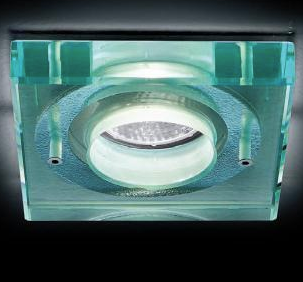
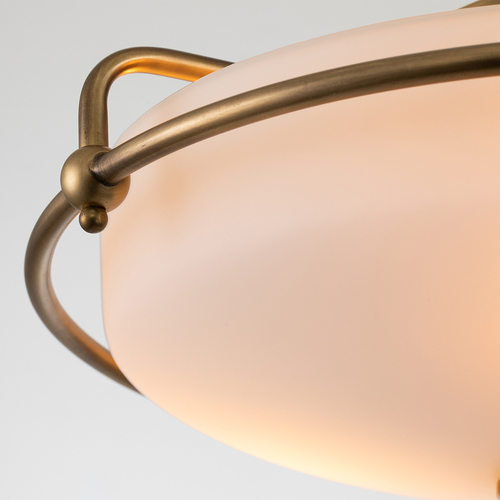
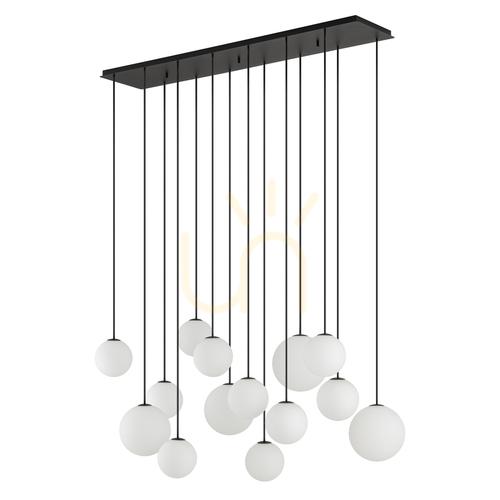
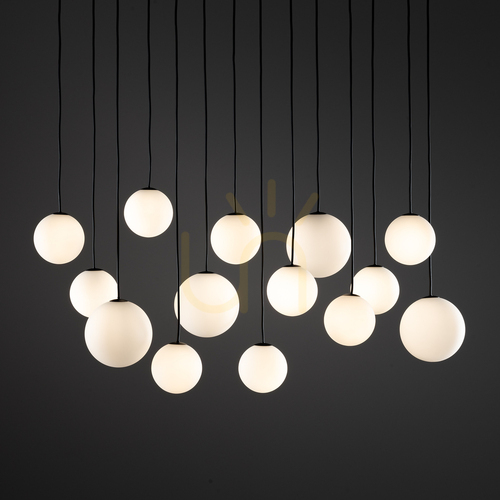
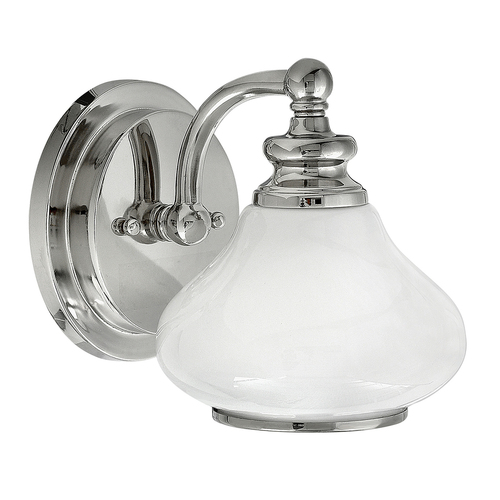
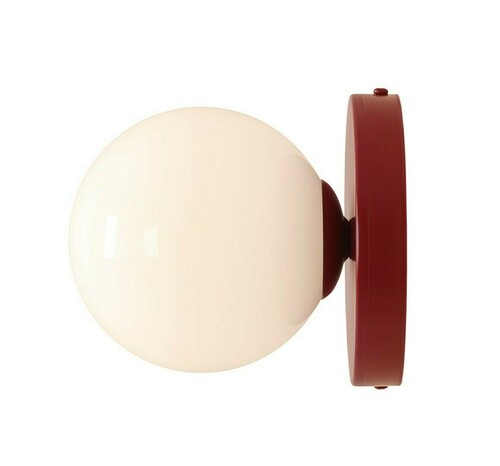
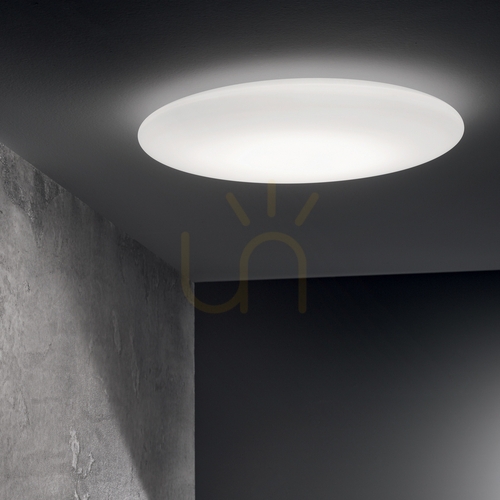
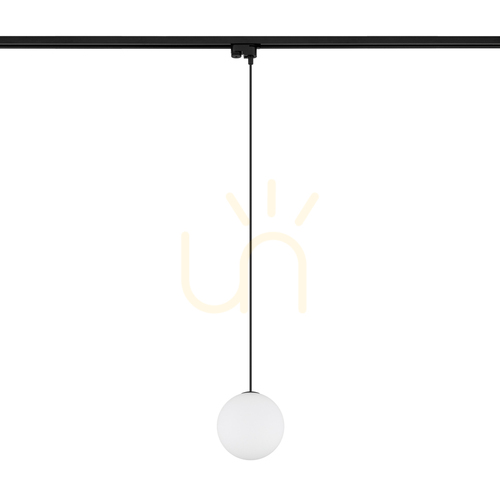
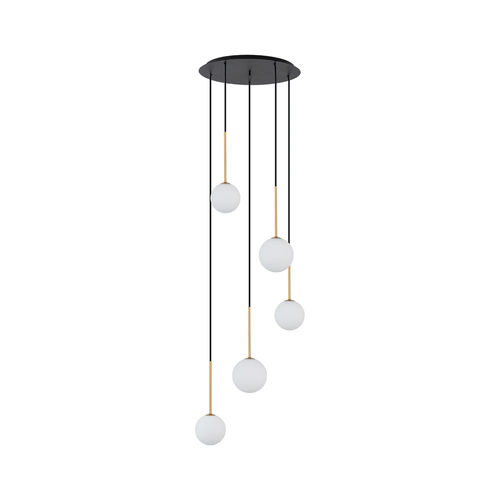
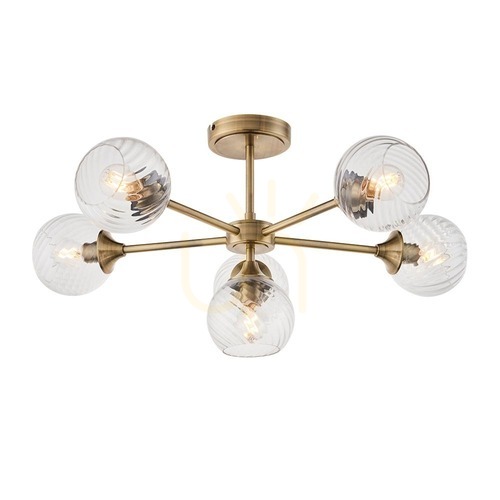
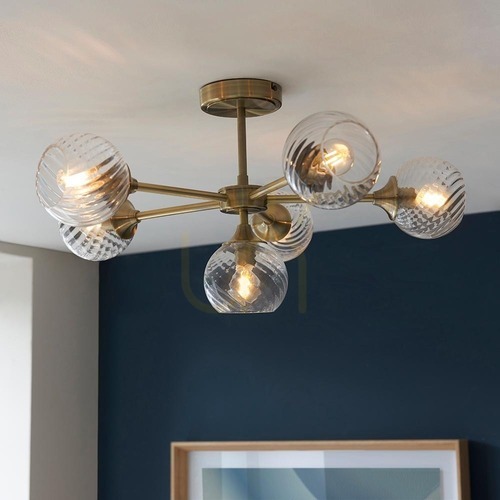
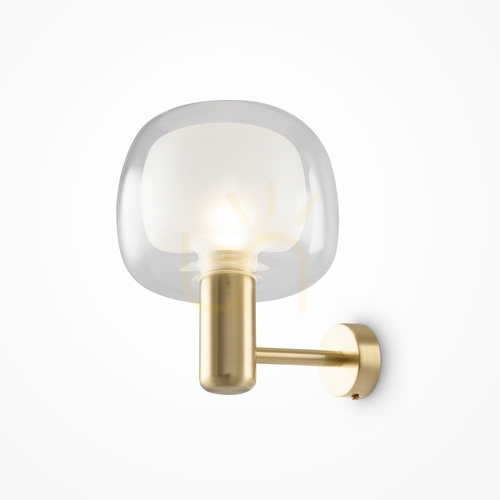
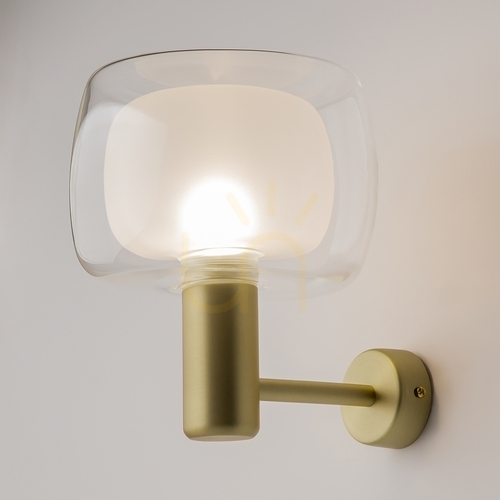
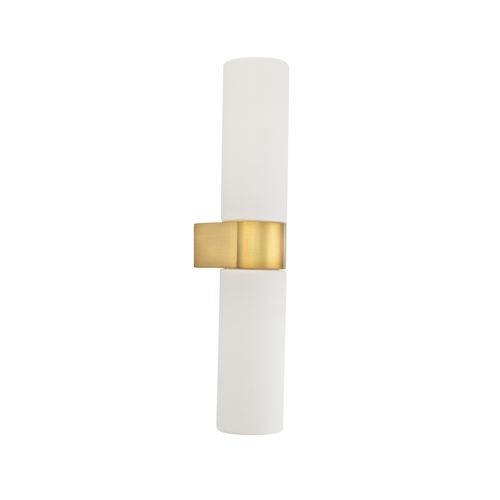
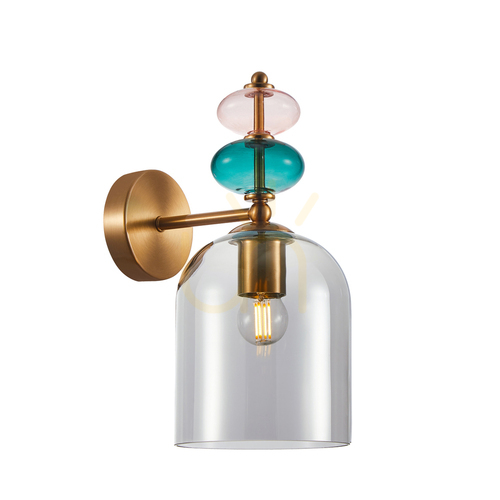
A glass lamp is any light where the glow passes through glass – a shade, a globe, a cylinder or the whole body of the lamp. What really matters is the kind of glass: clear glass gives bright, sparkling light, opal glass softens it, smoked or coloured glass turns it into mood lighting, and that choice shapes the room far more than with fabric or metal shades. You see glass in table lamps most of all, but just as often in pendants, flush ceiling lights, wall lights and floor lamps.
What glass does to the light
Think of the glass as a filter you choose on purpose. Each finish behaves differently once the bulb is on:
-
Clear glass lets nearly all the light through and shows the bulb, so the bulb itself becomes part of the design.
-
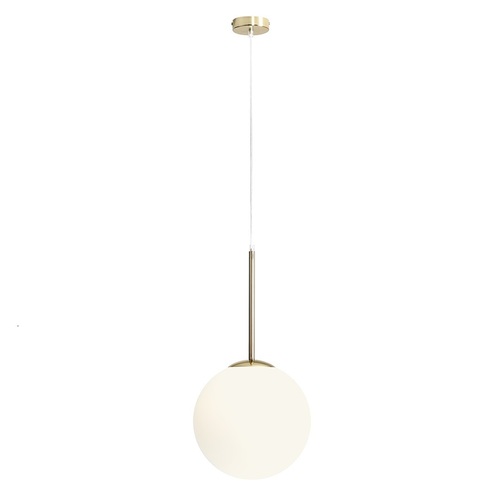
Opal glass – the milky white kind – spreads light evenly across the whole surface and hides the source. It is the easiest glass to live with day to day.
-
Frosted or etched glass diffuses in a similar way, with a softer, matt look.
-
Smoked, amber and coloured glass hold back a fair share of the output and warm or tint what comes through.
-
Ribbed and textured glass breaks the beam into streaks and reflections; mercury glass has a mirrored finish that shimmers when lit.
Hand-blown glass carries tiny air bubbles and slight changes in wall thickness. That is the mark of the maker, not a fault, and it is why no two hand-blown shades are quite alike.
Choosing a glass lamp for each room
| Where |
Glass that works |
Bulb |
Worth knowing |
| Living room side table |
coloured, ribbed or clear base with an opal or fabric shade |
LED, 2700 K, around 470–806 lm |
pair two lamps for a balanced room |
| Reading chair |
opal or frosted |
LED, 2700–3000 K, around 806 lm |
keep the bulb out of your eyeline |
| Bedside |
opal, smoked or amber |
LED, 2200–2700 K, 250–470 lm |
dimmable is a bonus |
| Over the dining table |
clear, smoked or ribbed pendant |
filament LED, 2200–2700 K |
shade about 60–80 cm above the table |
| Bathroom |
opal or frosted, sealed fitting |
LED, 3000–4000 K |
check the IP rating for the zone |
Glass lamps commonly take E27 or E14 screw caps or G9 capsules, and in UK homes many ceiling and table lamps still use the B22 bayonet cap. Some designs have integrated LEDs instead of a replaceable bulb, so check before you buy if you like changing colour temperature.
Styles: mushroom, vintage and coloured glass
The mushroom lamp – a glass dome sitting on a glass stem – has become the best-known glass table lamp shape, usually in opal, amber or pastel glass. Vintage glass lamps borrow shapes from the sixties and seventies: chunky ribbed bases, smoked globes, layered colours. Coloured glass table lamps work as accents rather than main light: a green or pink glass base looks good even when switched off, which matters for a lamp that spends half its life lit only by the window.
Safety, weight and care
Glass is heavy. A large globe pendant or a fitting with several shades can weigh a few kilos, so it needs fixing into a joist or solid ceiling, not just plasterboard. Fixed wiring on 230 V is a job for a qualified electrician, and bathroom lighting has to suit the zone it sits in under BS 7671 – IP44 is the usual minimum near a bath or shower. A table lamp sold for the UK should come with a fused three-pin plug.
LED bulbs run far cooler than halogen, so glass shades stay comfortable to touch, but always respect the maximum wattage marked on the fitting and use a bulb rated for enclosed fittings inside a closed globe. To clean, switch off and let the glass cool, lift the shade off and wash it in lukewarm water with a drop of washing-up liquid, with a towel in the bottom of the sink. Dry it straight away with microfibre to avoid streaks. A splash of white vinegar deals with limescale marks. Keep painted, gilded and mercury glass out of the dishwasher and never leave it to soak, and skip polish on frosted glass – it leaves greasy patches.
Glass lamp questions
Why are glass lamps so expensive?
Some are not, but hand-blown and mouth-blown glass takes skilled work, each piece is shaped individually and small flaws can mean starting again. Thick glass is also heavy to ship and needs careful packing.
What are glass lamps called?
It depends on the design: mushroom lamps, globe pendants, opal glass lamps, stained-glass lamps in the Tiffany style, or mercury glass lamps. In shops they are usually listed by type – table lamp, pendant, wall light – with glass as the material.
Are glass lamps good?
For light quality and longevity, yes: glass does not yellow, fade or warp with heat the way some plastics can, and it is easy to wipe clean. The trade-off is weight and fragility.
How much is a vintage glass lamp worth?
It depends on age, condition, whether the glass is hand-blown, and whether the wiring is original. Check old lamps for brittle flex and worn lampholders before switching them on – rewiring by an electrician is often needed.
Is a glass lamp a good choice for the living room?
Yes, as long as the main light uses diffusing glass. Save clear or smoked glass for accent lamps so the room has enough usable light.
Can a glass lamp be dimmed?
The glass makes no difference; the bulb and switch do. Use a dimmable LED bulb with a compatible dimmer.
If the bedside table is next on your list, see glass bedside lamps. More on lighting the rest of the home: indoor lighting.