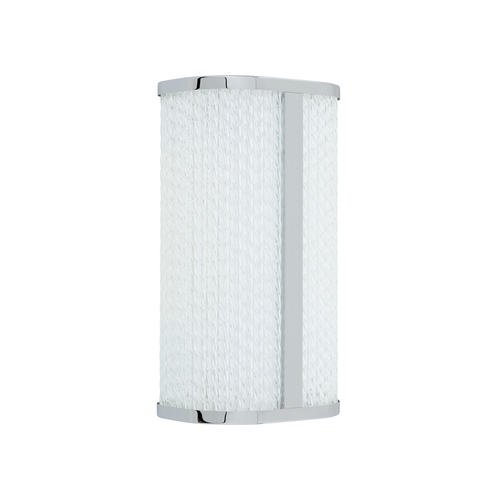
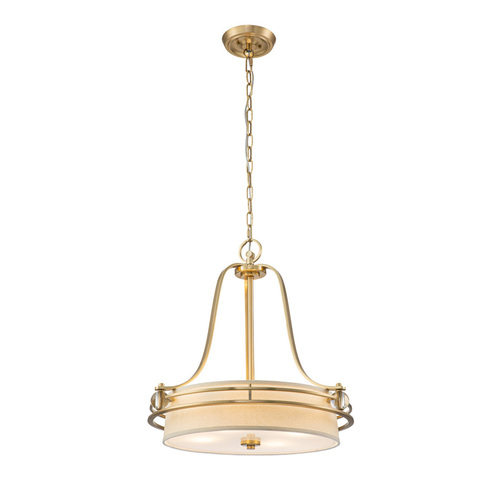
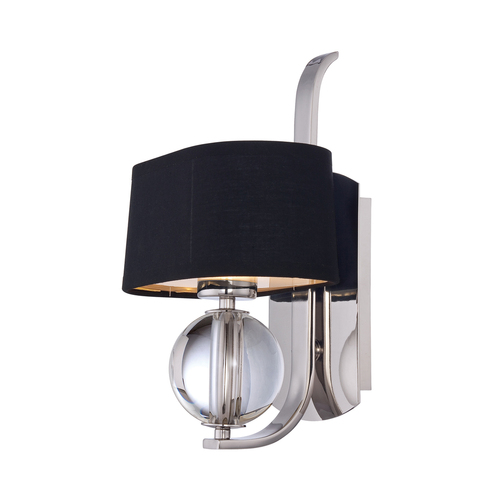
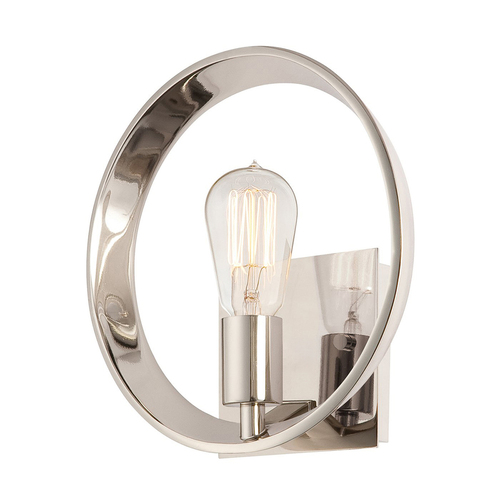
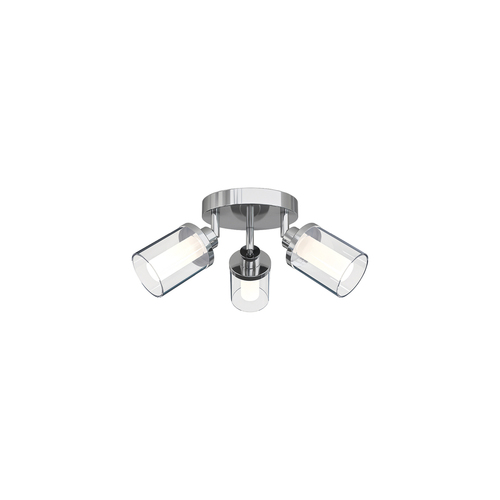
New York lights belong to a specific interior: the panelled, book-lined, club-like room that the style takes its name from. Dark stained walnut and oak, walls in deep green, navy or oxblood, aged and unlacquered brass, leather, marble, and a floor that is either dark boards or a heavy rug. The lighting that suits that room is not bright and it is not sparkling. It is heavy, warm and low, and it works by leaving most of the room in shadow and lighting the few places that matter — a chair, a desk, a picture, a drinks tray.
It is not glamour, and the difference is the whole point
The two styles get sold together and they are opposites. Glamour is about light: crystal, mirror, polished chrome, cut glass, surfaces chosen because they throw light back at you. New York style is about weight and darkness: solid brass with a patina, opal or smoked glass in a metal frame, shades that absorb rather than reflect, and a general refusal to sparkle. A crystal fitting in a panelled study reads as a mistake, not as an upgrade.
Four styles that get confused, and how to tell them apart
| Style |
Materials |
What the light does |
The quick test |
| New York |
Aged brass, dark stained timber, leather, marble, opal glass |
Pools of warm light against dark surfaces; the ceiling stays dark |
Nothing on the fitting reflects. Every surface is matt or softly aged |
| Glamour |
Crystal, mirror, chrome, polished nickel, cut glass |
Scatters light and multiplies the source into hundreds of points |
You can see the light source repeated in the fitting itself |
| Art Deco |
Chrome, black lacquer, alabaster, stepped and fluted forms |
Bounces light off geometric planes, usually upward |
The shape is drawn with a ruler and a compass — steps, fans, sunbursts |
| Industrial |
Raw and blackened steel, cage guards, enamel shades, conduit |
Bare, directional and unapologetic |
The fitting shows its fixings and its wiring |
Art Deco is the nearest neighbour, since both use brass and both belong to the same city and roughly the same decades, and the two do overlap in a hall or a bar. The comparison is on art deco lamps. The other neighbour is the factory vocabulary, which shares the dark palette but none of the softness — that is covered on industrial ceiling lights.
The four layers a New York scheme needs
Because the style depends on contrast, it cannot be built from one fitting. Four layers do the work, and the whole effect fails if any of them is missing or if they share a switch.
The low general layer
A single central fitting on a dimmer, run at perhaps a third of its output. Its job is to stop the room going black, not to light it. A shaded pendant or a compact chandelier in aged brass with fabric or opal shades is the usual choice; a bright bare-lamp fitting is not.
Wall lights on panelling
This is the layer that defines the style. Brass picture lights over framed prints, or half-shaded brackets mounted directly on the panelling at 160 to 175 cm, throw light onto the timber and let the grain do the work. On panelled walls, mount into the stile or rail rather than into a panel — panels are thin, they move with humidity, and a fixing in the middle of one will loosen.
Table and floor lamps
The layer people actually read by. A brass or ceramic base with a dark or deep-toned drum shade beside each seating position, at a height that puts the bottom of the shade level with the seated eye — usually 100 to 110 cm to the top of the shade on a side table. A dark shade lined in a pale colour is the classic construction: dark outside so the room stays moody, pale inside so the light that reaches the book is usable.
The accent
One picture light, one shelf light, or a single spot on a painting or a drinks cabinet. This is the layer that makes the room look designed rather than dim, and it is the one most often left out.
Colour temperature, and why it is not negotiable
Deep green paint, walnut and unlacquered brass are all warm, low-reflectance surfaces. Under a 4000 K lamp the green turns grey, walnut goes flat and brass looks like nickel. 2700 K is the working default and 2200 K suits an evening-only room, where it reads as lamplight rather than as electric light. Insist on a colour rendering index of 90 or better: a dark, saturated palette is precisely where a low-CRI lamp fails most visibly, because there is no white surface to hide behind.
Output should be lower than a modern scheme would use. Where an open-plan room in pale colours might want 100 lumens per square metre from the ceiling, a panelled room in dark colours wants that light concentrated instead — several 300 to 500 lumen sources at low level beat one 3000 lumen source overhead every time. Dimmers on every circuit are not a luxury here; they are how the room is operated.
Brass, and what it does over time
-
Unlacquered brass darkens unevenly and picks up fingerprints, which is exactly the intended effect. It needs nothing done to it. Polishing it restores a brightness the style does not want.
-
Antique or aged brass is a factory finish that mimics the same thing and stays put. It is the safer choice where several fittings must match each other.
-
Lacquered polished brass holds a mirror shine and belongs to the glamour vocabulary rather than this one.
-
Bronze and blackened brass read heavier still, and suit rooms with a lot of dark timber.
Common questions
Does the style need dark walls?
It needs contrast more than it needs darkness. A pale room with dark joinery, dark upholstery and brass lighting gets most of the way there. What it cannot survive is a bright, evenly lit ceiling — that alone will undo the effect regardless of the paint colour.
Can I use a chandelier?
Yes, provided it is a shaded or opal-glass frame in aged brass rather than a crystal one. Keep it dim and treat it as the background layer; the light people use should come from lamps at table height.
Is a picture light worth it?
It is the single most characteristic fitting of the style. Choose one roughly two thirds of the picture width, mounted so the head sits just above the frame and tips downward at about 30 degrees, and give it a warm lamp — a cool one bleaches oil paint and yellowed paper.
What about a home office in this style?
It works well, because the style is built around a desk and a chair. Add one task light at the desk with genuinely adequate output — a shaded brass desk lamp with an 800 lumen lamp — and keep the rest of the room low. Reading under 300 lumens of ambience alone is atmospheric and tiring.
How does it differ from a vintage scheme?
Vintage is about age and patina applied to any silhouette; New York style is a specific palette and a specific way of distributing light. The two overlap in aged brass, which is why vintage chandeliers is a useful page to read alongside this one.