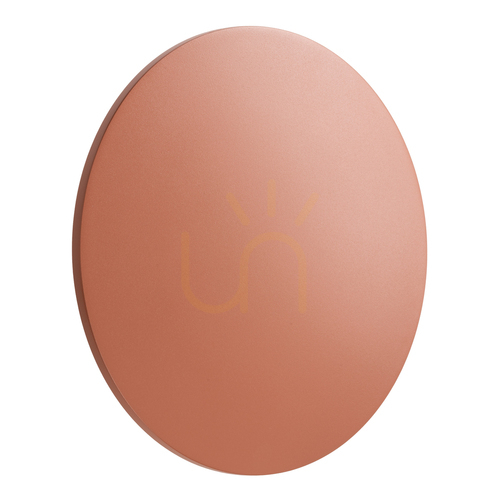
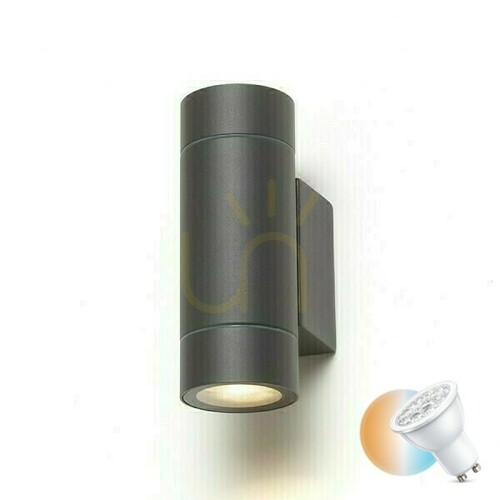
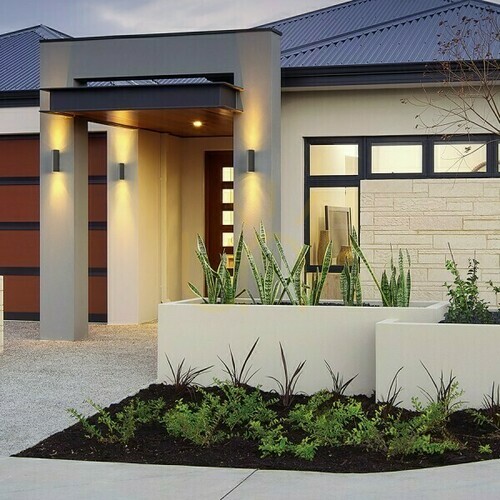
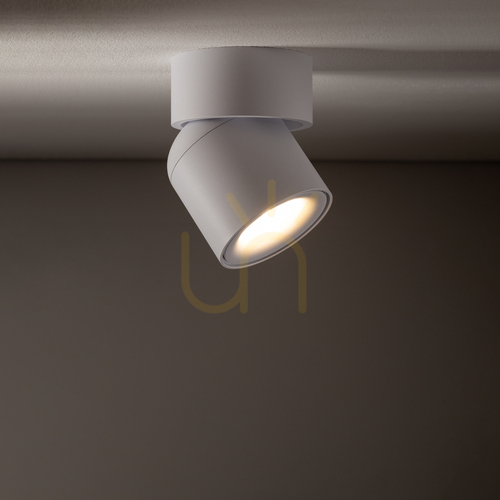
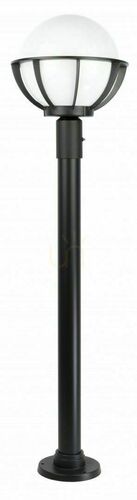
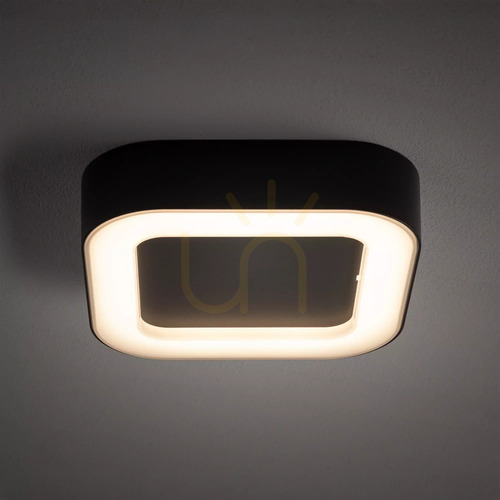
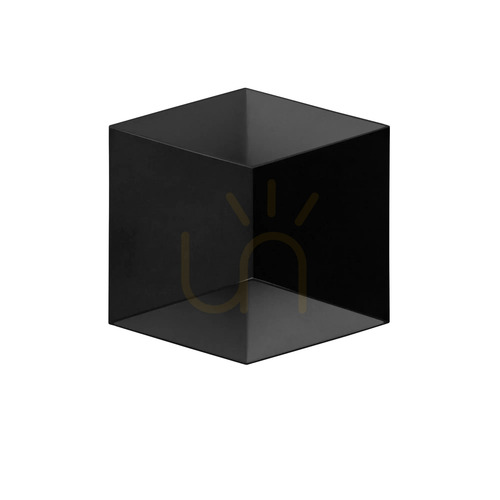
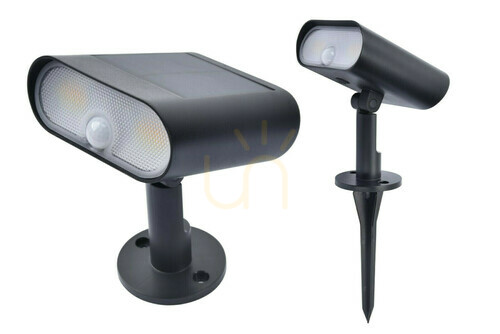
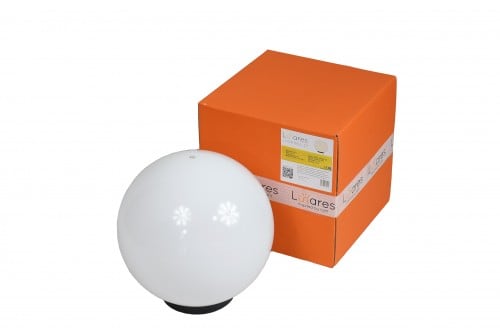
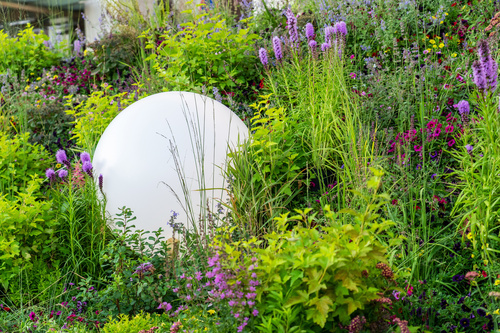
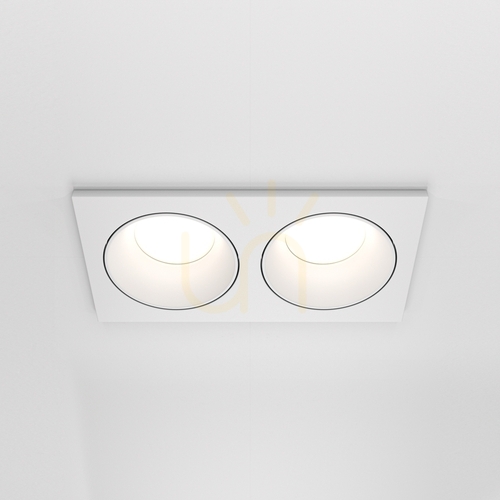
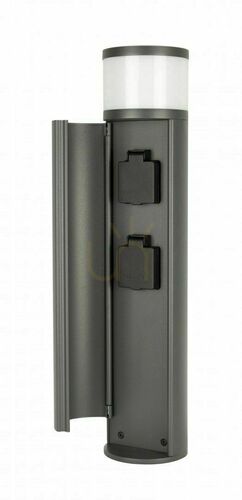
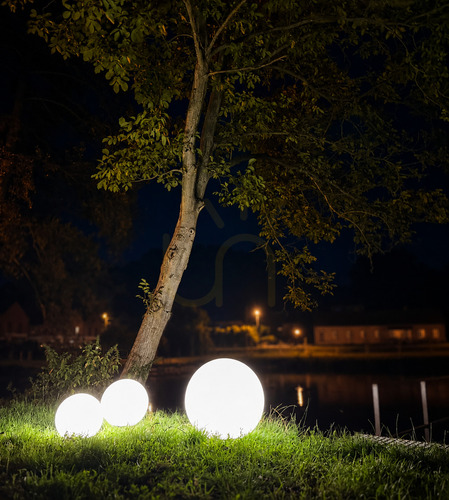
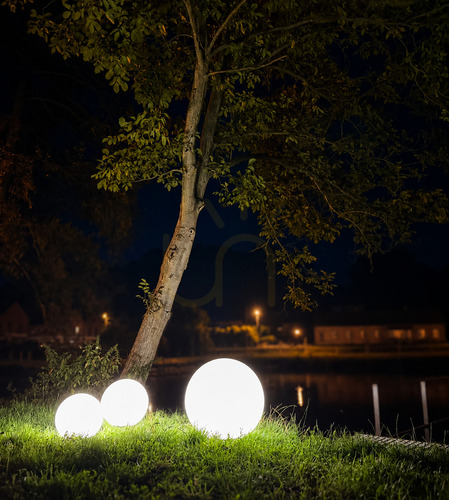
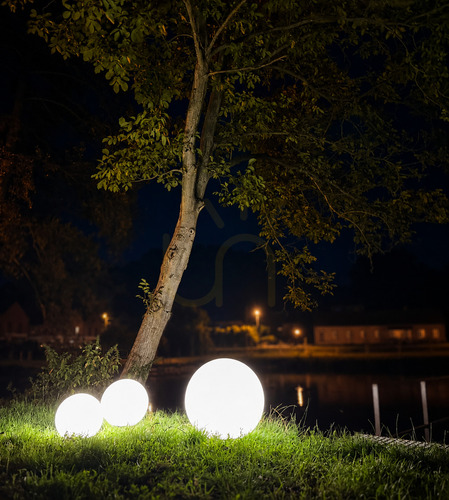
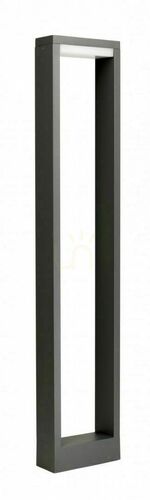
The Modernist filter pulls out the outdoor lights whose shape comes straight from twentieth-century modernism: cylinders, cubes, flat discs, slim bars, nothing applied for decoration. It cuts across the outdoor range — facade wall lights, bollards, floor and pendant fittings, recessed and drive-over units, porch ceiling lights and garden globes.
What makes an outdoor light modernist
You recognise it by what is missing. No wrought scrollwork, no imitation gas lantern; instead powder-coated aluminium in anthracite, graphite grey or black RAL 9005, opal glass or matt acrylic, fixings hidden in the body. The lamp usually sits deep enough that you see the light rather than the source. That restraint is why these fittings work against smooth render, exposed concrete, timber cladding and large glazed openings — and why they rarely fight with an older facade.
Wall lights: up-down, sensors and where the glare goes
On a wall, beam shape matters more than wattage. An up-down fitting draws two cones on the render and leaves the middle dark, which reads as calm and dazzles no one. A wider fitting over the front door sits best at roughly 2.0 to 2.2 m, so the light lands on the threshold rather than in people's eyes. A PIR sensor or dusk switch saves more energy than any lamp swap.
Paths, steps and driveways
Along a path, low light wins. A bollard around half a metre tall lights the surface you walk on rather than the whole garden; three to four metres apart is a sensible starting spacing, and taller posts can go further. Steps take recessed units set into the riser. A driveway is a different problem: the fitting sits in the surface you drive over, and a snow blade passes across it in winter.
Matching the IP rating to real exposure
| Position |
Minimum |
What actually hits it |
| Under an eave or porch |
IP44 |
Splashing from the side, little direct rain |
| Open facade, terrace |
IP54 to IP65 |
Wind-driven rain, dust, wall washing |
| Border, lawn, planting |
IP65 to IP67 |
Standing water, soil, irrigation |
| Driveway, paved apron |
IP67 plus a load rating |
Water sitting in the housing and wheel pressure |
| Pond, pool |
IP68 and SELV |
Continuous immersion; zone 0 allows only 12 V AC / 30 V DC |
Ratings vary by model, so read the figure on the product card before committing a fitting to a wet position.
Impact rating and load
For a ground-recessed fitting, IP alone is not the whole story. Check the IK class: IK08 is a 5 joule impact, IK10 is 20 joules, and only the latter suits paving a car crosses. Manufacturers also quote a static load — for a car or SUV look for around two tonnes, because turning the wheel on the spot puts far more through the glass than the vehicle's weight. Put drainage under the housing: seals fail from standing water, not rain.
Mains or low voltage
A 230 V garden circuit is work for a qualified electrician — RCD protection, ducted cable at the right depth, glands tightened onto the correct cable diameter. In return you get full output, any cable run you like and familiar E27 or GU10 lamps. A 12 V or 24 V system with the transformer indoors is safer to install yourself and easier to extend season by season; watch the voltage drop on long runs.
Salt: coastal air and winter grit
Powder-coated aluminium is forgiving in a garden: it does not rust through, and a scratched spot re-oxidises on its own. With stainless steel the grade decides the outcome. Grade 304 is fine inland; near the coast, and where the drive is gritted every winter, 316 is the sensible specification. Rinse anything beside a road or a pool once a season and repair coating damage before winter.
Colour, insects and the neighbours
Clean geometry makes shielding easy: a flat disc or a tube throws light where it is aimed instead of scattering it. Keep the source below eye level, aim down or at the surface you want to show, and leave the boundary dark. Warm 2700–3000 K looks better late in the evening and attracts fewer insects than 4000 K, which earns its place mainly at a gate. Dimming after midnight does more for a dark sky than removing a fitting.
Questions people ask
How bright should an outdoor wall light be?
A few hundred lumens per fitting is usually enough at a door. Contrast matters more than the number — two modest pools of light read better than one floodlight your eyes must recover from.
Does a pond light need a transformer?
Below the water and at the edge, yes: only separated extra-low voltage from its own isolating transformer belongs there. Two metres away a mains circuit is fine again, still on an RCD.