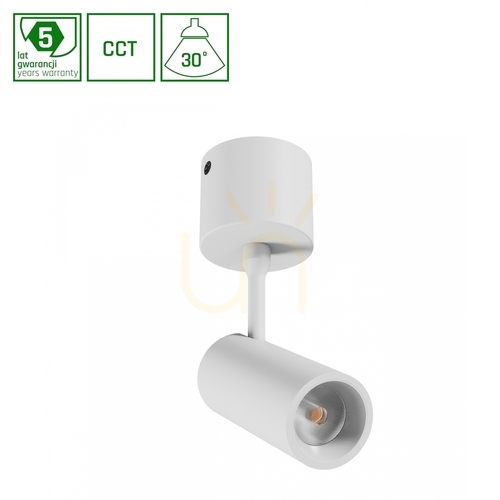
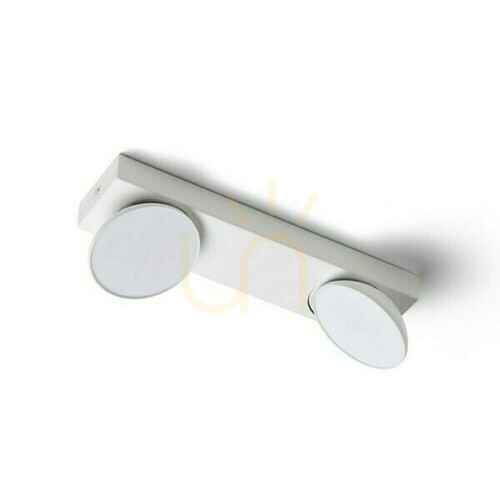
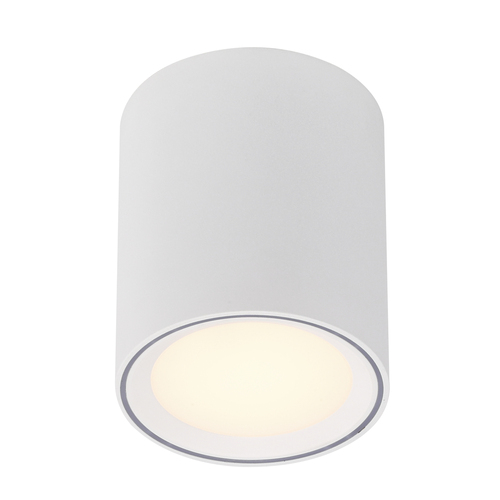
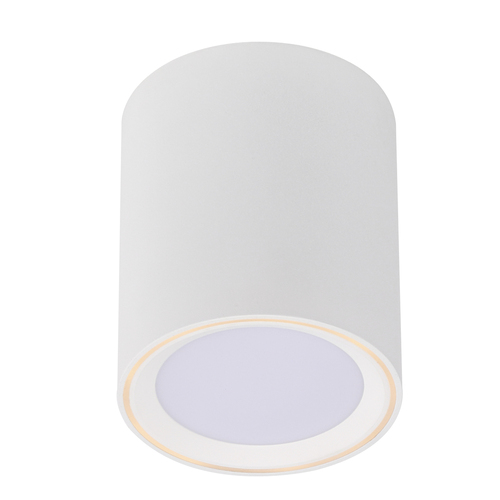
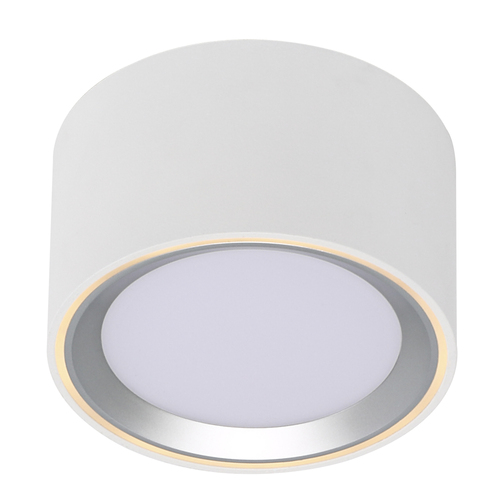
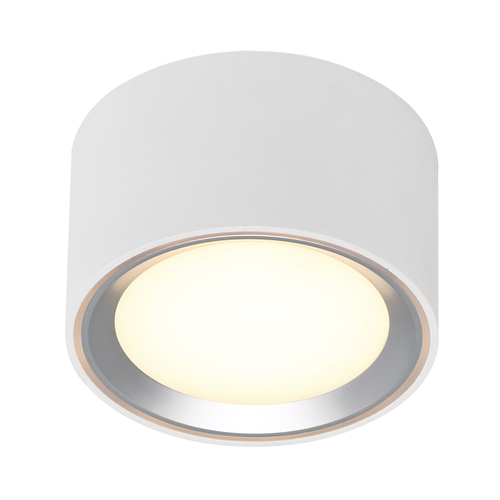
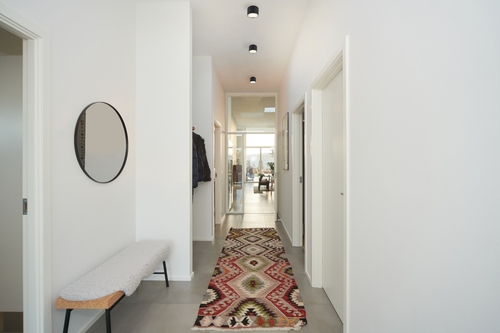
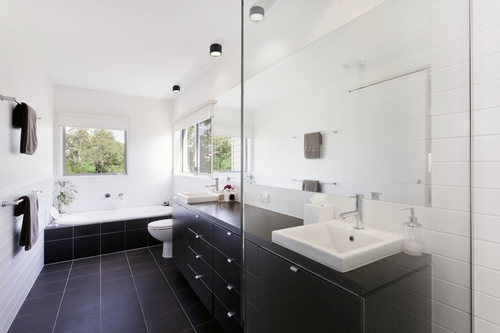
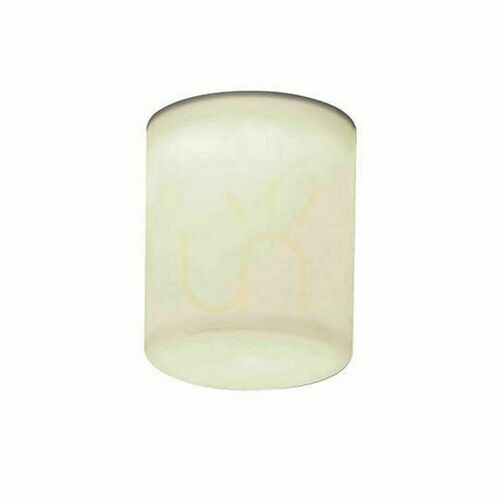
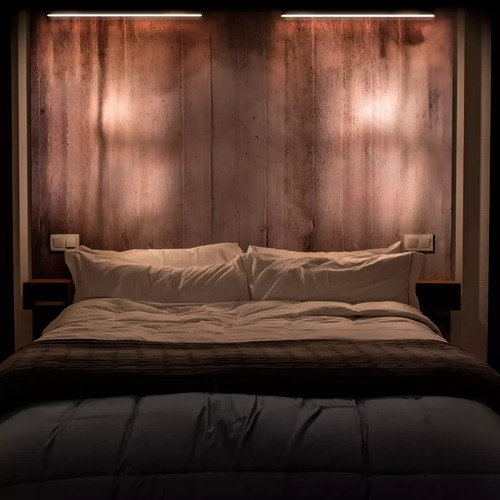
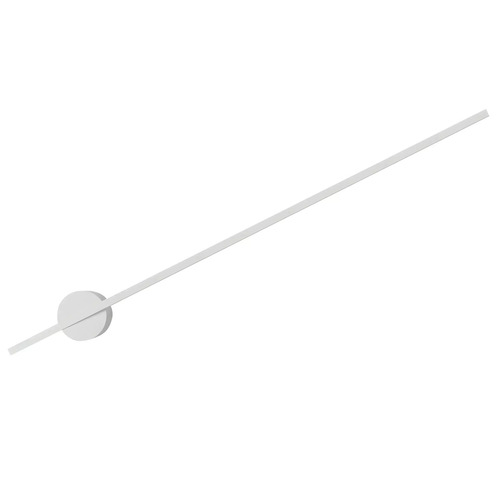
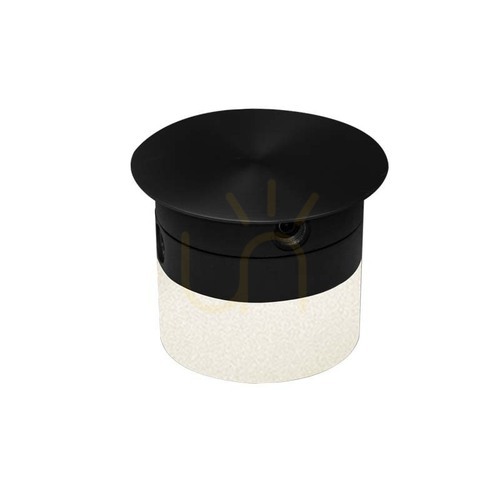
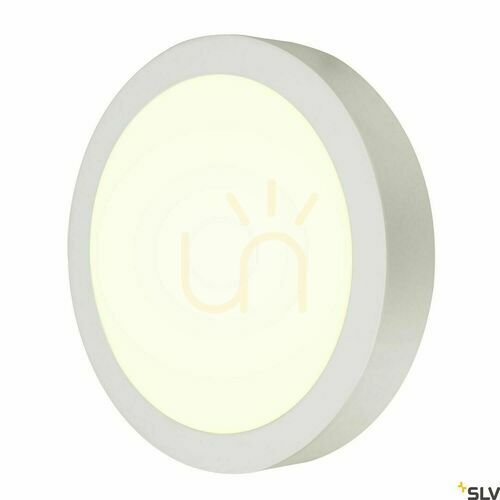
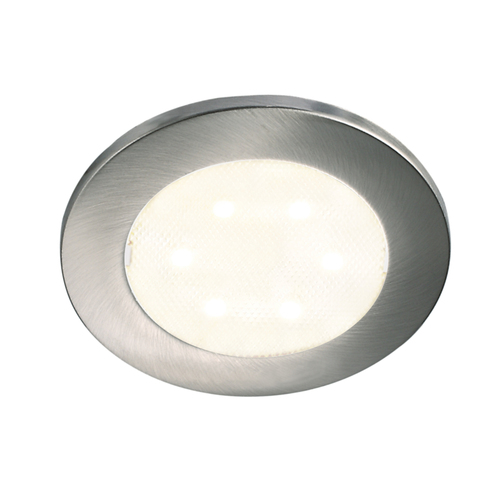
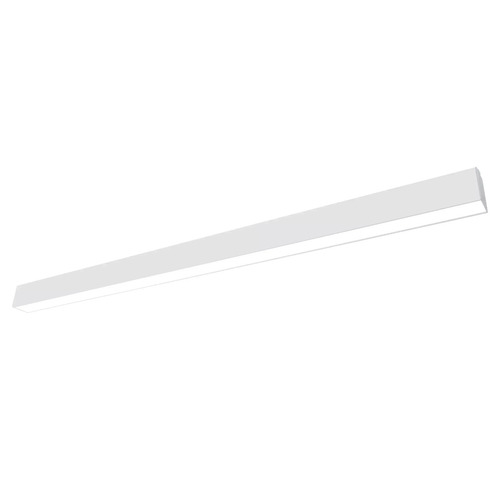
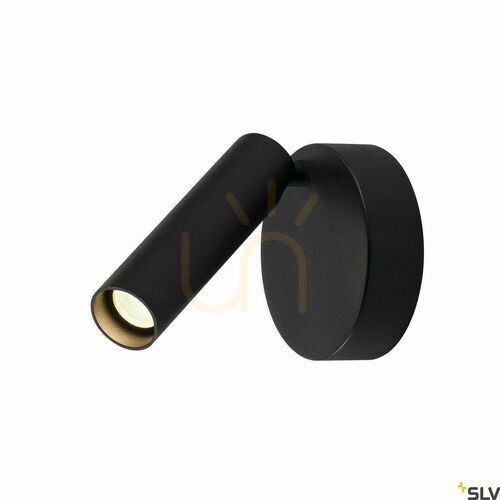
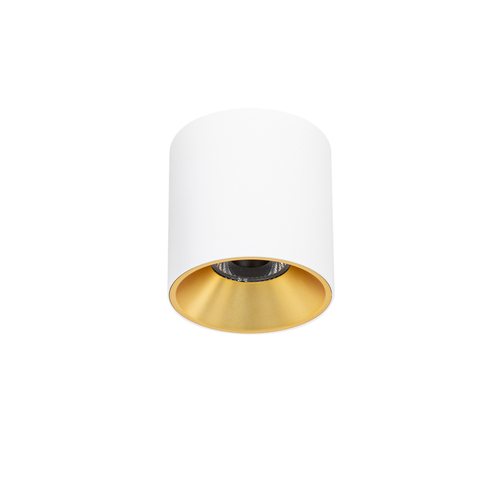
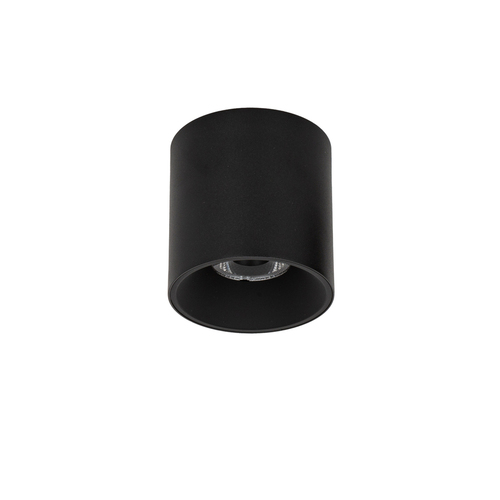
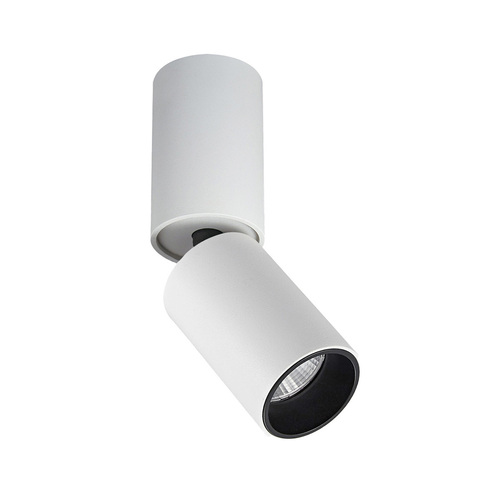
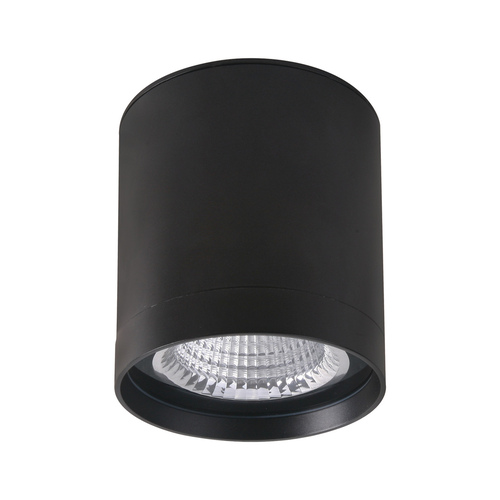
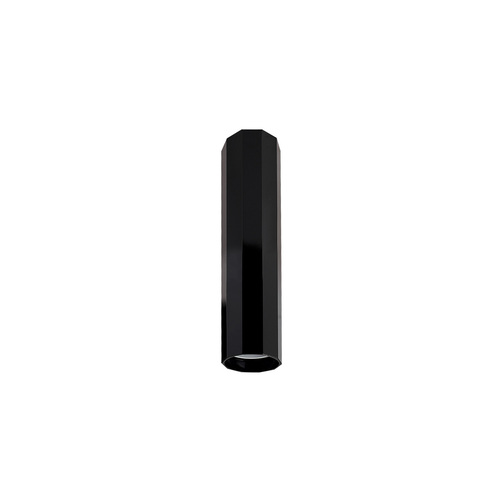
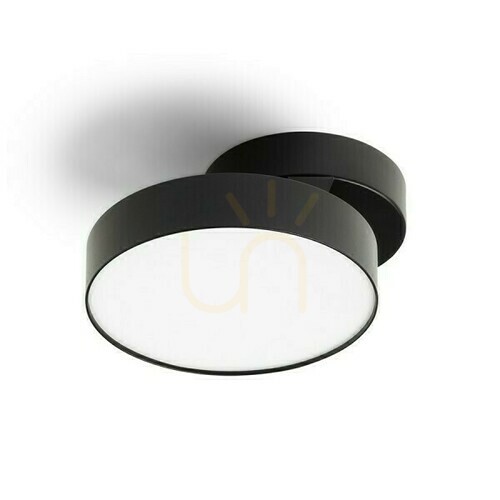
A surface mounted LED downlight fixes straight onto the ceiling and sends its light down in a defined beam, so you get the clean look of a downlight without cutting a hole. The LED is what makes the idea work: a fitting that sits proud of the ceiling can be slim, runs cool enough to keep its light output for years and uses a fraction of the power of the old halogen spot.
In British homes that matters more than it might seem. Plasterboard ceilings hide joists, cables and loft insulation, and every recessed downlight raises questions about fire rating and whether insulation can sit over it. A surface fitting needs only a small hole for the cable, which makes it the easy choice for concrete ceilings in flats, lath-and-plaster ceilings in period houses and any room where you would rather not open up the ceiling at all.
Integrated LED or a GU10 lamp?
Surface downlights come in two broad builds. Integrated fittings carry an LED module that is part of the light: the body can be a slim disc or a short cylinder, the optic is designed around the chip, and many offer an anti-glare baffle with the LED set well back. The trade-off is that when the module eventually fails, you replace the module or the whole fitting.
Fittings with a GU10 holder take a replaceable LED lamp. The body has to be deeper to house it, usually a cylinder of 8–15 cm, but you can change the colour temperature or brightness in a minute by swapping the lamp. If a slim profile matters most, go integrated; if you want flexibility, choose GU10.
Choosing beam angle, brightness and colour
Judge brightness by lumens rather than watts. As a starting point, 400–600 lm per fitting suits living rooms and bedrooms, while 700–1000 lm works over a kitchen worktop. The beam angle decides how many fittings you need and how far apart they go. On a typical 2.4 m UK ceiling:
| Beam angle |
Effect |
Typical use |
Rough spacing at 2.4 m |
| 15–25° |
Tight pool of light |
Picture, alcove, shelving |
Aimed at the object, not on a grid |
| 36–40° |
Defined pools |
Kitchen island, dining table, hallway |
Around 1–1.2 m |
| 60° |
Soft, even spread |
Kitchens, bathrooms, studies |
Around 1.2–1.5 m |
| 90–120° |
Broad, general light |
Living rooms, bedrooms, landings |
Around 1.5–2 m |
Keep the first row of fittings roughly half that spacing from the wall. For colour temperature, 2700–3000 K gives the warm white most people expect at home; 4000 K reads cooler and crisper, and suits kitchens, utility rooms and home offices. A colour rendering index (CRI) of 90 or above is worth paying attention to over the worktop, by a mirror and in a dressing room, where food, skin and fabrics need to look true.
Fitting, bathrooms and dimming
Most surface downlights fix with a mounting plate screwed into the ceiling, with the cable passing through the plate. Where there is only one ceiling rose, a multi-head plate or bar gives you two, three or four adjustable spots from that single point, so nothing has to be chased in. Separate fittings spread across the room each need a cable run of their own.
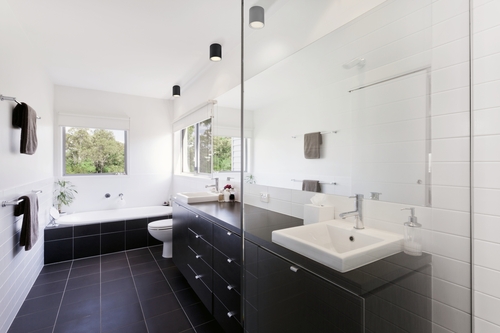
Connection to the mains should be done by a qualified electrician working to BS 7671. In England and Wales, new lighting work in a bathroom is usually notifiable under Part P. Bathrooms are divided into zones: zone 1, above the bath or shower, calls for at least IPX4 (IP65 is a common recommendation), and zone 2 for IPX4 as well; outside the zones, an IP20 fitting is acceptable. For dimming, pick fittings or lamps marked dimmable and pair them with a trailing-edge LED dimmer whose minimum load suits the small wattage of LED, or you may get flicker and buzz.
Common mistakes and care
- Too few narrow-beam fittings, which leaves bright circles on the floor and dark gaps between them.
- Mixing 3000 K and 4000 K in one room; the difference shows straight away on a white ceiling.
- Not checking that the base plate covers the old ceiling rose or the marks it leaves.
- Ignoring glare over a sofa or bed; a deep-set LED is far kinder to look up at.
To clean, switch off and wipe with a dry or slightly damp cloth. Avoid solvents, which can dull painted finishes and diffusers.
Frequently asked questions
What are surface mounted lights?
Lights fixed onto the surface of a ceiling or wall rather than set into it. The whole body stays visible, so there is no need for a cut-out or a void behind the ceiling.
Can I replace a halogen downlight with an LED downlight?
Usually, yes. If an existing surface fitting takes a GU10 lamp, a GU10 LED lamp drops straight in; just check the dimmer is LED-compatible. A low-voltage MR16 fitting may need its transformer changed for an LED driver, which is a job for an electrician.
Do surface mounted downlights need to be fire rated?
Fire-rated downlights exist to restore the fire resistance lost when a hole is cut into a ceiling. A surface fitting only needs a small cable entry, so the question rarely arises in the same way, but if the ceiling forms a fire barrier, for example below another flat, ask your electrician or building control.
Do I need an IC-rated downlight?
IC rating matters for recessed fittings that may be covered by loft insulation. A surface downlight sits below the ceiling, so insulation above is not an issue for the fitting itself.
Can you get smart surface downlights?
Yes. Some integrated fittings connect to a smart home system directly, and GU10 versions can take smart LED lamps, which lets you change brightness and colour temperature from an app or voice assistant.
Are slim surface mounted LED downlights bright enough?
A slim profile says little about output. Compare lumens and beam angle: a slim fitting with a well-designed optic can light a kitchen as well as a deeper cylinder.
More on surface fittings in general, including those that take conventional lamps: surface mounted downlights. If you would rather aim the light at artwork or a worktop, read about LED spotlights as well.