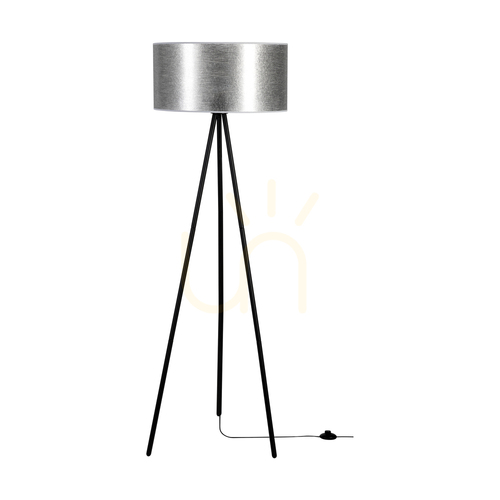
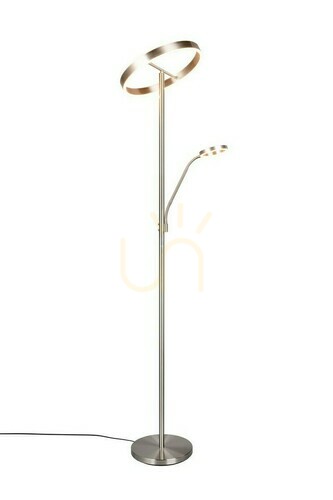
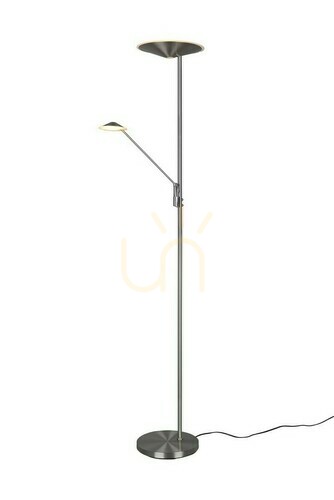
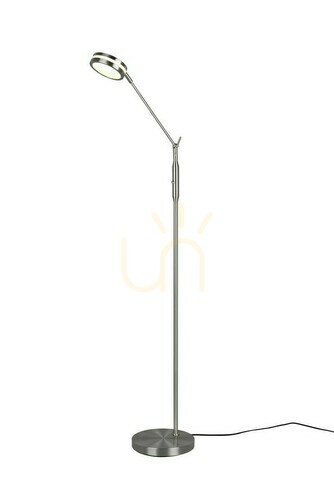
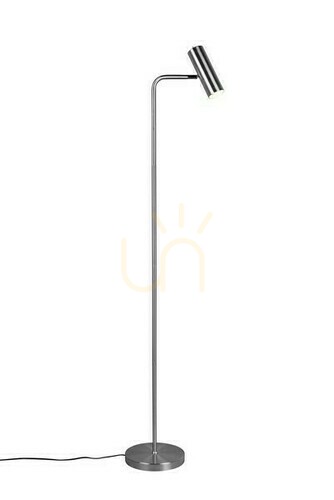
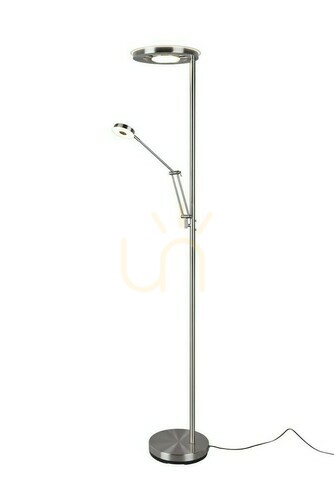
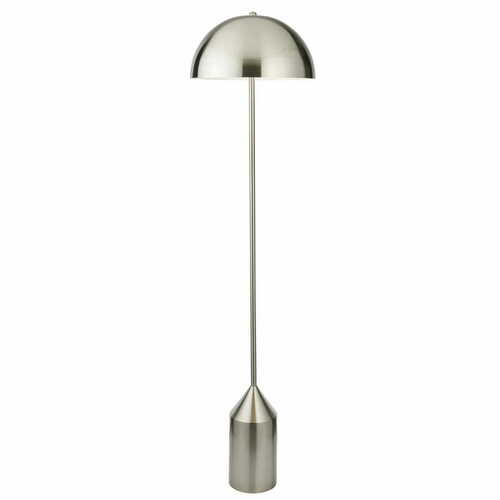
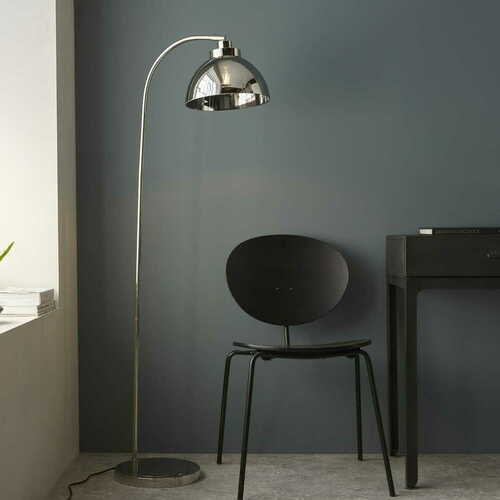
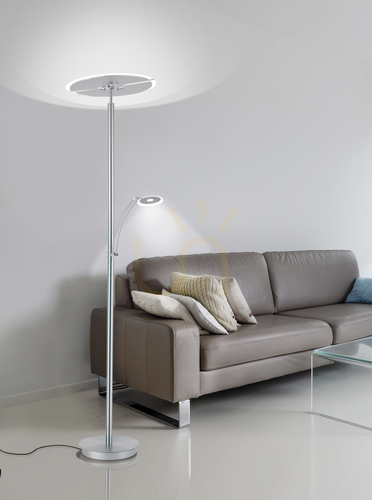
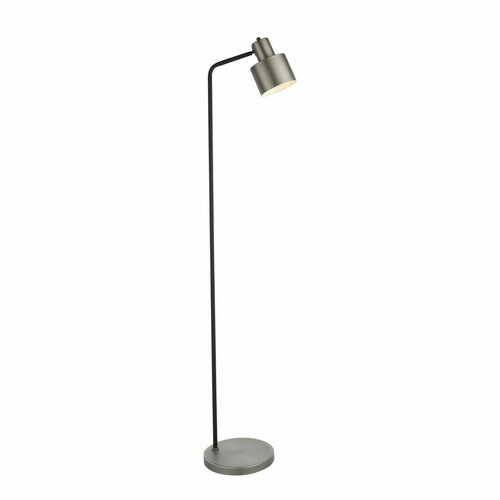
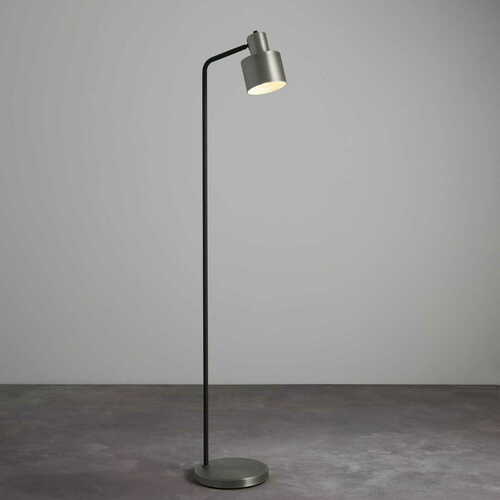
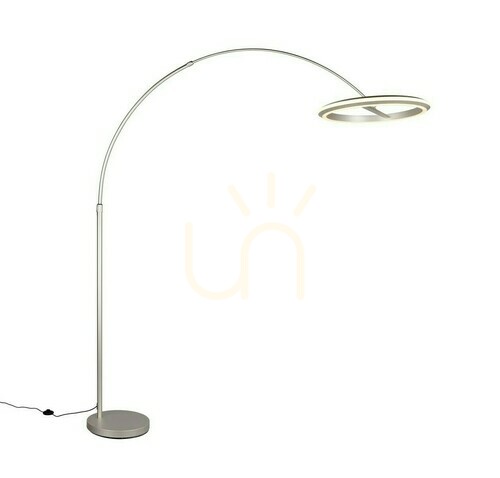
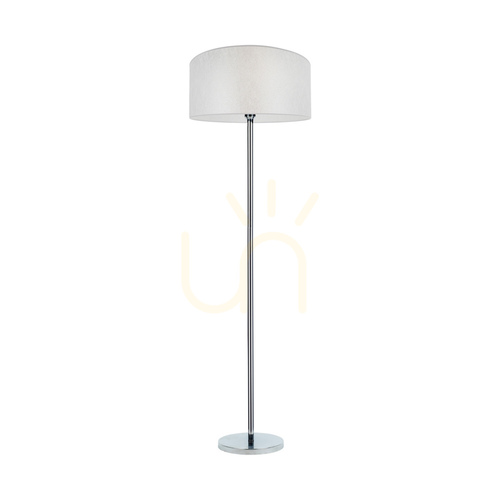
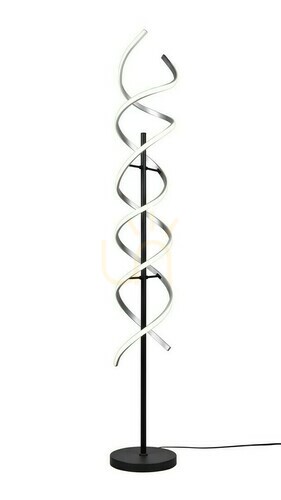
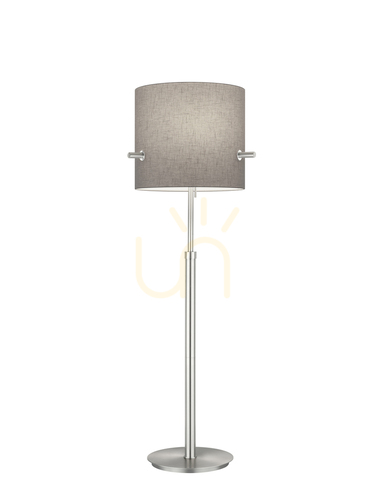
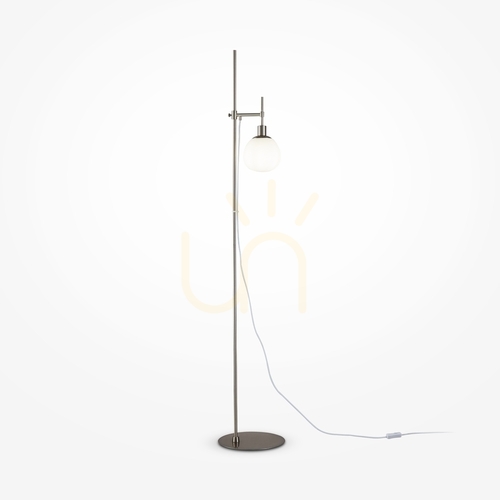
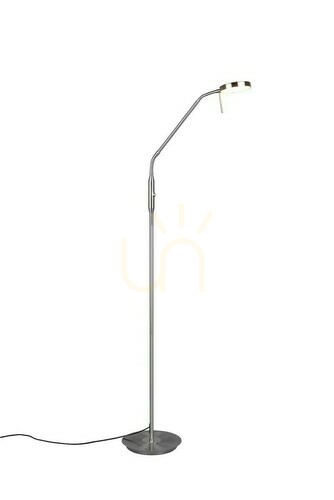
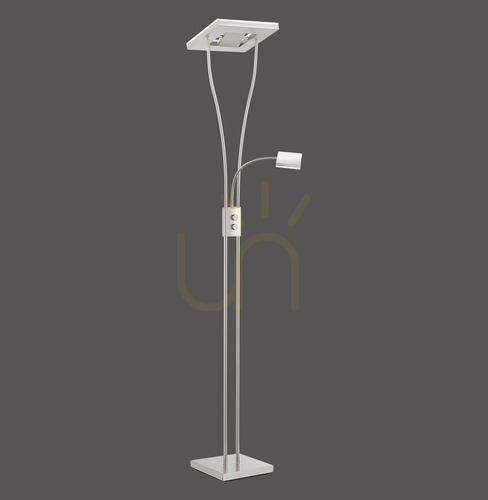
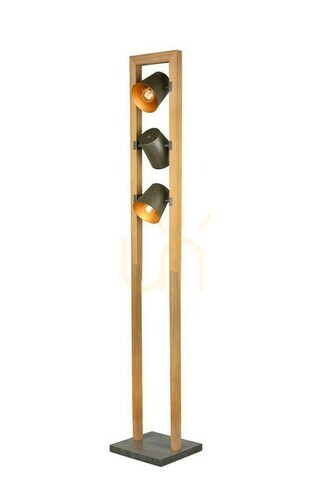
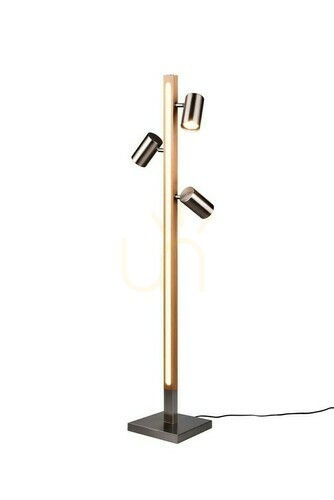
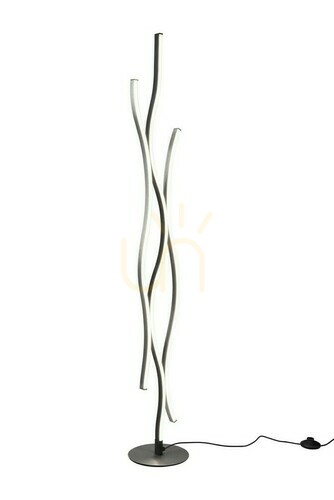
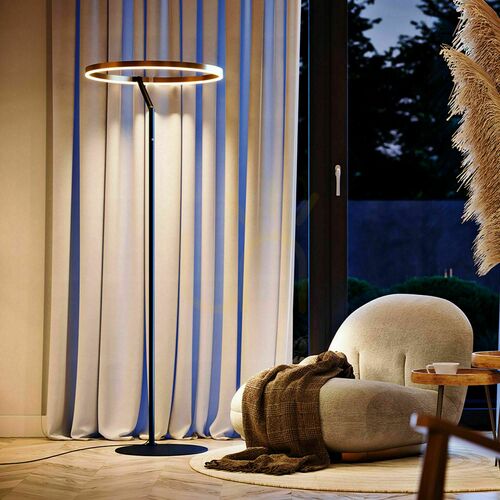
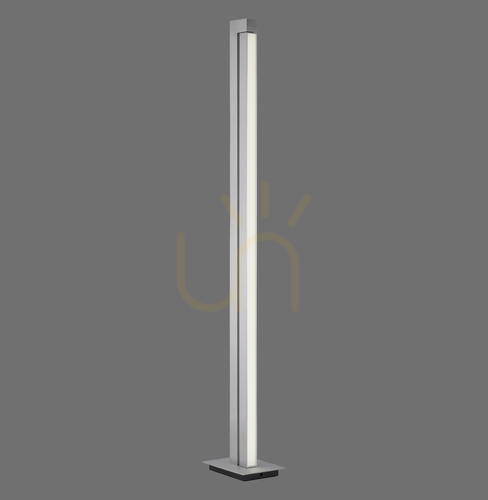
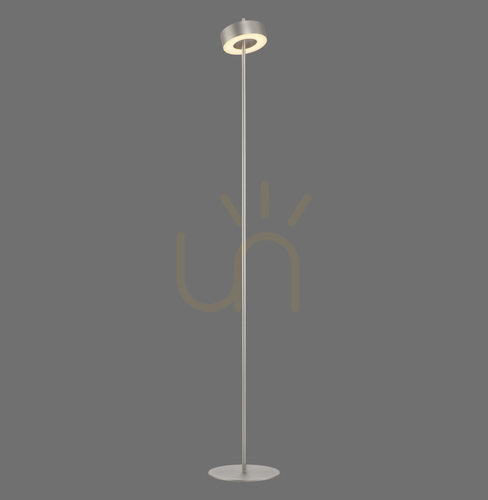
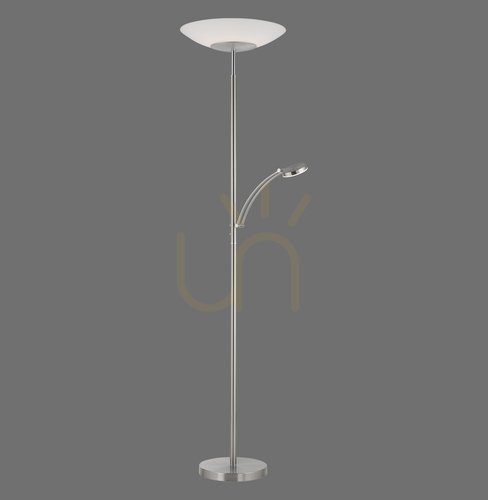
A silver floor lamp in a British home usually takes one of three shapes: a shaded standard lamp, a mother-and-child uplighter with a reading arm, or an arc lamp reaching over the sofa. The silver is the stem, base or bowl, and the finish runs from mirror-polished chrome through satin nickel to antique silver with a darkened patina. That choice changes how much the lamp reflects, how often it needs a wipe and whether it suits a new-build flat or a Victorian front room.
In the UK, antique silver is nearly as popular on floor lamps as chrome, and that fits British rooms: plenty of period houses, plenty of fabric shades and a liking for metal that looks as if it has been there a while. Polished chrome is the modern counterpart for pared-back spaces.
Antique silver: the traditional option
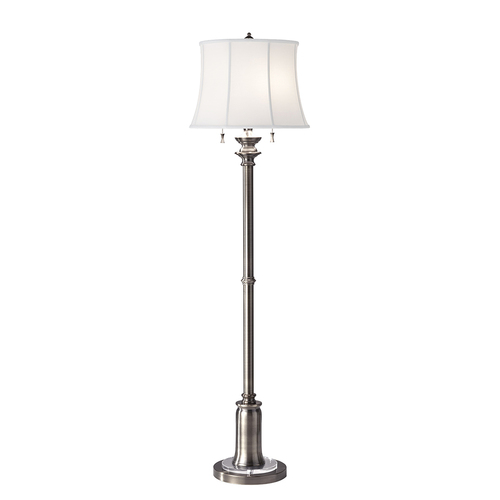
Antique silver is a finish rather than a material. On most lamps it is a coating over steel or cast metal, with darker tones worked into the recesses and edges so that turned or moulded detail stands out. It looks most at home on candlestick or column stems under a pleated, drum or empire shade.
It suits rooms with cornicing, panelled doors and a fireplace, and sits more easily than chrome beside brass and oak. The catch is care: the darker shading is part of the finish, so antique silver should only be dusted. Silver polish or a scouring pad strips the patina and leaves bright patches that are hard to put right.
Polished chrome, satin chrome and nickel
Otherwise the choice is about shine. Polished chrome reflects the bulb, the window and the television, which makes it the sharpest look and the least forgiving of fingerprints. Satin chrome and brushed steel break those reflections up and cope far better with a reading arm that gets adjusted every evening. Satin nickel carries a faint warmth that suits cream walls and oak floors, while silver-painted metal gives the colour without the mirror and keeps a tall lamp low-key.
Before choosing, look at the metal already on your walls. Chrome or nickel switch plates and sockets are a common British detail, and a lamp in the same finish makes the room look planned rather than pieced together.
Which type suits which room?
Ceiling height decides a lot: new-builds are often around 2.4 m, while Victorian and Edwardian ground floors frequently reach 2.7 m or more.
| Type |
Where it works |
Typical figures |
Silver finishes that suit it |
| Shaded standard lamp |
beside a sofa or in a bay window; any ceiling height |
around 150–170 cm, ES (E27) or BC (B22) cap, 2700 K |
antique silver or satin nickel with a fabric shade |
| Mother-and-child uplighter |
living rooms where one pendant is the only fixed light |
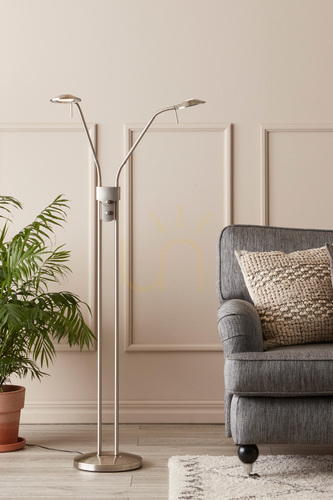
around 180 cm, uplight plus a 400–600 lm reading arm on its own switch |
satin chrome or satin nickel, ideally with a matt arm |
| Uplighter on its own |
period rooms with ceilings of 2.7 m or more |
175–190 cm, often 2,000–3,000 lm, ideally dimmable |
satin chrome or brushed steel bowl, white inside |
| Arc floor lamp |
over a sofa or coffee table in an open-plan room |
180–220 cm tall, 120–200 cm reach, heavy weighted base |
polished chrome arc on marble or steel |
| Task or reading lamp |
armchair, bedroom, home office |
light source at roughly 120–130 cm, adjustable head |
brushed steel or satin chrome |
Bulbs, plugs and switches
Warm white around 2700 K is the safe choice for a lounge, and it matters more with silver. Chrome reflects the colour of the light: warm white makes the stem look soft and inviting in the evening, while 4000 K cool white on polished metal starts to feel like an office. Keep cooler light for a desk lamp – and even there, 3000 K with a high colour rendering index (CRI 90 or above) is comfortable for reading.
Check the cap before you buy bulbs. Most continental-made lamps take an E27 screw (ES) or the smaller E14 (SES), while older British designs often use a B22 bayonet (BC). On open designs where the bulb is visible, a crown-silvered bulb is worth knowing about: the mirrored tip hides the bright filament and throws the light back into the reflector.
A floor lamp comes on a standard fused 13 A plug, so no electrician is needed. Some older and period homes, though, have small round-pin lamp sockets wired to the wall switch by the door. Fitting a matching round-pin plug to the lamp is a simple swap, but adding or altering those switched circuits, or adding new sockets, is work for a qualified electrician under BS 7671.
Placing it well
In a typical UK living room the pendant hangs in the middle and the corners stay dark, so a floor lamp earns its place in a corner, beside the sofa or in the bay. Set a reading lamp slightly behind the chair so the light comes over your shoulder, and keep a shade low enough that nobody on the sofa looks into the bulb – about seated eye height. Under a 2.4 m ceiling an uplighter tends to throw a bright disc overhead rather than an even glow, so a mother-and-child lamp turned down low or a shaded lamp often works better.
Arc lamps need the most planning. Their base usually sits 1.5–2 m from the spot they light, so measure the reach against your sofa and make sure the shade clears heads when people stand up.
Living with a silver lamp
Tall lamps are top-heavy, and light ones topple when a dog brushes past. A marble, cast-iron or heavy steel base is worth the extra weight in a family home. Check the flex and plug of a second-hand lamp before using it.
For cleaning, unplug the lamp and use a soft microfibre cloth, dry or barely damp. A drop of washing-up liquid shifts fingerprints; buff dry afterwards. Skip abrasive creams, ammonia glass sprays and limescale removers, which cloud plating, and keep silver polish for solid silver. Brushed finishes are wiped along the grain.
Silver floor lamp FAQs
Are floor lamps still in style?
Yes. Layered lighting – several lamps at different heights instead of one bright pendant – has made the floor lamp a fixture of most living rooms. Silver keeps that look neutral, so it rarely dates.
What are some good floor lamp ideas for a living room?
Put an uplighter in a dark corner for background light, an arc lamp over the sofa as a centrepiece, and a reading lamp by the armchair. Choosing all three in the same finish ties the room together.
Does a modern silver floor lamp work in a period home?
Often very well. A slim chrome arc or uplighter contrasts nicely with cornicing and panelled doors. If you would rather blend in, antique silver with a fabric shade is the gentler option.
Is a vintage silver floor lamp the same as antique silver?
Not quite. Antique silver is a finish; vintage describes a style. Mid-century chrome arc lamps and tripod lamps are vintage in style but bright and polished.
Chrome or brushed steel – which is easier to live with?
Brushed steel and satin chrome. They hide fingerprints and dust far better than polished chrome and suit busy family rooms.
Lamp types, heights and bulbs in general are covered under floor lamps. If the antique and mid-century side of silver appeals, carry on with vintage floor lamps.