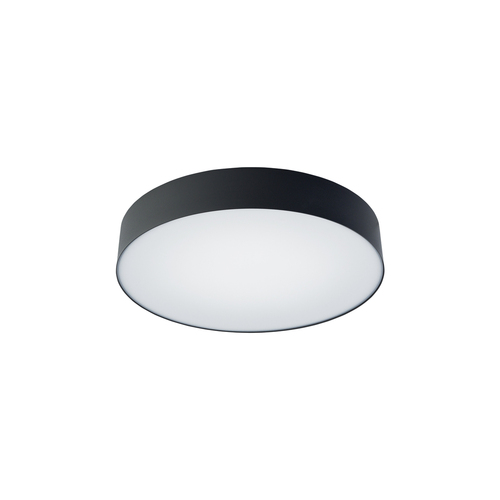
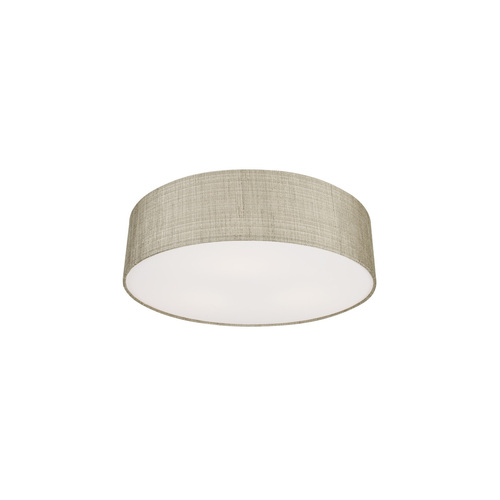
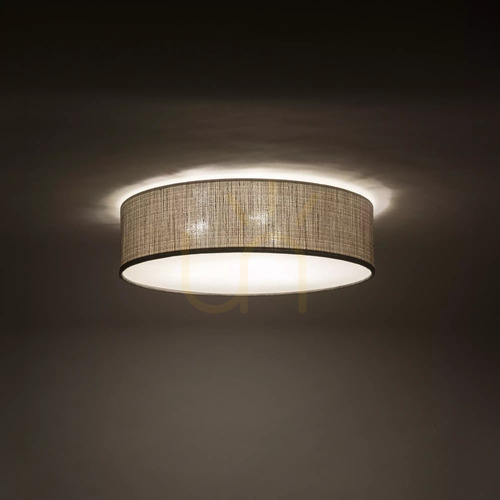
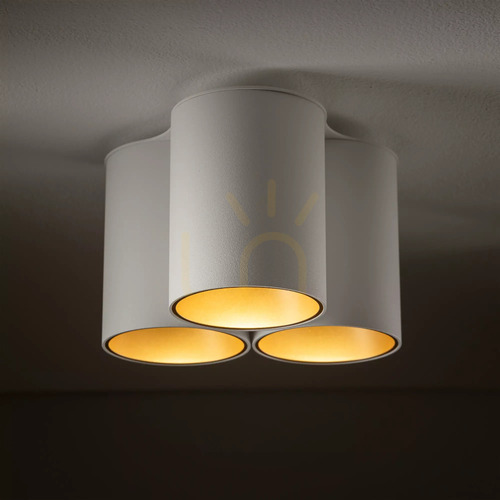
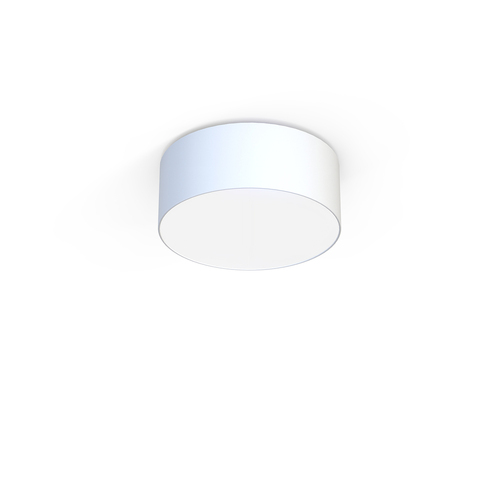
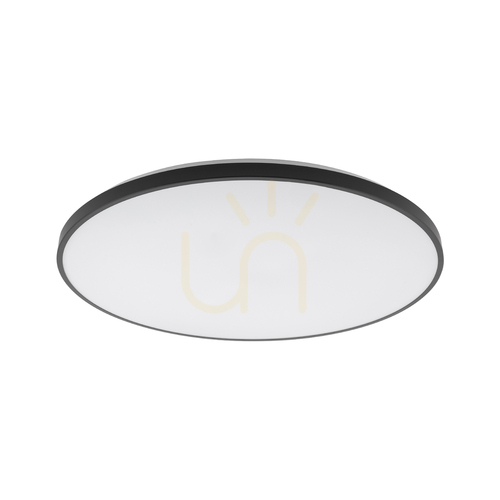
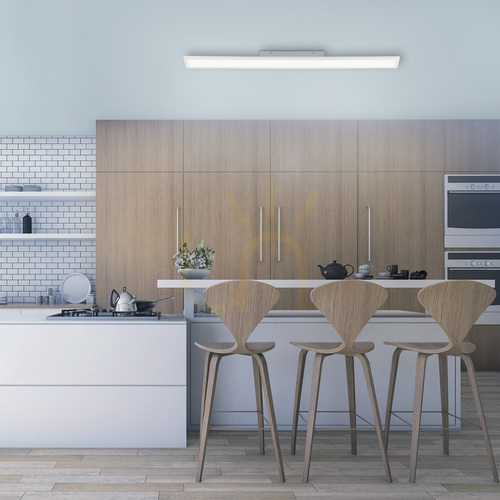
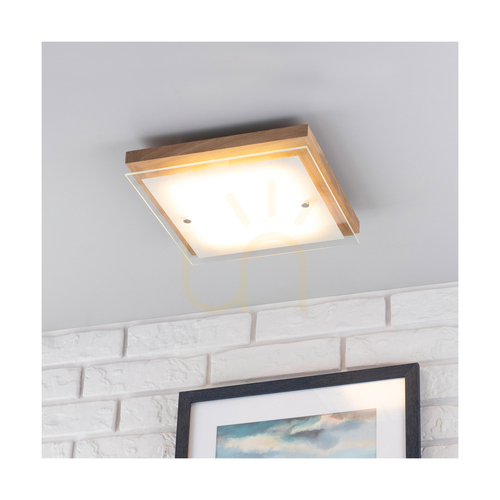
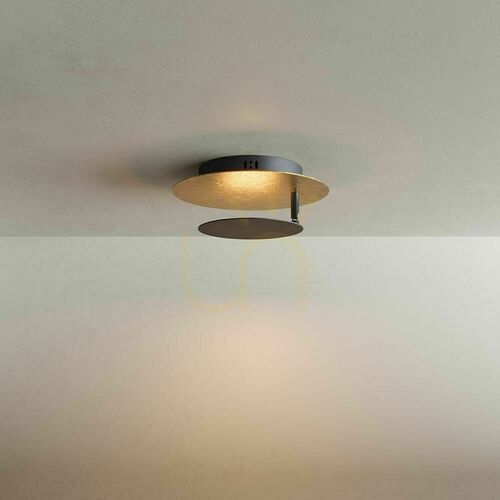
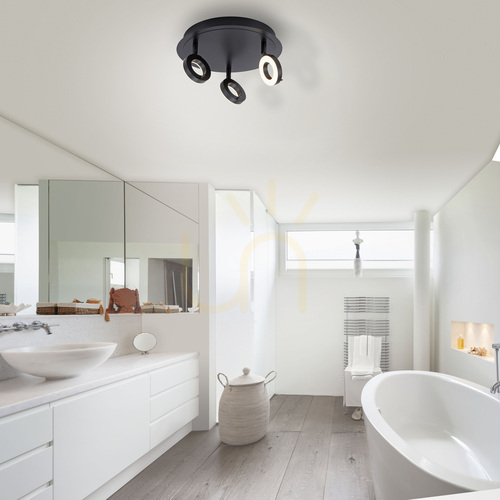
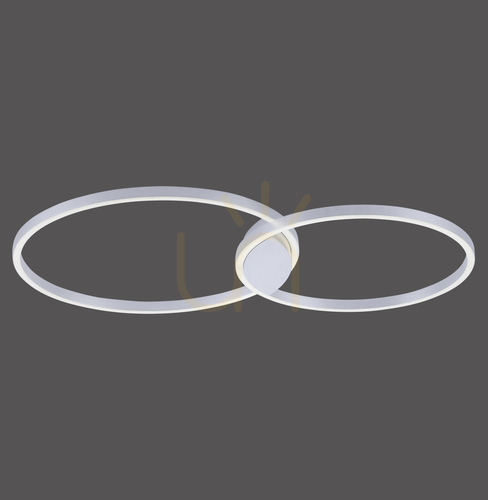
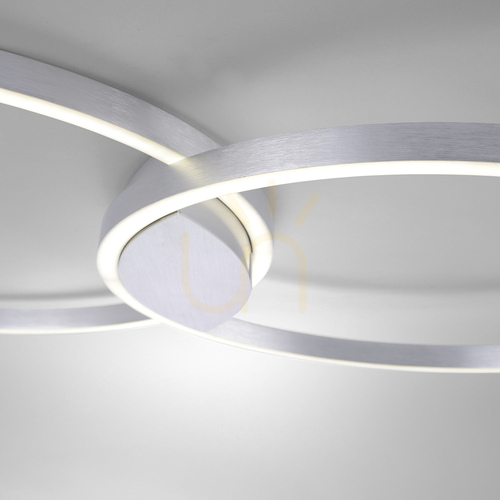
A kitchen ceiling light is a working light before it is anything else, and a flush fitting is the format that suits a kitchen for a practical reason: wall units, extractor hoods and open cupboard doors all reach into the space where a pendant would hang. Sitting tight to the plaster keeps the fixture out of that traffic, and it spreads light evenly enough that you are not cooking inside your own shadow.
You stand between the light and the worktop
This is the one thing every kitchen ceiling fitting gets wrong. Light coming from the middle of the room lands on your back, and your body casts a shadow onto exactly the surface you are chopping on. A large, evenly diffused flush fitting softens that shadow but never removes it, which is why under-cabinet lighting exists. Plan the ceiling fitting as the general layer — 150-200 lm per square metre — and light the worktop separately at around 300 lm per square metre.
Colour rendering and colour temperature over food
Temperature is a compromise between a kitchen you work in and a kitchen you eat in. 4000 K is accurate and alert over a worktop; 3000 K is what an adjoining dining area wants. In an open-plan room, 3000 K on the ceiling with cooler task light at the counter reads better than 4000 K everywhere. Colour rendering matters more than most people expect — an index of 90 or above is the difference between raw chicken looking pink and looking grey.
Grease, steam and getting it clean
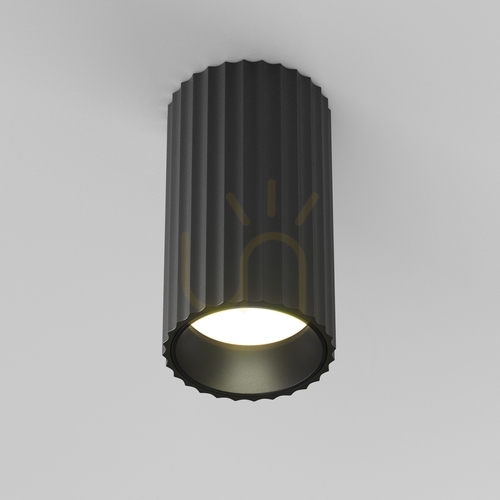
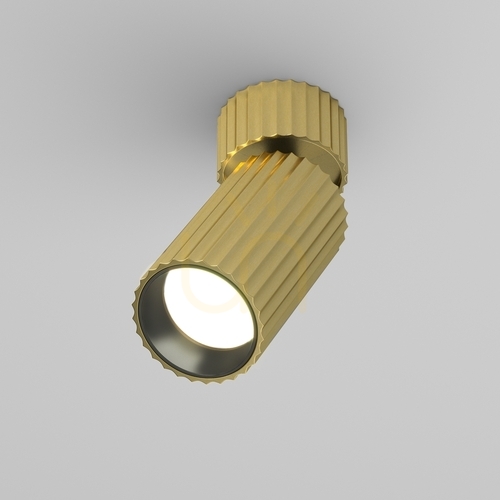
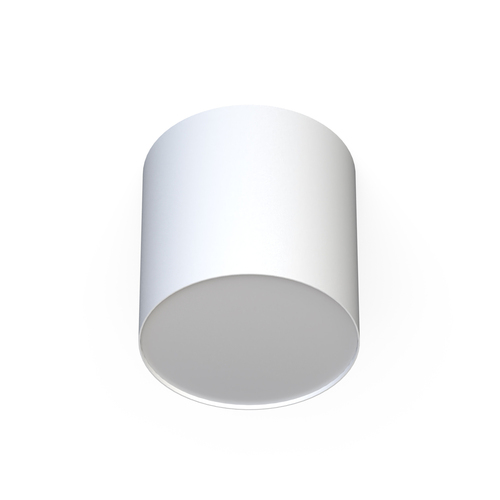
Every kitchen ceiling gets a fine film of aerosolised fat, and the fitting nearest the hob gets it first. A smooth opal diffuser wipes clean; deep ribbing and cut detail trap it and go yellow. Near a sink or a hob, IP44 is a reasonable minimum for splash and steam, and the same enclosed-fitting rule applies to the lamp inside a sealed shade — heat is the thing that kills it, not the steam. Isolate the circuit, let the diffuser cool, wash it in warm water with detergent, dry it fully.
Sizing to the room, not the worktop
Size the ceiling fitting to the floor area: 30-40 cm across a small kitchen, 40-50 cm over 12-18 m², or two smaller fittings in a galley so the light runs the length of the run rather than pooling in the middle. Keep them roughly 1.5 times the ceiling height apart, and do not centre one on the room if the room's centre is the island — the island wants its own light.
Frequently asked
How many lumens for a kitchen ceiling light?
Around 2,500-3,000 lm from the ceiling in a 15 m² kitchen, before under-cabinet lighting.
What colour temperature is best in a kitchen?
4000 K for pure task work, 3000 K if the kitchen is open to a dining or living space.
Does a kitchen ceiling light need an IP rating?
Not in the middle of the room, but IP44 is sensible directly over a sink or a hob.
Flush or a pendant over the island?
Both. Flush across the room for the general layer, pendants over the island where nothing walks underneath.
Where steam and a sealed diffuser matter even more, the reasoning carries over to bathroom flush ceiling lights.