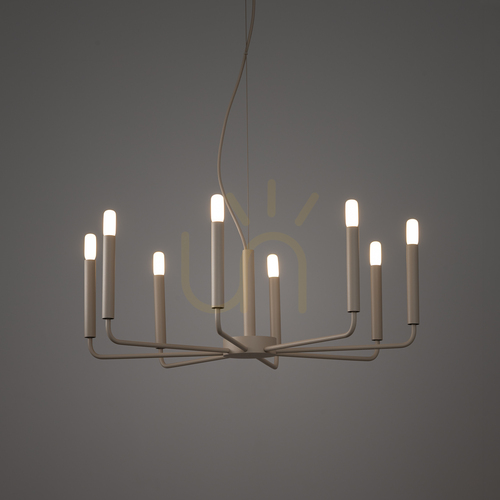
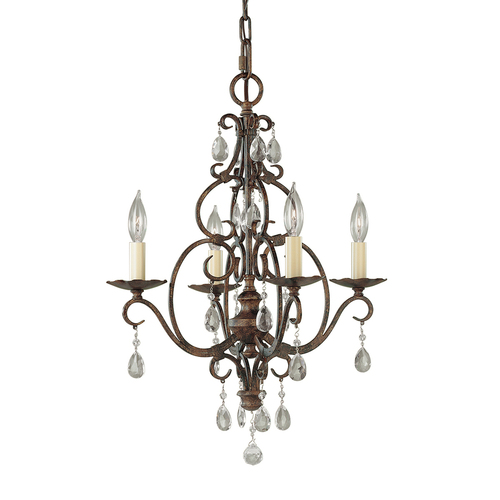
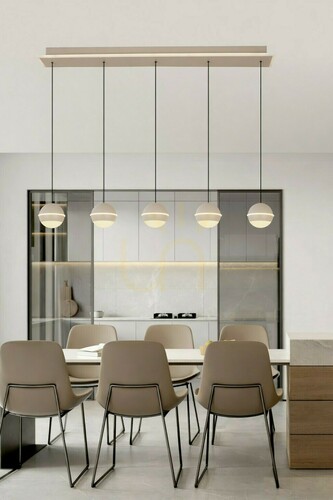
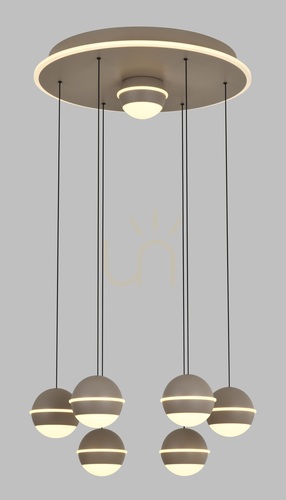
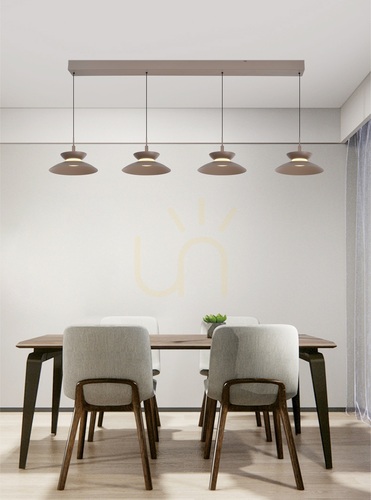
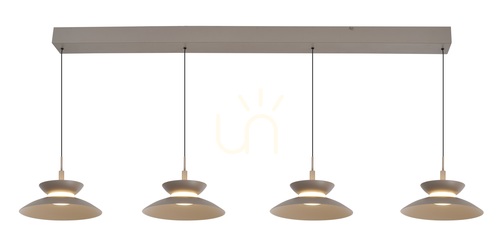
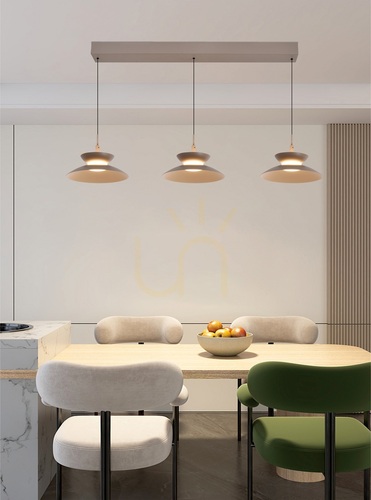
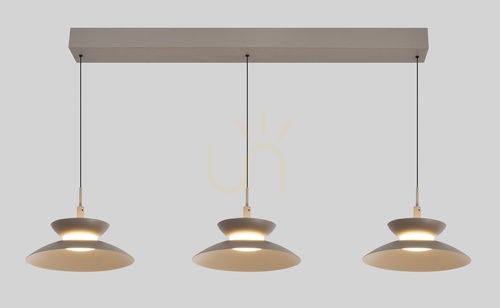
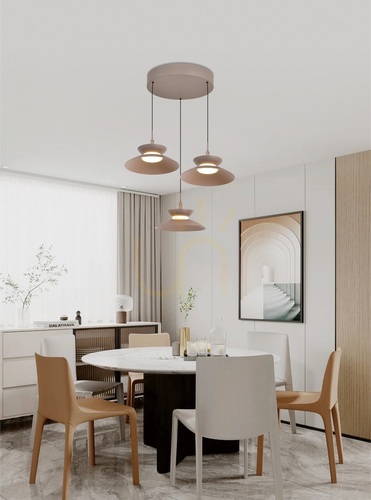
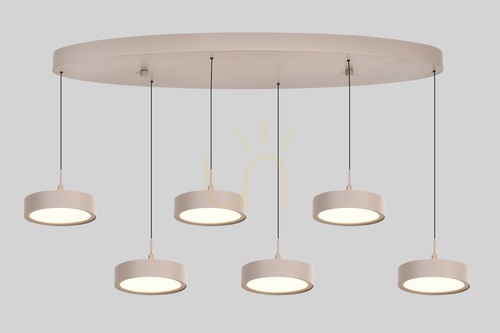
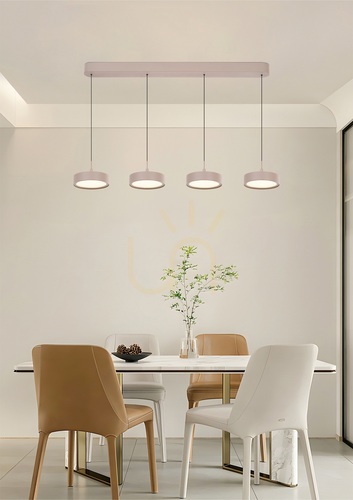
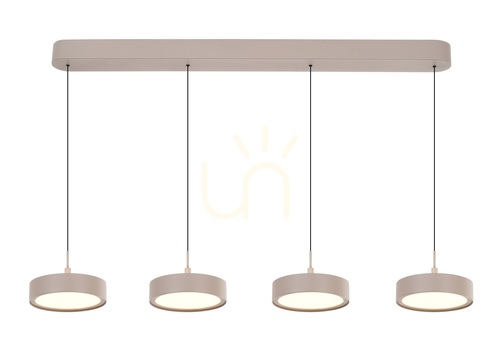
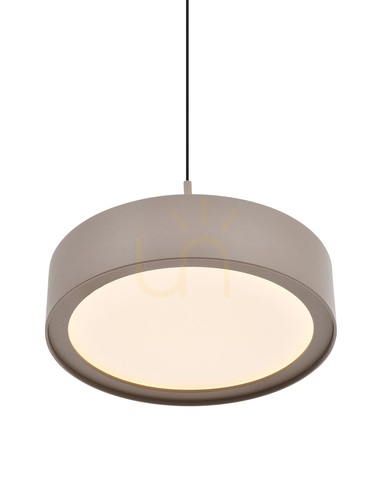
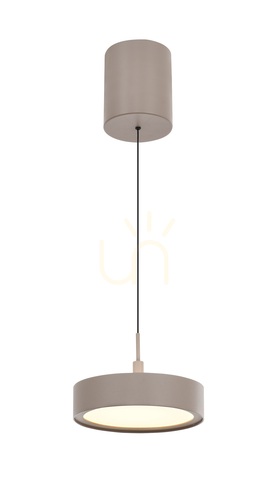
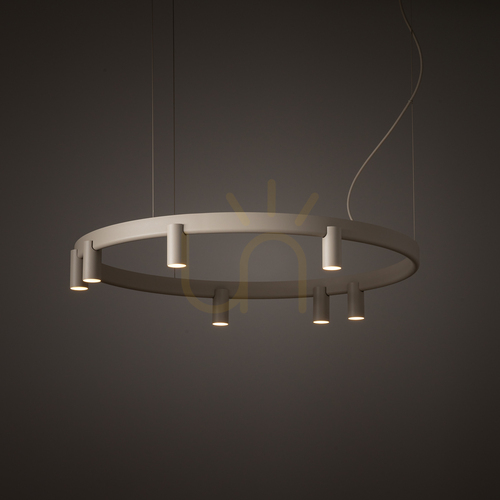
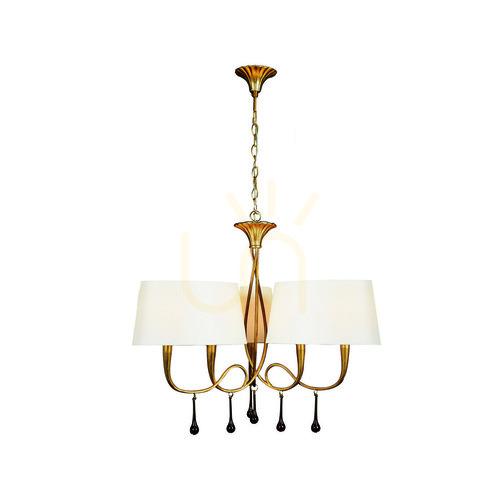
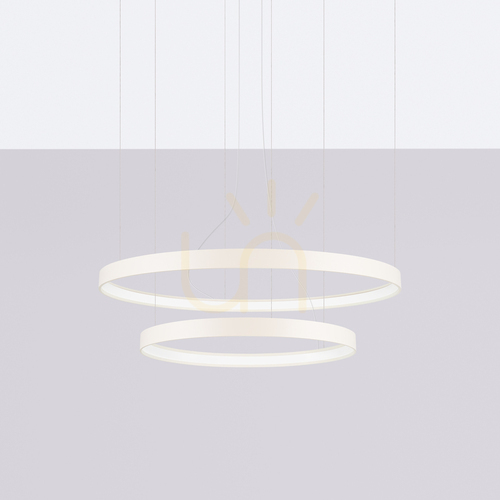
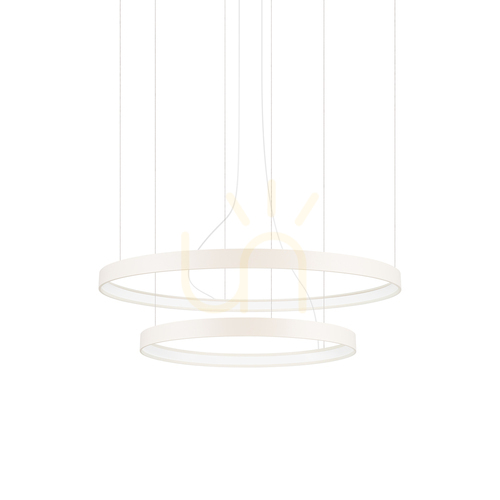
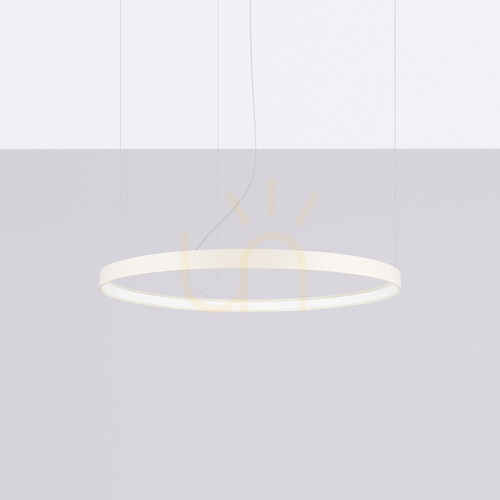
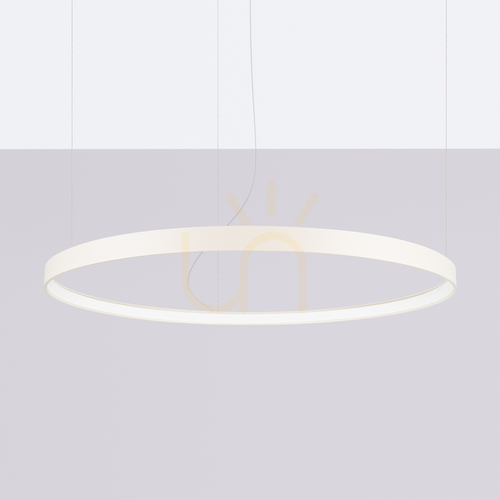
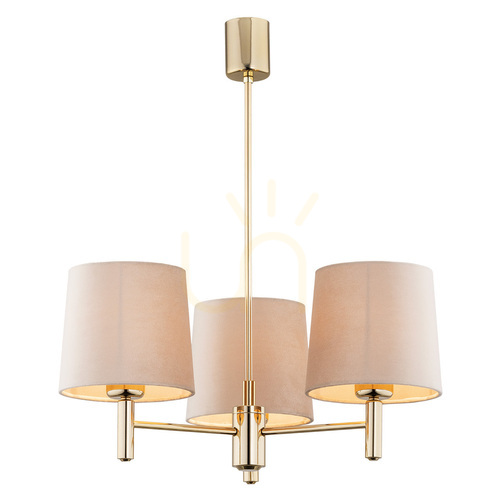
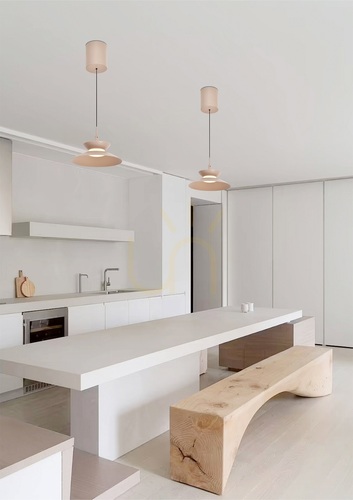
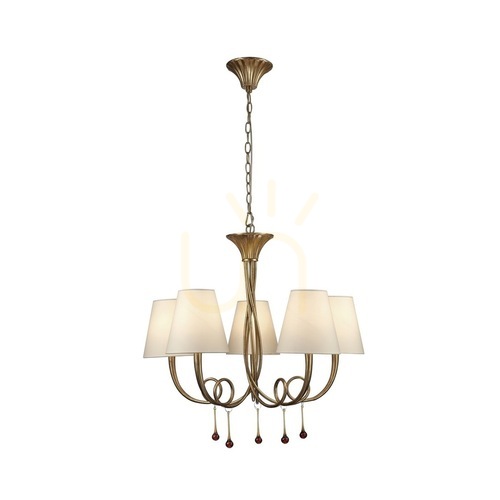
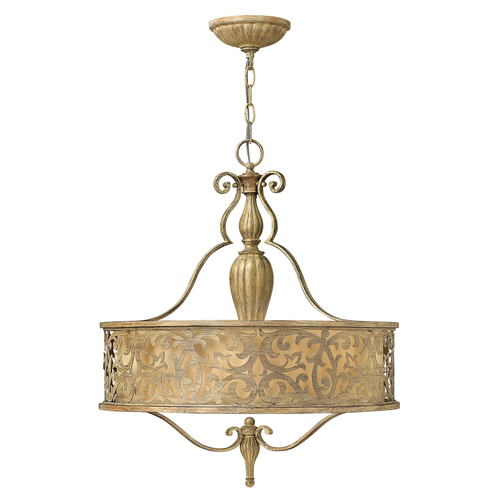
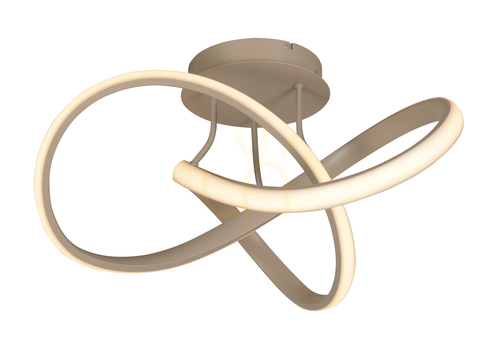
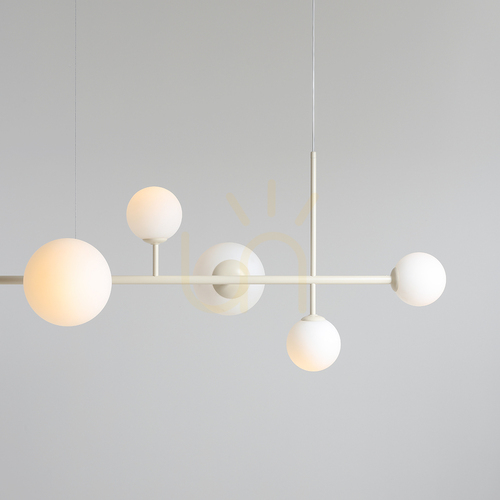
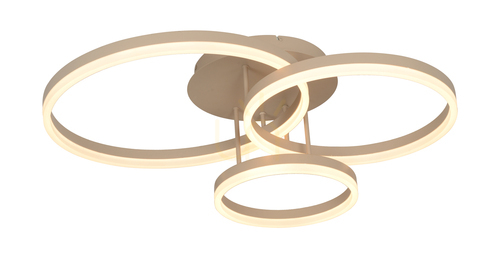
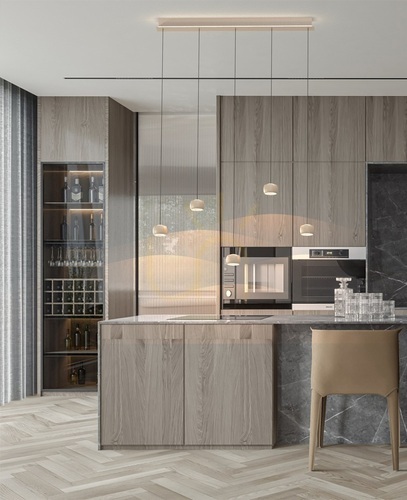
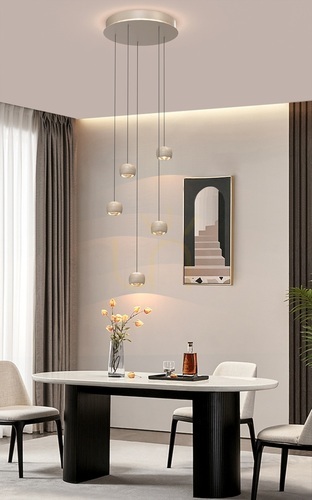
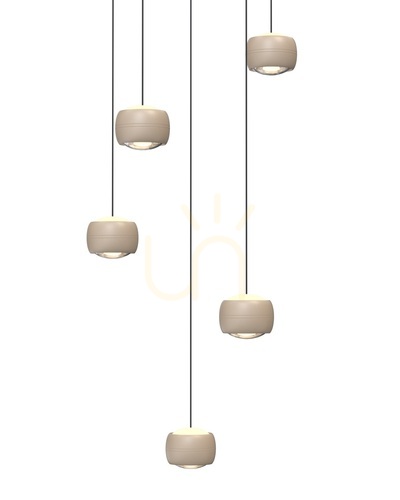
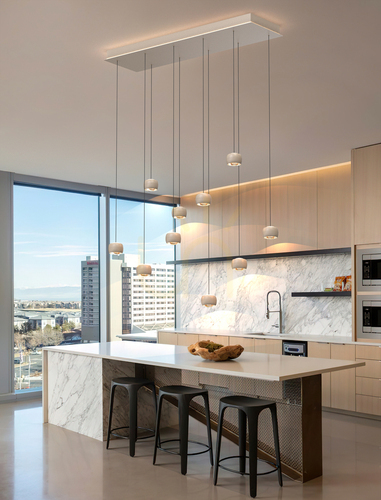
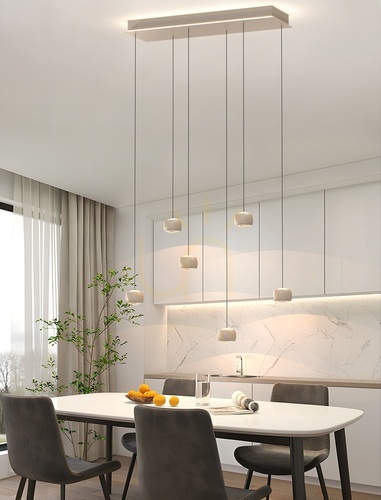
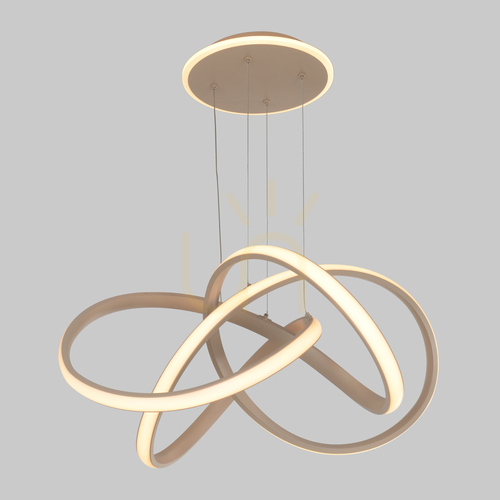
A beige ceiling light in chandelier form gives a room warm, diffused light and sits quietly against magnolia, greige or stone-coloured walls instead of shouting over them. On a chandelier, beige can mean a linen or faux-silk shade, a powder-coated metal frame, a ceramic or plaster body, natural rattan or paper, or tinted glass – and each of those handles light differently.
In British shops the same family often goes by cream, ivory, ecru, oatmeal, sand or taupe. The labels overlap, but under a white ceiling the difference shows: a yellow-leaning cream suits oak floors and brass, a grey-leaning greige sits better with charcoal, black and chrome. Hold a paint chart or a fabric swatch up to the product photo in daylight before you decide.
Cream, beige or ivory: what the colour does to the light
A beige fabric shade warms the light a little and softens it. Behind thin linen, a 3000 K bulb looks closer to 2700 K, and the whole shade glows. A thick or lined drum sends most of the light up and down in two pools and leaves the walls dimmer. Painted metal, ceramic and plaster let no light through, so the colour lives on the fitting itself while the shape of the shade decides the spread. Rattan and paper cast patterned shadows on the ceiling – lovely in a bedroom, distracting over a desk.
Sizing for a British room
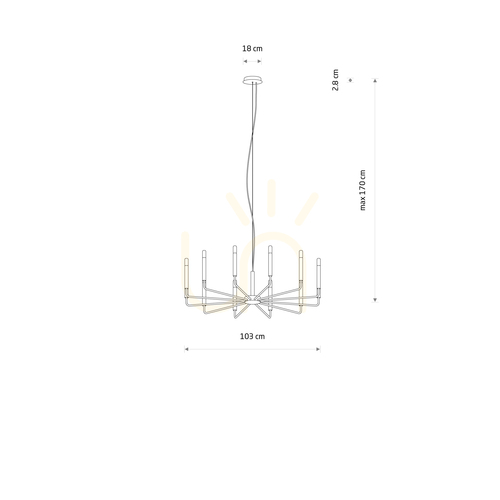
Most post-war homes and new builds have ceilings of around 2.4 m, which leaves little room for a long drop, especially in a bedroom where the fitting hangs above the bed. Victorian and Edwardian houses with 2.7–3 m ceilings can take a tiered chandelier on a longer chain. The figures below are the usual starting points.
| Question |
Typical guide |
Worth knowing |
| Diameter in a living room |
(room length + width in m) × 8–10 = cm |
a 4 × 5 m room suits about 70–90 cm |
| Headroom under the fitting |
at least about 2.1 m to the floor |
with a 2.4 m ceiling, keep fitting and drop within about 30 cm |
| Over a dining table |
bottom edge 60–80 cm above the top |
width about half to two-thirds of the table |
| Colour temperature |
warm white, 2700–3000 K |
4000 K makes beige look grey and flat |
| Colour rendering |
CRI 80, ideally 90 |
low CRI blurs cream and sand into one tone |
| Bulb cap |
E27 or B22, candle arms E14 or B15 |
LED bulbs run cool, which is kinder to fabric |
For a low ceiling, a semi-flush chandelier on a short stem is the safer choice. If even that is too much, a fitting that sits right against the ceiling is the next step – see beige flush ceiling lights.
Where beige works best
Beige pairs naturally with Scandinavian, Japandi, rustic and classic country interiors. In a living room with a grey sofa it warms the palette; in a kitchen with oak doors it brings the wood forward. In a bedroom, a fabric shade means no glare when you look up from the pillow, and a dimmer makes it the last light you switch off.
The trap is beige on beige. Walls, sofa, curtains and light in one shade flatten the room. Add contrast through a black or antique-brass frame, a darker wall behind the dining table, or a shade a couple of tones lighter or deeper than the walls.
Fitting and care
Fixed lighting in the UK should be installed by a qualified electrician working to BS 7671. Heavy chandeliers need a ceiling fixing rated for their weight, not just the ceiling rose.
- Pale fabric shows dust sooner than charcoal does. A lint roller or soft brush every few weeks keeps it clean, or a vacuum on low with the brush head.
- Dab marks with a barely damp cloth; never soak a shade, as the glue at the seams can let go.
- Sunlight and hot bulbs yellow light fabrics over time. Stick to the maximum wattage on the label.
- Brush rattan and paper dry – moisture warps them.
Frequently asked questions
How do you choose a ceiling lamp shade?
Start with the room: a translucent linen shade for soft all-round light, a lined or opaque shade when you want light directed down onto a table. Then match the shade's diameter to the room size and pick a tone that contrasts gently with the walls.
What kind of ceiling light gives the most light?
Brightness comes mainly from the bulbs' lumen output. Of the chandelier forms, open arms with exposed or clear-glass bulbs lose the least, and a thick lined drum loses the most. With a beige fabric shade, choose higher-lumen bulbs or a shade with an open base.
What colour wires go together for a ceiling light?
In current UK wiring, brown is live, blue is neutral and green-and-yellow is earth; older installations use red for live and black for neutral. If you are unsure, leave the connection to an electrician.
Is a large cream ceiling light too much for a small room?
Not necessarily. A pale shade looks lighter than a dark one of the same size, so you can go slightly bigger – just keep the headroom.
Can a cream chandelier look modern?
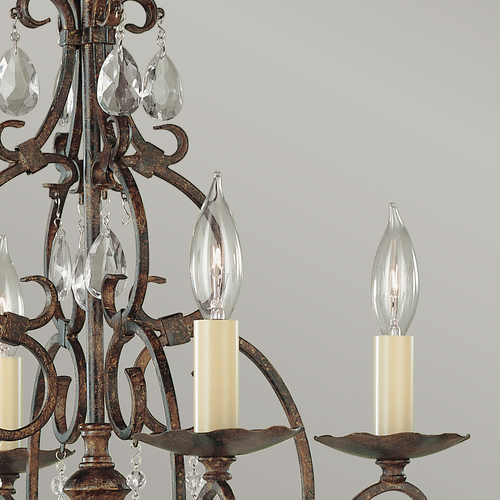
Yes, with a simple shape: a plain drum, a globe or a slim linear frame in oatmeal linen reads contemporary, while pleats and candle arms lean traditional.
Does a beige shade make the light warmer?
Slightly. If you prefer a cleaner white, use a 3000 K bulb rather than 2700 K, or choose a thinner fabric.
For more shapes and finishes, browse chandeliers.