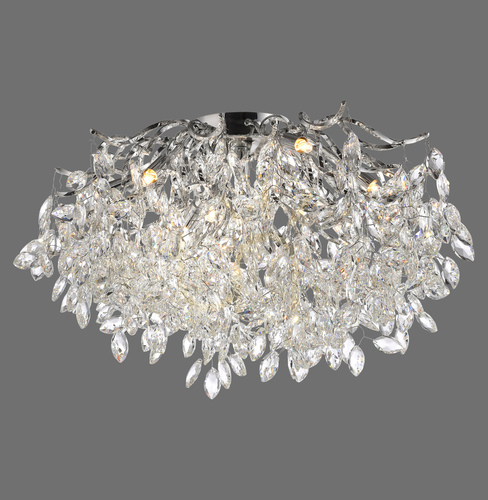
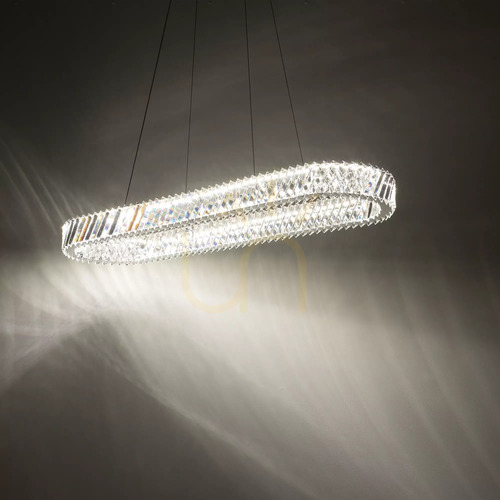
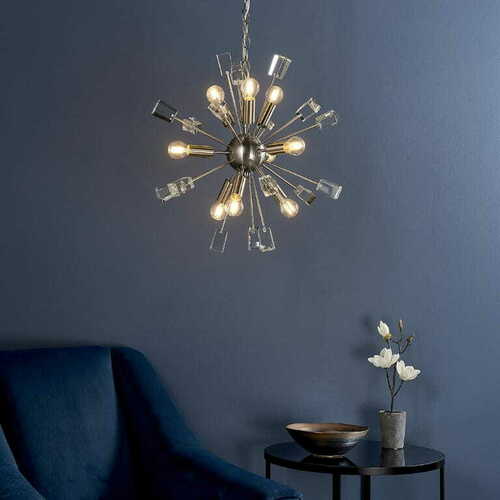
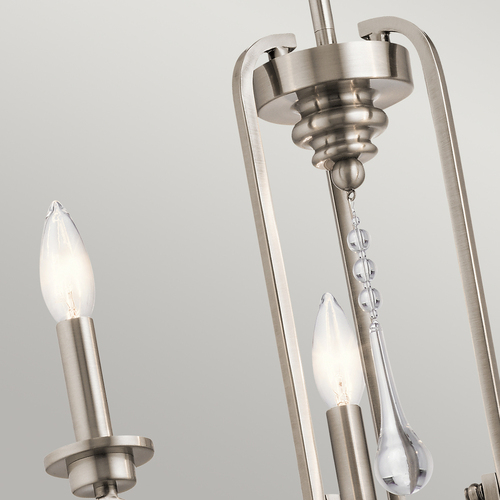
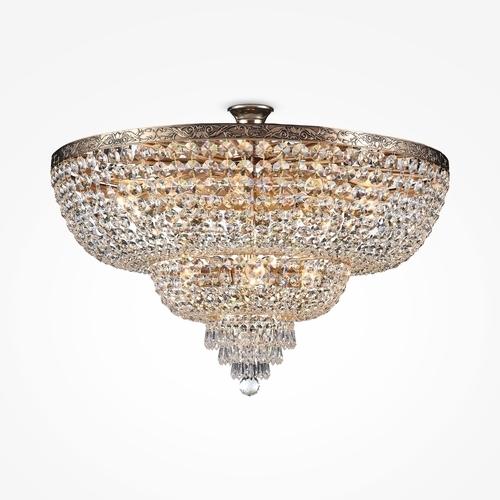
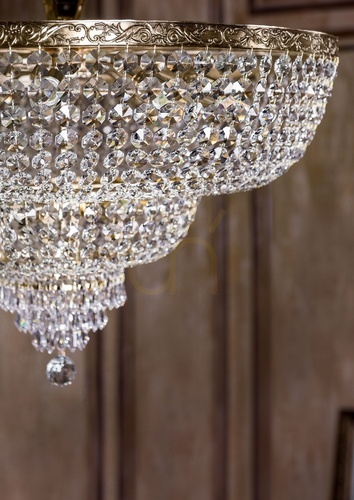
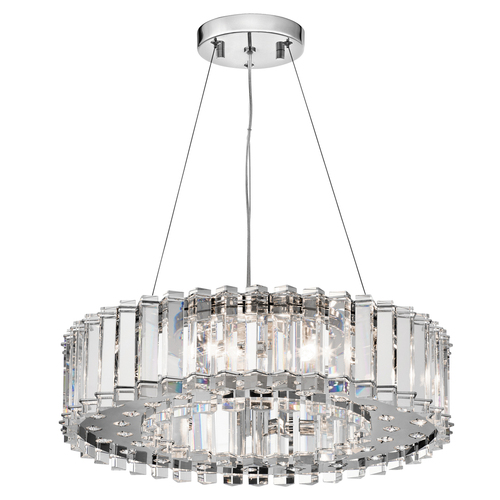
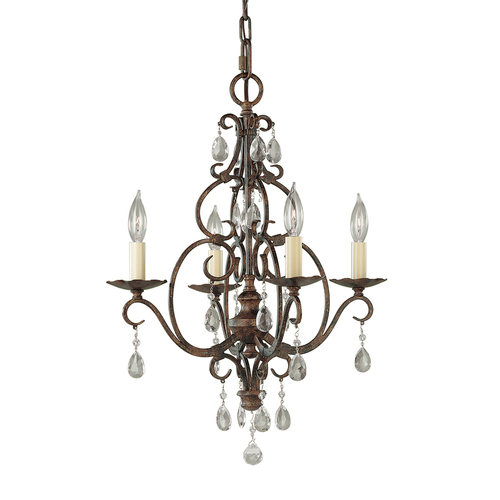
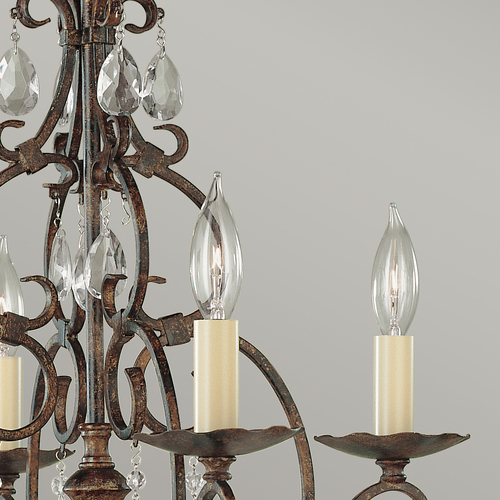
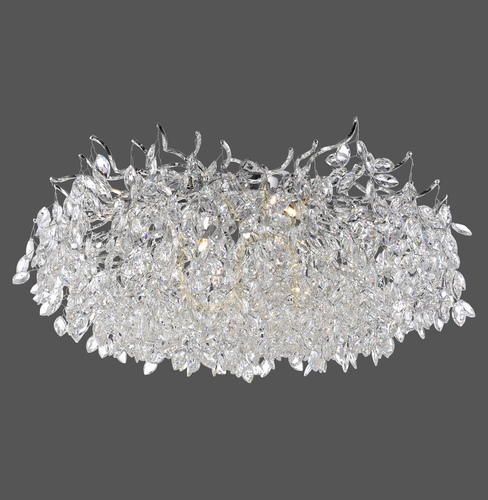
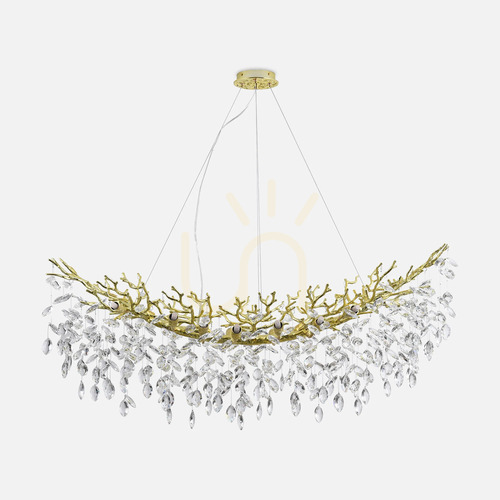
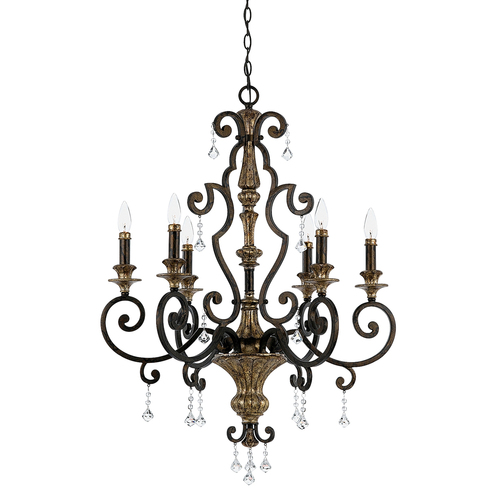
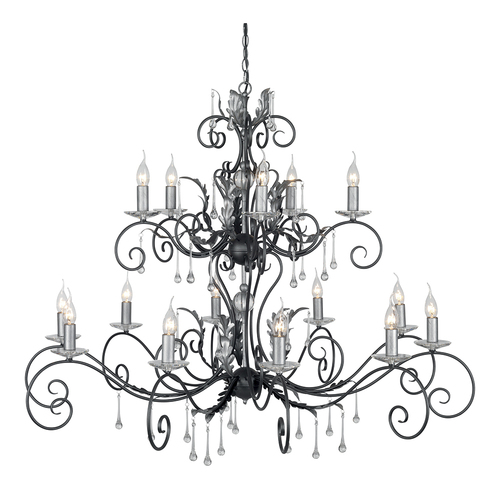
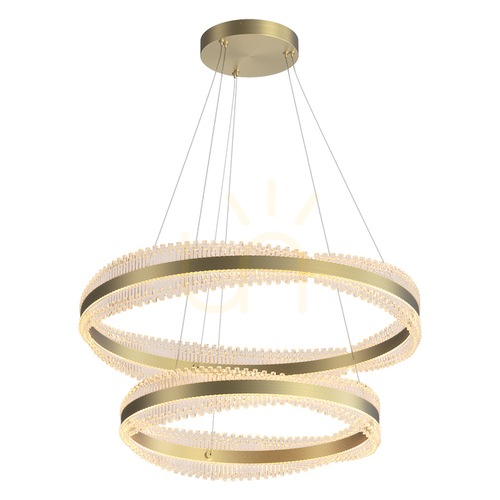
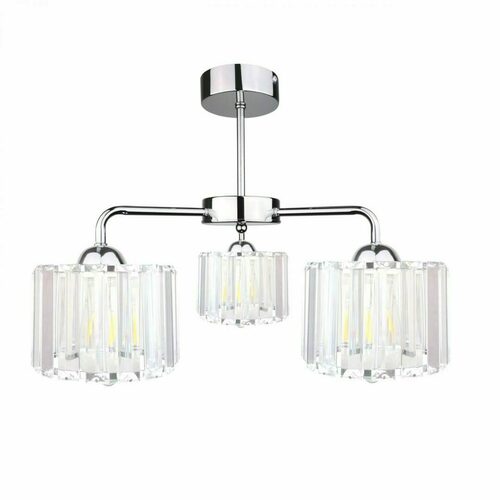
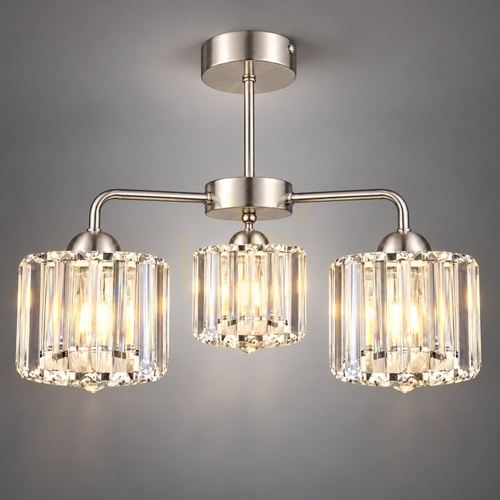
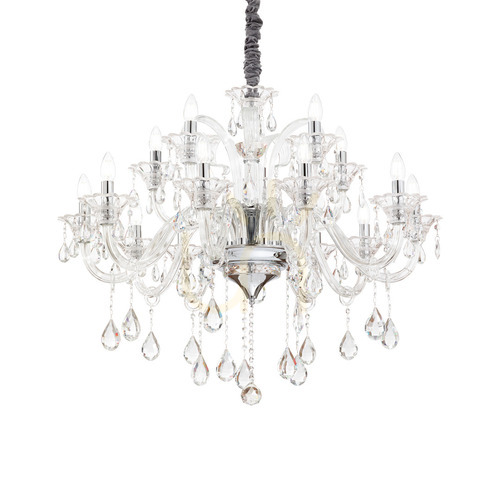
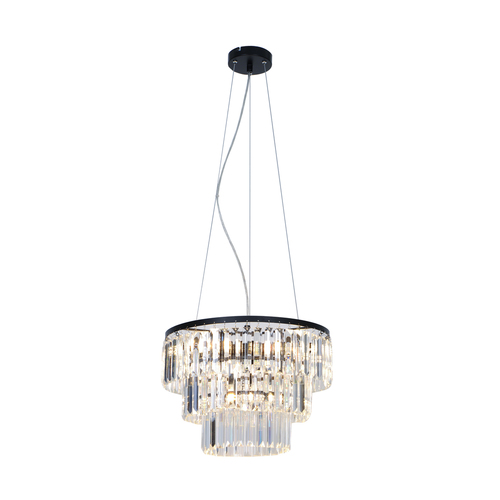
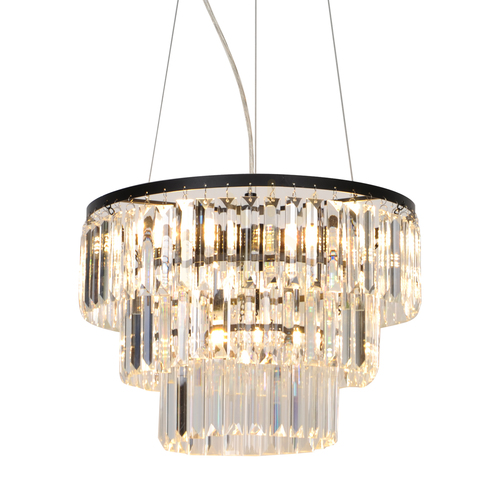
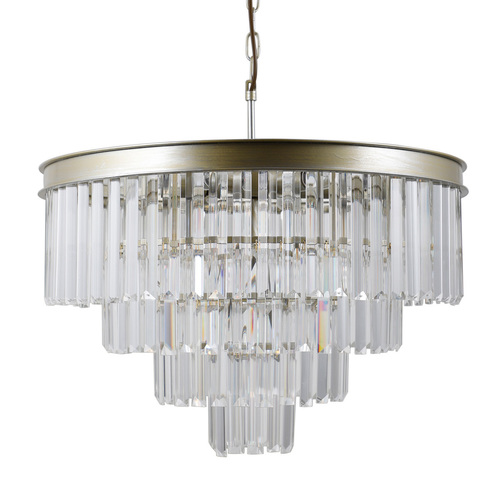
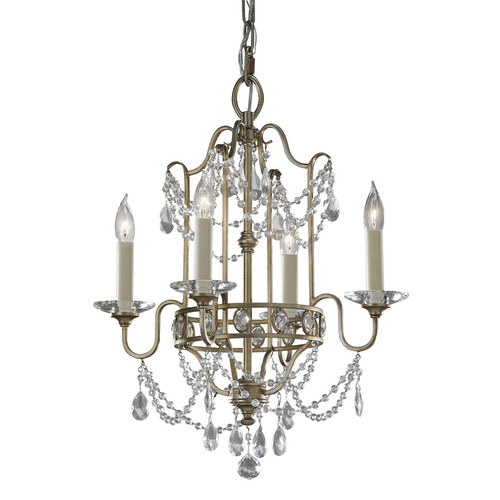
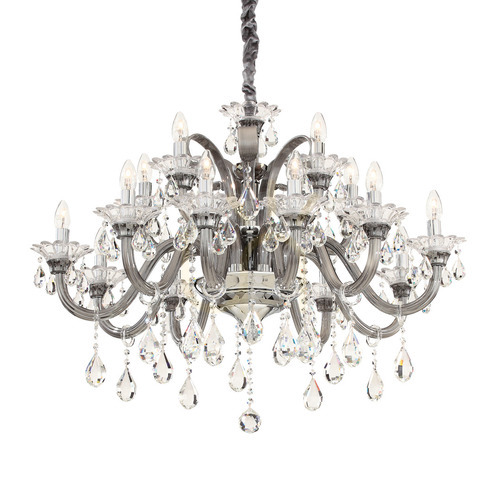
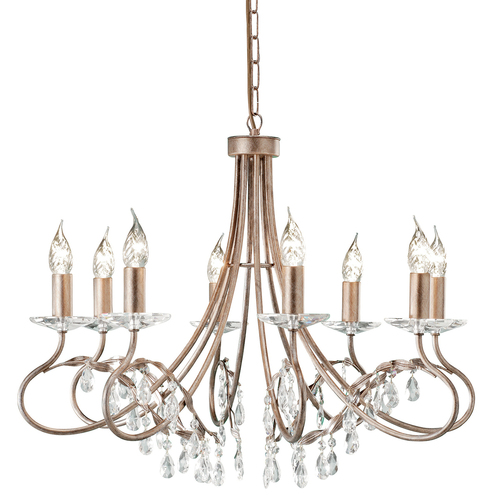
A crystal chandelier is the one luminaire in the house that is judged with the lights off as well as on. Cut crystal has a higher refractive index than ordinary glass, so every facet splits the beam and throws it back across the ceiling. That is the whole point of the thing, and it is also why the choices below - the cut, the drop, the bulb - matter more here than on any other ceiling light.
Why cut crystal behaves differently from glass
Light entering a faceted pendant bends, bounces off the back faces and leaves at a different angle. The sharper and more precisely cut the facet, the more of that light comes back as a defined point rather than a soft glow. A moulded acrylic drop looks similar in a photograph and does almost none of it. If a chandelier is meant to be seen from a sofa four metres away, the cut is what carries.
K9, lead crystal and pressed glass
K9 is optical-grade borosilicate glass, machine cut, clear and consistent, and it stays clear because there is no lead in it to cloud. Lead crystal contains around 24% lead oxide, which raises the refractive index further and gives the warm rainbow flare people associate with older pieces. It is also noticeably heavier. Pressed and moulded glass sits below both - the facets are rounded rather than sharp, and the sparkle is softer. None of these is wrong; they are three different price and weight brackets.
Getting the diameter right
In a room, a chandelier reads about one size larger than its measurement suggests, because the crystal catches the eye at the edges. As a starting point, add the room's length and width in metres and treat that number as a diameter in centimetres - a 4 x 5 m sitting room lands near 90 cm, which is a large fitting. Over a table, work from the table instead: roughly half to two thirds of the table's width, hung so the lowest crystal sits 70-85 cm above the tabletop. In a walkway, nothing should hang below 210 cm.
The bulb decides how much sparkle you get
Most multi-arm crystal fittings take E14, some take G9 capsules, and a few larger frames take E27. A clear candle lamp with a visible filament gives crystal a small, bright source to work with and produces defined refraction. A frosted or opal lamp spreads the source out and the pendants go flat. Warm white around 2700 K suits clear crystal; higher colour temperatures make it read cold and slightly blue. If you want to dim, check that the lamps are dimmable and that the total load clears your dimmer's minimum - eight LED candles at 4 W each is only 32 W, and many older dimmers will flicker below 40 W.
Weight, fixing and hanging height
A mid-size crystal chandelier weighs 5-15 kg. That is fine on a concrete ceiling with a proper anchor, and not fine on a plasterboard plug - fix into the joist or use a cavity anchor rated well above the load. Chain suspension can normally be shortened by removing links; rod suspension comes in fixed sections, so check the supplied lengths against your ceiling before ordering.
Cleaning without taking it down
Switch off, let the lamps cool, and photograph the pendant arrangement before removing anything - rehanging from memory is how a chandelier ends up looking lopsided. Dust with a microfibre glove between deeper cleans. For the deeper clean, a cloth barely damp with water and a drop of washing-up liquid on each drop, dried immediately, avoids the limescale spotting that leaves crystal looking permanently dull. Never spray liquid at the fitting while it is on the ceiling.
Common questions
How do I tell real crystal from acrylic?
Crystal is cold to the touch, heavier than it looks, and rings briefly when tapped. Acrylic warms in the hand within seconds and sounds dead.
Can a crystal chandelier work with a 240 cm ceiling?
Yes, if you choose a flush or short-drop frame under about 40 cm tall and keep it out of walkways. The wide, shallow designs suit low ceilings better than tiered ones.
Do I need an electrician?
For anything over a few kilograms, or where the existing ceiling hook is unknown, yes - the fixing carries the load, not the wiring.
What about a two-storey stairwell?
That is a different calculation, based on the void rather than the room. See our staircase chandeliers.