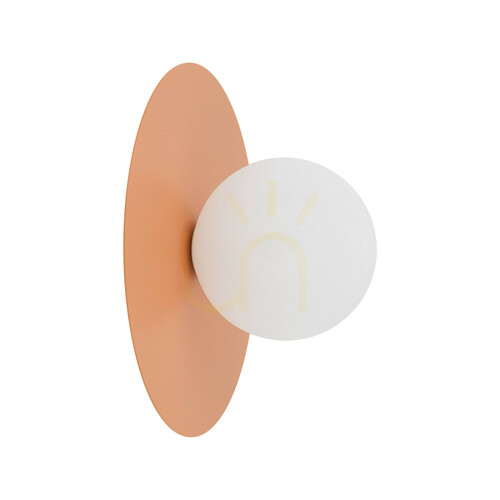
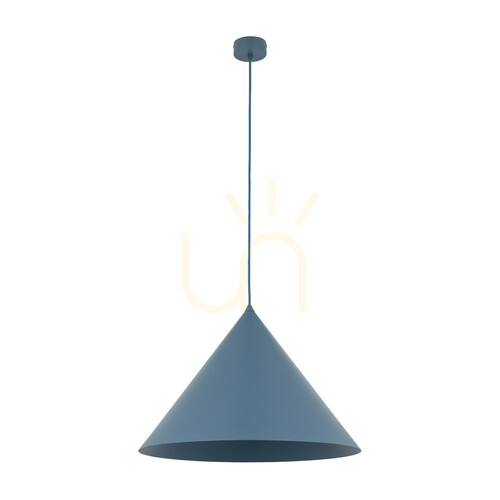
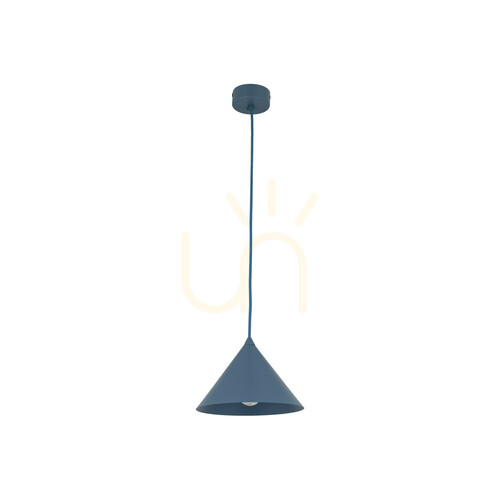
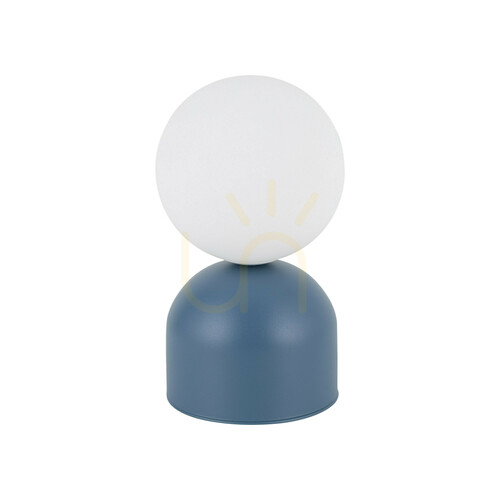
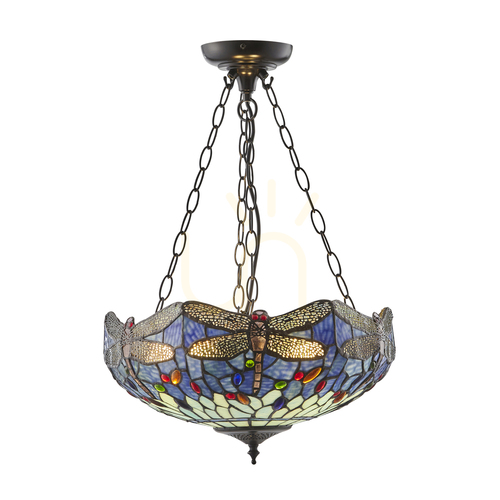
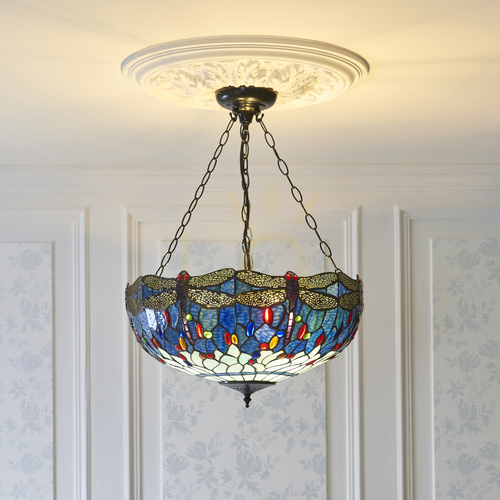
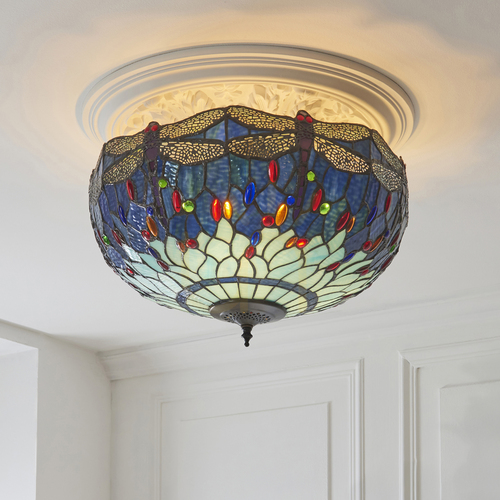
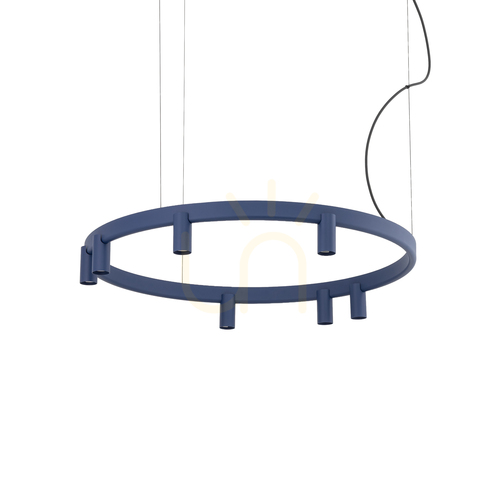
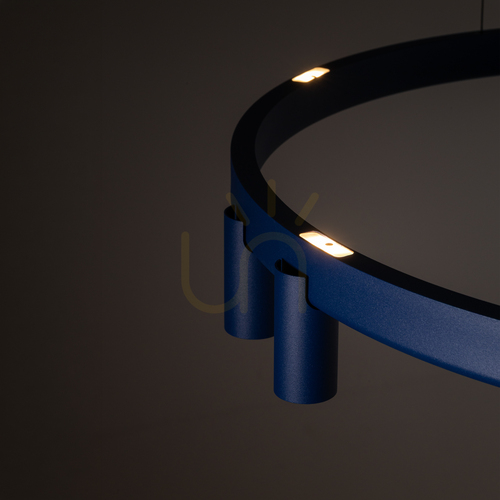
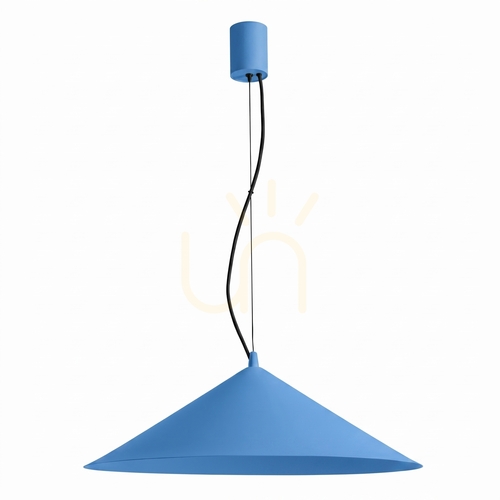
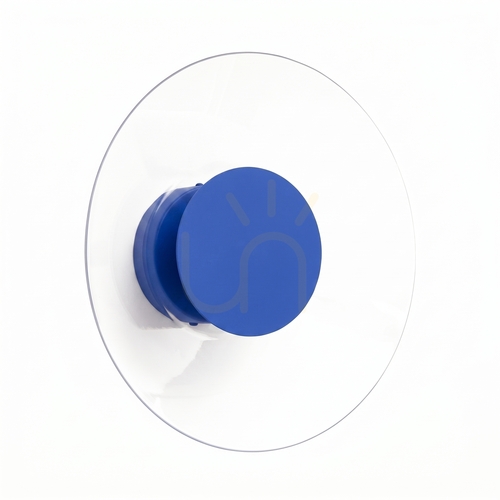
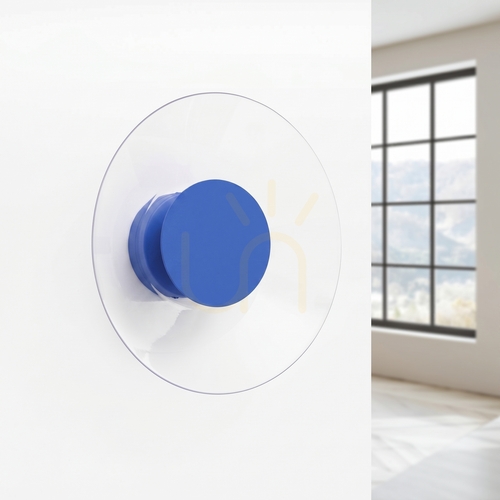
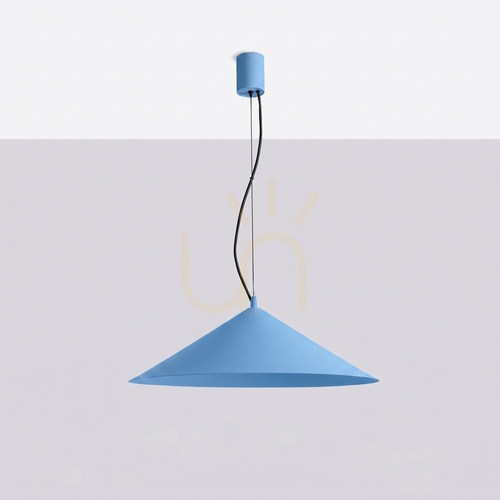
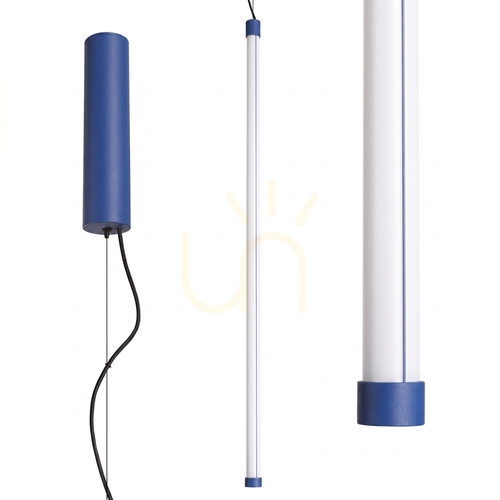
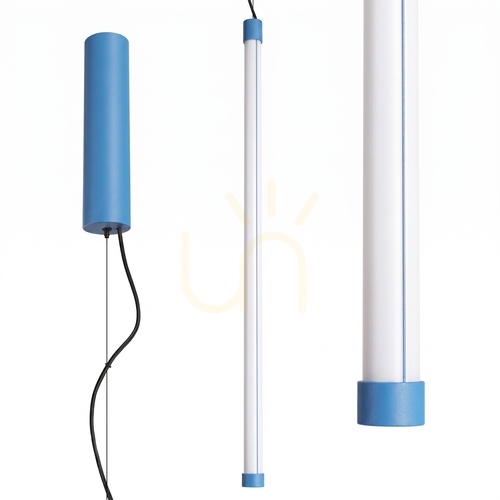
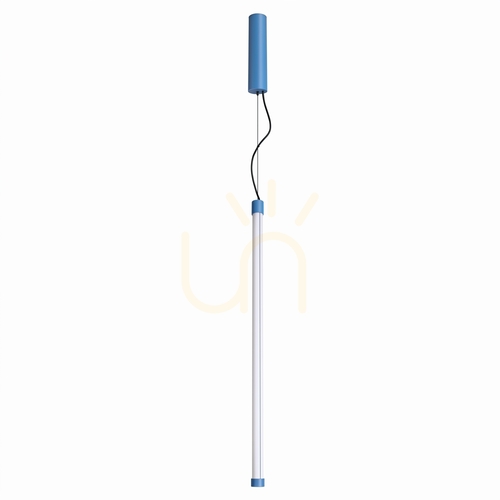
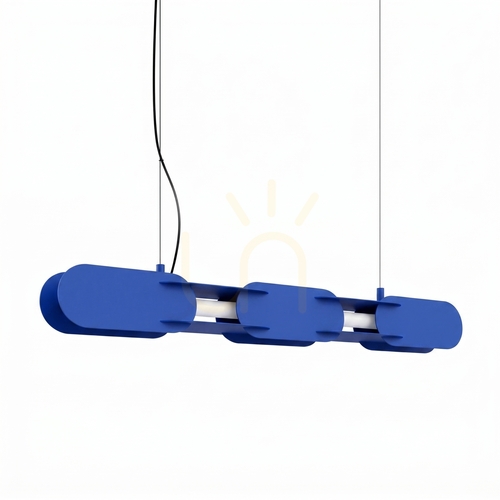
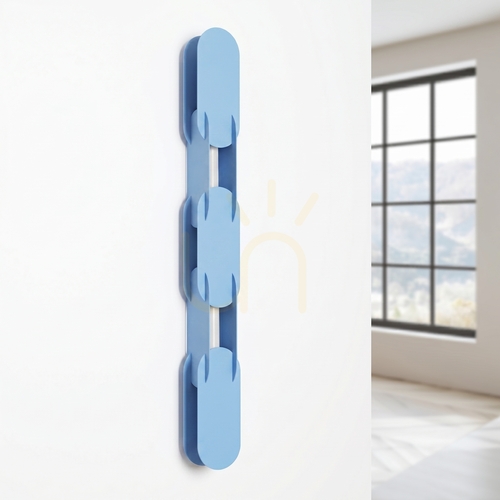
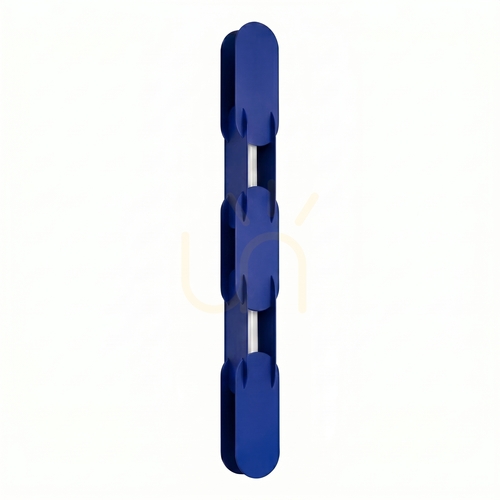
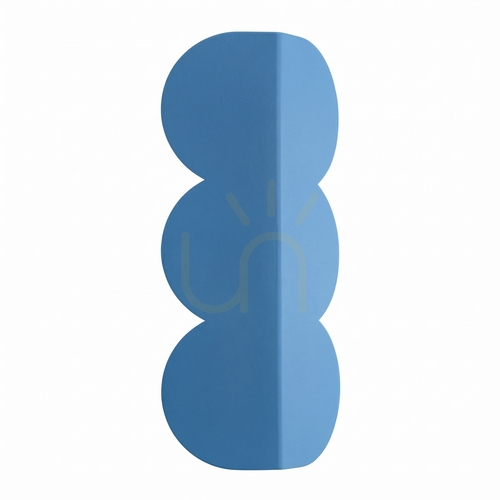
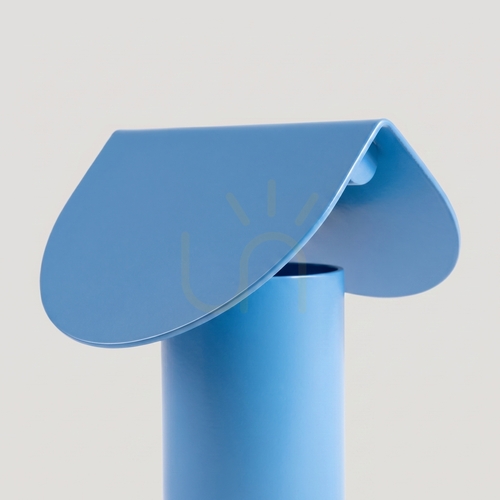
The best blue lights for a home put the colour on the lamp, not in the light: a navy base, a duck-egg ceramic body or a cobalt metal pendant, with an ordinary warm bulb doing the lighting. That distinction matters more with blue than with any other colour, because blue and warm lamplight sit on opposite sides of the colour wheel. Get it right and the lamp reads as a calm, confident accent; get it wrong and the room glows a murky grey-green by evening.
Blue lamp or blue light?
‘Blue lights’ can mean anything from emergency-vehicle beacons to the blue light given off by screens. A decorative blue lamp is a different thing from both. What decides how it behaves is the material carrying the colour.
Opaque materials – powder-coated metal, glazed ceramic, painted wood – show their blue on the outside only. The light that falls below is whatever the bulb produces, so a navy pendant over a dining table still lets food look like food. Translucent materials – coloured glass, fabric, acrylic – let the light pass through the colour. It comes out cooler and dimmer, and colours in the room look flatter. That is lovely in a window lamp or a moody corner, and frustrating over a desk.
It also explains why so many blue table lamps pair a blue base with a white or ivory shade. Warm light through a blue fabric shade tends to look muddy, so designers keep the colour low and the light clean.
Choosing a shade of blue
| Shade |
How it behaves |
Works well in |
Pair it with |
| Navy, midnight, inky blue |
reads as a deep neutral |
living rooms, studies, bedrooms |
brass, walnut, crisp white |
| Cobalt, sapphire |
the strongest accent; one per room is plenty |
pale living rooms, dining areas |
white, grey, black metal |
| Duck egg, powder blue |
soft, close to a neutral |
bedrooms, nurseries, country kitchens |
cream, oak, linen, sage |
| Teal, petrol |
blue with green in it; the most forgiving |
bathrooms, boho and coastal rooms |
rattan, terracotta, gold |
| Blue and white |
pattern rather than block colour |
traditional and cottage interiors |
dark wood, chintz, plain linen shades |
Teal is the safe bet if you are unsure: it looks blue by day and drifts greener under warm lamplight, so it rarely disappoints. Delft-style blue-and-white ceramic bases and ginger-jar shapes behave like a pattern, not a colour block, and sit happily in rooms with plenty of other prints. For contrast, burnt orange and cognac are the natural partners, since they are blue's complementary colours.
Room by room
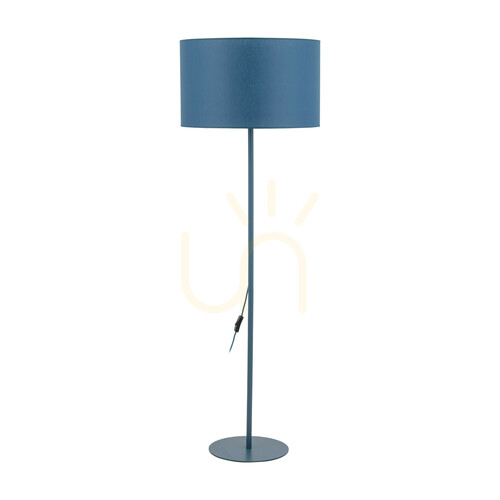
Living room. A blue base against a pale wall is the classic move. Navy looks its best in pairs – matching lamps on a console or either side of the sofa. A blue floor lamp beside an armchair works as a reading light as long as the shade itself is pale inside.
Bedroom. Here accurate colour matters less, so you can be braver: a velvet shade in deep blue, a navy ceiling fitting, matching bedside lamps. Keep the bulbs warm and dimmable.
Kitchen and dining. Keep the blue on the outside of the shade. Bluish light over a worktop makes bread, meat and tomatoes look unappetising. Hang pendants with the lower edge roughly 65–80 cm above the table.
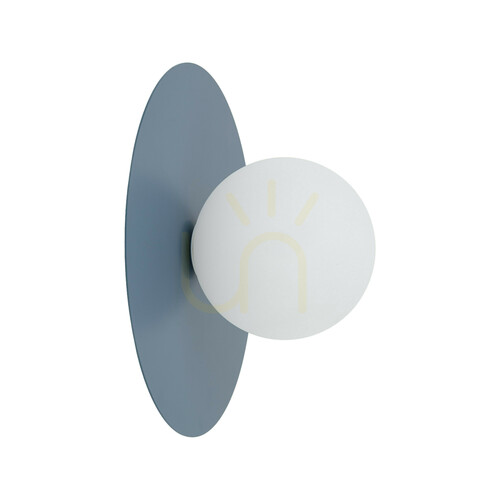
Children's rooms. Clear, bright blue suits them well, ideally on a wall light or a sturdy table lamp out of reach of small hands.
Bathrooms. Teal and sea blue suit tiles and chrome, but fittings near the bath or shower must carry a suitable IP rating – at least IPX4 in zones 1 and 2 under BS 7671, which in practice usually means IP44 – and the wiring is a job for a registered electrician.
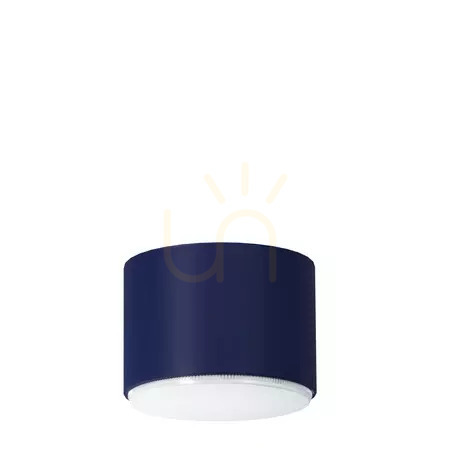
With a standard 2.4 m ceiling, a large dark pendant can make a room feel lower; a flush or semi-flush fitting in navy with an opal diffuser keeps the height. Period homes with taller ceilings can carry a generous blue glass pendant or a statement chandelier.
Bulbs that flatter blue
Warm white at 2700–3000 K is right for living rooms and bedrooms when the blue is on an opaque body. Behind blue glass, neutral white around 4000 K gives a cleaner, brighter glow than a very warm bulb – fine for a hallway or kitchen, a bit cool for bedtime. A CRI of 90 or more keeps the finish looking as it did in daylight. Most decorative lamps take E27 or E14 bulbs, smaller wall lights G9 and spotlights GU10; always stay within the maximum wattage on the label.
Pitfalls and care
Blues photograph unreliably, so trust the shade name – navy, cobalt, duck egg – more than a product photo. Buy multiple lamps for one room at the same time, as dye and glaze batches can vary. Gloss glazes throw cold reflections onto ceilings; matt finishes are calmer. Pale blue fabric fades in strong sun, so avoid a south-facing sill for a cotton shade. Dust metal with a dry microfibre cloth, wash glass in lukewarm soapy water once it has cooled, and brush velvet gently along the pile.
Frequently asked questions
What is blue light, and does a blue lamp give it off?
Blue light is the short-wavelength part of the visible spectrum, plentiful in daylight, screens and cool-white LEDs; in the evening it can delay sleep. A blue lamp with a warm white bulb behind an opaque shade adds very little. A translucent blue shade with a cool bulb adds more, so keep that combination out of the bedroom.
Is a blue lamp a good bedside lamp?
Yes, if the blue is in the base or the outside of the shade and the bulb is warm and dimmable. Choose a pale-lined shade so you can read without straining.
Light blue lamp or navy – which is easier to style?
Navy behaves like a neutral and suits most schemes, especially with brass or wood. Light blue is gentler but needs other soft tones around it, such as cream, oak or sage.
How do I style a vintage blue lamp?
Let it stand alone on a sideboard or desk, give it a plain shade, and repeat its blue once nearby – a vase, a print, a cushion – rather than surrounding it with more blue.
Can a blue floor lamp be the main light in a room?
Rarely. A floor lamp gives pooled, local light. Use it with a ceiling fitting or two more lamps, and choose an uplighter or a pale shade if you want it to brighten the whole room.
Why is a blue lamp linked with police stations?
The traditional blue lamp hung outside British police stations, which is where the phrase comes from. A blue lamp at home is purely decorative.
Where to go next
For other fittings, from ceiling lights to floor lamps, see the main indoor lighting category. If it is the light itself you want to turn blue, read more about colour-changing RGB LED lights.