A velvet lampshade gives a table lamp, floor lamp or ceiling pendant the deep colour and soft sheen of a velvet armchair, and it changes where the light goes. The dense pile lets very little light through the sides, so a velvet shade throws a pool of light down onto the table and a wash up onto the ceiling, while the fabric itself only glows.
That makes it a different buy from a linen or paper shade. Before you choose a colour, it is worth knowing how the lining, the size and the fitting decide whether the lamp ends up cosy, bright or simply too dim.
What sits behind the velvet
Most velvet shades are made from fabric laminated onto a stiff backing, or stretched over a frame with a separate lining. The inside matters as much as the outside:
-
White lining or white laminate bounces the most light back out, so the lamp is noticeably brighter with the same bulb.
-
Gold or copper lining warms the light and pushes it downwards – the classic glowing circle on a side table.
-
Silver lining reflects a cooler, crisper light than gold.
-
Clear laminate lets the texture of the velvet show when the lamp is on, especially with crushed or cut velvet.
The fibre makes a difference too. Polyester velvet holds its colour, resists crushing and is easy to brush. Cotton velvet looks flatter and richer but marks and fades more readily. Dark shades such as bottle green, navy, aubergine or black read almost as solid at night; blush, sage, ochre and cream let a gentle glow through.
Choosing the right size and fitting
Shades are often bought on their own in the UK, so check the fitting before anything else. Ceiling pendant shades usually sit on a standard lampholder ring; many are duplex, meaning they can go on a lamp base or hang from the ceiling. Table and floor lamps take a ring that fits a B22 bayonet or E27 holder, while small candle shades and some bedside lamps use E14 or a clip-on fitting.
| Where |
Typical shade |
Bulb (LED) |
Watch out for |
| Bedside lamp |
20–30 cm diameter |
250–470 lm, 2700 K |
lower edge roughly at eye level when sitting up in bed |
| Living room table lamp |
30–40 cm drum or empire |
470–806 lm, 2700–3000 K |
choose a white lining if you read by it |
| Floor lamp |
40–50 cm drum |
806–1521 lm |
shade deep enough to hide the bulb from the sofa |
| Ceiling pendant |
35–60 cm, larger in high rooms |
806–1521 lm |
a diffuser underneath stops glare when you look up |
| Over a dining table |
35–50 cm |
806–1521 lm, dimmable |
bottom edge usually 60–80 cm above the tabletop |
For a table lamp, a handy rule of thumb is a shade diameter close to the height of the base, deep enough to cover the lampholder. Too small and the base dominates; too big and the lamp looks top-heavy.
Fringes, tassels and vintage shades
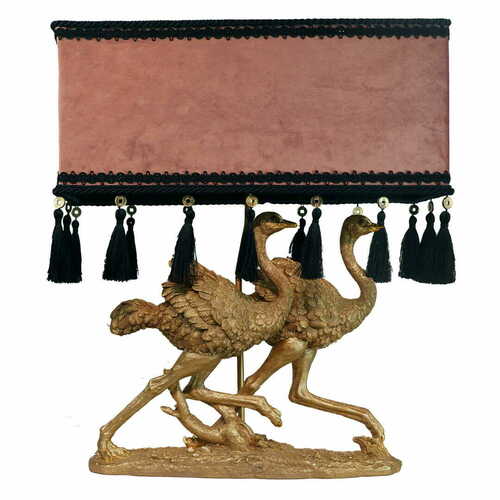
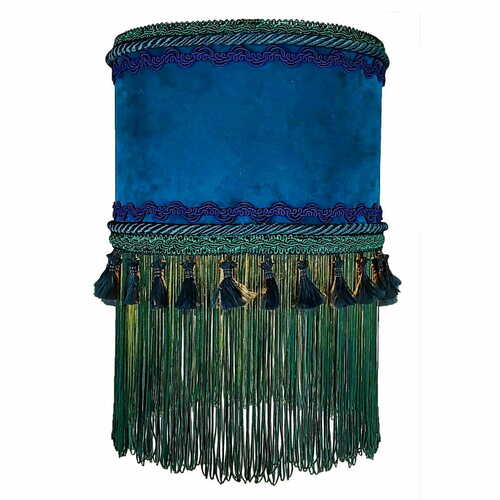
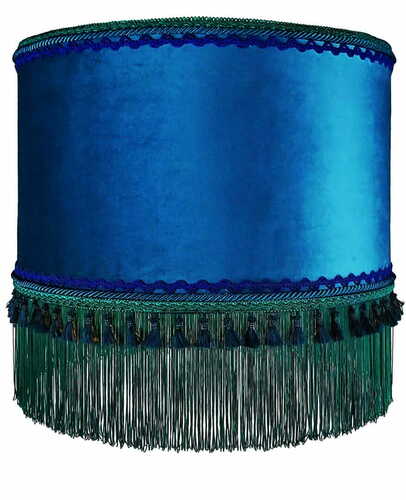
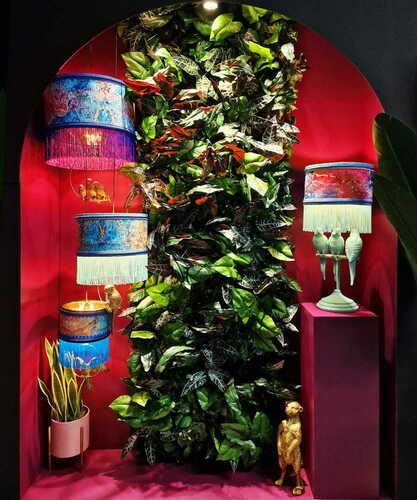
Fringed velvet shades are a style of their own: a drum or scalloped empire with a long fringe or tassels round the hem. They suit a table lamp more than a pendant, because a fringe over a dining table picks up cooking grease and dust and sways in every draught. Vintage velvet shades are often pleated or lined in silk-like satin. If you put one on a modern base, check that the ring matches and fit an LED bulb, since aged fabric, glue and lining scorch and turn brittle more easily than new ones.
Where velvet works – and where it doesn't
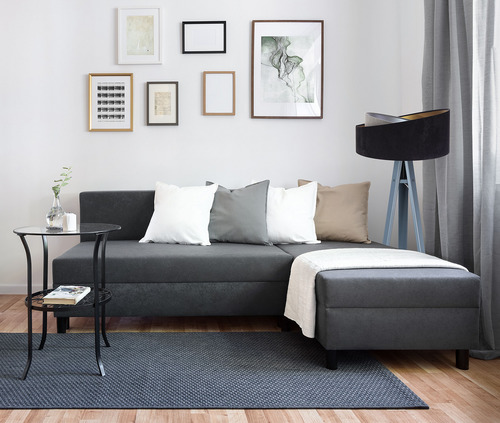
Velvet is mood lighting. It looks at home next to a sofa, on a sideboard, in a bedroom with upholstered furniture or hung low over a dining table. Pair a dark shade with overhead light for tasks; on its own it will leave corners in shadow.
Hanging a new shade on an existing pendant is a simple DIY job. Moving the ceiling rose, adding a light point or rewiring a vintage base is different: anything that touches the 230 V wiring is work for a qualified electrician under BS 7671. Bathrooms are ruled out anyway, since an open fabric shade is made for dry rooms, and so is the space above a hob, where the pile soaks up grease within weeks. Bay windows are the quieter risk: strong sun through the glass bleaches a jewel-coloured shade unevenly, the side facing out going first.
Looking after a velvet shade
A ceiling shade is far easier to clean on a table than from a stepladder. Switch the light off, let the bulb cool and take it out, then unscrew the plastic shade ring on the lampholder and lift the shade off – the flex and the ceiling rose stay where they are. B22 and E27 pendant holders both work this way. A duplex shade can then be stood on its ring, the right way up for a lamp base, and brushed at a comfortable height.
Fringes and tassels need their own routine. Hold the trim at the top and comb it through with your fingers or a wide-toothed comb, working down to the tips so the strands don't knot. For a deeper dust, cover the vacuum nozzle with a piece of old tights so loose threads aren't sucked in. Keep water away from tassels: the twist loosens and darker dyes can bleed into a pale shade. Snip a stray thread rather than pulling it.
When the lamp goes back up, check the bulb. Fit an LED that stays within the maximum wattage on the label and sits fully inside the shade – on a shallow pendant a long bulb can poke below the rim and glare. A shade that has been stored flat or squashed in a box will show pressed patches in the pile; steam held a few centimetres away usually lifts them.
Frequently asked questions
What is the best way to deep clean a velvet lampshade?
Start dry: a soft brush along the pile, or a vacuum with an upholstery brush on low. Then dab marks with a cloth barely damp with mild soapy water and let it air-dry. Never soak the shade – the glue or stitching can give way, and water leaves rings in the pile.
Can you clean velvet like a silk lampshade?
Treat it just as gently. Both are delicate fabrics, often glued to a backing or stitched to a lined frame, so dry brushing comes first and moisture only ever goes on as a light dab.
Which velvet lampshade suits a table lamp?
Usually a drum or empire shape 30–40 cm across, with a white lining if the lamp is for reading and gold if it is mainly for atmosphere.
Is a velvet lampshade a good choice for a floor lamp?
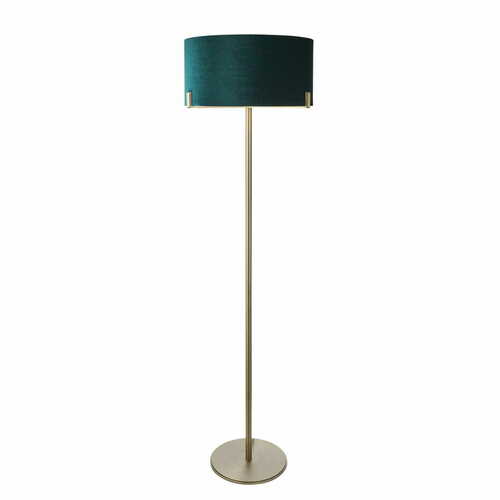
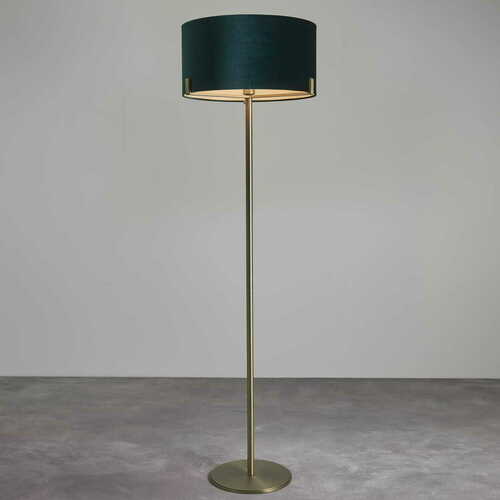
Yes, as long as it is large enough – around 40–50 cm – and deep enough to hide the bulb at sitting height. Floor lamps take a brighter bulb, so a lighter colour stops the shade looking like a dark block.
Do velvet lampshades let much light through?
Very little through the sides, especially in dark colours. Most of the light comes from the top and bottom openings, which is why velvet suits mood or accent lighting rather than lighting a whole room.
How do you refresh an old velvet lampshade?
Brush it thoroughly, steam out any flattened patches and check the inside. If the lining is stained or the glue is lifting at the seams, a lampshade maker can reline or re-cover it on the same frame, which is often worth it for a good vintage shape.
More lighting for every room in the house: indoor lights. If you would rather have a thinner fabric that glows through the sides, have a look at fabric shade lamps.