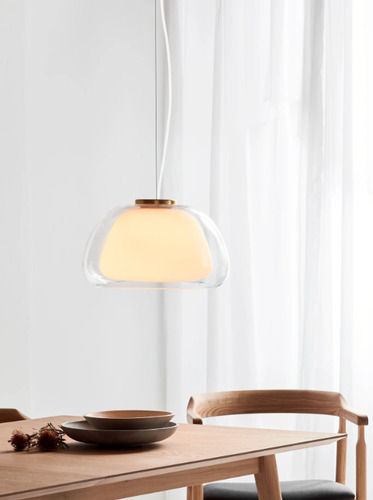
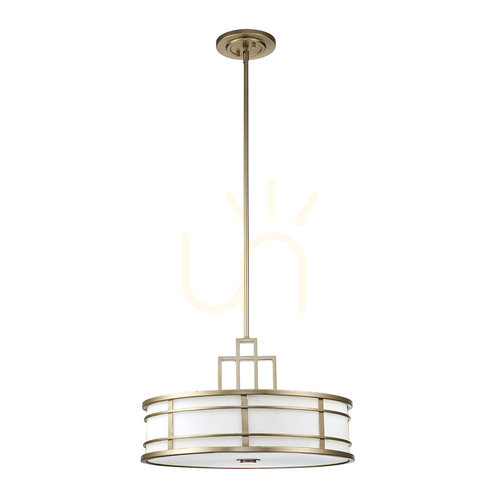
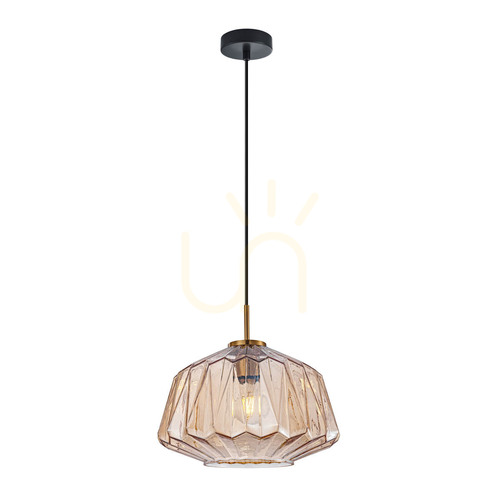
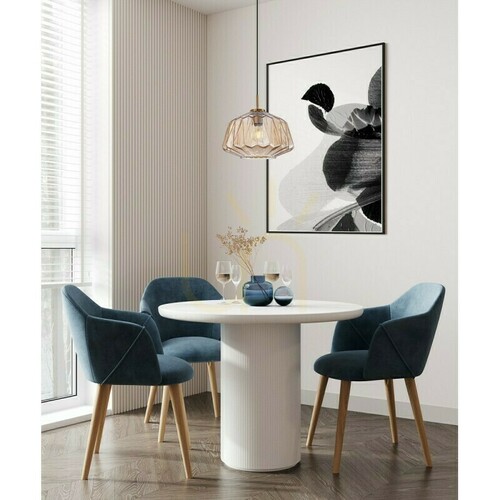
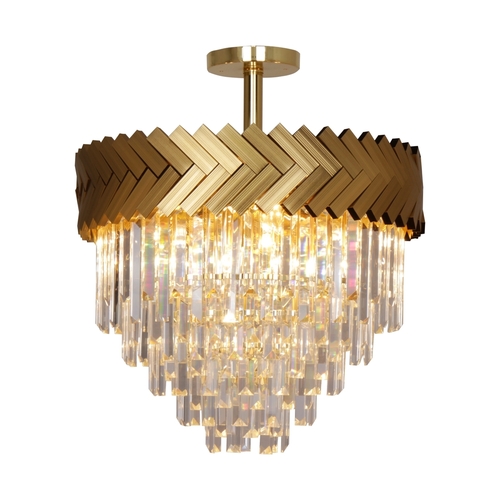
Art Deco pendant lights are a single shade on a stem, a chain or a flex, and the interwar decades produced a small, very recognisable set of them: the stepped cone in opal glass with a brass collar; the tiered disc, each ring narrower than the one below; the fluted globe in a chromed ring; the wide alabaster or opal bowl hung on three chains. Four shapes, and the whole difference between them is what they do with the bulb — which matters more in a pendant than in any other fitting, because a pendant hangs at head height and points its source straight at the people sitting under it.
The four period shades, and what each is like to sit under
The stepped or tiered cone
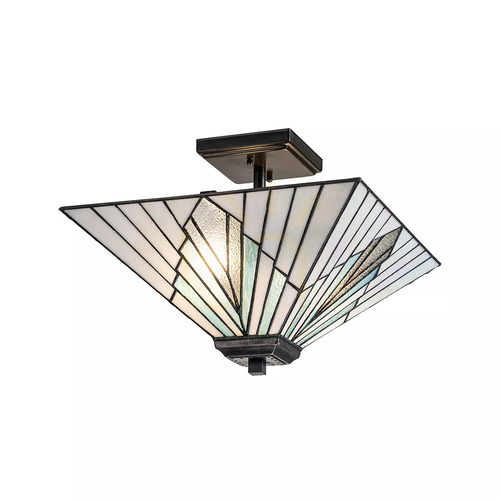
A shade whose profile steps in as it rises, in opal or frosted glass, usually with a metal collar at the top. It is the workhorse of the style: it throws most of its light down onto a table, it cuts the source off completely from anybody seated, and it looks like the period from across the room without any decoration at all. If you are buying one Art Deco pendant for a dining table, this is the shape to start from.
The tiered disc fitting
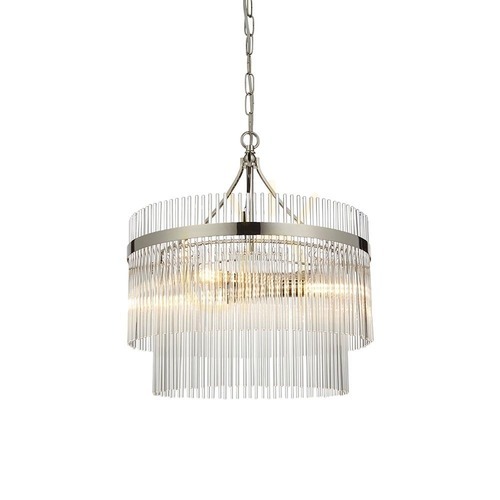
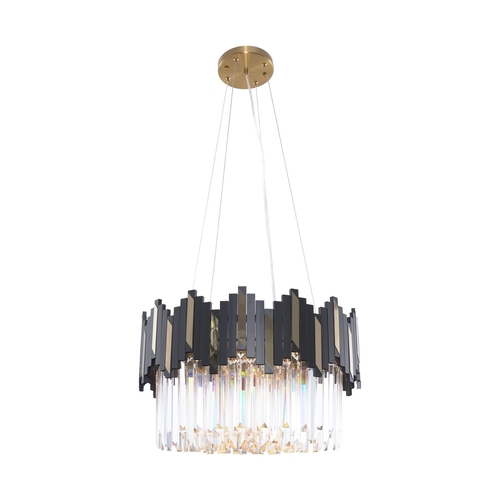
Two, three or four flat glass rings stacked on a central stem with a gap between each. Light escapes through every gap, so the fitting glows around its whole circumference and reads as a lit object rather than a shaded bulb. It gives less light straight down than a cone does, and it lights the room around it far better.
The fluted or reeded globe
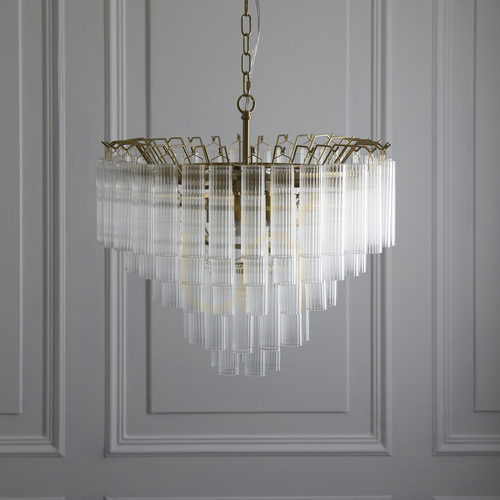
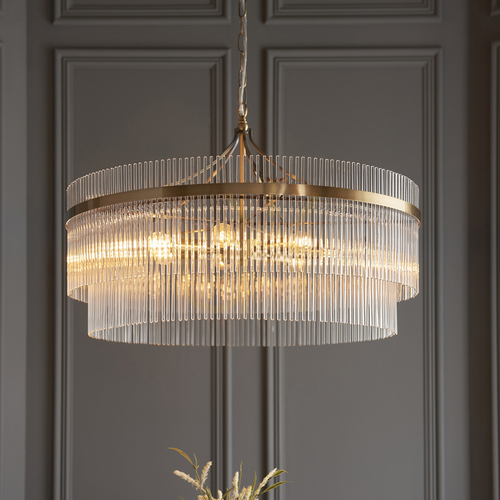
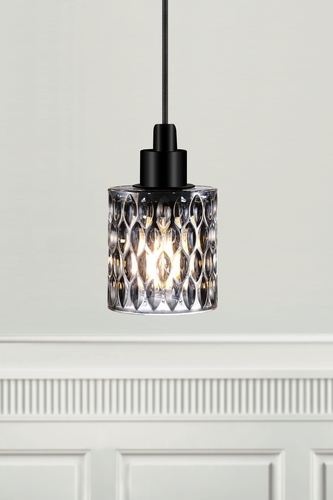
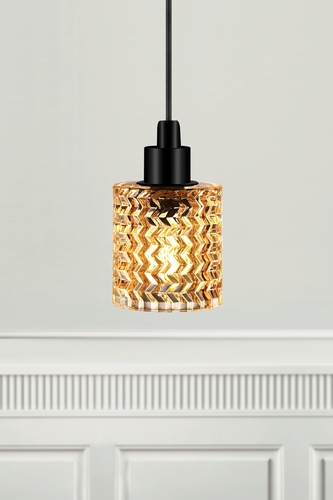
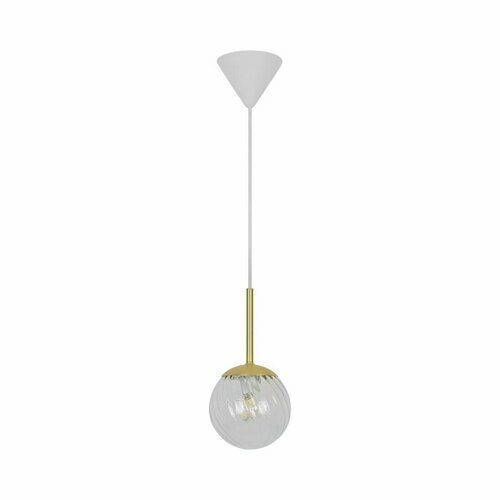
A sphere or drum of ribbed glass in a metal ring. The flutes work as small cylindrical lenses: they spread the image of the filament sideways into a series of bright vertical lines, which is where the sparkle comes from. What they do not do is dim it. Behind fluted clear glass, the bulb is a design decision — a frosted lamp or a long low-brightness filament, never a compact high-output one.
The bowl on chains
An open dish of alabaster, opal or plaster suspended on three chains, throwing nearly all its light at the ceiling. There is no glare anywhere in the room and no usable light on a table. It is atmosphere, and it needs lamps or wall brackets alongside it to make a room work.
Hanging heights
Where the bottom of the shade should finish
| Position |
Bottom of shade |
Why that number |
| Over a dining table |
70 to 90 cm above the tabletop |
Below the eye of the person sitting opposite and above the eye of somebody standing to serve. Use around 75 cm at a 2.5 m ceiling and more as the ceiling rises. |
| Over a kitchen island |
75 to 85 cm above the worktop |
Clears a tall bottle and a raised arm while keeping the light on the surface. |
| Beside a bed, replacing a table lamp |
1.3 to 1.5 m above the floor |
Shade at the eye level of somebody sitting up, and the whole bedside surface stays free. |
| Anywhere people walk |
2.1 m above the floor, minimum |
Head clearance overrides every aesthetic argument, particularly in a hallway. |
| Over a stairwell |
2.1 m above the highest tread it passes |
Measure from the step below the fitting, not from the floor at the bottom of the flight. |
Width, and how many
-
One pendant over a rectangular table: shade width roughly one third to one half of the table width. A 90 cm table takes a 35 to 45 cm shade.
-
Round table: about one third of the diameter.
-
A row of three over a long table or an island: 60 to 75 cm between centres, at least 30 cm in from each end. Small stepped cones in a row are a very period arrangement; three wide bowls in a row are a wall.
-
In the middle of a room rather than over furniture: add the room's length and width in metres and read the answer as centimetres of diameter.
Suspension, and the outlet that is in the wrong place
Chain, rod and cable are not interchangeable. Chain is the original suspension for bowls and dishes, it adjusts a link at a time, and it swings — which is fine in a dining room and a nuisance in a hallway. A rigid rod or tube holds a stepped cone steady and shortens only in fixed increments, because you shorten it by removing sections. Cable adjusts anywhere, with the surplus coiled inside the canopy or cut by an electrician, and it is the easiest to get to an exact height.
The problem specific to older apartments is that the ceiling outlet is almost never above the table. The reversible fix is a proper ceiling hook above the table with the flex or chain swagged sideways to the existing rose — it looks deliberate provided the run is taut and the hook is a real one. It needs a fitting supplied with generous cable, so check the stated length before ordering rather than after the electrician has gone.
Fixing, source and service
-
Weight. Glass shades and cast collars are heavier than they photograph. The ceiling rose is a wiring connection, not a structural anchor; anything with mass needs a fixing into a joist or a bracket spanning two.
-
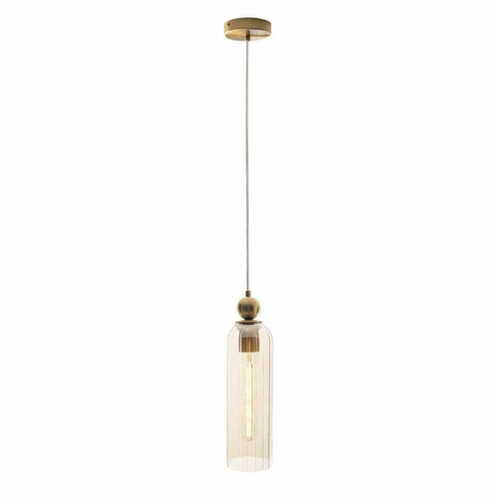
Sockets. E27 and E14 at 230 V dominate, sometimes G9 in small shades. Where the glass is clear, frosted or fluted, the bulb is visible and its shape reads as period or does not — a globe or tubular filament lamp belongs, a compact spiral does not.
-
Colour. 2700 K over a dining table, or 2200 K for an unmistakably period evening light. Above 3000 K brass goes green and food looks wrong. CRI 90 or better wherever there is brass, wood or stone under the fitting.
-
Dimming. The strongest case for a dimmer in the house is a dining pendant. Confirm the lamp is dimmable, use a trailing-edge dimmer with retrofit LEDs, and check the dimmer's minimum load if the total wattage is small.
-
Glass as a consumable. Ask whether a replacement shade is available before you hang a moulded glass shade somewhere a cupboard door can reach it.
Questions people ask
How do I tell a real period shape from a dressed-up modern one?
Look at the profile and the collar. Genuine period shapes step, flute or tier; they are symmetrical about the vertical axis and the glass meets the metal in a defined ring. A smooth smoked glass sphere on a thin brass wire is a contemporary fitting with a period palette — which is a legitimate thing to buy, but it is not the same object.
How low is too low over a table?
Below roughly 65 cm from the tabletop people start ducking to see each other across the table, and serving dishes catch the rim. Below 60 cm the fitting is simply in the way.
Can one pendant light a dining room?
It can light the table. It cannot light the room — the walls go dark and the space reads as smaller than it is. Add wall brackets or a lamp on a sideboard on a separate switch; that is how these rooms were lit originally.
Which glass for a fitting at eye level?
Opal, every time. It hides the source from all angles. Keep fluted and clear glass for fittings that hang above your sightline or that you have deliberately paired with a low-brightness lamp.
What should I compare this against?
If the type is not settled, ceiling lights art deco weighs a pendant against a flush fitting and a multi-light one for your ceiling height, and chandeliers art deco covers the tiered and multi-arm end. For a low ceiling, art deco ceiling lights is the format that costs no headroom.