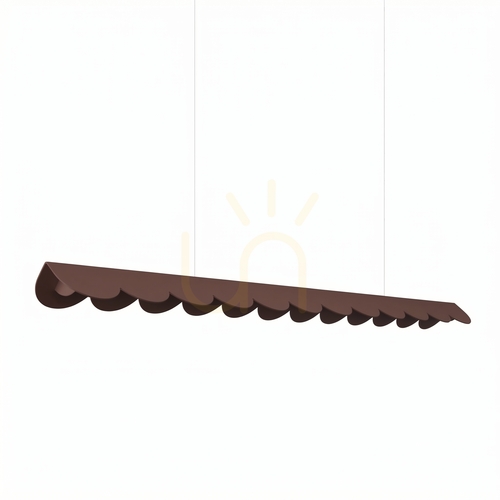
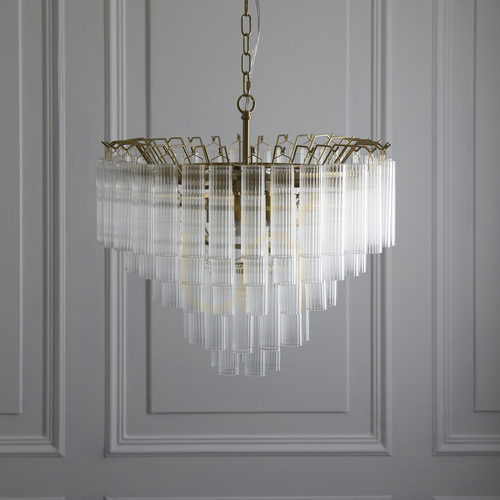
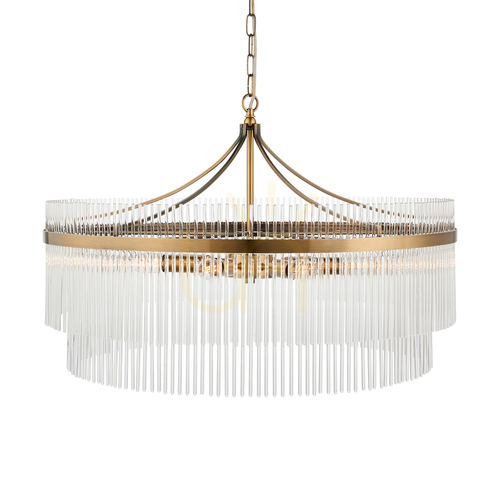
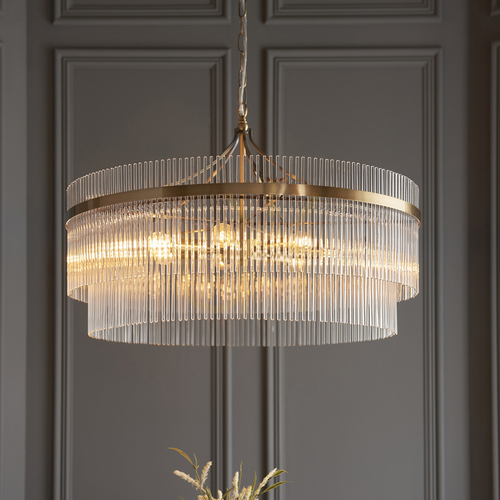
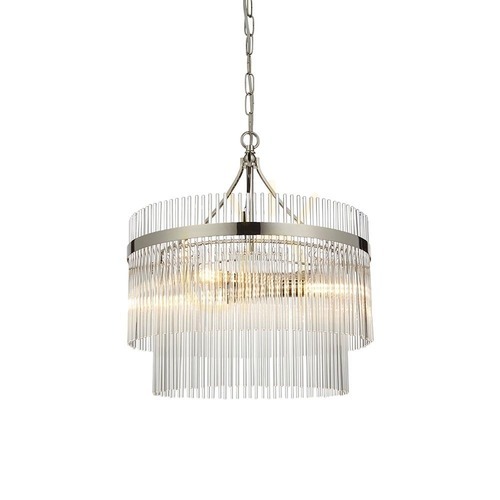
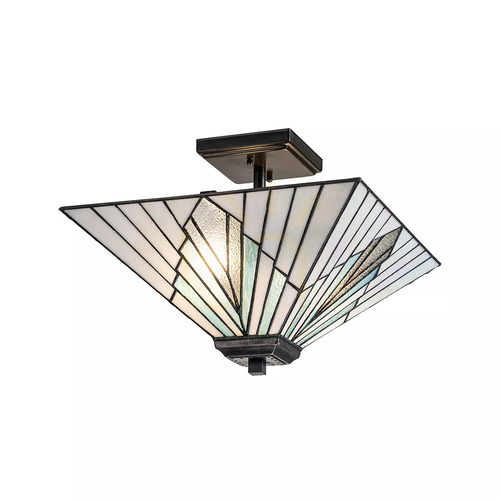
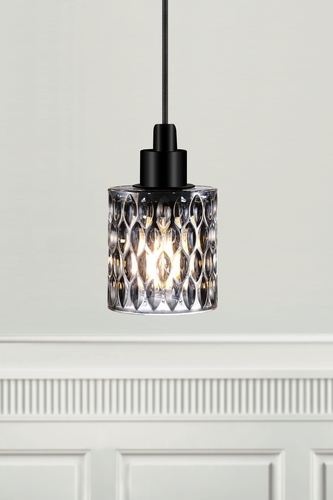
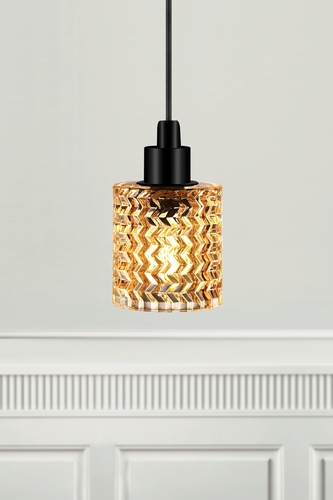
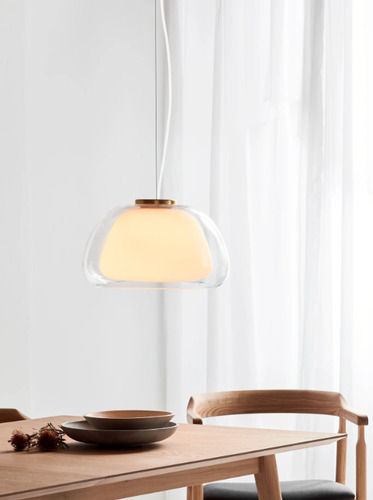
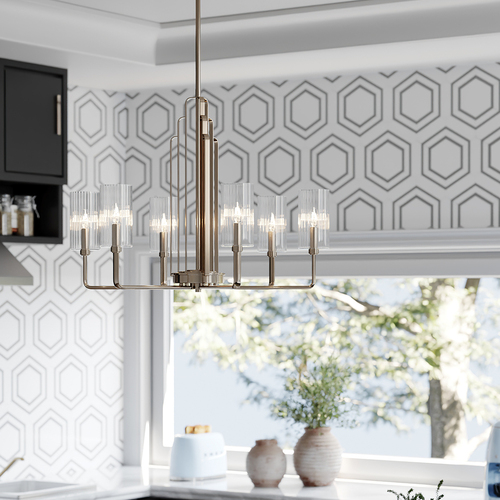
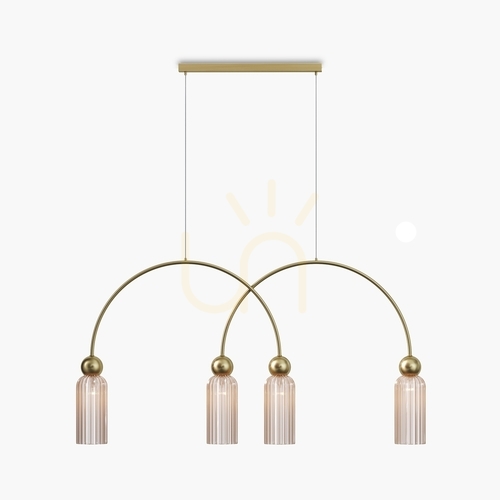
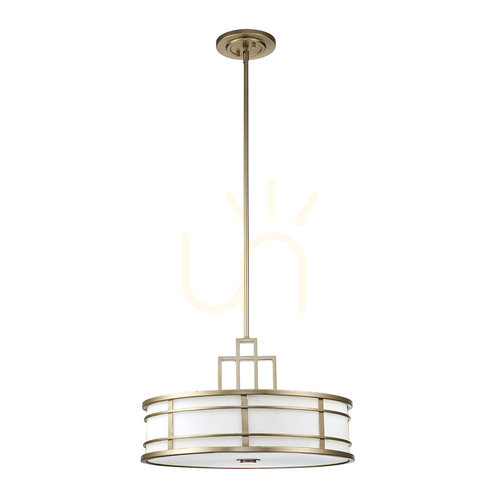
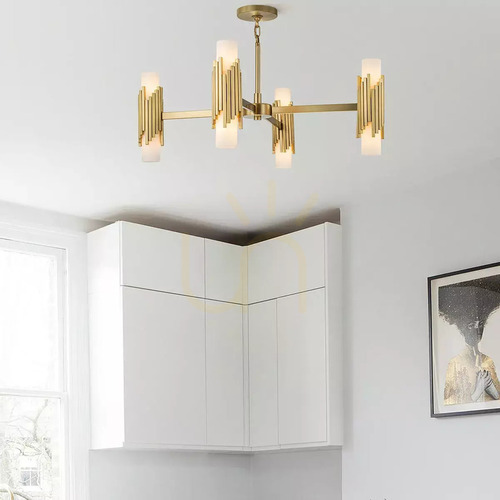
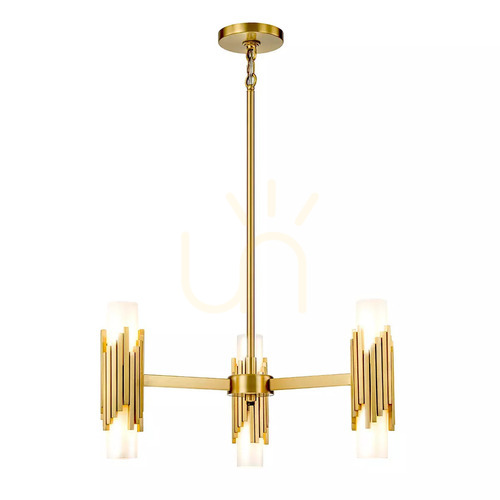
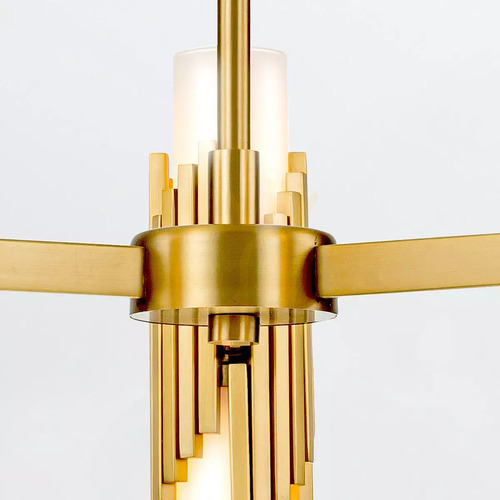
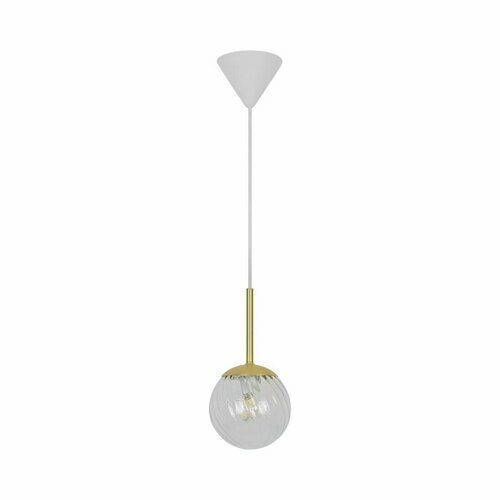
Art Deco ceiling lights is a category with four very different fittings inside it, and the interwar style makes the difference between them sharper than usual. A stepped opal disc pressed against the plaster and a five-tier brass chandelier on a chain are both correct for the period; one of them fits a 2.4 m apartment ceiling and the other does not. This page is the decision about which type your room can carry. Once that is settled, the style questions — fluted or opal glass, brass or chrome, how deep the steps should be — become straightforward.
The four types against your ceiling
What each overhead type needs, and what the period offers in it
| Type |
Drop |
Ceiling |
The Art Deco version of it |
| Flush and semi-flush |
0 to 30 cm |
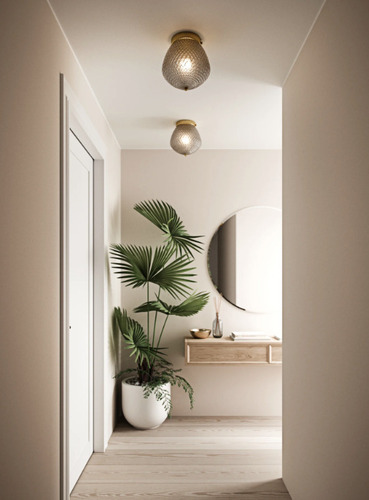
Any, and the only sensible answer below 2.4 m in a walking route |
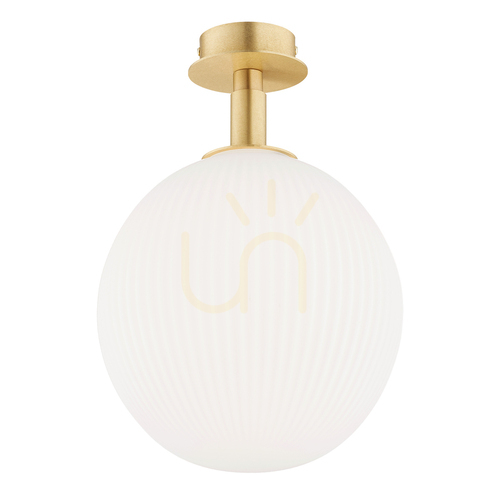
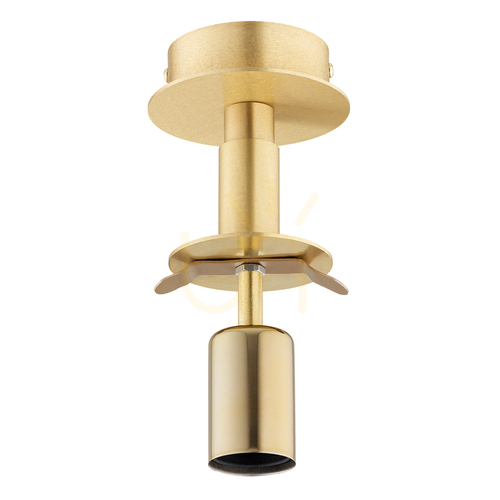
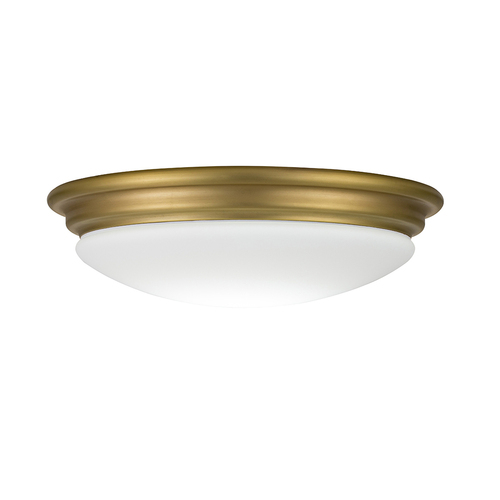
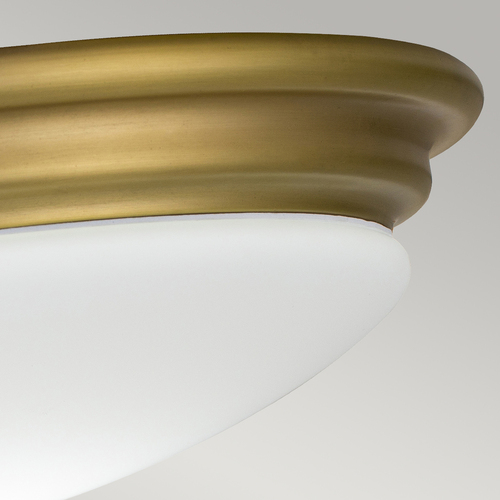
Stepped opal discs, fluted glass domes in a metal ring, backplates with a fan or sunburst edge |
| Single pendant |
Adjustable, usually 30 to 150 cm |
2.5 m upward, or any height directly over a table |
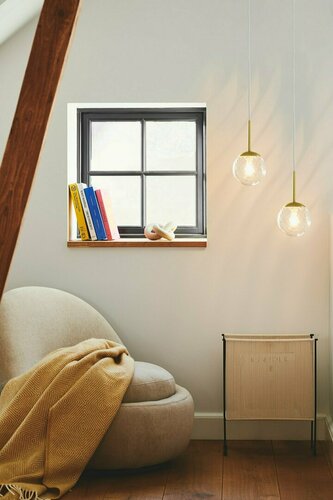
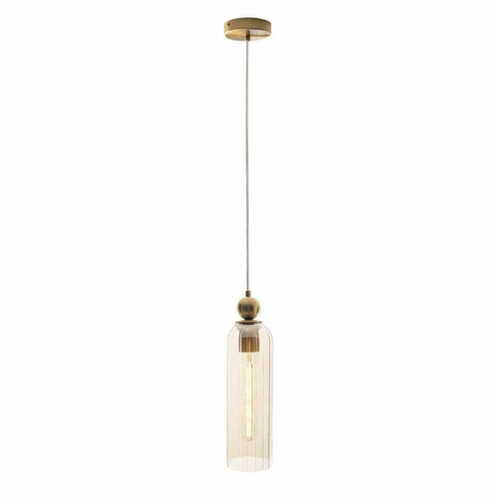
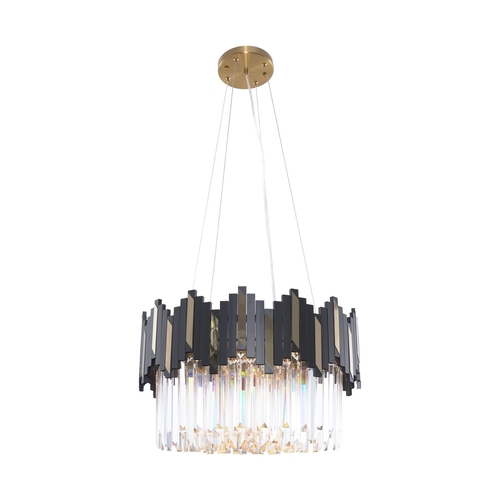
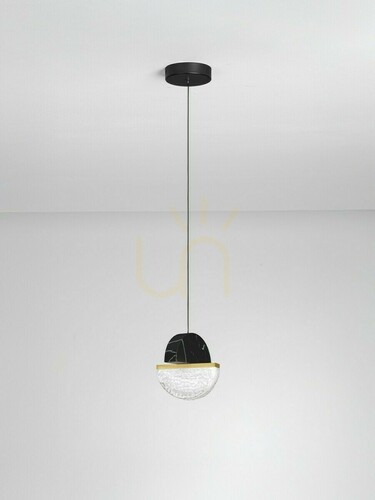
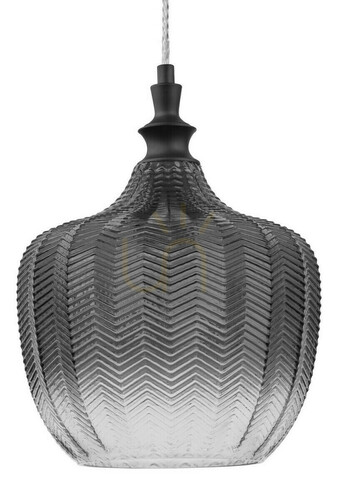
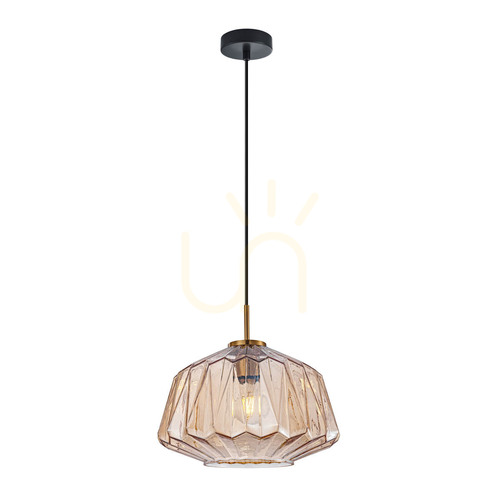
Tiered glass shades, fluted globes, cone shades on a slim brass stem, alabaster bowls on three chains |
| Chandelier or multi-light |
40 to 120 cm, more over a stair |
2.7 m upward in the middle of a room |
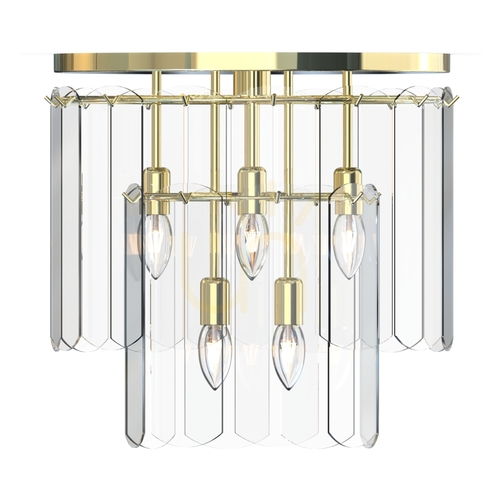
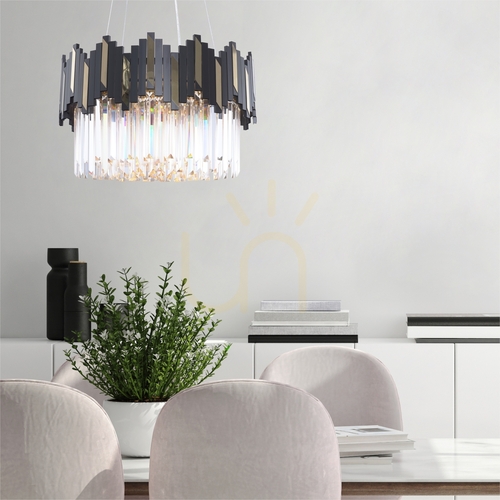
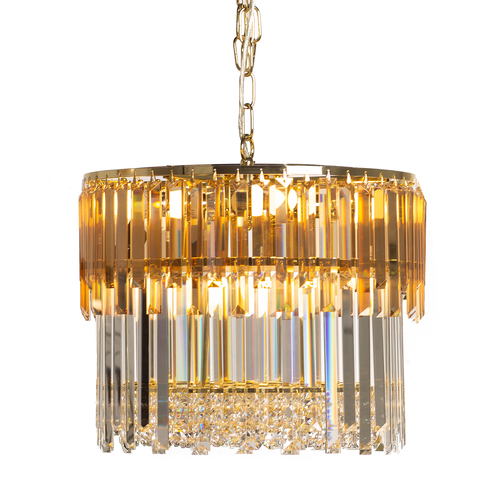
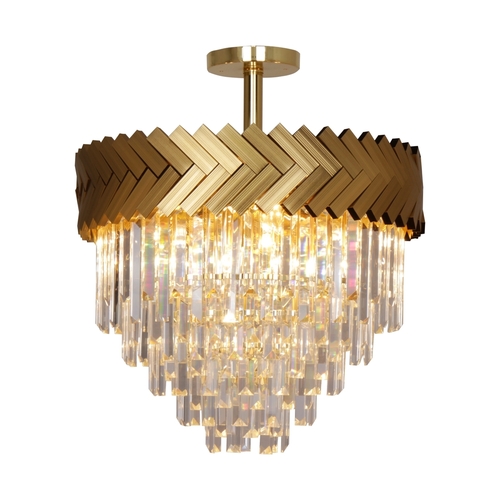
Stepped tiers, radiating arms with slip shades held in cast frames, layered glass discs |
| Track and directional |
Low profile |
Any |
No period version exists — this is the type where a Deco room borrows from somewhere else and hides it |
Start from the tape measure
Ceilings below 2.4 m
Nothing hangs where people walk. Take the flush end of the range and choose a fitting with real depth to its profile: a stepped disc with three rings reads as designed, a flat plate reads as a service fitting. The exception is the dining table, where the tabletop sets the height and a hanging fitting is allowed even in a low room.
2.5 to 2.7 m
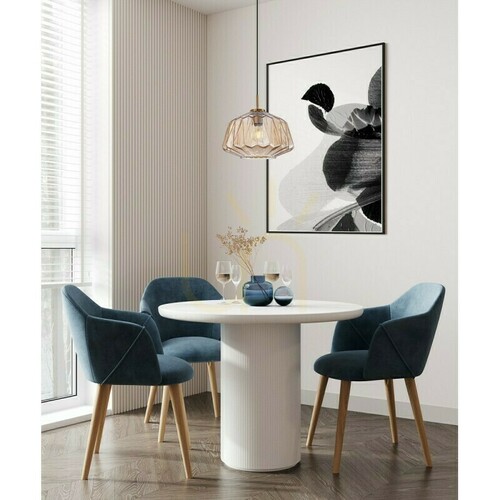
The usual apartment. Pendants work, as long as the bottom of the shade stays 2.1 m above the floor anywhere you walk. Over a dining table you have room to hang properly: 70 to 90 cm from the tabletop to the bottom of the shade, nearer 75 cm at the lower end of this range.
2.8 m and above
Older buildings, and the height where the tiered and multi-arm fittings of the period stop looking oversized and start looking correct. A single small shade on a long flex in a 3 m room looks stranded; the style's own answer is mass — tiers, arms, a wide stepped shade.
Stairwells and halls
Measure from the highest tread the fitting passes over and keep its lowest point 2.1 m above that. Then ask how the lamp gets changed, because a tiered fitting over a stairwell is a job with a tower rather than a chair, and that answer often decides the fitting.
Sizing in numbers
-
Middle of a room: add length and width in metres, read the result as centimetres of diameter. A 3 by 4 m bedroom takes something around 70 cm; a 4 by 5 m living room around 90 cm.
-
Over a rectangular dining table: shade width one third to one half of the table width, never more.
-
Over a round table: about one third of the table diameter.
-
Fitting height: roughly 6 to 7 cm of fitting for every 30 cm of ceiling height, as a starting point for a fitting in the middle of a room.
The glass decides how it feels
Overhead is where the difference between the period's glass types is most obvious, because you look up at a ceiling fitting from underneath and the source is pointing at you.
-
Opal glass — white through the thickness — turns the shade into an even glowing surface and hides the bulb from every angle. It is the comfortable choice for a room you sit in and the only sensible one for a corridor where the fitting is at head height.
-
Fluted or reeded clear glass breaks the image of the filament into a row of bright vertical lines. It sparkles, and it does not hide anything: behind fluted glass, buy a frosted lamp or a long filament LED, never a compact high-output one.
-
Smoked and amber glass cut output and warm the colour without reducing the brightness of the source itself. Plan for more lumens than you would use behind clear glass.
-
Alabaster and plaster bowls throw most of their light at the ceiling and glow gently at the rim. Beautiful, and not enough on their own — pair one with lamps at the edges of the room.
Installation notes worth checking before you order
-
Weight and fixing. Glass and cast metal are heavy. The existing ceiling rose is a connection point, not a structural anchor; anything with mass wants a fixing into a joist or a bracket spanning two.
-
Shortening. Rod-suspended fittings shorten in fixed steps by removing rods; chain and cable shorten anywhere. That difference decides whether the fitting can hang where you want it.
-
The outlet position. In older apartments the ceiling outlet is rarely over the table. A ceiling hook and a swagged flex is the reversible fix, and it needs a fitting supplied with generous cable.
-
Source. 230 V on E27, E14, G9 or GU10, or an integrated LED module. Keep everything at 2700 K, or 2200 K for a deliberately period evening light, and CRI 90 or better where there is brass and stone to light.
Questions people ask
One fitting in the middle, or several smaller ones?
One central fitting lights the floor and leaves the walls dark, which makes a room feel smaller. The period's own solution was a centre fitting plus wall brackets, on separate switches, and it still works better than any single fitting at any price.
Can I put a chandelier in a 2.5 m room?
Over a table, comfortably. In the middle of a room where people walk, you have around 40 cm of usable depth once you keep the bottom at 2.1 m — so a wide, shallow tiered fitting rather than a tall one.
Is a chain or a rod more correct?
Both are period. Chains suit alabaster and glass bowls, which were hung that way from the start; a slim rod or tube suits stepped cone and tiered shades, and it keeps the fitting from swinging in a hallway.
Where do I go from here?
By type: pendant lights art deco for a single suspended shade, chandeliers art deco for multi-light fittings, and art deco ceiling lights for flush and semi-flush mounts. For the materials, motifs and bulb choices that run across all of them, see art deco lamps.