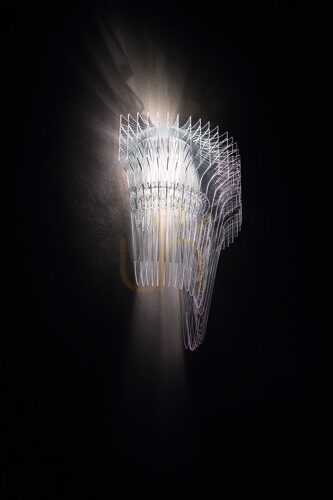
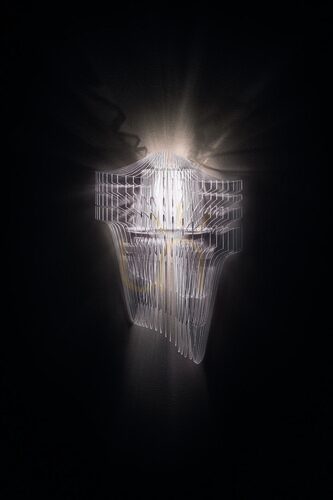
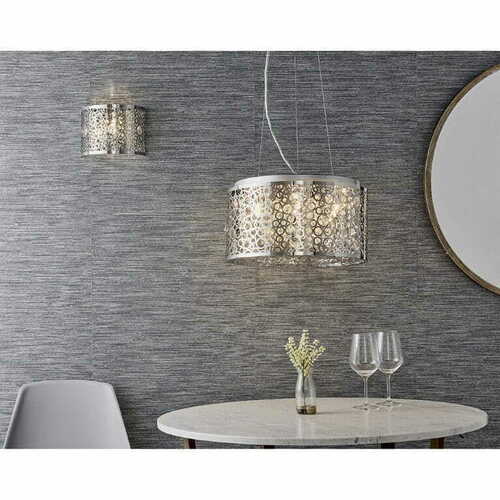
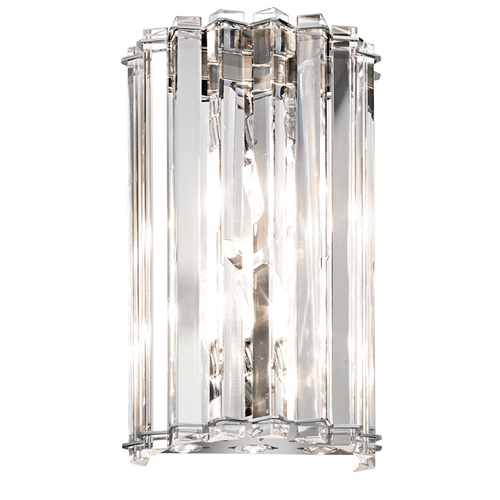
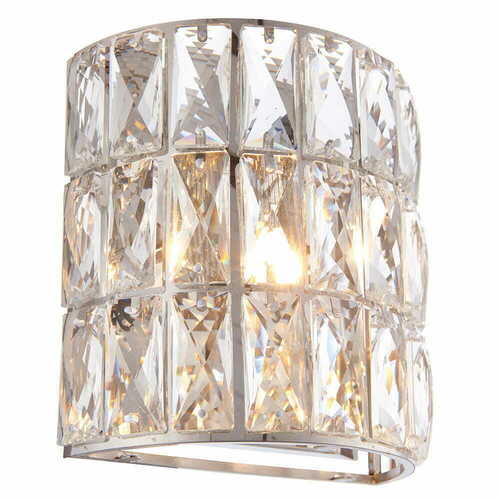
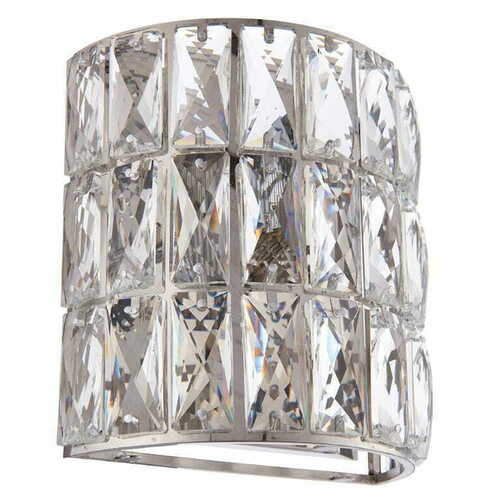
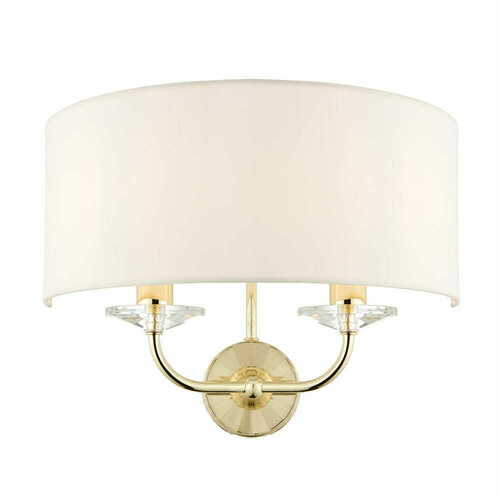
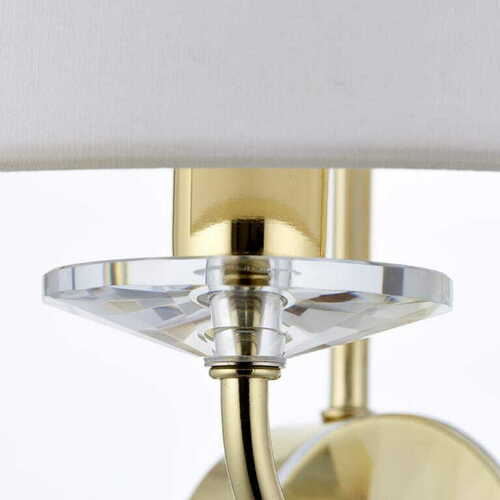
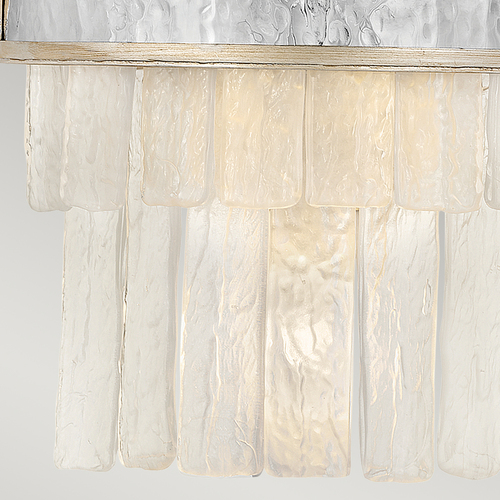
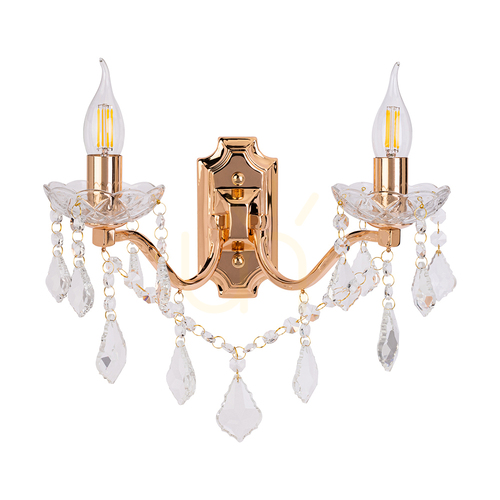
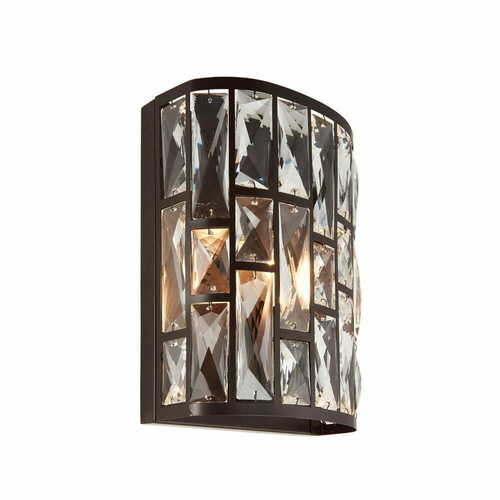
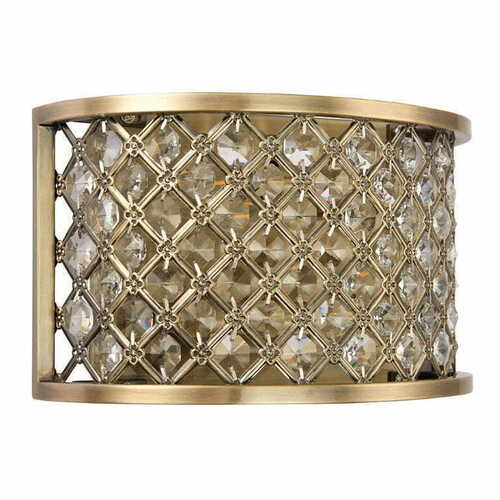
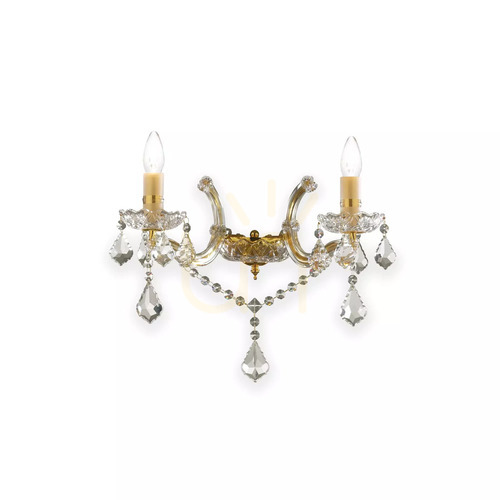
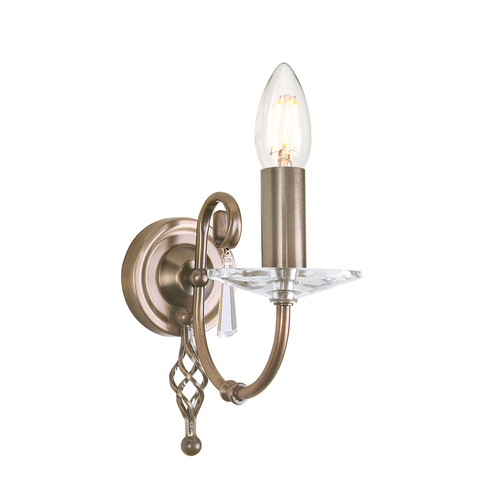
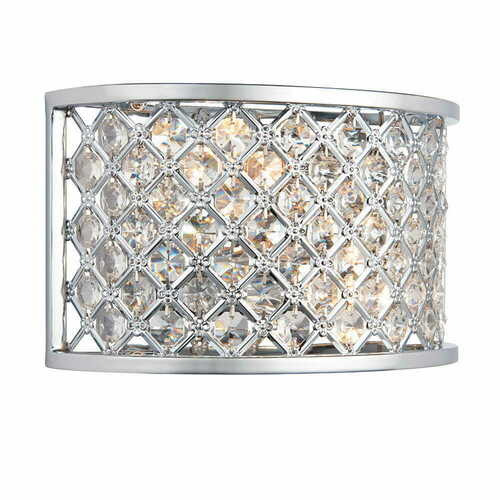
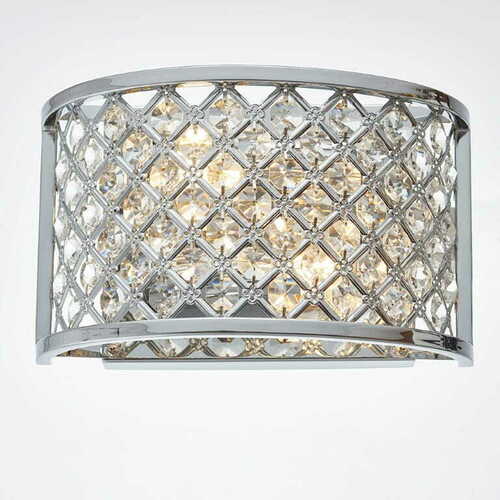
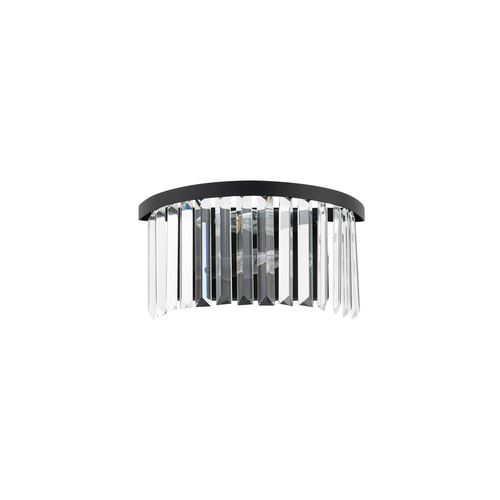
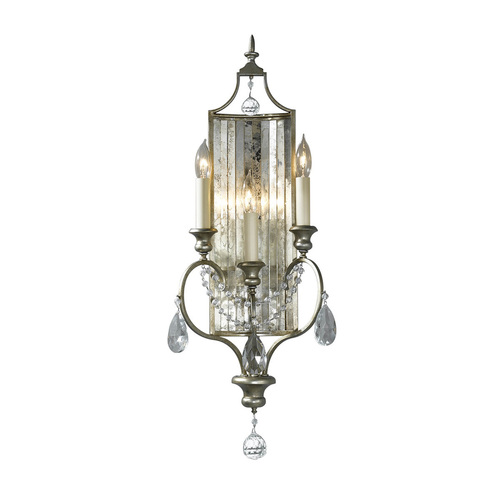
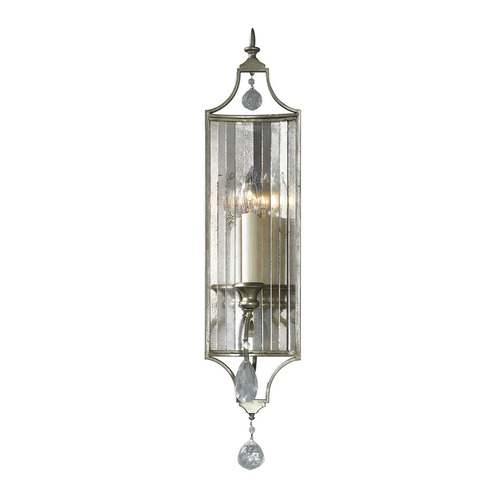
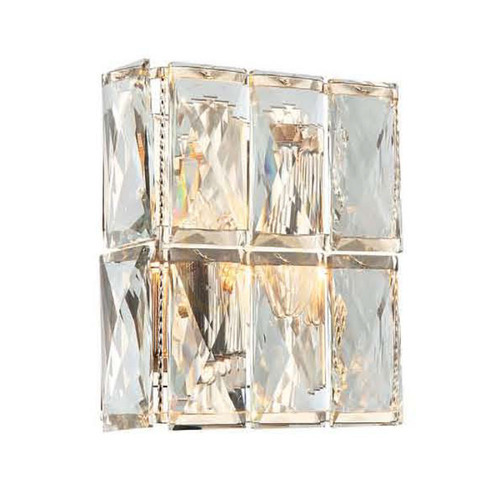
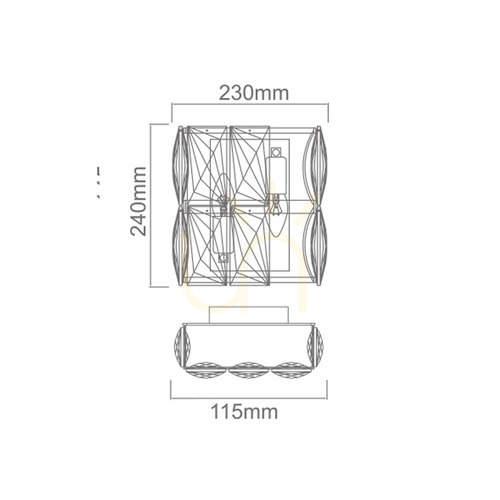
Crystal wall lights are bought for one effect: the small, sharp points of light that a cut surface throws onto the wall and ceiling around it. Everything else about the fitting — the arm, the backplate, the finish — is in service of that. Understanding how the sparkle is produced tells you which one to buy and which lamp to put in it.
What actually makes it sparkle
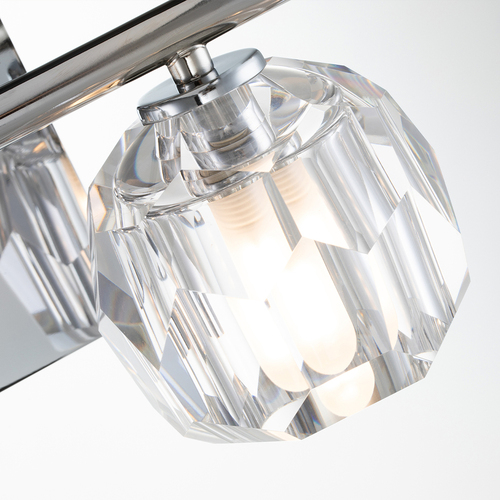
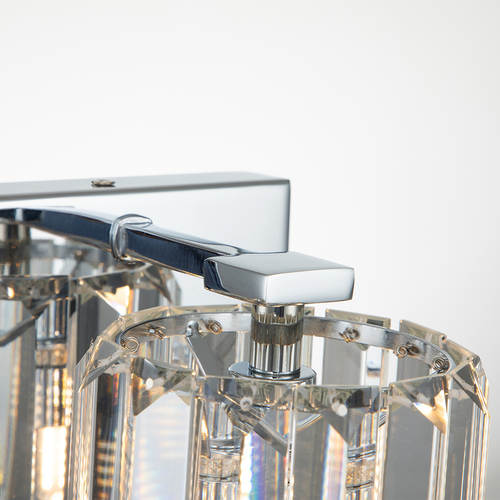
A facet works like a prism: it needs a small, bright, undiffused source to refract. Give it a point source and you get defined flecks of light with a hint of colour at the edges. Give it a large frosted lamp and the same crystal goes flat and merely looks glassy. This is why the lamp choice matters more on a crystal fitting than on any other kind of wall light.
K9, lead crystal and plain cut glass
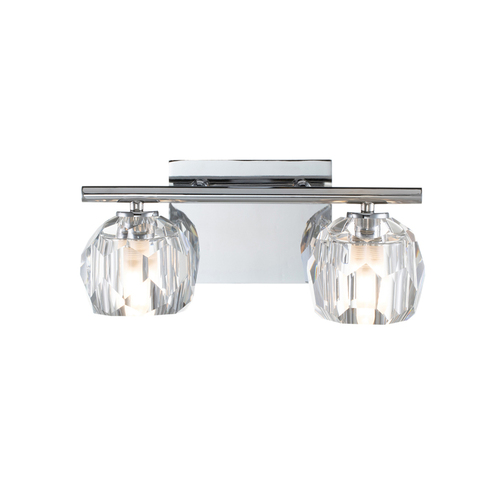
Lead crystal contains lead oxide, which raises the refractive index and gives the deepest fire; it is heavier, softer to cut and more expensive. K9 is an optical glass, lead-free, hard, very clear and the standard in most modern fittings — brilliant, slightly cooler in character. Ordinary pressed glass moulded to look faceted sparkles least, because moulded edges are rounded rather than sharp. The tell is the edge: run a fingertip along it, a cut facet is crisp.
The lamp decides the effect
Use a clear lamp, not a frosted one, and keep the output modest — a bright bare source at eye level is glare, not glamour. G9 is the usual socket in crystal wall fittings, with E14 in larger ones. Dimming is worth having: crystal at full output in a small hallway is too much, and at 30 percent it is exactly right. Where the lamp is replaceable, dimmability comes from the lamp and dimmer pairing, not from the fitting.
Weight, fixings and cleaning
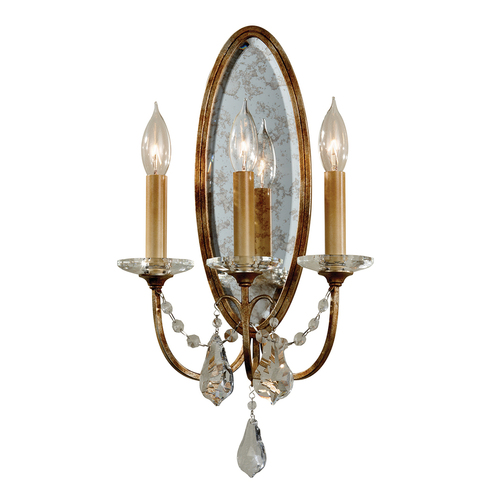
Crystal is dense, and a fitting hung with dozens of drops can weigh several kilos. On plasterboard use cavity fixings sized for the load, and check that the backplate covers the box neatly, since a crystal fitting draws the eye to its own edges. Clean with the power off and the crystal cold: a soft cloth, or drops removed and washed in warm water with a drop of detergent, then dried by hand. Never spray cleaner at a mounted fitting — it runs into the lampholder.
Frequently asked questions
Is K9 crystal as good as lead crystal?
For a wall light, yes. K9 is clearer and harder; lead crystal gives slightly warmer fire. The cut quality matters more than which of the two you choose.
Why does my crystal wall light not sparkle?
Almost always the lamp. A frosted or opal bulb removes the point source the facets need. Swap it for a clear one.
Where do crystal wall lights work best?
In pairs, on a wall you pass rather than sit against — a hallway, a stairwell, either side of a mirror or a dining room wall, often echoing a chandelier in the same room.
How often do they need cleaning?
Dust dulls facets fast. A light dust every couple of months keeps the effect; a full wash once or twice a year is plenty.
To repeat the effect overhead, see Chandeliers, or keep the scheme quieter with Flush Ceiling Lights.