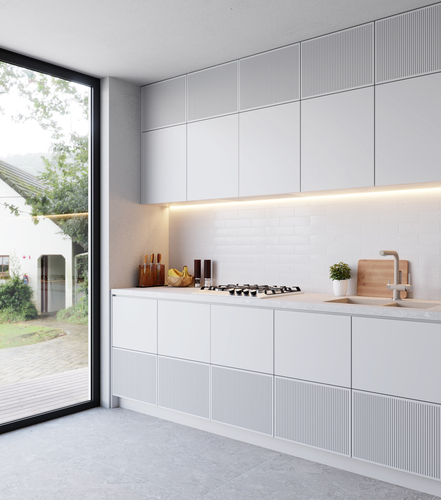
Fitting LED strip lights under kitchen cabinets fixes the one lighting problem a ceiling fitting cannot: when you stand at the worktop, your own body blocks the light and you chop in your own shadow. Under cabinet lighting comes from where the work happens, and a strip is the neatest way to do it — flat, cuttable to the millimetre, and invisible once it sits in a channel.
Where the strip actually goes
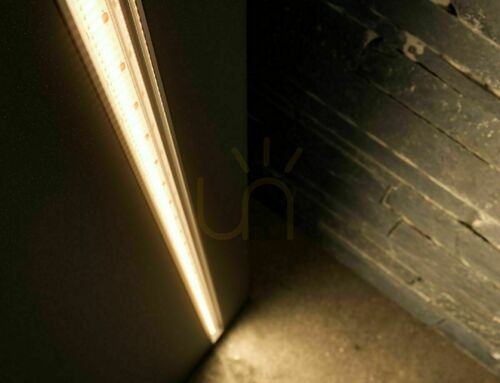
Mount it on the underside of the wall unit, roughly 50 mm back from the front edge of the door. Push it too far back and the beam bounces off the splashback into your eyes; bring it too far forward and you see the diodes themselves reflected in a gloss worktop. If the cabinet has a recessed bottom panel, the shadow gap is usually the perfect home for a channel. Where cupboards are open-fronted or glazed, run a short section along the front rail instead and switch it separately.
Getting rid of the dots
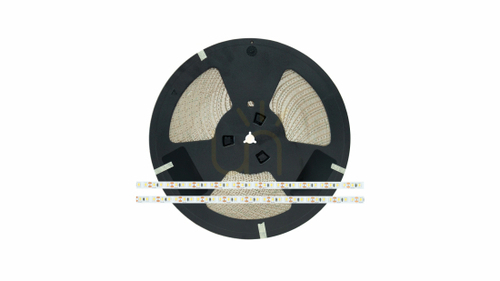
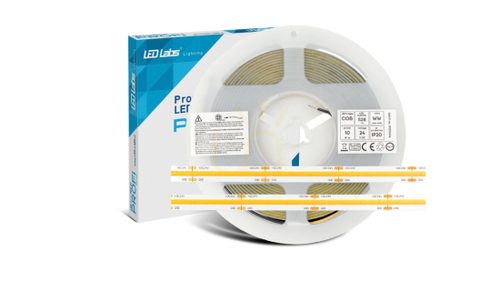
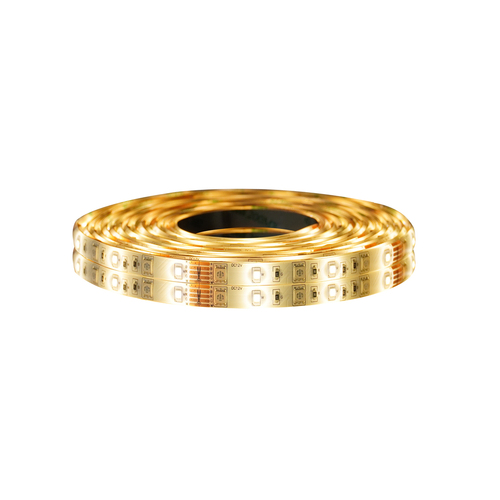
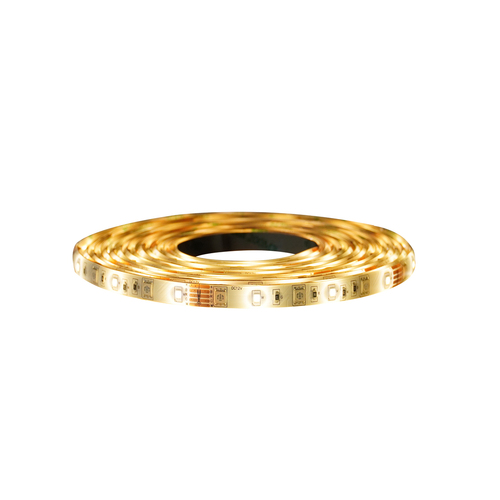
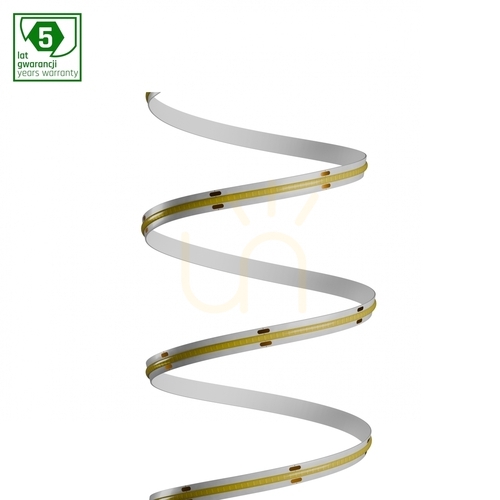
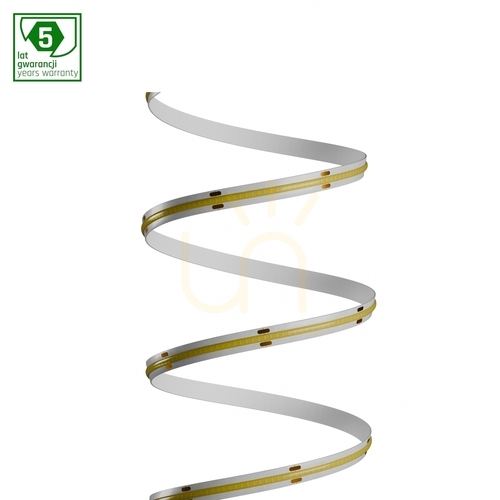
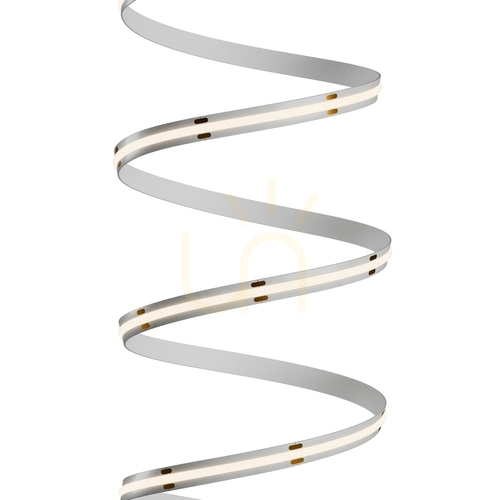
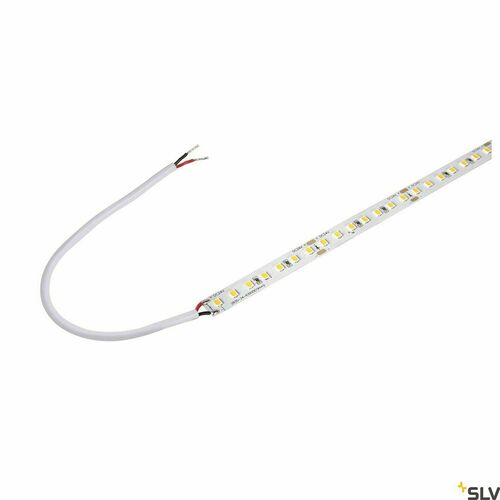
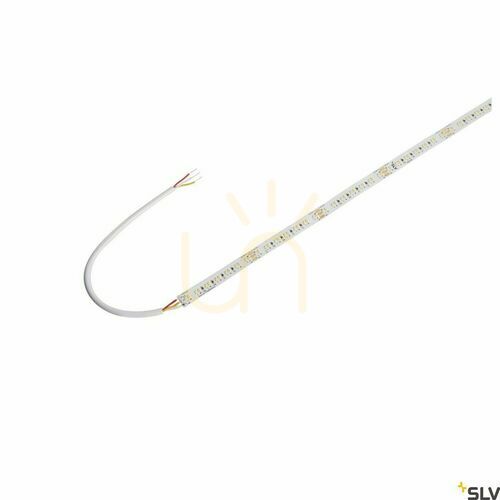
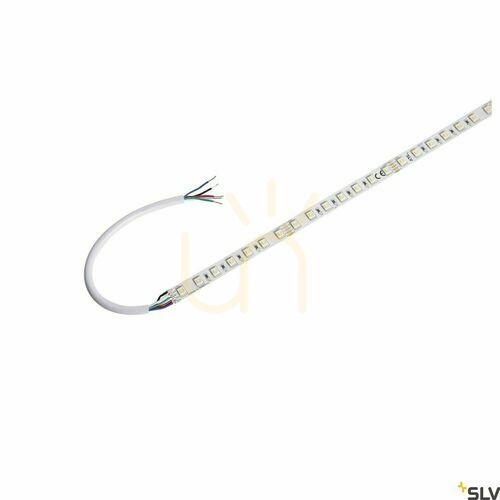
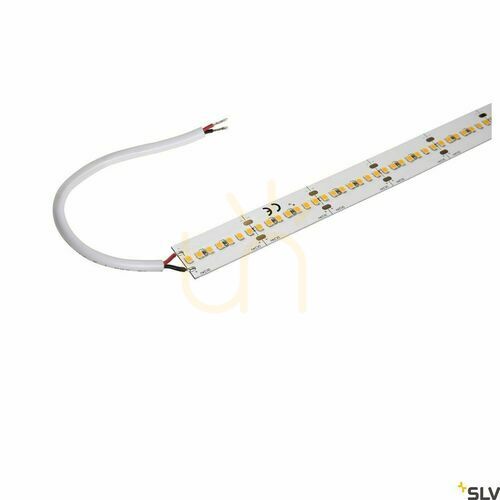
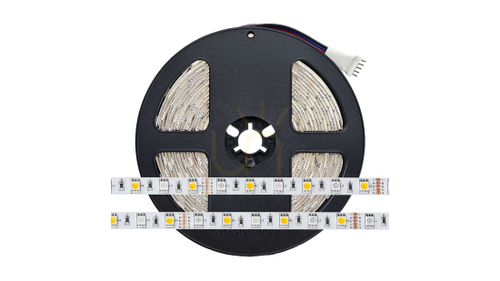
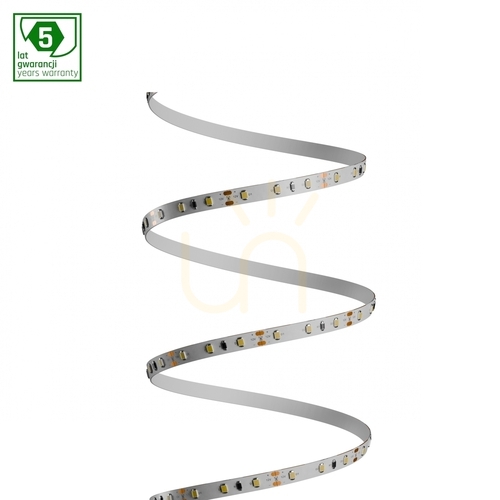
This separates a professional-looking run from a DIY one. A 60 LED/m strip throws a visible row of hotspots onto a polished worktop, and once you have noticed it you cannot unsee it. At 120 LED/m the dots begin to merge. A COB strip — a continuous phosphor stripe over densely packed chips — gives one unbroken line, which is why it has taken over under-cabinet work.
Colour temperature and colour rendering over a worktop
Neutral white at 4000 K is the sensible choice for a working surface: food looks like itself and your eyes stay comfortable through a long prep. Warm white at 2700–3000 K belongs at the plinth or over a dining end, where you want atmosphere rather than accuracy. What matters more than kelvins is CRI. Below CRI 80, raw meat turns grey and vegetables look tired. Look for CRI 90 or better under cabinets — it is the single spec that most changes how the kitchen feels.
Brightness, and how much you need
For task light over a worktop, budget 700–1000 lumens per metre; for a plinth or a glazed cupboard, 300–400 lm/m is plenty and more will glare. A diffuser absorbs roughly 10–15% of the output, so size on the strip's rated figure.
Driver sizing and where to hide it
Multiply metres by watts per metre, then add 20–30% headroom. Eight metres of a 9.6 W/m strip draws about 77 W, so specify a 100 W driver, not an 80 W one. A driver run permanently at its limit gets hot and fails long before the LEDs do. Put it somewhere you can reach again — inside a wall unit or the void beside an extractor — and choose a quiet one, because cheap switching supplies whine audibly in a quiet kitchen.
12 V or 24 V over a long run
A kitchen run of 3–6 m is exactly where 12 V starts to show voltage drop: the far end sits dimmer and shifts yellow. At 24 V the same length is untroubled. On an L-shaped kitchen, feed two separate sections from the corner rather than carrying one long strip around it.
The aluminium channel is not decoration
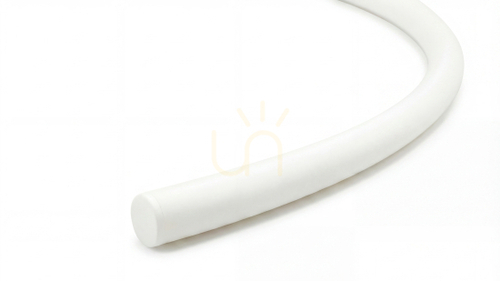
A strip stuck straight to chipboard has nowhere to dump its heat, so the chip runs hot and its output falls year on year. An aluminium profile carries that heat away, and the frosted diffuser blends the remaining dots into a line. Under a cabinet it does a second job as well: grease and steam settle on the profile, where you can wipe them off, rather than on the strip itself, where they stay. Channels and diffusers sit in LED strips and profiles.
Cutting, connecting and sticking
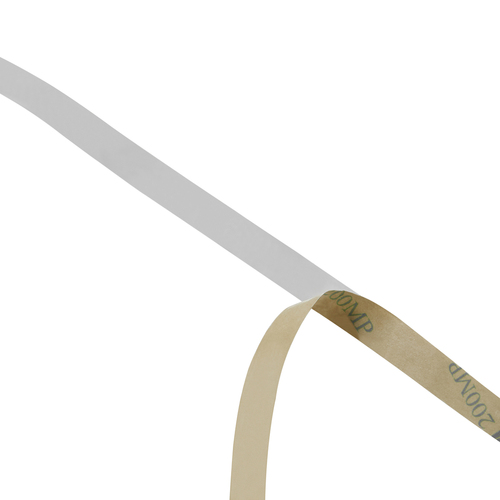
Cut only on the marked points, typically every 25 or 50 mm. Solderless clip connectors suit a quick job, but a soldered joint survives the daily heat cycling beside an oven far better. The factory 3M tape holds only on a clean, dry, degreased surface — wipe the cabinet underside with isopropyl alcohol first, because it is greasier than it looks.
Frequently asked questions
Do I need anything rated for moisture?
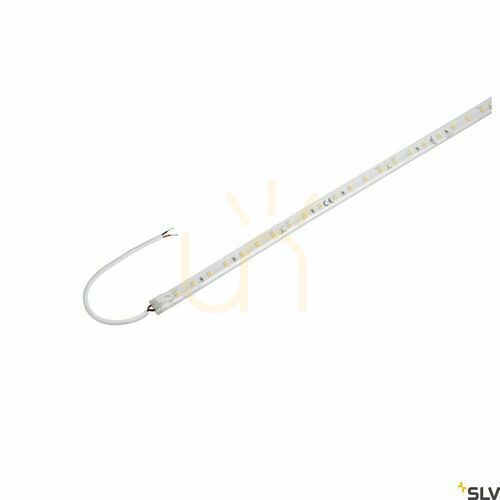
Over a sink or beside a hob, choose at least IP44, ideally a sealed channel with a silicone gasket. Elsewhere along the run, a bare IP20 strip inside a profile is fine.
Can I dim it?
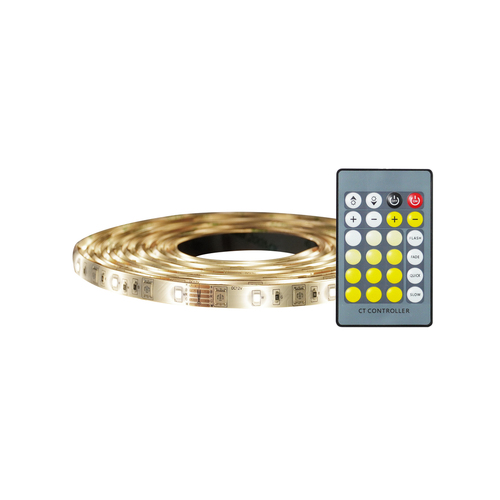
Yes, with a dimmer placed between the driver and the strip, or a dimmable driver. Putting a mains dimmer in front of an ordinary switching driver causes flicker instead.
What is the best way to switch it?
A hand-wave sensor under the cabinet is the most usable option in a kitchen, where your hands are often wet or floury. Door-contact switches suit glazed cupboards; a wall switch beside the run suits everything else.
Why has my old run gone dim?
Almost always heat rather than age. A strip taped to bare timber in a closed recess runs permanently hot, and its lumen output drops much faster than the datasheet suggests.