A balcony is the one outdoor space with no ground to dig, no lawn to run a cable across and, for most people, a tenancy agreement that rules out drilling the wall. Balcony outdoor lights therefore start as a fixing problem and a power problem; the look comes third.
Lighting a balcony without making a hole
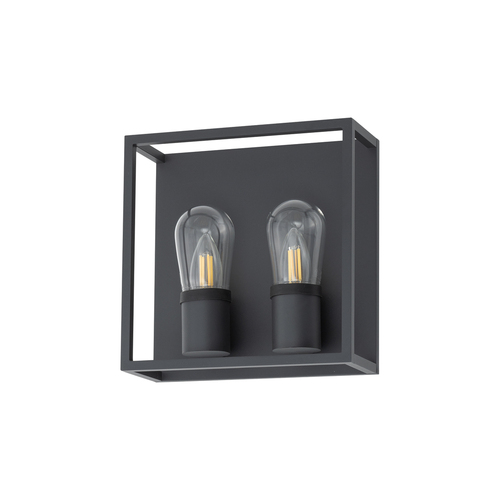
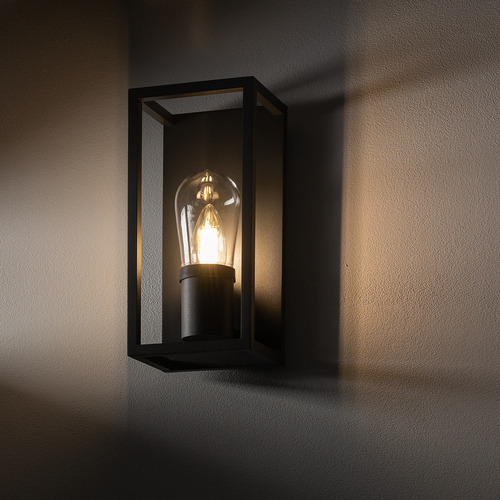
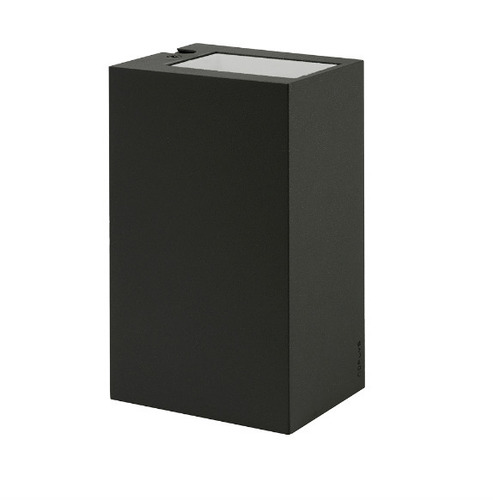
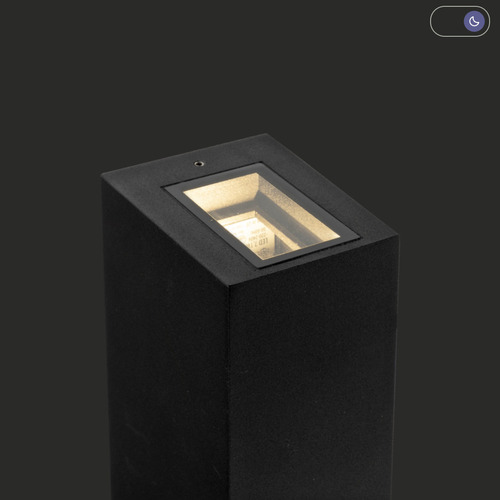
Almost every balcony offers a rail, a balustrade or a parapet, and there is a fitting made for each. Metal railings take clamp-on lights with a rubber-lined jaw. Glass balustrades take clamps with plastic pads that spread the load instead of pressing on one point. A solid parapet suits weighted or free-standing fittings and hanging lanterns hooked over the edge. The wall between the balcony and the flat is the only surface a conventional wall light belongs on, and that is precisely the surface a tenant usually cannot drill.
| Surface |
What fits it |
Watch for |
| Metal railing |
Clamp light, hanging lantern |
Rail diameter; a lined jaw so the paint is not rubbed through |
| Glass balustrade |
Padded clamp |
Glass thickness and no point loading |
| Concrete or brick parapet |
Weighted fitting, hooked lantern, festoon |
Stability in gusts; nothing that can topple outward |
| Flat wall |
Wall light |
Landlord consent, cable route, weatherproof entry |
Wind, not rain, is what breaks things
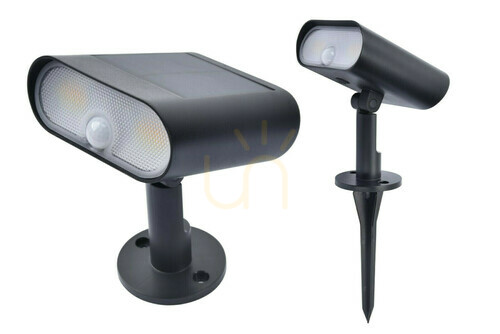
Above the third floor the wind is far stronger than at ground level, and a building corner funnels a gust into something much fiercer than the forecast. Anything that merely stands on the floor eventually goes over the edge. Hanging fittings need a closed hook or a safety cord, festoon runs need strain relief at both ends, and a solar light with a large panel needs a bracket rather than the ground spike it ships with — there is no ground here to put it in.
The balcony above you is not a roof
A covered balcony feels dry and mostly is, until wind-driven rain arrives from the side. IP44 is reasonable for fittings tucked against the wall and under the slab above. On the railing, at the open edge and on a top-floor balcony with nothing overhead, specify IP65. Condensation is the other half of the story: a sealed fitting with no pressure equalisation mists up inside after cold nights, which looks like a leak but is really a ventilation issue.
Power without a cable through the window
The clean solution is an existing outdoor socket on an RCD-protected circuit, feeding a plug-in fitting on a cable rated for outdoor use. Where there is no socket, the usual improvisation — a lead run out through a tilted window — is the worst of the options, because it ruins the seal and leaves a connection sitting in the rain. Better routes are rechargeable fittings you bring inside to charge, or a 12 V set with the transformer indoors so only extra-low voltage crosses the threshold. Solar performs well on a south or west balcony and barely at all on a north-facing one from October onwards.
Your light, your neighbour's bedroom
On a balcony the fitting sits at the eye level of everyone opposite and directly below the windows of the flat above. Light thrown upward lands in someone's bedroom; light thrown outward lands in the building across the street. Choose shielded fittings that work downward onto the floor, the table and the rail, keep the output low, and stay between 2200 K and 2700 K. Warm light suits a small space, reads as calm rather than institutional, and attracts noticeably fewer mosquitoes and moths than cool white.
Quick answers
Am I allowed to fit lights on a rented balcony?
Clamp-on, free-standing and hanging fittings with no fixings are normally fine. Drilling the façade or the balustrade, or any fixed wiring, needs the landlord's permission.
Is IP44 enough under a covered balcony?
Against the wall, yes. At the open edge or on the top floor, choose IP65.
Rechargeable or solar?
Solar if the balcony faces south or west; rechargeable if it faces north or you want reliable light through winter.
Wall lights, bollards and ground fittings for gardens and terraces sit in the wider outdoor lighting range.