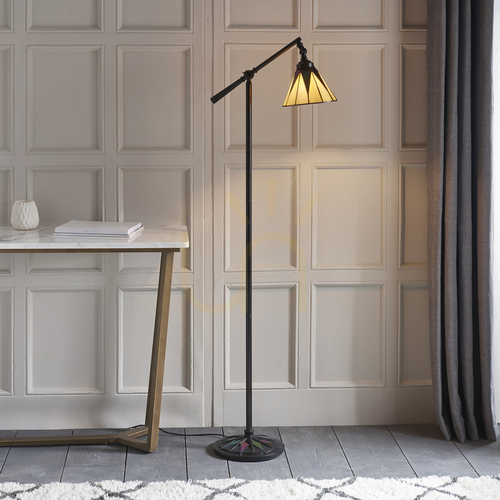
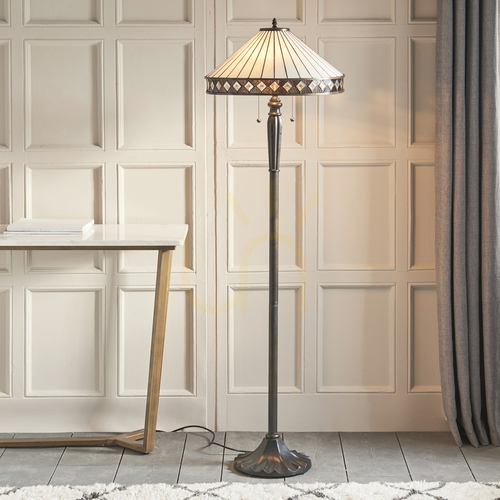
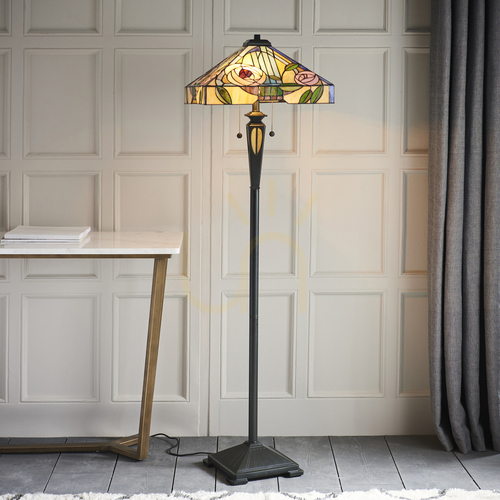
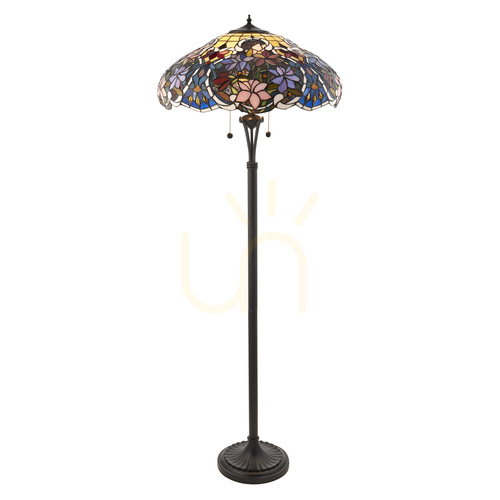
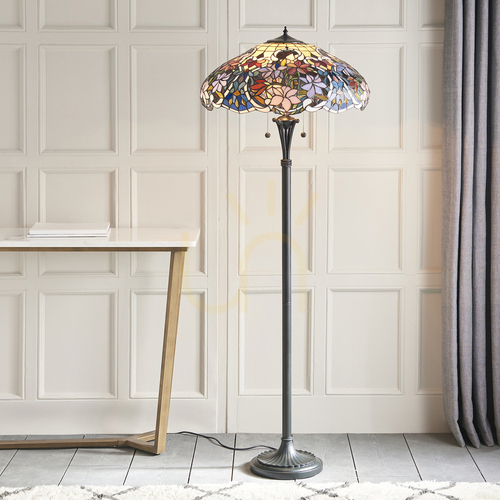
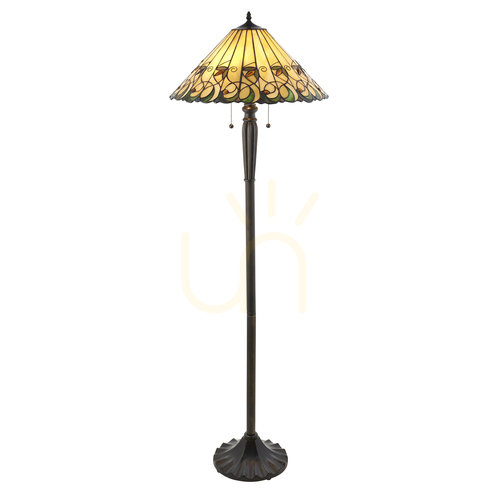
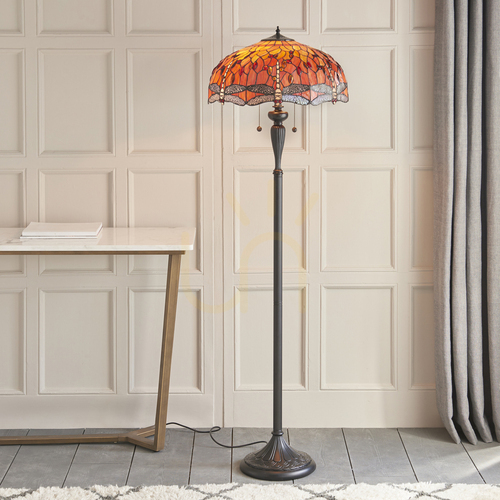
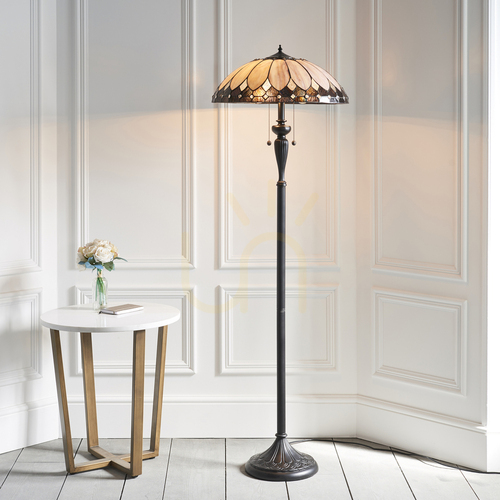
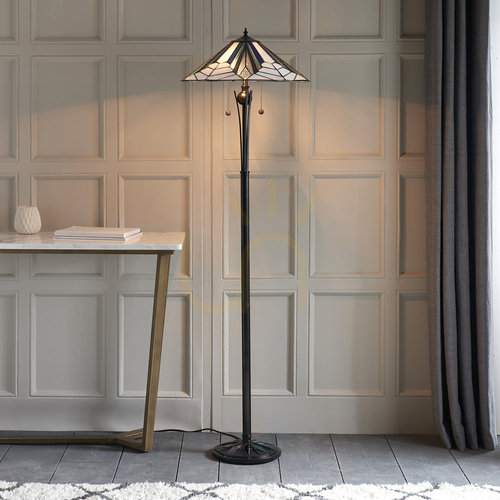
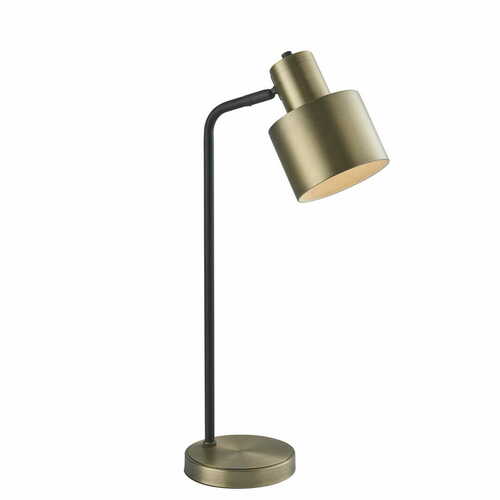
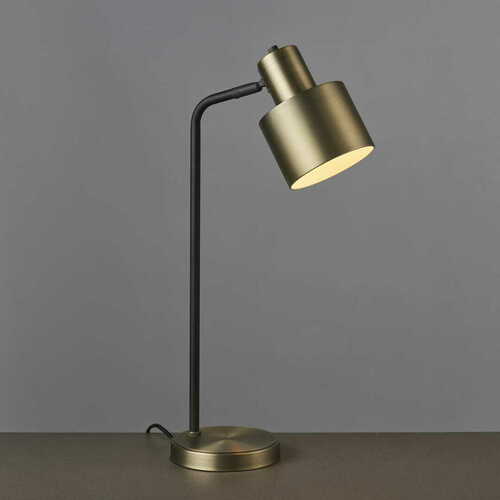
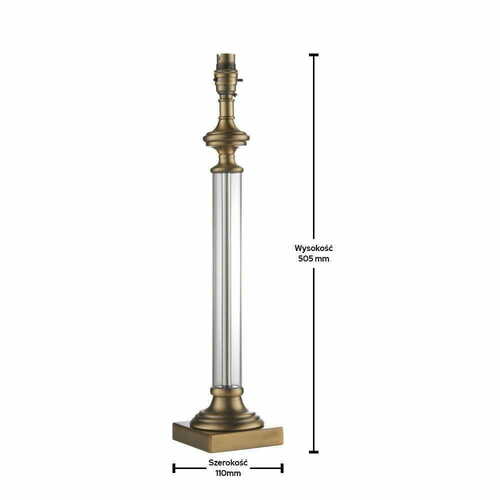
A standing lamp bought for the living room is doing something a ceiling light cannot: putting light at the height people actually sit at. One central pendant flattens a room because everything is lit from the same direction at the same strength. Add two or three sources between 120 and 180 cm and the room gains depth, corners stop looking like dead space, and in the evening the ceiling light can finally go off.
Where a floor lamp goes in a living room
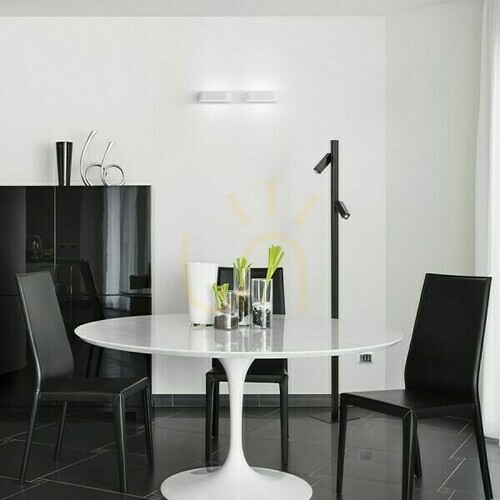
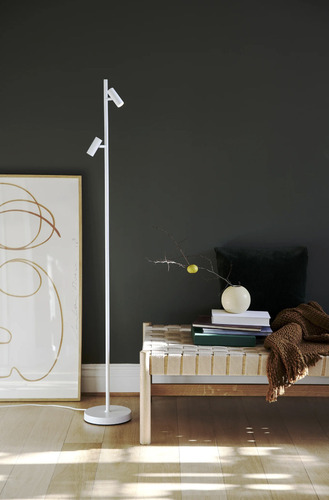
The positions that work are the ones the eye tends to lose: the far corner diagonally opposite the sofa, the gap behind an armchair, the end of the sofa where a side table will not fit, and the wall beside a bookcase. A corner is the most efficient of these, because light bounces off two walls instead of one and the room reads as larger. What rarely works is the middle of a wall with nothing around it — a lamp standing alone looks like it is waiting for furniture.
Arc lamps: reaching over the sofa without a table
An arc lamp puts its head over the seating area while its base stays a metre or more away, which solves the case where there is nowhere to stand a lamp but the seat still needs light. Two numbers decide whether one fits: the reach, usually 100–200 cm horizontally, and the height of the head, which wants to clear the head of anyone sitting under it by a comfortable margin. The trade-off is the base. That cantilever needs 15–25 kg of marble or steel underneath it, and a base that heavy takes floor space and does not move casually for hoovering.
Uplighter, downlighter, or both in one
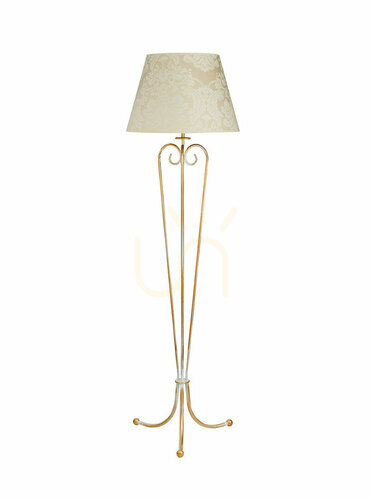
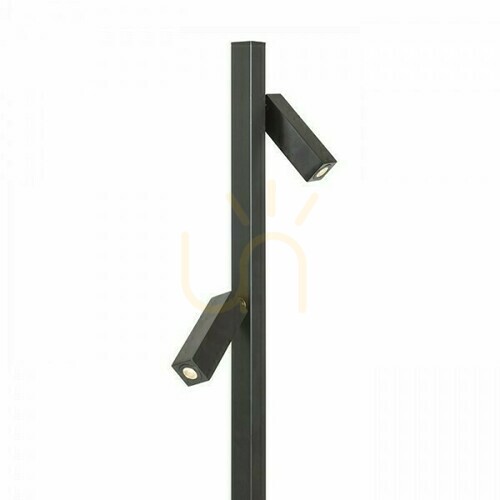
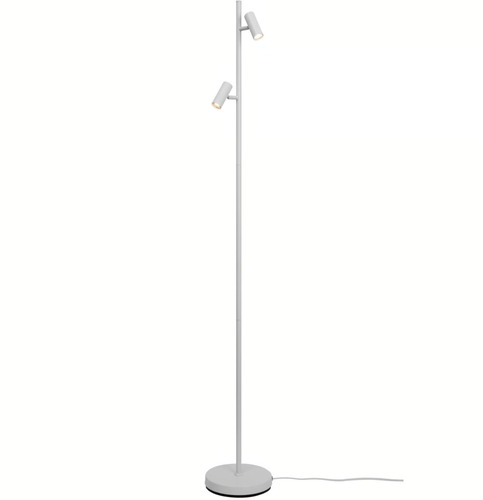
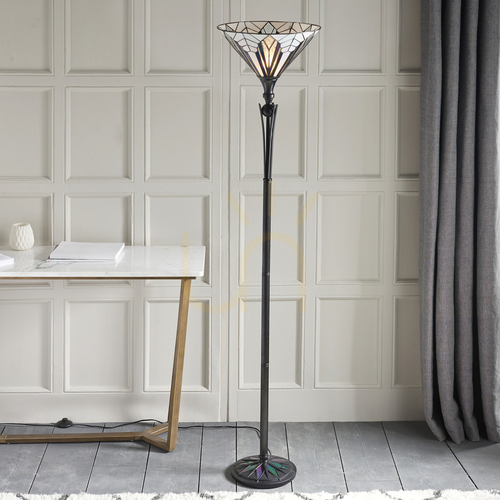
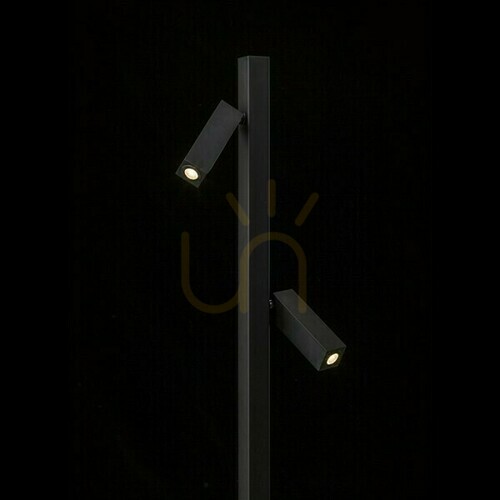
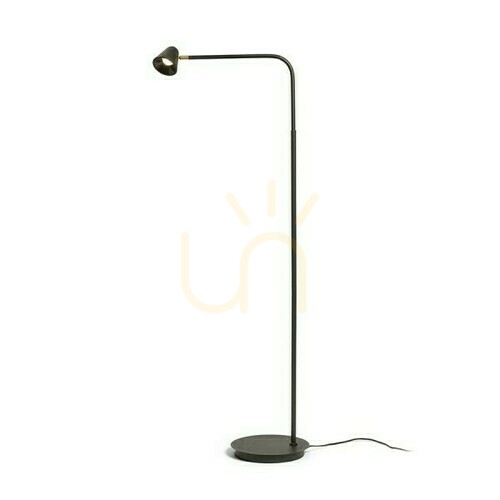
An uplighter throws everything at the ceiling and lets it fall back diffused — the softest general light available and the best partner for a dimmer, but it depends entirely on a pale ceiling; a dark or timber ceiling absorbs most of it. A shaded downlighter puts a defined pool of light where it stands, excellent beside a chair and poor as a room's only source. Models with a main head plus a separate swivelling reading arm give you both on independent switches, which is usually the most useful lamp in a living room that has to be atmospheric and practical on the same evening.
Height, and the seated eye-level test
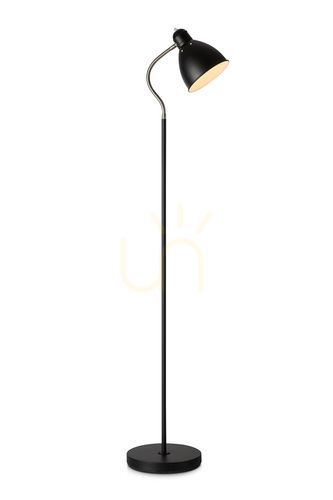
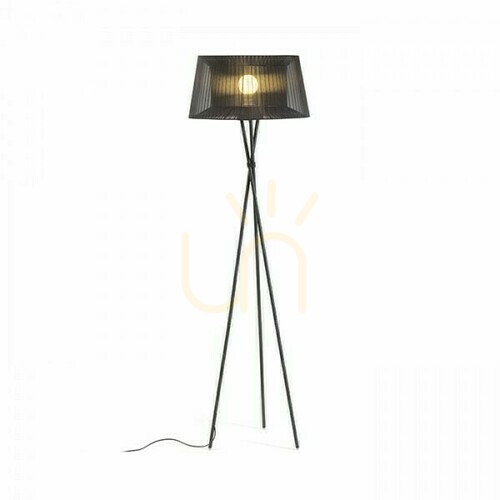
Standing up to judge a lamp is the standard mistake. Sit on the sofa. If the bottom edge of the shade falls below your eye line, you see light on surfaces; if it falls above, you see the bulb, and the room looks dimmer than it is because your eye adapts to the bright spot. For a lamp next to a seat, that puts the shade's lower rim at roughly 120–140 cm from the floor. Uplighters escape the rule entirely, which is why they suit open rooms with several seating positions.
Base weight, footprint and a cable across the floor
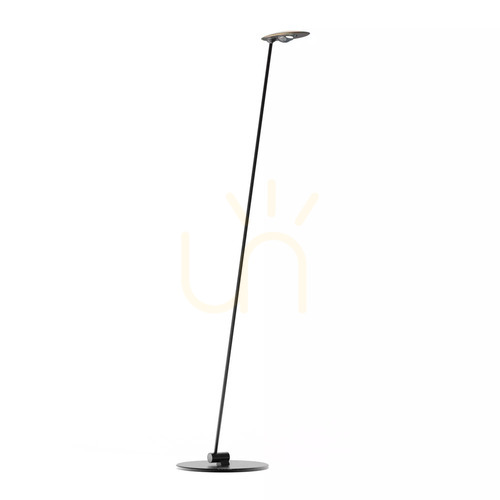
In a room with children or a dog, base weight is a safety specification rather than a detail. A straight column of 150–180 cm wants a base of about 3 kg or 25 cm across before it stops being easy to knock over; an arc lamp wants far more. Then there is the cable, which spoils more placements than any other factor. A lamp in a corner is usually near a socket; a lamp behind the sofa in the middle of a room usually is not, and a flex running across a walkway is both untidy and genuinely hazardous. Check the cable length before ordering, prefer a foot switch to a switch buried under a shade, and run the flex along the skirting rather than under a rug.
Common questions
How tall should a living room floor lamp be?
150–180 cm for a corner uplighter, 120–140 cm to the bottom of the shade for a lamp beside a seat. Arc lamps sit higher still, around 200–220 cm at the head.
How many lamps does a living room need?
Three separate sources is the usual working answer for a room of 20–25 m², at least one of them low. In an open-plan space, a fourth marks the boundary between zones better than any furniture does.
Can a floor lamp replace the ceiling light?
In the evening, yes — a dimmable uplighter does it better. For cleaning, or in a room short of daylight, no: a single source from a corner will not light a large floor area evenly.
What is the difference between a floor lamp and a standing lamp?
Nothing except habit; the two names describe the same thing. If you want to browse the wider selection under the other name, it is here: floor lamps.