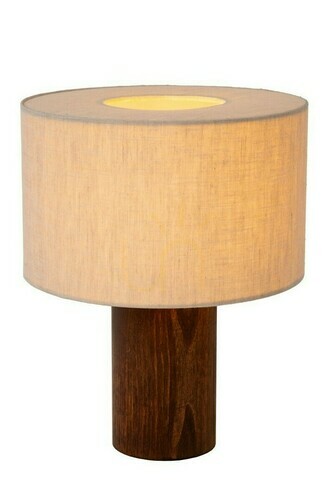
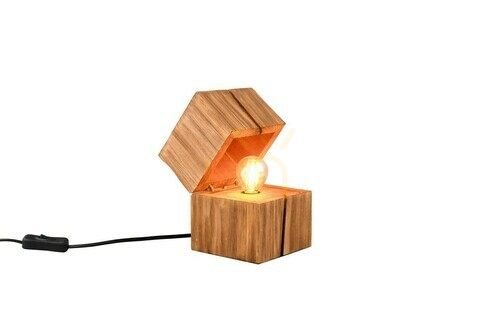
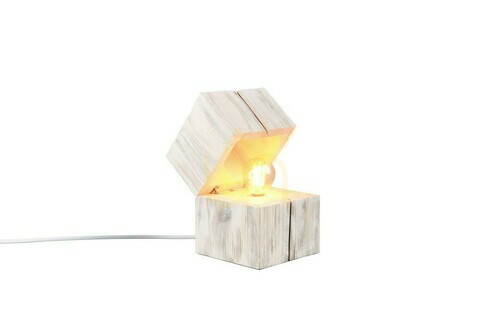
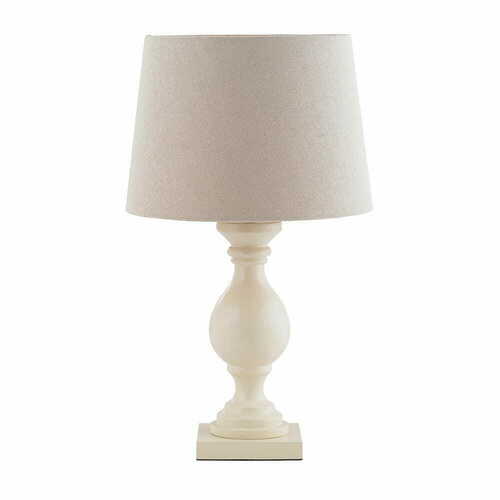
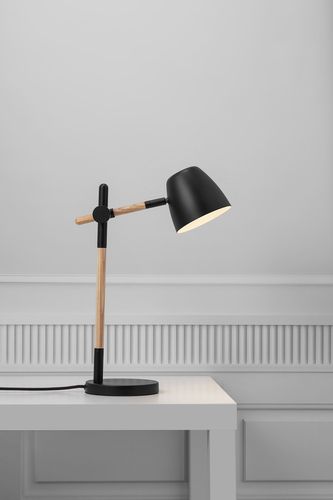
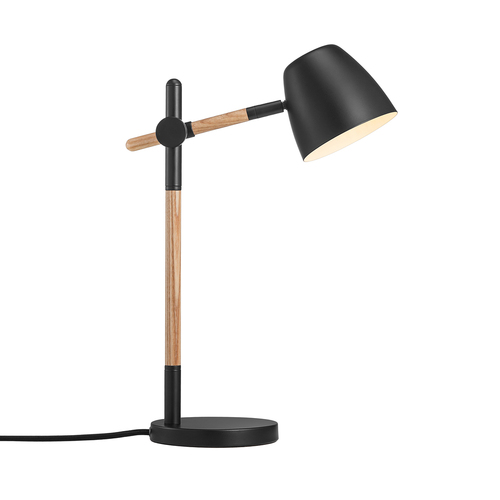
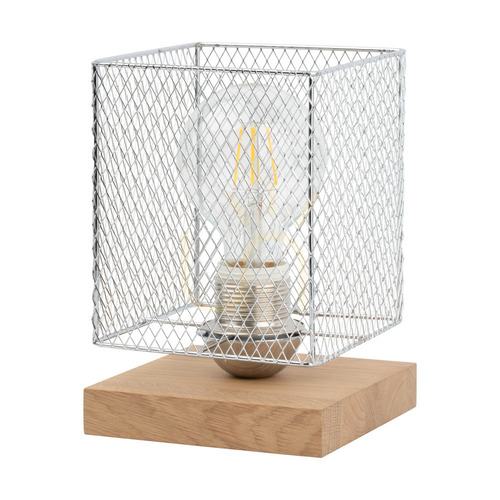
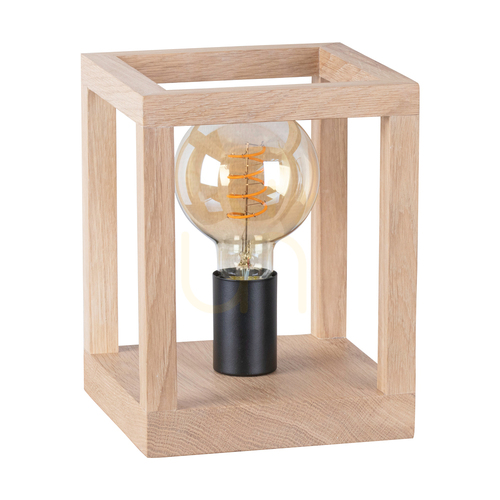
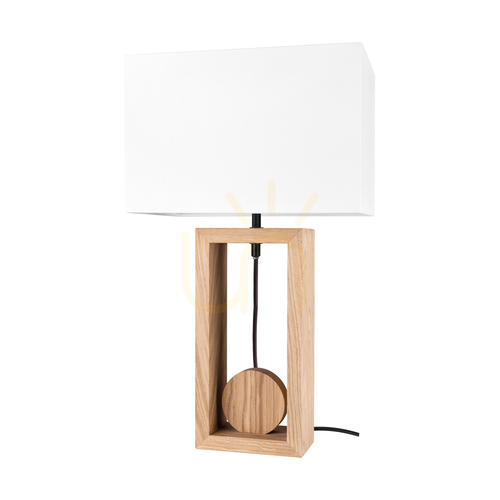
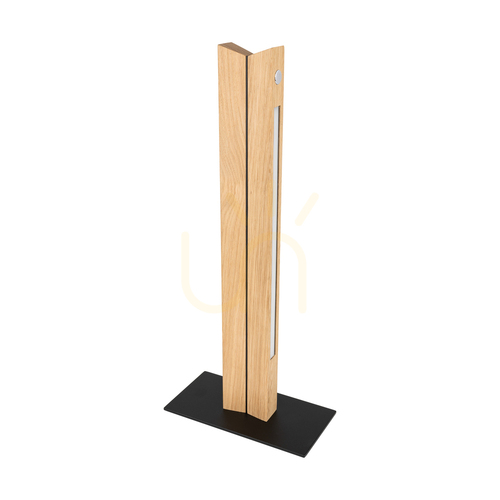
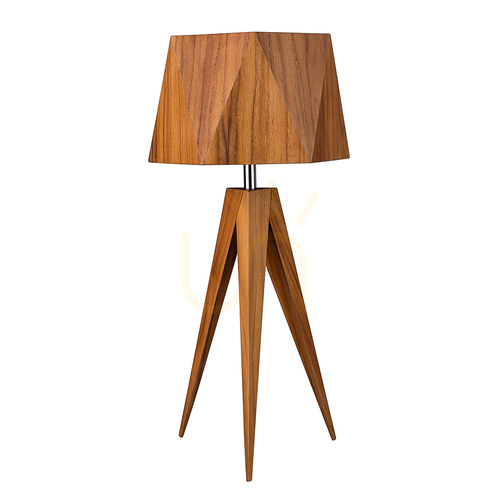
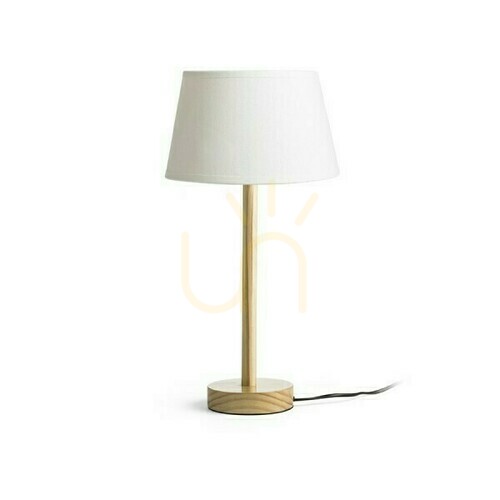
Wood table lamps are bought for the base, not the bulb. Grain runs differently through every blank, so two lamps off the same production line are never quite twins, and a turned oak or walnut body sitting on a console does something a painted metal one cannot — it reads as furniture rather than as a fitting. Which wood, and how it has been finished, decides almost everything else about living with it.
Solid, veneered and laminated bases
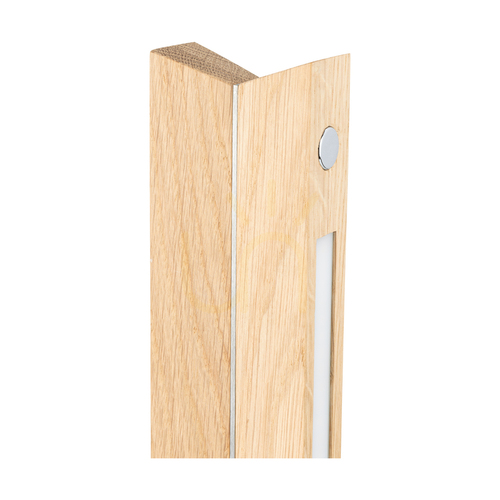
A solid block or a lathe-turned body shows end grain at the top and bottom, takes a deep chamfer, and gains character as it ages. Veneer wraps a thin sheet of the good stuff over a stable core; it is lighter, cheaper and perfectly respectable, but the giveaway is a repeating pattern and a seam where the sheet meets. Laminated or finger-jointed bodies show a striped edge on purpose and are the most dimensionally stable of the three. Look at the underside before you decide — that is where the construction is honest.
Turned bodies, tripods and blocks
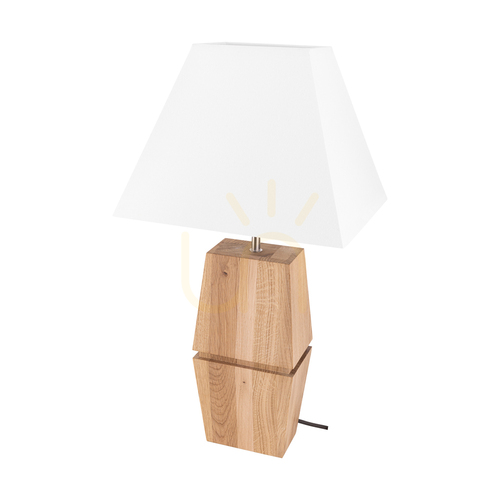
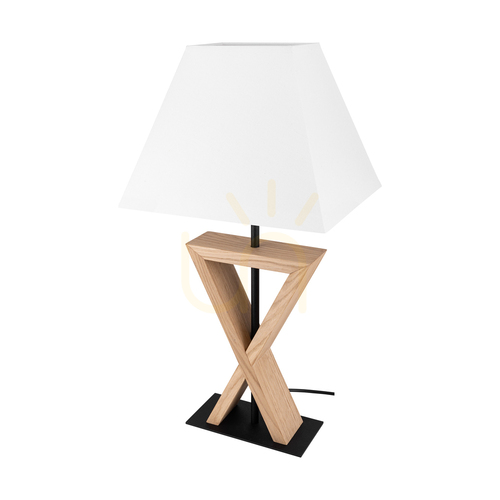
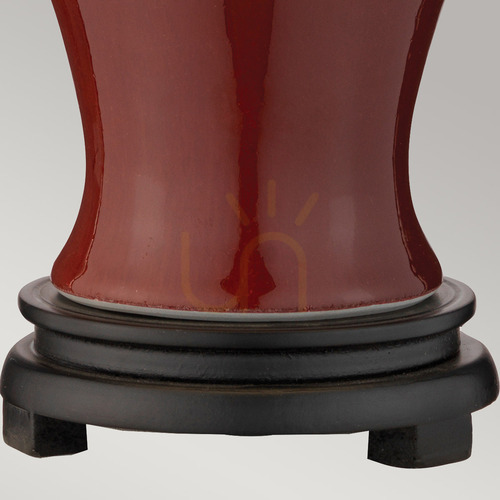
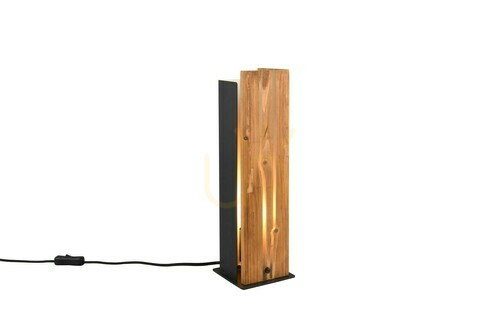
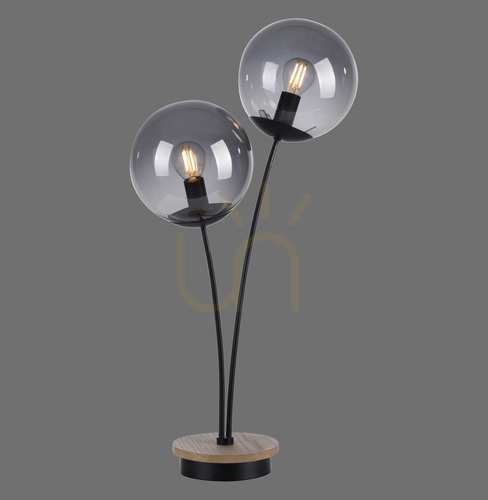
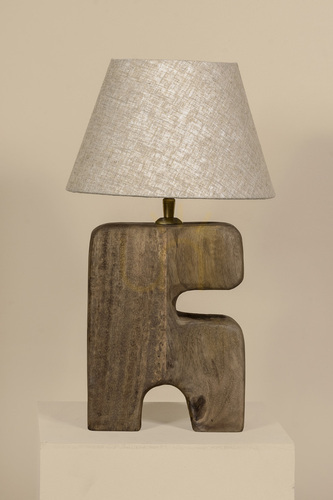
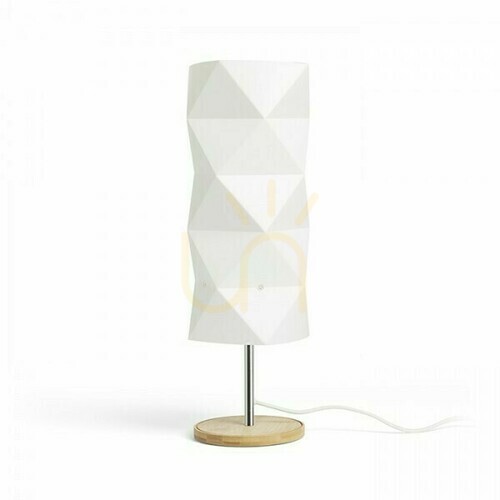
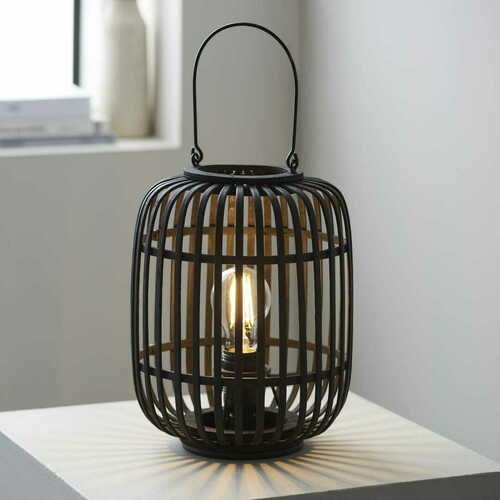
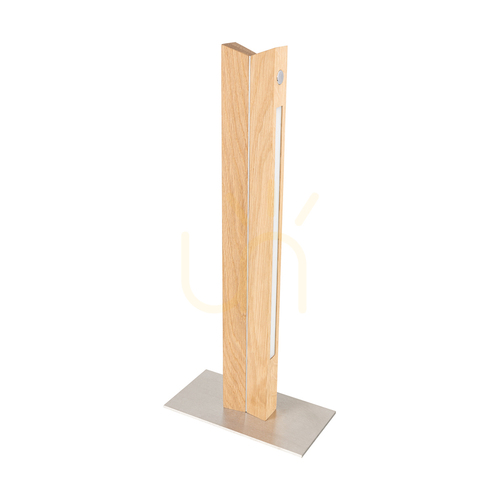
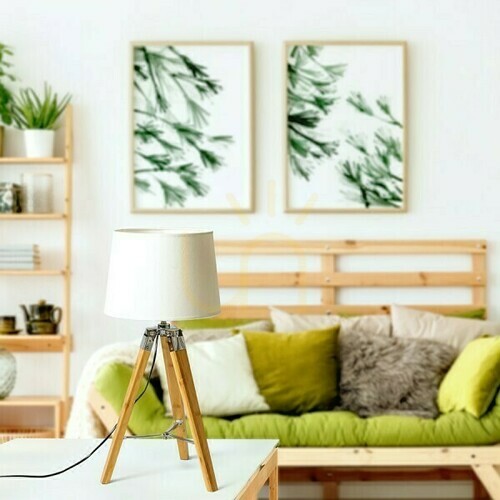
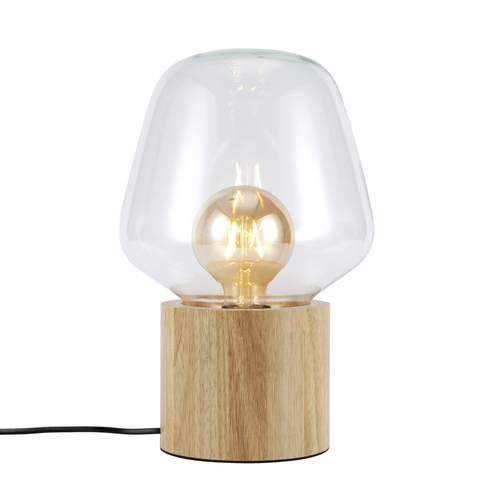
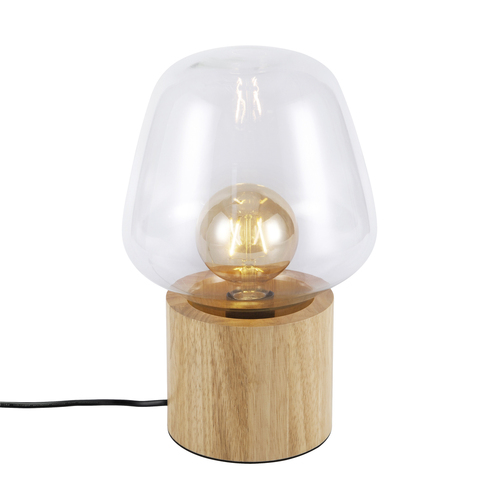
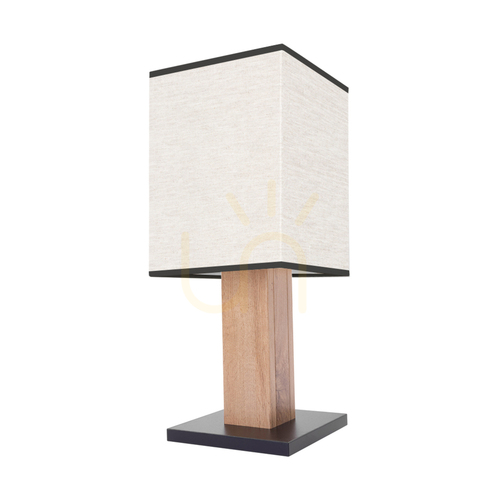
Three shapes cover most of the category. A turned body — bottle, column, ginger jar — is the traditional one and carries a fabric drum well. A tripod puts three splayed legs under a comparatively large shade and needs floor or table space around it, but stays stable because of the spread rather than the mass. A geometric block or slab is the quiet modern option and usually pairs with a slim shade or an exposed bulb. Rattan and bamboo sit at the edge of this family: woven rather than cut, and they let light through the base itself.
How the finish decides the upkeep
Oiled wood is matte and open-grained, feels like timber under the hand, and wants re-oiling every few years; it also takes fingerprints and drink marks. Lacquered or clear-sealed wood wipes clean and stays as it left the factory, at the cost of a slightly plastic sheen up close. Waxed sits between them. Stained, limed and whitewashed finishes change the tone while leaving the figure visible — useful when you want pale wood in a room of dark furniture. Whatever the finish, check it under warm light before committing: 2700 K pushes pale oak and pine distinctly yellow.
Pairing a shade with a wood base
Natural linen, oatmeal and off-white shades are the default because they carry the warmth of the timber without competing with it. Black or charcoal shades turn a light wood lamp graphic and cut the amount of light escaping sideways. A pale lining matters more than the outer colour: it is the lining that bounces light down onto the table. Avoid matching the shade to the wood tone exactly — near-misses look accidental in a way that a clear contrast never does.
Where a wooden lamp should not stand
Directly above a radiator and in a bathroom. Timber moves with humidity, and while fine hairline checks in a solid base are normal ageing rather than a defect, sustained dry heat or steam will open them up. Wood is also lighter than ceramic or stone, so on a shallow shelf or a narrow bedside table check the footprint and route the cable so a tug pulls the plug rather than the lamp.
Questions people ask
Does a wooden lamp base get warm?
No. Heat is produced at the lamp holder inside the shade, and with LED sources there is very little of it to begin with.
My two lamps do not match in colour — is one faulty?
No. Colour and figure vary between boards from the same tree, and finishing shifts them further. It is the reason to buy wood in the first place.
How do I get a water ring out of an oiled base?
Fine steel wool along the grain with a little furniture oil usually lifts it. On a lacquered base, do not attempt it — the sealer is the surface.